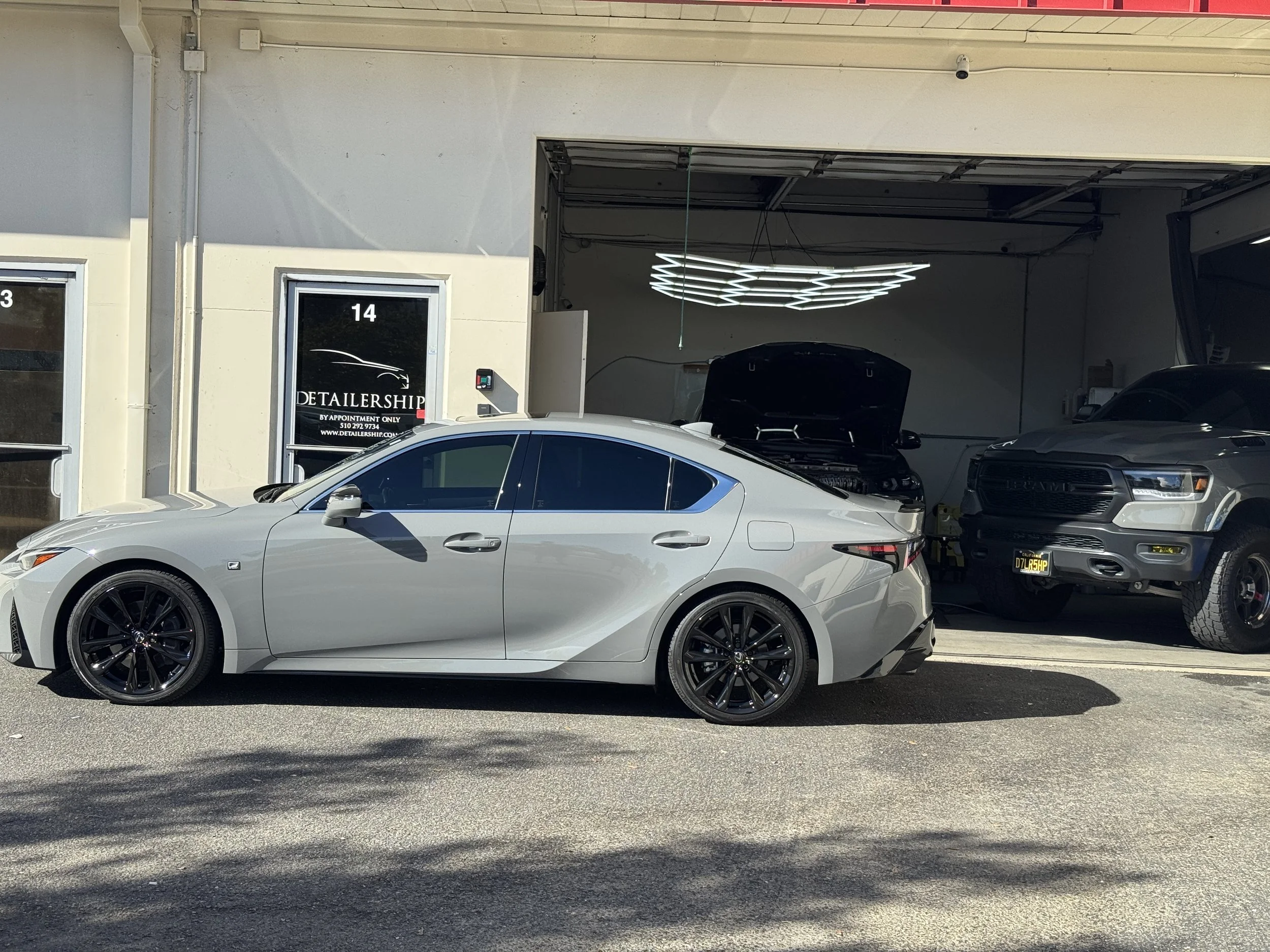
Leasing a 2024 Lexus IS 350 F Sport involves navigating specific financial metrics including the residual value, money factor, capitalized cost reduction, and localized dealer incentives. Because this vehicle sits in the compact luxury sports sedan segment, lease terms are heavily influenced by Lexus Financial Services (LFS) regional guidelines, credit-tier requirements, and current market depreciation rates for the IS platform.
Understanding the Financial Framework of an IS 350 F Sport Lease
Leasing is essentially a long-term rental agreement where you pay for the vehicle’s depreciation over the term of the contract rather than the full purchase price. For the 2024 Lexus IS 350 F Sport, the financial structure rests on four critical pillars: the Adjusted Capitalized Cost, the Residual Value, the Lease Term, and the Money Factor.
The Adjusted Capitalized Cost is the "price" of the car you are actually paying off during the lease. It begins with the negotiated selling price of the vehicle, minus any capitalized cost reductions (down payments, trade-in equity, or manufacturer rebates). A common mistake among luxury car buyers is failing to negotiate the selling price, assuming that lease payments are fixed by the manufacturer. You can and should negotiate the dealer's markup, often referred to as the "cap cost," to lower your monthly obligation.
The Residual Value is the projected worth of the car at the end of the lease term, determined by LFS as a percentage of the Manufacturer’s Suggested Retail Price (MSRP). This value is non-negotiable. It protects the lessee from market volatility; if the car depreciates faster than expected, the loss falls on the leasing company, not you.
The Money Factor (MF) is effectively the interest rate on your lease. Unlike a traditional loan, it is expressed as a decimal (e.g., 0.00210). To convert this to an approximate annual percentage rate (APR), you multiply the money factor by 2,400. In the current 2026 economic landscape, regional volatility can affect these rates, making it essential to ask your dealer for the "buy rate"—the lowest interest rate offered by LFS before any dealer markup is added for profit.
Eligibility and Prerequisites for Leasing
To secure a favorable lease on a 2024 model in 2026, you must meet the underwriting standards set by Lexus Financial Services. While individual dealership policies may vary, the core requirements remain consistent.
Credit Score Thresholds
Leasing a luxury vehicle typically requires a "Tier 1" credit profile. In the industry, this usually translates to a FICO score of 720 or higher. Lessees falling below this threshold may still be approved, but they will likely face a higher money factor, significantly increasing the cost of the lease.
Insurance Requirements
Because a leased vehicle is legally owned by the financing institution until the buyout, LFS mandates specific insurance coverage levels. You will be required to carry "full coverage" insurance, which includes comprehensive and collision, typically with specific deductible limits (often $500 or $1,000) and liability limits that exceed standard state-minimum requirements. You must present proof of this insurance at the time of delivery.
Mileage Considerations
The 2024 Lexus IS 350 F Sport is a performance-oriented vehicle, but leases are strictly limited by annual mileage caps. Standard leases usually offer 7,500, 10,000, 12,000, or 15,000 miles per year. Selecting an allowance lower than your actual usage leads to "excess mileage penalties," which can range from $0.15 to $0.30 per mile depending on the contract.
Key Lease Components Comparison
The following table outlines the fundamental variables that dictate your monthly payment. Understanding these allows you to compare quotes from different dealerships effectively.
| Component | Description | Impact on Payment |
|---|---|---|
| Capitalized Cost | Negotiated sale price of the IS 350 F Sport | Lowering this reduces monthly payments |
| Residual Value | Guaranteed future value at lease end | Higher residual lowers monthly payments |
| Money Factor | The interest rate charged by the lender | Lower MF reduces interest/payment |
| Term Length | Usually 24, 36, or 39 months | Shorter terms have higher depreciation |
| Down Payment | Upfront cash to reduce the balance | Reduces payments but increases risk |
Navigating the 2026 Market for 2024 Models
By 2026, the 2024 Lexus IS 350 F Sport is considered a "certified pre-owned" or "aged" new inventory unit depending on mileage and status. If you are locating a new 2024 unit still on a dealer lot, you have significant negotiating leverage.
Negotiating the "Cap Cost"
Since the vehicle is two model years removed from the current production cycle, dealerships are generally motivated to clear the unit to make space for newer inventory. Do not settle for the MSRP. Research the current market value of comparable units and use that as your baseline for the capitalized cost.
Acquisition Fees and Documentation Fees
Every lease includes an "Acquisition Fee" charged by LFS (typically around $795) to cover the costs of initiating the lease. This is standard across all dealerships. However, be wary of "dealer documentation fees" or "processing fees." While some fees are state-regulated, others are purely dealer profit. You should verify if these are negotiable in your specific jurisdiction.
Wear and Tear Guidelines
A significant concern for lessees is the "turn-in" process. Lexus Financial Services provides a specific inspection guide for what constitutes "excess wear and tear."
Typical acceptable wear includes:
- Minor dings or scratches less than the size of a credit card.
- Tires with at least 1/8 inch of tread remaining.
- Interior upholstery showing normal signs of use without rips, burns, or permanent stains.
Damage that falls outside these parameters—such as cracked windshields, deep body panel dents, or non-factory modifications—will result in charges at the end of the lease. It is highly recommended to perform a pre-inspection roughly 30 days before the lease ends to allow time for repairs at independent shops, which are often cheaper than the dealership's assessment.
Common Mistakes to Avoid
- Putting Money Down: In a lease, a large down payment (cap cost reduction) is risky. If the vehicle is totaled in an accident shortly after the lease begins, that down payment is generally non-refundable and lost to the gap insurance settlement.
- Ignoring the "Buy Rate": Always ask the finance manager for the "buy rate" money factor. Dealers are permitted to mark up the interest rate to generate extra profit. You have the right to request the base rate.
- Rolling Fees into the Monthly Payment: While convenient, rolling your taxes, acquisition fees, and registration costs into the monthly payment means you will be paying interest on those fees for the duration of the lease.
- Underestimating Mileage: If your lifestyle involves long commutes, do not select a 10,000-mile lease to save $20 a month. The end-of-lease penalty for exceeding your mileage cap will vastly outweigh those minor savings.
Frequently Asked Questions
Is it better to lease or finance a 2024 Lexus IS 350 F Sport?
Leasing is generally better if you prefer lower monthly payments and the ability to upgrade to a new vehicle every three years. Financing (buying) is better if you plan to keep the car for five to ten years and want to avoid mileage restrictions and wear-and-tear inspections.
Can I buy the car at the end of the lease?
Yes, you can exercise your "lease-end purchase option." The price to buy the car will be the residual value set in your original contract, plus any applicable fees. This is a good option if you have grown attached to the car or if its current market value is higher than the residual value.
What is the "Gap" insurance and is it included?
Gap insurance covers the difference between what you owe on the lease and what the insurance company pays if the car is totaled. Lexus Financial Services typically includes Gap protection in their lease agreements, but you should verify this in your specific contract document.
Can I modify my leased IS 350 F Sport?
Modifications are generally prohibited. Any non-factory additions (such as aftermarket wheels, suspension kits, or performance tuning) must be removed before returning the vehicle. If the car is returned with non-factory parts, the dealer may charge you to return it to stock condition.
Do I have to return the lease to the dealership where I bought it?
No. You can return your leased Lexus to any authorized Lexus dealership in the country. However, some dealers may be more flexible during the return inspection process if you intend to lease or purchase your next vehicle from them.
Next Steps for Prospective Lessees
If you are proceeding with a lease for a 2024 Lexus IS 350 F Sport, your first step is to obtain a specific, itemized quote from your local dealer. Ensure the quote explicitly lists the MSRP, the negotiated selling price, the money factor, the residual percentage, and the total drive-off amount. Use this documentation to compare against other dealerships. Before signing, verify that the term length and mileage allowance align with your actual driving habits to avoid surprise fees down the road.