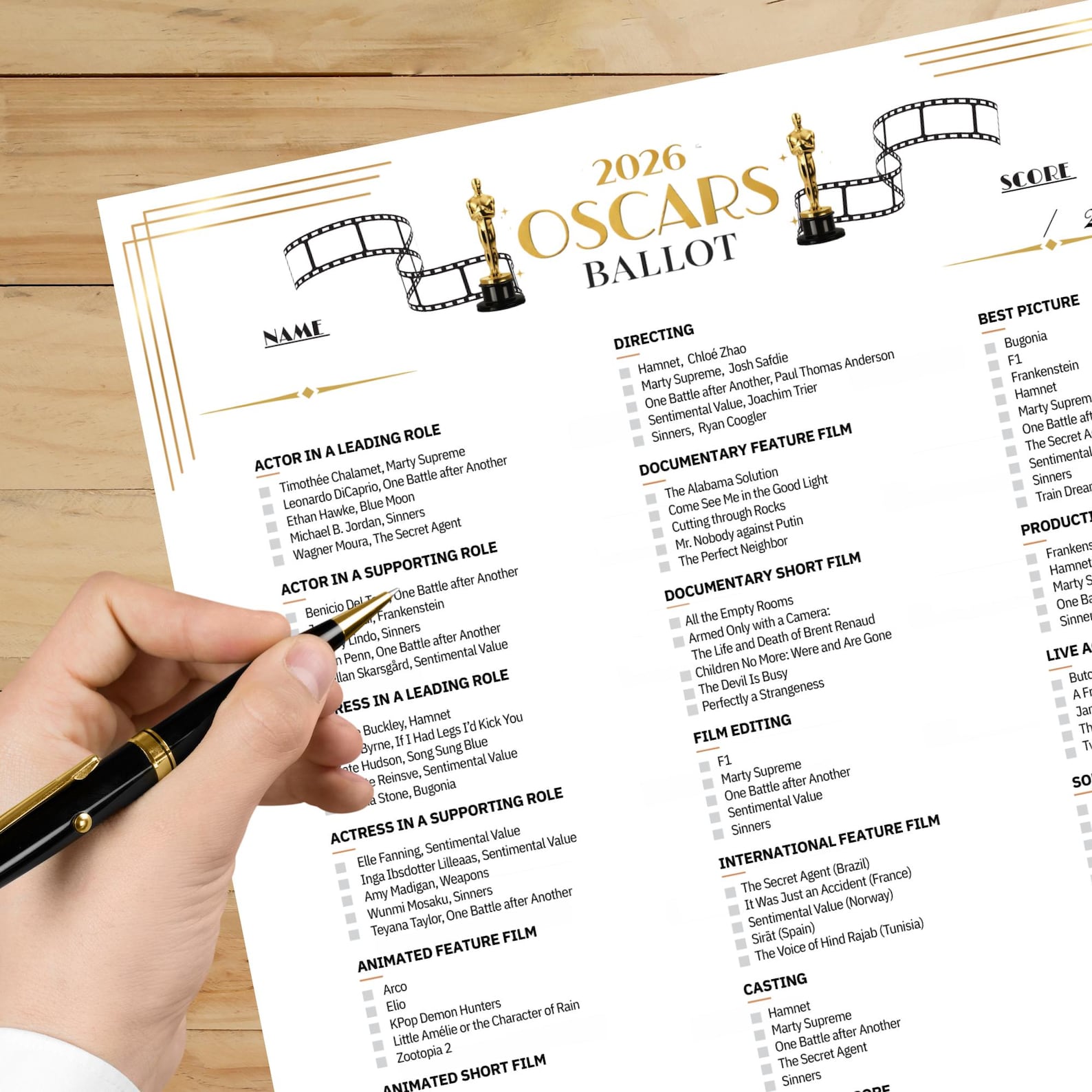
The 2019 Oscars ballot served as the formal instrument used by the Academy of Motion Picture Arts and Sciences (AMPAS) members to vote for the 91st Academy Awards. It functioned as the final stage of the selection process, covering 24 distinct categories, and reflected the specific eligibility criteria, nomination standards, and voting protocols established for films released during the 2018 calendar year.
The Evolution of the Academy Awards Ballot
The 2019 Oscars ballot was not merely a list of nominees; it was a complex data-collection tool designed to facilitate the preferential voting system. By 2019, the Academy had refined its processes to balance the traditional prestige of the Oscars with an evolving industry landscape. Understanding this document requires acknowledging the structural components of Academy voting, which remained relatively stable leading up to the 91st ceremony but were subject to specific modifications regarding category definitions and member eligibility.
The ballot is distributed annually to the thousands of active voting members of the Academy. These members represent diverse branches of the film industry, including actors, directors, cinematographers, sound designers, and costume designers. For the 2019 ceremony, the ballot structure ensured that voters primarily participated in their own branch’s specific category nominations, while the "Best Picture" category remained open to the entire voting body. This inclusive approach to the top award is intended to capture a broader consensus, though it necessitates a complex mathematical approach to tabulate the winners.
Decoding the 2019 Ballot Structure
The 2019 Oscars ballot was organized by category, following a standard sequence that begins with the performance categories and concludes with the top production honors. Each section of the ballot featured the nominated films or individuals along with the title of the film that earned them the nomination.
Major Category Groupings
- Performance Categories: Best Actor, Best Actress, Best Supporting Actor, and Best Supporting Actress.
- Directing and Writing: Best Director, Best Original Screenplay, and Best Adapted Screenplay.
- Technical and Artisanal Categories: Cinematography, Film Editing, Production Design, Costume Design, Makeup and Hairstyling, Sound Editing, Sound Mixing, and Visual Effects.
- General Production: Best Picture, Best Animated Feature, Best Documentary Feature, and Best Foreign Language Film.
The 2019 ballot was significant for its inclusion of competitive fields that had undergone recent scrutiny. For instance, the distinction between Sound Editing and Sound Mixing remained a point of focus for technical voters, as these two categories often require a deep understanding of film production workflow rather than just the final auditory output.
The Preferential Voting System Explained
One of the most frequent points of confusion regarding the 2019 Oscars ballot—and Academy ballots in general—is the "preferential ballot" system used for Best Picture. Unlike other categories where a simple plurality might suffice, the Best Picture category requires voters to rank the nominees in order of preference (1st, 2nd, 3rd, etc.).
When the ballots are tabulated, the votes are analyzed to determine if any film has achieved an absolute majority of first-place votes. If no film reaches this threshold, the film with the fewest first-place votes is eliminated, and its ballots are redistributed to the film ranked second on those specific cards. This process repeats until one film achieves more than 50% of the vote. This mechanism is designed to reward consensus and films that appeal to a wide spectrum of Academy members, rather than films that might be the passionate favorite of a small, polarized group.
Eligibility and Requirements for 2019 Nominees
To appear on the 2019 Oscars ballot, films and individuals had to satisfy rigorous requirements set forth by the Academy. The primary rule for the 2019 ceremony was that a film must have been released in a commercial motion picture theater in Los Angeles County for at least seven consecutive days during the 2018 calendar year.
This rule acts as a gatekeeper, ensuring that the Oscars remain a competition for cinema as a theatrical medium. In 2019, this created notable discourse regarding the emergence of streaming platforms. While films distributed via digital services were eligible, provided they met the theatrical run requirement, the industry was then in the early stages of navigating how these films should be categorized and evaluated compared to traditional studio productions.
Comparing Technical vs. Creative Categories
A common mistake in reviewing the 2019 ballot is treating every category as an equal exercise in artistic critique. In reality, the ballot distinguishes between categories where subjective artistry is the primary metric and those where technical precision and standard industry practices are paramount.
| Category Type | Voting Eligibility | Primary Criterion |
|---|---|---|
| Performance | Primarily Actors Branch | Emotional range, character depth |
| Technical/Artisanal | Specific Craft Branches | Execution, innovation, workflow |
| General (Best Picture) | All Academy Members | Overall production excellence |
| Documentary/Foreign | Academy-wide Committees | Subjectivity, cultural impact |
The technical categories (e.g., Visual Effects) often rely on "shortlists" prior to the ballot phase. For the 2019 cycle, the Visual Effects branch held a bake-off where artists presented their work before the final nominees were selected for the ballot. This tiered system ensures that by the time a voter sees the name on the official ballot, it has already been vetted by specialists in that field.
Common Misconceptions Regarding the Ballot
The Myth of Popular Vote
A widespread misunderstanding is that the Oscars ballot is a popular vote decided by the public. The 2019 ballot was strictly for the approximately 8,000 voting members of the Academy. Public sentiment, box office performance, and critical reviews influence the "buzz" leading up to the ceremony, but they have no formal weight on the physical ballot.
Ballot Secrecy and Security
The secrecy of the 2019 ballot was maintained through a sophisticated verification process. Each ballot is uniquely coded to the member to ensure that only eligible voters participate, and the firm of PwC (formerly PricewaterhouseCoopers) is tasked with the tabulation. This rigorous security prevents ballot stuffing and ensures that only one vote per member is counted for each category.
Why Some Films Were Excluded
Films often missing from the 2019 ballot were usually excluded due to missing the qualification dates or failing to provide the required "Official Screen Credits" forms. The Academy’s submission requirements are strictly administrative; a film with high critical acclaim could be disqualified if the production company failed to submit the proper documentation by the submission deadline.
Frequently Asked Questions
Who was eligible to vote using the 2019 Oscars ballot? Only active, dues-paying members of the Academy of Motion Picture Arts and Sciences in good standing were eligible. Each member is assigned to a specific branch (e.g., Directors, Producers) and votes within their branch for specific categories, with everyone voting for Best Picture.
How does the ballot handle a tie? The Academy rules are designed to minimize the possibility of a tie, though if one were to occur, the procedures involve specific counting protocols overseen by the third-party accounting firm. In modern Academy history, ties are exceptionally rare because of the complex nature of the preferential and proportional voting systems.
Can a member change their vote after submitting the ballot? No. Once the ballot is submitted—whether through the physical process or the online portal used in recent years—the vote is final. The tabulators operate on a "last-in" basis, but once the deadline passes, no further modifications are permitted.
Why are some categories not on every member's ballot? The Academy uses a "branch-specific" system to ensure that experts in a field are primarily responsible for judging their peers. For instance, the Sound Editing branch members are the primary voters for their category, as they possess the specific technical vocabulary to evaluate the nuance of that craft.
Was the 2019 ballot digital or paper? By 2019, the Academy had transitioned to an almost entirely digital voting process. Members accessed a secure, encrypted online portal to cast their votes. This reduced the margin of human error associated with paper ballots and allowed for faster, more accurate tabulation.
Final Recommendations for Understanding Historical Ballots
To fully grasp the significance of the 2019 Oscars ballot, one must view it as a snapshot of the industry at that time. It represents the intersection of artistic merit, institutional tradition, and the specific professional biases of the Academy voters. If you are conducting research on this ballot for historical or professional purposes, focus your study on the "Academy Rules and Regulations" documents published by the organization for the 91st awards cycle. These documents provide the most authoritative insight into why certain films appeared on the ballot and why others were excluded.
Finally, remember that the ballot is a static document of a dynamic industry. Analyzing the 2019 ballot serves best as an exercise in understanding how the Academy codified cinematic value during a period of transition in film distribution and production technology.