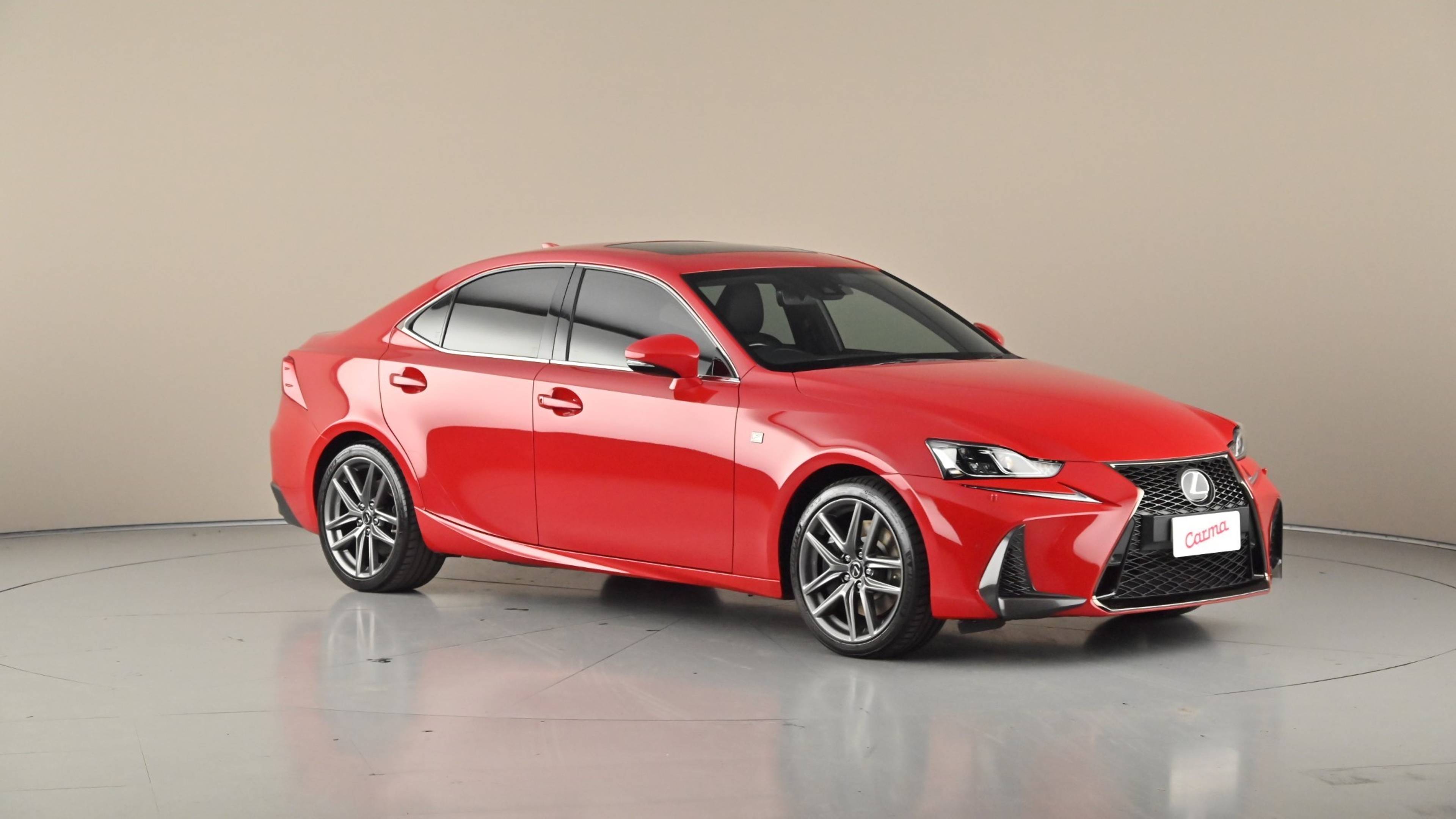
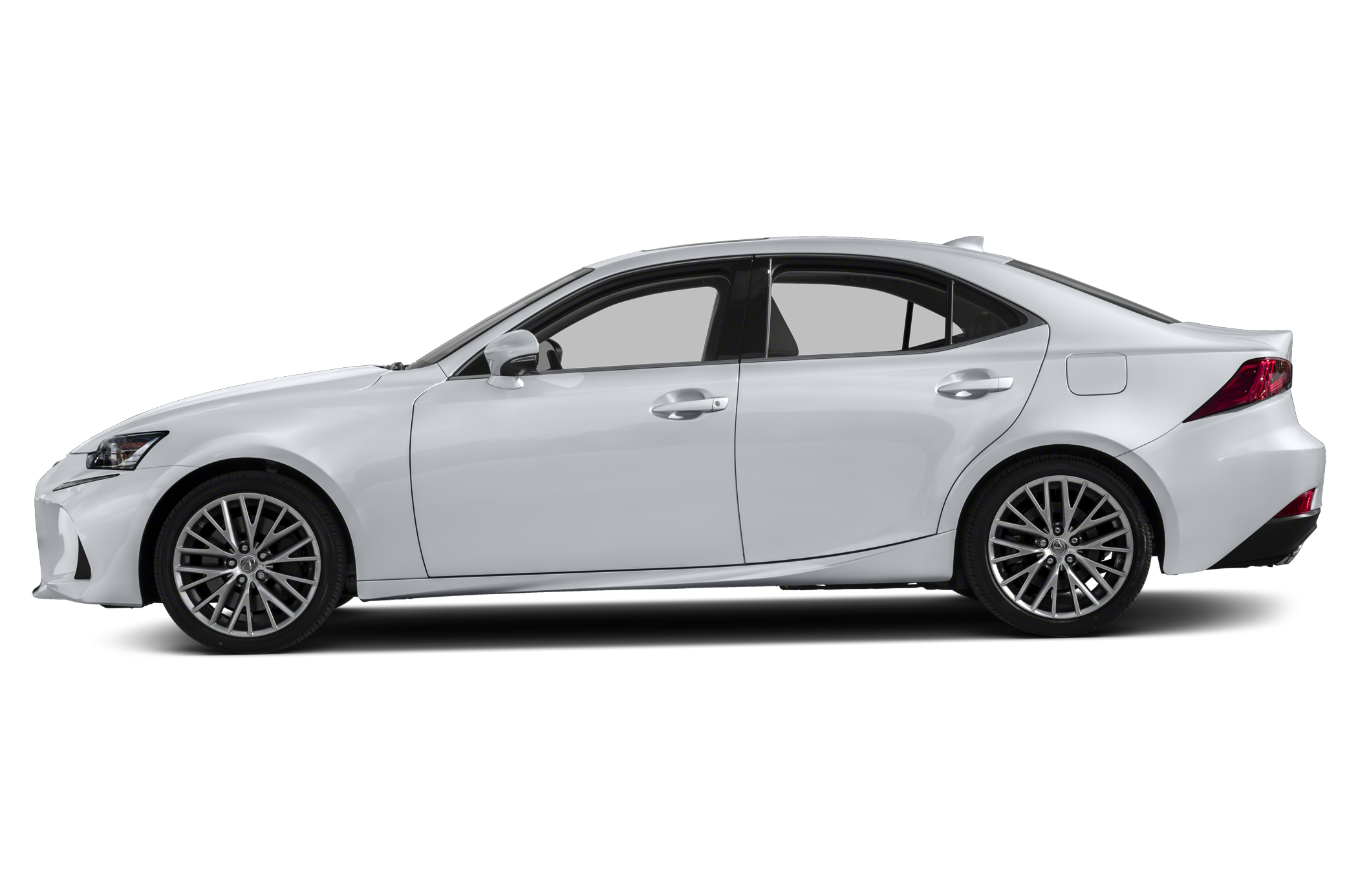
The 2017 Lexus IS200t accelerates from 0 to 60 mph in a factory-claimed 6.9 seconds, with independent instrumented tests recording real-world times between 6.5 and 6.8 seconds. Powered by a 2.0-liter turbocharged four-cylinder engine producing 241 horsepower and 258 lb-ft of torque, the rear-wheel-drive sedan delivers smooth mid-range acceleration rather than aggressive off-the-line launches.
2017 Lexus IS200t Performance At a Glance
The 2017 model year holds a unique place in the Lexus IS history. It represents the final year the entry-level rear-wheel-drive (RWD) luxury sedan carried the "IS 200t" designation before Lexus rebadged the identical four-cylinder powertrain setup as the "IS 300" RWD for 2018.
Beneath the refreshed front fascia and revised lighting of the 2017 facelift lies Toyota’s 8AR-FTS engine architecture. This powertrain was developed to give Lexus a competitive entry against European benchmarks like the BMW 3 Series, Audi A4, and Mercedes-Benz C-Class.
Below is a breakdown of the factory performance figures for the stock 2017 Lexus IS200t:
| Metric | Factory Specification / Tested Value |
|---|---|
| Engine Type | 2.0-Liter Twin-Scroll Turbocharged Inline-4 (8AR-FTS) |
| Horsepower | 241 hp @ 5,800 RPM |
| Torque | 258 lb-ft @ 1,650–4,400 RPM |
| Transmission | 8-Speed Sport Direct-Shift Automatic (AA81E) |
| Drivetrain | Rear-Wheel Drive (RWD) |
| 0–60 mph Acceleration | 6.5 – 6.9 seconds |
| Quarter-Mile Time | 15.1 – 15.3 seconds @ ~93 mph |
| Top Speed | 143 mph (electronically limited) |
| 60–0 mph Braking Distance | ~115 feet |
| Curb Weight | 3,583 lbs |
| EPA Fuel Economy | 22 MPG City / 32 MPG Highway / 26 MPG Combined |
Engine Architecture and Powertrain Engineering
To understand why the IS200t achieves its specific 0–60 mph sprint, one must look closely at the engine bay. The 8AR-FTS 2.0-liter engine features several advanced engineering solutions designed to balance efficiency, emissions, and responsiveness.
Twin-Scroll Turbocharger Technology
Lexus opted for a proprietary twin-scroll turbocharger paired with a water-cooled cylinder head integrated directly into the exhaust manifold. The twin-scroll layout separates exhaust pulses from alternating cylinders, reducing exhaust gas interference and allowing the turbine to spool faster at low engine speeds. Peak torque of 258 lb-ft arrives early at 1,650 RPM and stays flat through 4,400 RPM, providing a wide power band for daily driving.
D-4S Dual Injection System
The IS200t utilizes Toyota’s D-4S injection system, which combines both direct cylinder injection and port fuel injection. At low-to-medium loads, the system uses both injectors to optimize fuel atomization, lower emissions, and prevent valve carbon accumulation. Under heavy throttle—such as a full 0–60 mph acceleration run—the engine relies primarily on high-pressure direct injection to cool the combustion chamber and maximize power output without engine knock.
Variable Valve Timing with Intelligent Wide (VVT-iW)
Another key feature is VVT-iW technology on the intake camshaft, paired with VVT-i on the exhaust side. This system allows the engine to alternate between the conventional Otto cycle (for peak acceleration and power) and the high-efficiency Atkinson cycle (during light-load cruising). While this enhances fuel economy during highway trips, the transition back to full-power Otto cycle under sudden acceleration introduces a subtle delay when stomping the accelerator from a dead stop.
Gearbox and Launch Dynamics: Why 0–60 Times Vary
While 241 horsepower is a strong rating for a compact luxury sedan, the 2017 IS200t's 0–60 mph time of 6.5 to 6.9 seconds is often described by automotive journalists as modest compared to direct competitors. The reasoning comes down to three factors: vehicle mass, transmission tuning, and launch control availability.
- Engine: 241 HP / 258 lb-ft
- VVT-iW Atkinson-to-Otto Transition Delay
- 8-Speed AA81E Automatic Gearbox (Conservative 1st Gear)
- 3,583 lb Chassis Inertia
- 0–60 mph Sprint: 6.5 - 6.9 Seconds
1. Curb Weight Dynamics
At 3,583 pounds, the RWD IS200t carries notable physical mass. Compared to a contemporary F30 BMW 328i or B9 Audi A4 2.0T RWD/FWD, the Lexus carries roughly 100 to 200 additional pounds. Accelerating nearly 1.8 tons of car off the line requires overcoming initial inertia, which directly impacts the first 0–30 mph split time.
2. Gear Ratios of the 8-Speed AA81E Transmission
The IS200t comes exclusively with an 8-speed automatic gearbox derived from high-performance applications like the earlier IS F. However, the software programming in the IS200t prioritizes smoothness and longevity over aggressive gear shifts.
First gear is geared conservatively to ensure seamless off-the-line motion without harsh tire chirp. Furthermore, upshifts in Sport mode are refined rather than lightning-fast, resulting in micro-second gaps between gear shifts that add up during a 0 to 60 mph test run.
3. Traction and Electronic Torque Management
The IS200t does not include an electronic launch control program. Drivers performing a "brake torque" launch (holding the brake while applying gas to build engine boost before releasing the brake) will notice the computer management system limits engine torque output until the brake pedal is completely released. This built-in protection mechanism prevents severe brake wear and transmission torque-converter damage, but it restricts aggressive off-the-line launches.
Driving Modes: Normal, Eco, and Sport
The drive mode select dial on the center console alters throttle mapping and transmission behavior, directly influencing real-world acceleration feel:
- Eco Mode: Severely deadens throttle response and forces the 8-speed transmission to upshift at low RPMs (often under 2,000 RPM). 0–60 mph acceleration in Eco mode can feel sluggish, frequently taking over 8 seconds unless the pedal is completely floored to trigger downshift kickdown.
- Normal Mode: Provides a linear throttle pedal response. Good for everyday commuting, though small dips in throttle application may not immediately trigger a gear downshift.
- Sport Mode: Increases throttle sensitivity and holds lower gears longer, keeping the turbocharger spooled in the core torque band (2,000–4,500 RPM). While Sport mode does not increase peak engine horsepower, it drastically improves 30–50 mph and 50–70 mph passing acceleration by keeping the engine ready to surge forward without waiting for multi-gear downshifts.
2017 Lexus IS200t vs. Compact Luxury Competitors
During the 2017 model year, the compact luxury sport sedan segment was fiercely competitive. Below is a direct comparison of stock performance metrics between the 2017 Lexus IS200t RWD and its primary rival sport sedans from that era.
| Vehicle Model | Engine | Power / Torque | Transmission | Drivetrain | 0–60 mph (Tested) | Curb Weight |
|---|---|---|---|---|---|---|
| 2017 Lexus IS200t | 2.0L Turbo I4 | 241 hp / 258 lb-ft | 8-Speed Auto | RWD | 6.5 – 6.9 sec | 3,583 lbs |
| 2017 BMW 330i | 2.0L Turbo I4 | 248 hp / 258 lb-ft | 8-Speed Auto | RWD | 5.4 – 5.6 sec | 3,541 lbs |
| 2017 Audi A4 2.0T | 2.0L Turbo I4 | 252 hp / 273 lb-ft | 7-Speed Dual-Clutch | FWD / AWD | 5.2 – 6.1 sec | 3,450–3,626 lbs |
| 2017 Mercedes C300 | 2.0L Turbo I4 | 241 hp / 273 lb-ft | 7-Speed Auto | RWD | 5.8 – 6.0 sec | 3,417 lbs |
| 2017 Infiniti Q50 2.0T | 2.0L Turbo I4 | 208 hp / 258 lb-ft | 7-Speed Auto | RWD | 7.0 – 7.2 sec | 3,674 lbs |
Key Takeaways from the Data
- Straight-Line Speed: European competitors like the BMW 330i and Audi A4 2.0T are faster to 60 mph by almost a full second, primarily due to faster-shifting transmissions (like Audi’s S tronic dual-clutch) and lighter curb weights.
- Infiniti Comparison: The IS200t easily outpaces entry-level competitors like the 2.0-liter Infiniti Q50, offering 33 additional horsepower.
- Real-World Feel: While the IS200t falls slightly behind in drag-strip acceleration metrics, its linear power delivery makes it feel exceptionally smooth during highway merging and cruising.
F Sport Trim: Does It Improve Acceleration?
A common question among pre-owned luxury car shoppers is whether the IS200t F Sport trim offers faster 0–60 mph performance than the base or Luxury trims.
The short answer is no, it does not increase straight-line speed.
The 8AR-FTS engine, turbocharger, intake, exhaust system, and transmission gear ratios are identical across all trims of the 2017 IS200t.
However, the F Sport model changes driving dynamics through several mechanical and aesthetic hardware additions:
- Adaptive Variable Suspension (AVS): Standard on F Sport models, this system continuously adjusts damper settings to minimize body roll during hard cornering.
- Staggered Wheel/Tire Fitment: The F Sport features wider rear tires (255/35R18 rear vs. 225/40R18 front), which increases rear axle traction during cornering exits, though it adds negligible traction benefit to straight-line 0–60 launches.
- Enhanced Steering Tuning: Variable Gear-Ratio Steering (VGRS) recalibrates steering feedback for a firmer, more communicative feel.
- High-Friction Brake Pads: Upgraded front brake pads improve pedal feel and heat resistance during repeated hard stops.
Modifying the IS200t: Improving 0–60 Times
For owners seeking to lower their 0–60 mph times, the turbocharged 8AR-FTS engine responds well to basic aftermarket modifications. Because Lexus engineered the engine with strong internal components, moderate tuning unlocks notable power gains.
1. ECU Plug-and-Play Tuners & Flash Maps
- Stage 1 ECU Tunes: Aftermarket piggyback tuners (such as the Burger Tuning JB4 or DTE Systems) or full ECU reflash tunes increase peak turbo boost pressure from the factory ~17 PSI up to 20–22 PSI.
- Performance Gain: A Stage 1 tune generally adds 25 to 40 wheel horsepower and 35 to 50 lb-ft of torque.
- 0–60 Impact: A flashed IS200t can reduce its 0–60 mph sprint down to 5.8 – 6.0 seconds, bridging the gap to unmodified German rivals.
2. Intake and Downpipe Modifications
- High-Flow Intake: Replacing the restrictive stock airbox improves intake sound and provides minor top-end horsepower improvements (+5–8 hp).
- Cat-less / High-Flow Downpipe: Replacing the primary catalytic converter lowers exhaust backpressure significantly, allowing the twin-scroll turbocharger to spool roughly 300–400 RPM earlier in the rev range.
3. Transmission ECU Flashes
Because the AA81E transmission software is the main bottleneck for quick launches, custom TCM (Transmission Control Module) flashes can speed up shift times and firm up gear engagements, directly contributing to quicker acceleration times.
Reliability and Long-Term Ownership Considerations
The trade-off for the IS200t's slightly slower 0–60 times compared to its German competition is its long-term reliability record. Toyota's conservative factory engine calibration and transmission tuning play a vital role in preventing pre-mature mechanical failures.
Vacuum Switching Valve (VSV) Concerns
The most widely documented issue on early 8AR-FTS engines involves the boost pressure control Vacuum Switching Valve (VSV). A failing VSV causes erratic boost control, resulting in a sudden drop in engine power, hesitant acceleration, or a diagnostic check engine light (DTC P26B7). Replacing the valve is a straightforward repair that restores original factory acceleration.
Water Pump Longevity
Like many Toyota/Lexus engines, the mechanical water pump may show signs of slow coolant seepage around 70,000 to 100,000 miles. Keeping an eye on the coolant reservoir level prevents potential overheating issues.
Low Carbon Accumulation
Thanks to the D-4S dual-injection setup, the intake valves are regularly washed with fuel from the port injectors. As a result, the 2017 IS200t does not suffer from the severe intake valve carbon buildup that frequently plagues direct-injection-only European engines of similar vintage.
Frequently Asked Questions
Is the 2017 Lexus IS200t fast?
The 2017 Lexus IS200t is quick enough for confident daily driving and highway merging, but it is not classified as a dedicated high-performance sports car. With a 0–60 time around 6.5 to 6.9 seconds, it prioritizes linear power delivery, refinement, and cabin quietness over explosive line launches.
What is the difference between the 2017 Lexus IS200t and the 2018 Lexus IS300 RWD?
Mechanically, there is virtually no difference. For the 2018 model year, Lexus renamed the 2.0-liter turbo RWD model from "IS 200t" to "IS 300 RWD." Both vehicles use the identical 8AR-FTS 2.0-liter turbocharged four-cylinder engine making 241 horsepower paired with an 8-speed automatic transmission.
Does the 2017 Lexus IS200t come in All-Wheel Drive (AWD)?
No. The "IS 200t" badge was strictly reserved for the Rear-Wheel-Drive (RWD) variant. If you require All-Wheel Drive in a 2017 Lexus IS, you must look for the 2017 Lexus IS 300 AWD, which uses a detuned 3.5-liter naturally aspirated V6 engine producing 255 horsepower paired with a 6-speed automatic transmission.
How can I get the fastest 0–60 time out of a stock IS200t?
To achieve the fastest acceleration in a stock IS200t, switch the Drive Mode dial to Sport, turn off traction control (Traction OFF mode), move the gear selector to Manual mode, and perform a mild brake-torque launch by holding the brake with your left foot while bringing engine revs to approximately 2,000 RPM before quickly releasing the brake.
Does the IS200t require Premium Gasoline?
Yes. Lexus requires 91 octane (AKI) premium unleaded gasoline or higher for the 8AR-FTS turbocharged engine. Running lower octane fuel forces the engine computer to retard ignition timing to prevent engine knock, which significantly degrades 0–60 mph performance and reduces fuel economy.
Final Verdict and Buyer Recommendation
The 2017 Lexus IS200t delivers a balanced mix of athletic styling, luxury refinement, and long-term mechanical reliability. While its 6.5 to 6.9 second 0–60 mph acceleration puts it slightly behind period rivals from BMW and Audi in pure drag-strip contests, its 258 lb-ft of low-end torque provides plenty of passing power for daily driving.
For buyers considering a pre-owned vehicle, the IS200t stands out as an excellent option if low maintenance costs, strong resale value, and durable chassis design are higher priorities than absolute straight-line speed. Those desiring faster launch times can easily unlock additional performance through basic aftermarket ECU tuning while retaining the comfort and build quality Lexus is known for.