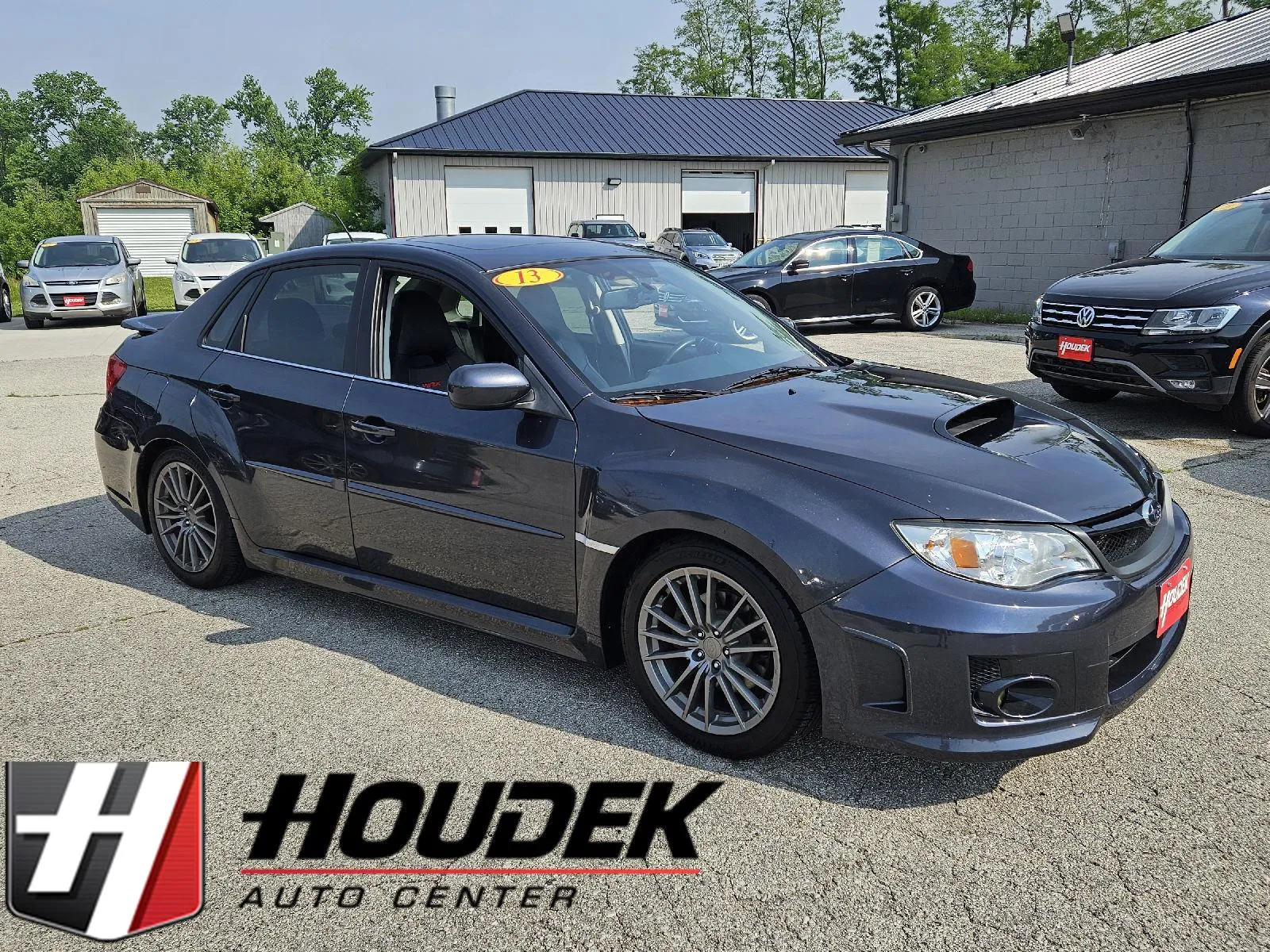
The 2013 Subaru Impreza WRX sedan debuted with a base manufacturer’s suggested retail price (MSRP) of $25,795. Combined with a standard $770 destination fee, the entry-level sticker price landed at exactly $26,565. This price point surprised buyers and automotive journalists alike by delivering 265 horsepower, full-time symmetrical all-wheel drive, and widebody styling for thousands less than competing hot hatches and sports sedans.
The Math Behind the $26,565 Sticker Price
When Subaru announced pricing for the 2013 Impreza WRX lineup, the automotive landscape was recovering from economic tightening, and performance cars were rapidly climbing toward the $30,000 threshold. The 2013 WRX arrived in three distinct trim levels: base, Premium, and Limited, offered in both four-door sedan and five-door hatchback body styles.
Base Price: $25,795 Destination Fee: +$770 -------------------------- Total Entry MSRP: $26,565
At $26,565, the base sedan served as the financial anchor of Subaru’s performance fleet. For that figure, buyers received the identical mechanical powertrain found in the $30,000+ Limited models. Subaru avoided de-tuning the engine, removing the standard limited-slip rear differential, or swapping in inferior suspension hardware on base variants. The only differences between the base model and costlier trims were comfort conveniences such as fog lights, heated seats, a power moonroof, leather upholstery, and optional factory touch-screen navigation.
Because Subaru kept mechanical parity across all trims, the $26,565 base sedan became an instant target for driving enthusiasts who wanted pure performance without paying for cabin luxury.
Why the $26,565 Price Tag Caught the Market Off Guard
To understand the industry’s surprise at the $26,565 figure, you must evaluate the performance-to-dollar ratio of the early 2010s. The 2013 model was part of the third-generation (GV chassis for sedans) WRX lifecycle. In 2011, Subaru gifted the standard WRX the aggressive, flared widebody fenders previously reserved exclusively for the range-topping WRX STI. By 2013, that aesthetic maturity had settled in, meaning a buyer spending under $27,000 walked away with a vehicle that visually mirrored a $35,000 flagship.
Beyond aesthetics, the powertrain delivered straight-line speed that disrupted conventional market pricing tiers. Equipped with the turbocharged 2.5-liter engine, the 2013 WRX sedan consistently recorded 0-to-60 mph acceleration times between 4.7 and 4.9 seconds in independent magazine testing.
In 2013, achieving a sub-five-second sprint to highway speeds typically required spending upwards of $35,000 to $45,000 on platforms like the BMW 135i, Audi S4, or Ford Mustang GT. Entry-level sport-compact alternatives like the Volkswagen GTI, Honda Civic Si, and Hyundai Genesis Coupe simply could not match the WRX’s violent off-the-line traction or mid-range turbocharged punch, yet they occupied identical price brackets.
Technical Specifications: What $26,565 Bought
The mechanical package packaged into the $26,565 MSRP explains why the car developed a cult following. Subaru engineered the third-generation WRX on an evolution of its rally-proven global platform, pairing lightweight chassis dynamics with an overachieving forced-induction engine.
Powertrain Architecture: The EJ255 Engine
Under the aluminum hood sat the EJ255, a 2.5-liter horizontally opposed (boxer) four-cylinder engine featuring:
- Displacement: 2,457 cc (2.5L)
- Valvetrain: Double Overhead Cam (DOHC), 16 valves, Dual Active Valve Control System (DAVCS) on intake cams
- Turbocharging: TD04-derived turbocharger producing up to 14.2 psi of peak boost
- Horsepower: 265 hp @ 6,000 rpm
- Torque: 244 lb-ft @ 4,000 rpm
- Compression Ratio: 8.4:1
Because the boxer engine lays horizontally flat in the bay, it maintains a significantly lower center of gravity than transverse or inline four-cylinders. This architecture directly reduces body roll and improves turn-in sharpness without requiring excessively harsh spring rates.
Drivetrain and All-Wheel-Drive Mechanicals
Every base 2013 WRX sedan came standard with a five-speed manual transmission. Subaru routed power through its Continuous AWD system, which utilized a mechanical center differential supported by a viscous coupling unit. Under normal driving conditions, the differential maintained a 50/50 torque split between the front and rear axles. If wheel slip occurred at either axle, the viscous silicone fluid sheared, locking the differential to transfer up to 100% of usable torque to the wheels with maximum traction.
At the rear axle, Subaru integrated a mechanical Viscous Limited-Slip Differential (VLSD) as standard equipment. This prevented inside-wheel spin when powering through tight corners, a feature often omitted on base-model competitor platforms.
Suspension and Chassis Tuning
The GV sedan rode on a 103.3-inch wheelbase, featuring an independent front MacPherson strut setup paired with an independent double-wishbone rear suspension. Subaru upgraded the anti-roll bars (21 mm front, 16 mm rear) and stiffened the rear subframe bushings for the widebody iterations, reducing understeer while allowing rapid directional transitions on broken asphalt or loose gravel.
2013 Compact Performance Landscape: Comparative Analysis
To see how the 2013 WRX sedan disrupted the market at $26,565, consider how it compared against its closest factory competitors in the 2013 model year.
| Model | Base MSRP (incl. destination) | Drivetrain | Horsepower | Torque (lb-ft) | 0–60 mph (sec) |
|---|---|---|---|---|---|
| 2013 Subaru WRX Sedan | $26,565 | Symmetrical AWD | 265 hp | 244 lb-ft | 4.7 |
| 2013 Volkswagen Golf GTI (2-Door) | $24,995 | Front-Wheel Drive | 200 hp | 207 lb-ft | 6.5 |
| 2013 Ford Focus ST | $24,495 | Front-Wheel Drive | 252 hp | 270 lb-ft | 5.9 |
| 2013 Mazdaspeed3 | $24,995 | Front-Wheel Drive | 263 hp | 280 lb-ft | 5.8 |
| 2013 Honda Civic Si Sedan | $23,545 | Front-Wheel Drive | 201 hp | 170 lb-ft | 6.5 |
| 2013 Mitsubishi Lancer Ralliart | $28,890 | All-Wheel Drive | 237 hp | 253 lb-ft | 5.5 |
Analysis of the Competitive Field
- Traction Superiority: Front-wheel-drive competitors like the Focus ST and Mazdaspeed3 generated impressive peak torque figures, but suffered from severe torque steer and wheel hop under aggressive launch conditions. The WRX hooked up and accelerated without front-tire scrub.
- The Mitsubishi Rivalry: The closest direct competitor was the Mitsubishi Lancer Ralliart, which utilized a detuned version of the Evolution X drivetrain. However, the Ralliart commanded a base MSRP over $2,300 higher than the WRX, offered less horsepower (237 vs. 265), and forced buyers into an automated dual-clutch transmission (TC-SST) with historically high maintenance overhead.
- The Civic Si and GTI Deficit: While the GTI offered a significantly more refined cabin and the Civic Si offered legendary reliability, both trailed the WRX by more than 60 horsepower and nearly two full seconds in zero-to-sixty testing.
Strategic Compromises: Where Subaru Cut Costs
Building an all-wheel-drive performance car capable of beating sports machinery twice its price required deliberate trade-offs. Subaru spent the development budget on engine hardware, chassis stamping, and drivetrain components. Consequently, cost-cutting was visible in everyday touchpoints.
Cabin Materials and Acoustics
The interior of the 2013 WRX was functional but austere. Hard, textured plastics covered the dashboard, door cards, and center console. Sound deadening was minimal, resulting in noticeable tire slap, wind noise, and exhaust drone at interstate speeds. The factory four-speaker audio head unit was notoriously underpowered, offering muffled sound reproduction and archaic Bluetooth integration compared to Volkswagen's slick infotainment systems of that era.
Transmission Architecture
While the premium WRX STI received a bulletproof, motorsport-derived six-speed manual gearbox with a Driver Controlled Center Differential (DCCD), the standard WRX retained a variant of Subaru’s older split-case five-speed manual transmission. Though adequate for stock horsepower levels, the five-speed lacked the tight gear spacing and structural case rigidity of the STI box. Additionally, without a tall sixth overdrive gear, the 2013 WRX revved around 3,000 rpm at 75 mph, limiting highway fuel economy.
Fuel Consumption
The EPA rated the 2013 WRX at 19 mpg city / 25 mpg highway, with a combined rating of 21 mpg. Drivers who used the turbocharger regularly saw real-world numbers drop into the mid-teens. The requirement for premium 91+ octane fuel meant operating costs remained noticeably higher than front-wheel-drive rivals like the Honda Civic Si or standard Golf GTI.
Evaluating the 2013 WRX Sedan in the Used Market
Decades of enthusiast ownership have proven the 2013 WRX to be both rewarding and mechanically vulnerable. If you are shopping the used market today, navigating these vehicles requires extreme diligence, as thousands were modified, raced, or neglected by previous owners.
Critical Mechanical Checkpoints
1. Ringland Failure and Piston Health
The EJ255 engine uses hypereutectic cast pistons. Due to factory lean-burn fuel mapping (programmed to satisfy emissions requirements) and heat retention in cylinders #2 and #4, these engines are prone to detonation that cracks the top piston ringlands.
- Verification: Always perform a pre-purchase compression and leak-down test. Healthy cylinders should show compression numbers within 10% of each other (typically 140–150 psi across all four cylinders). High crankcase pressure or smoke puffing from the oil fill neck indicates blow-by from fractured ringlands.
2. Firewall Spot Weld Failure
A structural flaw affecting 2008–2014 Imprezas and WRXs involves the spot welds securing the clutch/brake pedal bracket to the bulkhead (firewall). Repeated cycling of the heavy clutch pedal causes these factory spot welds to shear over time.
- Symptoms: Squeaking noises when pressing the clutch pedal, side-to-side deflection of the brake pedal assembly while depressing the clutch, or difficulty engaging first and reverse gears.
- The Fix: Inspect the wiper cowl area under the hood for popped welds. Correcting this requires either re-drilling and bolting the bracket through the firewall or installing an aftermarket master cylinder brace paired with a structural pedal box repair kit.
3. Transmission and Center Differential Wear
Listen closely for low-speed drivetrain binding or grinding when making tight circles in a parking lot. If the viscous center differential has overheated from mismatched tire circumferences or extended hooning, the center diff will lock up, causing the front and rear axles to bind and chirp the tires during tight parking maneuvers.
4. Modifications and ECU Calibration
A significant percentage of 2013 WRXs were modified. Beware of cars that feature aftermarket downpipes, cold air intakes, or blow-off valves without documentation of a professional dyno tune or Accessport engine calibration. Installing an aftermarket intake or exhaust on an EJ255 without correcting the mass airflow (MAF) scaling frequently triggers catastrophic engine knock.
Long-Term Maintenance Schedules and Costs
If you own or intend to purchase a 2013 WRX sedan, factor in the maintenance cycles unique to the EJ-series powertrain platform:
- Timing Belt Assembly (Every 105,000 miles or 7 years): Unlike modern FA-series engines that use a timing chain, the EJ255 uses a long rubber timing belt driving four camshaft pulleys. A failure of the belt, tensioner, or idler pulleys results in immediate piston-to-valve collision and destroyed cylinder heads. Always replace the water pump, tensioner, and all idler pulleys concurrently with the belt.
- Oil Change Intervals: Do not follow extended oil intervals. Change full-synthetic oil (5W-30 or a high-shear-strength 5W-40) every 3,000 to 3,500 miles. The EJ255 holds only 4.4 quarts of oil, and oil starvation during sustained high-G right turns is a documented cause of spun rod bearings.
- Spark Plug Replacement: Spark plugs must be changed every 60,000 miles. Because of the horizontal boxer engine design, clearance between the cylinder heads and the inner unibody frame rails is minimal, requiring specialized universal-joint socket extensions or unbolting the engine mounts to jack the engine up slightly.
Frequently Asked Questions
Did the 2013 WRX sedan require premium fuel?
Yes. The turbocharged EJ255 engine requires 91 octane or higher premium unleaded fuel. Running lower-octane fuel causes the engine computer to retard ignition timing to stop knock, resulting in reduced power output, sluggish throttle response, and potential engine damage under heavy boost.
What was the difference between the 2013 WRX and the 2013 WRX STI?
The 2013 WRX STI commanded a significantly higher MSRP ($34,295 base). For the extra cost, the STI provided a larger EJ257 engine producing 305 horsepower, a heavy-duty six-speed manual gearbox, the Driver Controlled Center Differential (DCCD) with front and rear limited-slip differentials, larger Brembo four-piston front brakes, a quicker steering rack, and SI-DRIVE throttle mapping.
Why did the 2013 WRX use a 5-speed manual instead of a 6-speed?
Subaru retained the 5-speed manual transmission in the WRX to keep production costs low and maintain financial differentiation from the flagship STI. The 5-speed unit traced its lineage back to the 1990s Subaru legacy architecture, making it inexpensive to build and assemble.
Is the 2013 WRX sedan reliable as a daily driver?
A stock, well-maintained 2013 WRX is reliable if factory maintenance schedules are strictly observed. However, reliability drops drastically if the vehicle has been modified without proper engine management, driven aggressively before reaching full engine operating temperature, or run with low engine oil levels.
Does the 2013 WRX have Bluetooth and modern infotainment features?
The 2013 WRX base model included basic hands-free Bluetooth phone connectivity and an auxiliary/USB input port, but lacked modern conveniences such as Apple CarPlay, Android Auto, or a high-resolution touchscreen. Most modern owners replace the double-DIN factory head unit with an aftermarket touchscreen console.
Final Buyer Guidance and Next Steps
The $26,565 MSRP of the 2013 Subaru WRX sedan stood as a high-water mark for attainable all-wheel-drive performance. By pairing widebody styling with a potent 265-horsepower turbo drivetrain, Subaru gave buyers supercar-beating traction at standard family-sedan pricing.
If you are entering the market today to purchase a GV-chassis WRX sedan:
- Prioritize Unmodified Examples: Walk away from vehicles with cheap bolt-on intakes, manual boost controllers, or deleted catalytic converters that lack dyno-tune verification.
- Mandate Engine Testing: Insist on a dry/wet compression test and a four-cylinder leak-down test before exchanging funds.
- Budget for Preventative Maintenance: Immediately set aside $1,500 to $2,000 for critical baseline servicing, including the timing belt kit, fresh differential fluids, spark plugs, and a comprehensive firewall spot-weld inspection.