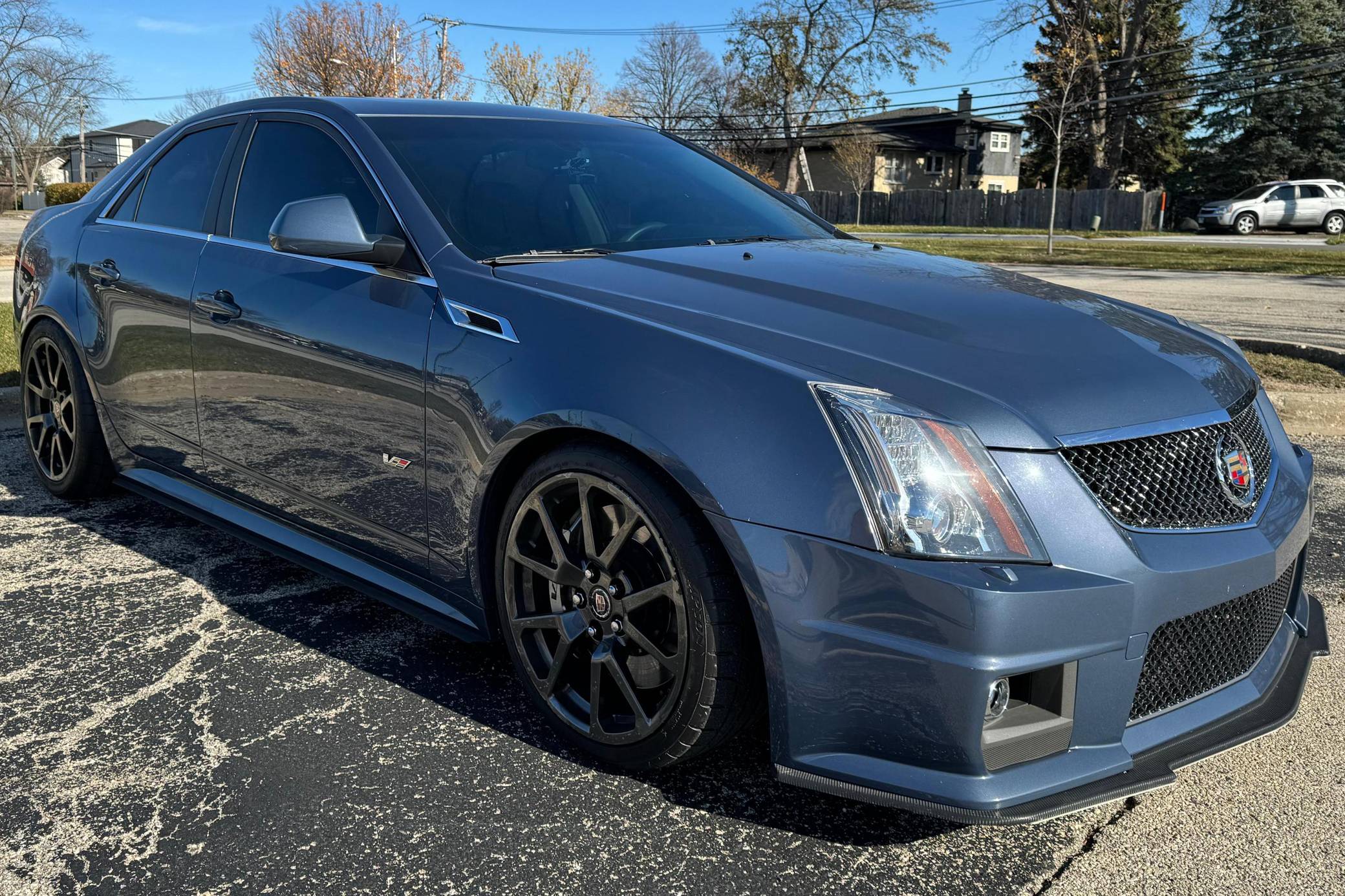
The 2013 Cadillac CTS-V sedan remains a definitive benchmark for American performance, blending a 556-horsepower supercharged LSA V8 with a sophisticated Magnetic Ride Control suspension. As a "super sedan," it offers the rare combination of track-ready performance and four-door practicality, making it a highly sought-after modern classic in 2026 for enthusiasts who refuse to compromise on utility.
The Heart of the Beast: The Supercharged 6.2L LSA V8
The core identity of the 2013 CTS-V sedan is defined by its engine. Under the hood sits a 6.2-liter LSA V8, a powerhouse derived from the Corvette ZR1’s LS9 engine. While the LS9 utilized a larger supercharger and dry-sump oiling, the LSA was optimized for the sedan's requirements, delivering 556 horsepower and 551 lb-ft of torque.
This power is delivered via a 1.9-liter Eaton Twin Vortices Series (TVS) supercharger. Unlike older supercharger designs that struggled with heat soak and parasitic loss, the TVS design features four-lobe rotors that improve thermal efficiency and airflow. For the driver, this translates to immediate, linear power delivery. There is no "turbo lag" here; the torque is available almost from idle, allowing the heavy sedan to lung forward with a ferocity that rivals modern electric vehicles, but with a visceral mechanical soundtrack that only an American V8 can provide.
In 2026, this engine is particularly praised for its "overbuilt" nature. The LSA features a cast-aluminum block, six-bolt main bearing caps, and forged steel connecting rods. This robust internal construction makes it a favorite for the aftermarket community, as the engine can reliably handle significantly more boost than the factory setting with relatively minor modifications to the cooling system and fuel injectors.
Performance Dynamics: More Than Just Straight-Line Speed
While the raw power of the 2013 CTS-V is impressive, its ability to handle corners is what truly set it apart from previous American muscle cars. This was the era where Cadillac decided to compete directly with the BMW M5 and Mercedes-Benz E63 AMG on the Nürburgring, and the hardware reflects that ambition.
Magnetic Ride Control (MRC)
The 2013 model features the second generation of Cadillac’s Magnetic Ride Control. This system uses dampers filled with magneto-rheological fluid—a liquid infused with iron particles. By applying an electromagnetic charge, the car can change the viscosity of the fluid (and thus the stiffness of the suspension) in milliseconds. In "Tour" mode, the CTS-V absorbs road imperfections like a traditional luxury cruiser. In "Sport" mode, the suspension firms up to minimize body roll and maximize mechanical grip during aggressive cornering.
Braking and Traction
Stopping a 4,200-pound sedan requires immense thermal capacity. Cadillac equipped the 2013 CTS-V with a high-performance Brembo braking system. The front features six-piston calipers clamping down on 15-inch ventilated rotors, while the rear utilizes four-piston calipers. This setup provides consistent pedal feel even under heavy track use. Additionally, the Performance Traction Management (PTM) system offers five different modes, ranging from wet weather safety to a full track mode that allows for controlled slides while still providing a safety net for the driver.
Practicality: The Daily Driver Reality
The "V" in CTS-V stands for performance, but the "CTS" foundation ensures that the vehicle remains a functional sedan. This dual-purpose nature is why the 2013 model is still highly relevant in 2026.
Interior Space and Comfort
Inside, the CTS-V offers a cabin that was, for its time, the pinnacle of Cadillac luxury. The most critical interior option for any buyer is the Recaro performance seats. These 14-way adjustable seats feature pneumatic bolsters that can be tightened to hold the driver in place during high-G cornering or loosened for long-distance highway cruising.
The sedan configuration provides legitimate seating for five adults, though four is the more comfortable reality for longer trips. Unlike its coupe sibling, which suffers from limited rear headroom and difficult ingress, the sedan offers standard rear doors and enough legroom for average-sized adults. This makes it a viable "one-car solution" for an enthusiast with a family.
Cargo and Utility
The trunk provides approximately 13.6 cubic feet of space. While not class-leading, it is deep and wide enough to accommodate several suitcases or a full set of golf clubs. The rear seats also feature a pass-through for longer items like skis. In the context of 2026, where many modern performance cars have sacrificed trunk space for hybrid batteries or complex aerodynamic venting, the CTS-V’s traditional layout is refreshingly functional.
2013 CTS-V Sedan Technical Specifications
The following table summarizes the key technical data for the 2013 CTS-V sedan, providing a snapshot of its performance capabilities.
| Feature | Specification |
|---|---|
| Engine Type | 6.2L Supercharged LSA V8 |
| Horsepower | 556 hp @ 6,100 rpm |
| Torque | 551 lb-ft @ 3,800 rpm |
| Transmission | 6-speed Manual (TR-6060) or 6-speed Auto (6L90) |
| 0-60 MPH | 3.9 Seconds (Automatic) / 4.0 Seconds (Manual) |
| Top Speed | 191 MPH (Manual) / 175 MPH (Automatic) |
| Braking (60-0 mph) | 110 feet |
| Curb Weight | 4,222 lbs |
| Fuel Economy (EPA) | 12 City / 18 Highway (14 Combined) |
| Trunk Volume | 13.6 Cubic Feet |
Ownership in 2026: Maintenance and Reliability
Purchasing or maintaining a 2013 CTS-V in 2026 requires an understanding of its specific mechanical needs. While the LSA engine is famously reliable, the surrounding components are high-performance parts that command premium prices.
- Magnetic Ride Control Replacement: The MRC shocks are prone to leaking over time. Because of the specialized fluid and electronics involved, replacing a full set of these dampers can be expensive, often costing several thousand dollars. Some owners in the 2020s have opted for traditional coilover conversions, but this sacrifices the car’s dual-mode personality.
- Supercharger Isolator Rattle: A common issue with the LSA engine is a rattling sound from the supercharger at idle, caused by a spring-loaded isolator. Many units were fixed under warranty with a solid isolator, but it is a point of inspection for any used buyer.
- Fuel Consumption: It must be noted that the CTS-V is not an economical vehicle. With a combined EPA rating of 14 MPG, and real-world numbers often lower during spirited driving, fuel costs are a significant part of the ownership experience. In 2026, this is often viewed as the "tax" paid for the unfiltered V8 experience.
- Tires and Brakes: Due to the vehicle's weight and power, it consumes rear tires and brake pads rapidly if driven aggressively. Replacing the large Brembo rotors is a standard maintenance task that costs significantly more than it would on a standard CTS.
The 2013 Model Year Significance
The 2013 model year represents the penultimate year of the second-generation (V2) CTS-V. By this time, Cadillac had ironed out most of the early production glitches found in the 2009-2010 models. It was also the era before the CTS grew significantly in size for the third generation. Many enthusiasts prefer the V2 sedan because it feels more compact and agile than the 2016+ V3 models, despite having slightly less power.
Furthermore, 2013 was one of the last years you could pair a high-output American V8 with a traditional three-pedal manual transmission in a luxury sedan body. As manual transmissions have almost entirely vanished from the luxury landscape by 2026, the 6-speed TR-6060 manual versions of the 2013 CTS-V have seen a significant surge in collector value.
Frequently Asked Questions
Is the 2013 CTS-V reliable as a high-mileage daily driver?
The 6.2L LSA engine is extremely durable, often reaching 150,000 miles or more without major internal failure if maintained. However, "reliability" in a CTS-V context also includes the electronics and suspension. Owners should expect higher-than-average costs for wear-and-tear items like brakes, tires, and the Magnetic Ride dampers.
What is the difference between the 2013 and newer CTS-V models?
The 2013 (V2) uses the 556-hp LSA engine and the Sigma II platform. The 2016-2019 (V3) models moved to the Alpha platform, utilized a 640-hp LT4 engine, and dropped the manual transmission option entirely. The 2013 model is often considered more "analog" and easier for hobbyists to work on.
Does the 2013 CTS-V have modern safety features?
For its time, it was well-equipped. It includes StabiliTrak electronic stability control, multiple airbags, and high-performance ABS. However, it lacks 2026-standard features like adaptive cruise control, lane-keep assist, or automatic emergency braking. It is a driver-focused car that relies on the operator for primary safety.
How does the fuel economy impact its use in 2026?
With a 12-14 MPG average, the 2013 CTS-V is expensive to operate as a primary commuter. Most owners in 2026 treat it as a "weekend" car or a secondary vehicle. Its 18-gallon fuel tank provides a range of only about 250 miles in mixed driving, necessitating frequent stops.
Are parts still available for the 2013 CTS-V?
Since the LSA engine was used in various GM products (including the Camaro ZL1) and the CTS was a high-volume car, mechanical parts are widely available. However, V-specific body panels and interior trim pieces are becoming more difficult to find and expensive to source through specialty recyclers.
Final Recommendation
The 2013 Cadillac CTS-V sedan remains a premier choice for those seeking a "wolf in sheep’s clothing." It provides the blistering performance of a supercar with the unassuming silhouette of a luxury four-door. For buyers in 2026, the recommendation is to seek out a well-documented example with the Recaro seat package. If you value driver engagement above all else, the rare 6-speed manual is the version to buy, as it represents a peak in the "analog" super sedan era that is unlikely to ever be replicated in the age of electrification. Prioritize cars with a clear history of Magnetic Ride Control maintenance to ensure the vehicle retains its signature balance of power and poise.