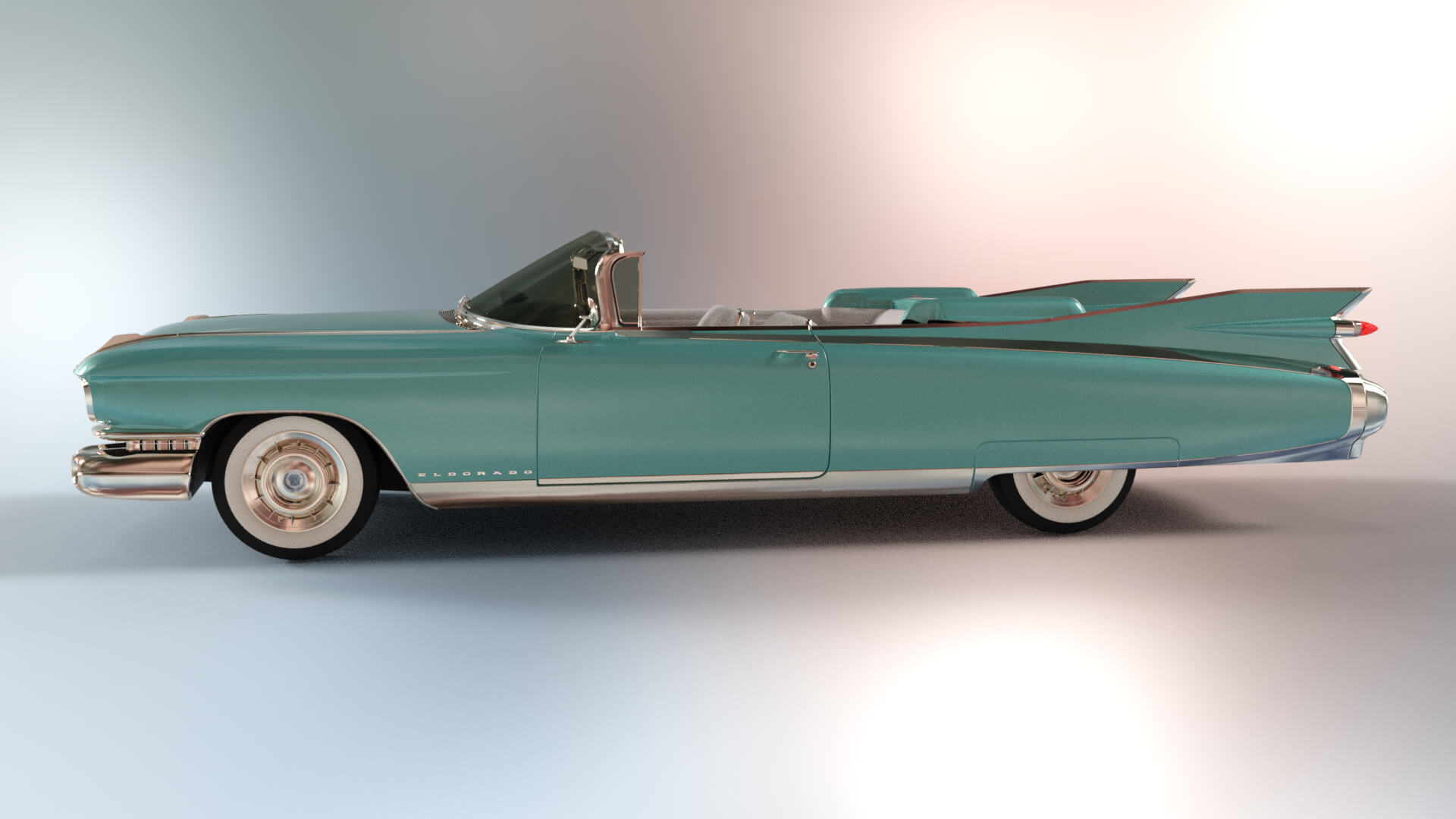
The 1959 Cadillac Series 62 Biarritz represents the absolute peak of 1950s American automotive design, characterized by its iconic 42-inch tall tailfins, bullet-style taillamps, and massive panoramic windshield. As one of the most recognizable and sought-after classic convertibles in automotive history, it encapsulates the post-war optimism, industrial might, and flamboyant styling of the Eisenhower era, remaining a prized centerpiece for collectors worldwide.
Introduction to the 1959 Cadillac Biarritz
When discussing the pantheon of American automotive design, few vehicles evoke the immediate recognition, awe, and cultural resonance of the 1959 Cadillac Series 62 Biarritz convertible. The late 1950s was a period of unbridled styling expression, where Detroit designers drew heavy inspiration from the aerospace industry and the space race. Spearheaded by General Motors' legendary styling chief Harley Earl—whose final full year of design oversight was 1959—the Cadillac division produced a vehicle that pushed aesthetic boundaries to their absolute limits.
The Biarritz nameplate, denoting Cadillac's ultra-luxurious convertible variant, stood at the very top of the brand's prestige hierarchy. With a production run that was strictly limited compared to standard sedans, the '59 Biarritz was both a status symbol for the elite and a rolling sculpture. Today, examining this automotive icon requires looking past the superficial flashiness to understand its engineering, its historical context, and the enduring legacy that commands six-figure valuations in the modern collector car market.
The Design Revolution: Harley Earl's Swan Song and the 1959 Tailfins
The defining visual characteristic of the 1959 Cadillac Biarritz is, without question, its gargantuan tailfins. Rising 42 inches off the ground, these fins incorporated dual bullet-shaped taillights—often referred to as "bullet" or "torpedo" lamps—that became a signature element of late-fifties automotive styling. This design feature was not merely decorative; it was a deliberate attempt to mimic the swept-back wings and jet exhaust nozzles of modern military aircraft.
Harley Earl understood that the American public craved excitement and visible progress on the highway. Under his guidance, the 1959 Cadillac underwent a complete sheet-metal redesign from the previous year's models. The front end featured a dual-bullet bumper guard setup, expansive chrome grilles, and dual headlamps housed beneath sweeping brow lines. The side profile was accentuated by clean slab-sided body panels, accented by subtle chrome spears and massive wheel arch skirts.
The convertible top mechanism itself was an engineering feat of the era. Fully power-operated, the heavy fabric top folded neatly beneath a flush-fitting metal boot cover, preserving the clean, unbroken beltline of the car when open. This obsession with uninterrupted lines and extravagant chrome ornamentation made the Biarritz an undeniable statement piece, capturing the essence of an era when bigger and bolder equated to better.
Powertrain, Performance, and Engineering Specifications
Beneath the sweeping hood of the 1959 Cadillac Biarritz lay a mechanical package designed to haul nearly 5,000 pounds of Detroit steel with effortless grace. Powering the convertible was a massive 390 cubic-inch (6.4-liter) overhead-valve V8 engine equipped with a single four-barrel carburetor, factory-rated at 325 horsepower and an immense 430 lb-ft of torque. For drivers seeking even greater performance, an optional triple-carburetor ("Tri-Power") setup raised output to 345 horsepower, though this option was rare and is highly coveted by contemporary purists.
Routing power to the rear wheels was a Hydra-Matic four-speed automatic transmission. While modern drivers are accustomed to seamless, multi-speed transmissions, the Hydra-Matic of this era was renowned for its durability and firm, positive shifts, which matched the heavy-duty nature of the car's powertrain.
| Specification | Detail |
|---|---|
| Engine Type | 390 cubic-inch (6.4L) OHV V8 |
| Horsepower | 325 hp @ 4,800 rpm (Standard) / 345 hp (Tri-Power) |
| Torque | 430 lb-ft @ 3,100 rpm |
| Transmission | 4-speed Hydra-Matic automatic |
| Wheelbase | 130.0 inches |
| Curb Weight | Approx. 4,940 lbs |
| Original Base Price | $5,455 USD (approximate) |
The chassis utilized a tubular X-member frame design introduced by Cadillac for the 1957 model year, which provided exceptional torsional rigidity for an open-top convertible. Suspension duties were handled by unequal-length control arms and coil springs up front, paired with a live axle and multi-leaf springs in the rear. While air suspension ("Airmatic Ride") was offered as an option on some 1959 Cadillacs, many owners subsequently converted their vehicles to conventional coil springs due to reliability issues with the complex air bladders and compressors of the period. Power steering and power-assisted drum brakes were standard equipment, essential for maneuvering a vehicle that spanned over 220 inches in total length.
Interior Luxury and Technological Appointments
Stepping inside a 1959 Cadillac Biarritz reveals an interior designed to mimic a high-end parlor or a private aircraft cockpit. Cadillac marketed the vehicle not just as transportation, but as a mobile sanctuary of comfort. The dashboard featured an expansive, wrap-around instrument cluster with a sweeping speedometer and auxiliary gauges housed beneath a padded eyebrow dash.
Upholstery options for the Biarritz were among the most opulent in the industry. Standard seating combined genuine leather bolt inserts with metallic-threaded nylon fabrics, while full leather upholstery was available as an upgrade. The front seat was a six-way power-adjustable bench seat, and occupants benefited from standard amenities that were revolutionary for the late 1950s.
Notable luxury and convenience features included:
- Autronic Eye: An automatic headlight dimmer system that sensed oncoming traffic and dipped the high beams automatically.
- Guide-Matic Power Headlamp Control: Advanced lighting automation for night driving.
- Power Windows and Vent Windows: Standard electrical controls for all side glass.
- E-Z-Eye Tinted Glass: Reduced solar heat gain through the panoramic windshield and side windows.
- Signal-Seeking Radio: A vacuum-tube AM radio equipped with a foot switch to cycle through receivable broadcast frequencies.
Despite these advanced conveniences, servicing these electrical systems today requires specialized knowledge. The complex circuitry of mid-century power accessories, vacuum-operated trunk releases, and intricate dashboard wiring harnesses represent common restoration hurdles for modern hobbyists.
Production Numbers, Rarity, and Market Valuation
Due to their high cost of entry and specialized status, convertibles were produced in much smaller quantities than their hardtop and sedan counterparts. For the 1959 model year, Cadillac manufactured approximately 1,320 units of the Series 62 Biarritz convertible. This limited production run ensures that surviving examples are fiercely contested whenever they appear on the open market.
In the collector car market, values fluctuate based on historical authenticity, restoration quality, and mechanical sorting. A matching-numbers drivetrain, factory-correct colors, and functional original accessories can command significant price premiums.
- Barn Find / Project Car ($50,000 - $90,000)
- Older Restoration ($120,000 - $200,000)
- Concours-Level Correct ($250,000 - $350,000+)
Evaluating a potential purchase requires meticulous scrutiny. Because of the vast amounts of stainless steel trim, zinc-diecast grille components, and massive chrome bumpers fitted to the 1959 models, cosmetic restoration alone can easily exceed the market value of lesser vehicles. Sourcing replacement chrome plating or rare interior trim pieces often presents a formidable financial commitment for restorers.
Frequently Asked Questions
How many 1959 Cadillac Biarritz convertibles were built?
Cadillac produced approximately 1,320 units of the Series 62 Biarritz convertible for the 1959 model year. Because convertibles were more expensive and less practical than sedans or hardtops, original production figures were low, making surviving examples rare and highly prized by collectors today.
What is the difference between a Cadillac Eldorado Biarritz and a Series 62 Biarritz?
For the 1959 model year, Cadillac consolidated its top-tier styling. The Eldorado Biarritz was a distinct, highly-trimmed model that featured standard triple carburetors, specialized side trim, distinct rear styling accents, and air suspension as standard equipment, whereas the standard Series 62 Biarritz offered slightly simpler trim and a single four-barrel carburetor by default.
What fuel economy does a 1959 Cadillac Biarritz achieve?
With a 390-cubic-inch V8 engine, a curb weight approaching 5,000 pounds, and a three-speed automatic transmission, the 1959 Biarritz typically achieves between 8 and 12 miles per gallon under normal driving conditions. Fuel efficiency is rarely a primary concern for collectors of classic luxury land yachts.
Are replacement parts difficult to find for a 1959 Cadillac?
While mechanical components for the 390 V8 engine and transmission are widely available through specialized vintage parts suppliers, exterior body panels, specific chrome trim pieces, and unique interior hardware can be exceedingly difficult and expensive to source, often requiring scavenging from parts cars or custom fabrication.
What should I look for when inspecting a 1959 Cadillac Biarritz for purchase?
Buyers must prioritize inspecting the frame for structural rust, particularly along the X-member and lower floor pans where moisture can accumulate. Additionally, verify the completeness and condition of the exterior chrome and pot-metal trim, as replating or replacing these parts represents the single largest expense in a restoration project.
Conclusion and Next Actions
The 1959 Cadillac Biarritz remains an undisputed masterpiece of automotive sculpture, capturing a fleeting moment in history when design knew no bounds. Owning, driving, or restoring one of these classic convertibles demands an appreciation for mid-century craftsmanship and an understanding of vintage mechanical maintenance. For prospective buyers or enthusiasts, the next logical step involves connecting with marque-specific registries, such as the Cadillac & LaSalle Club, to inspect verified examples, review authenticity guides, and connect with experienced restorers before acquiring or committing to a restoration project.