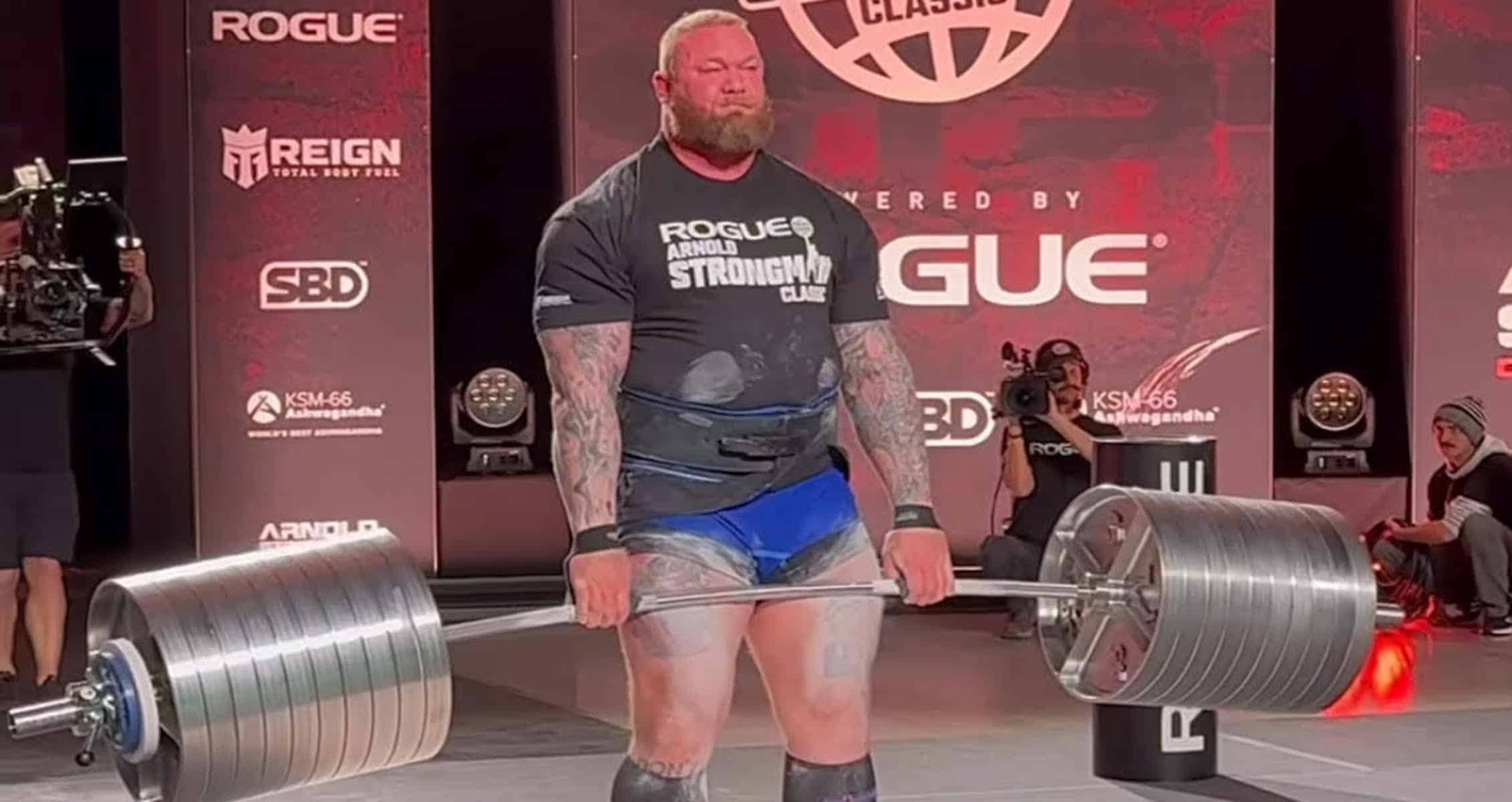
Pulling a 1000 pound deadlift is an elite athletic milestone achieved by only a tiny fraction of elite powerlifters globally, requiring years of meticulous programming, immense structural reinforcement, and precise biomechanical efficiency under heavy loads.
Achieving a 1,000-pound deadlift is one of the most formidable milestones in the history of human strength sports. When a barbell loaded to half a ton breaks away from the platform and is successfully locked out, it represents the absolute pinnacle of human power generation, neural drive, and connective tissue resilience. While lifting heavy weights is common in commercial gym environments, stepping into the four-figure club requires a level of physiological commitment and genetic alignment that separates elite competitors from everyday gym-goers.
The journey to this monumental benchmark is rarely linear. It demands a hyper-focused approach to training variables, injury mitigation, equipment optimization, and nutritional fueling. This guide examines the anatomical realities, technical blueprints, and programming frameworks required to safely approach and execute a 1,000-pound deadlift.
The Anatomy and Biomechanics of Ultra-Heavy Pulls
Lifting 1,000 pounds or more is not simply a matter of pulling harder; it requires complete mastery of human leverage and force transfer. As the load increases, the margin for mechanical error shrinks to zero. A millimeter of misplacement in foot stance or bar path can result in missed attempts or severe injury.
The Starting Position and Spinal Integrity
The lift begins long before the plates leave the floor. To move massive loads, the lifter must establish an optimal mechanical starting position. Whether utilizing a conventional stance or a sumo stance, the primary objective is to align the center of mass of the barbell directly over the mid-foot.
For conventional pullers, this means setting the hips higher to engage the posterior chain, while sumo pullers drop their hips lower to utilize hip adductors and quadriceps for initial leg drive. In both styles, maintaining a neutral spine is non-negotiable. Spinal flexion under a 1,000-pound load risks catastrophic disc herniation. Lifters must master bracing through the Valsalva maneuver—inhaling deeply into the diaphragm and pushing outward against a rigid weightlifting belt to create a 360-degree cylinder of internal pressure.
Joint Angles and Leverage Optimization
At sub-maximal weights, lifters can often muscle through poor positioning. At 1,000 pounds, physics dictates success or failure. The shoulder blades must remain directly over or slightly ahead of the bar, and the arms must act as unyielding cables transmitting force from the traps and lats down to the floor.
The transition from the floor to the knees (the pull) relies heavily on leg and hip extension, while the lockout phase tests upper-back, glute, and erector spinae strength. Weakness in any single link of this kinematic chain will cause the lift to stall out.
Prerequisites and Physiological Baseline
Before an athlete can realistically target a 1,000-pound deadlift, their physical foundation must be exceptionally developed. Trying to force this milestone prematurely is a primary driver of chronic injury and burnout.
Bodyweight and Weight Class Context
Historically, the vast majority of official 1,000-pound deadlifts have been executed by heavyweights and super-heavyweight powerlifters or strongmen—typically athletes weighing well over 240 pounds, often exceeding 300 pounds. While there are extraordinary outliers in lighter weight classes who pull unprecedented multiples of their body weight, absolute mass provides a distinct biomechanical advantage. Greater body weight increases leverage, shortens relative range of motion via increased girth, and provides structural padding around joints.
Foundational Strength Standards
An athlete does not wake up and pull 1,000 pounds after hitting a 500-pound max. The pathway involves decades of progressive overload. Generally, an athlete should display exceptional auxiliary strength metrics before chasing this specific number.
| Lift Category | Minimum Foundation Benchmark | Elite 1000-Pound Club Standard |
|---|---|---|
| Raw Squat | 500–600 lbs | 700–900+ lbs |
| Bench Press | 350–450 lbs | 500–600+ lbs |
| Deficit Deadlift | 80% of max conventional | 85–90% of max conventional |
| Barbell Row | 315 lbs for strict reps | 455+ lbs for explosive reps |
These benchmarks illustrate that the entire muscular system—not just the lower back and hamstrings—must be exceptionally robust to support the skeletal load of a 1,000-pound barbell.
Programming and Training Methodologies
Training for a 1,000-pound deadlift requires a distinct shift from standard bodybuilding hypertrophy routines or general fitness programming. Because the central nervous system (CNS) takes weeks to recover from maximal loading, high-frequency, maximal-effort pulling is counterproductive.
Periodization and Load Management
Elite pullers often utilize conjugate systems, undulating periodization, or block periodization. Instead of pulling heavy every week, training blocks are divided into specific phases:
- Hypertrophy/Accumulation Phase: Building muscle cross-sectional area in the lats, glutes, hamstrings, and upper back using moderate weights and higher repetition ranges.
- Strength/Intensification Phase: Transitioning to heavier loads (75% to 85% of 1RM) with lower rep ranges, focusing on bar speed and mechanical efficiency.
- Peaking Phase: Introducing supramaximal holds, partial range-of-motion pulls (such as rack pulls from below the knee), and carefully timed heavy singles leading up to a competition or testing day.
Accessory Work for Weak Point Elimination
Every lifter has a specific point where their deadlift fails—either off the floor or at the lockout. Targeted accessory movements are prescribed to fix these vulnerabilities:
- For Off-the-Floor Failures: Deficit deadlifts (standing on a 1- to 2-inch platform) and paused deadlifts (pausing 2 inches off the floor) build starting strength and off-the-floor acceleration.
- For Lockout Failures: Block pulls, Romanian deadlifts (RDLs), and heavy barbell hip thrusts reinforce glute engagement and upper-back rigidity.
- For Grip Limitations: Farmers walks, thick-bar training, and heavy static holds ensure the hands do not open up under the load.
Equipment and Gear Considerations
Lifting 1,000 pounds raw requires specialized equipment designed to protect the athlete and maximize force transfer, while equipped lifting utilizes multi-ply canvas suits to rebound weight through the range of motion.
Raw vs. Equipped Lifting
In modern powerlifting federations, the 1,000-pound barrier has been broken in both raw (sleeves and belt) and equipped categories.
- Raw Lifting: Relies entirely on human musculature, utilizing an approved powerlifting belt, lifting shoes (or deadlift slippers), and chalk. Straps are generally prohibited in sanctioned powerlifting competitions but are frequently used in strongman events and off-season training to save the hands and nervous system.
- Equipped Lifting: Utilizes multi-ply polyester or canvas deadlift suits and briefs. These suits act like external springs, storing massive amounts of elastic potential energy as the lifter descends, assisting significantly at the lockout.
Chalk, Belts, and Footwear
Even minor equipment choices matter at this level. High-grade magnesium carbonate chalk is essential to prevent the hands from slipping against knurled steel. A stiff, high-density leather belt (typically 10mm or 13mm) provides the necessary abdominal wall feedback to brace safely. Footwear is chosen based on personal leverage: flat-soled shoes or deadlift slippers minimize the distance the bar must travel, whereas some lifters prefer specialized shoes with subtle metatarsal support.
Injury Prevention and Risk Mitigation
Attempting a 1,000-pound deadlift places extreme shear and compressive stress on the lumbar spine, hips, knees, and central nervous system. Ignoring recovery protocols will inevitably lead to injury.
Managing CNS Fatigue
The nervous system does not distinguish between physical weight and mental stress. Heavy pulling taxes the central nervous system heavily. Lifters pushing toward four figures must prioritize sleep, caloric intake, and deload weeks. Overtraining manifests as persistent joint aching, plummeting bar speed, irritability, and insomnia.
Common Injury Points and Rehab
The most frequent injuries associated with ultra-heavy deadlifts include lumbar disc herniations, hamstring tears at the ischial tuberosity, and biceps tendon tears (particularly prevalent when utilizing a mixed grip without proper arm positioning). To mitigate biceps tears, many elite lifters utilize a hook grip or transition to specialized strongman deadlift bars that feature more whip and knurling. When a minor tweak occurs, active recovery, blood-flow restriction (BFR) training, and professional physical therapy are required long before returning to maximal loads.
Nutritional and Recovery Protocols
Fueling a body capable of moving 1,000 pounds requires substantial energy intake. Because these lifters carry significant muscle mass, caloric maintenance or a slight caloric surplus is typically necessary to support continuous tissue repair.
Macronutrient Distribution
- Protein: Essential for muscle protein synthesis and connective tissue repair, consumption typically ranges from 1 to 1.5 grams per pound of body weight.
- Carbohydrates: Crucial for replenishing muscle glycogen stores depleted during intense, central-nervous-system-heavy training sessions.
- Fats: Necessary for optimal hormonal regulation, particularly maintaining natural testosterone and growth hormone production.
Frequently Asked Questions
How many people have deadlifted 1,000 pounds?
While exact numbers fluctuate as the sport grows, only a select group of elite powerlifters and strongmen have officially deadlifted 1,000 pounds or more in sanctioned competition or under strict gym verification standards. Pioneers like Andy Bolton, Benni Magnusson, Eddie Hall, and Hafthor Bjornsson have expanded the boundaries of what was once thought impossible.
Is a sumo or conventional deadlift better for hitting 1,000 pounds?
Both styles have produced 1,000-pound lifts. Conventional deadlifts rely heavily on posterior chain and lower back strength with a longer range of motion, while sumo deadlifts require immense hip mobility and adductor strength with a shortened range of motion. The choice depends entirely on the lifter's skeletal proportions and anthropometry.
Can you deadlift 1,000 pounds without a belt?
While beltless deadlifting builds exceptional core strength, pulling 1,000 pounds without a supportive lifting belt is exceedingly rare. Belts provide crucial intra-abdominal pressure that protects the spine from extreme shear forces under maximal loads.
How long does it take to reach a 1,000-pound deadlift?
For an individual with elite genetic predispositions, reaching a 1,000-pound deadlift typically requires 10 to 15 years of dedicated, highly structured strength training, flawless nutrition, and an injury-free athletic trajectory.
Next Actions and Training Recommendations
If your long-term athletic trajectory is set toward elite pulling milestones, start by evaluating your current technical baseline and structural imbalances. Consult with experienced strength coaches who specialize in advanced powerlifting programming, prioritize video analysis to refine your bar path, and ensure your recovery protocols match the intensity of your training sessions. Never sacrifice structural integrity for short-term ego lifting.