The 1980s represented a golden age of network television, where charismatic actors redefined fashion, catchphrases, and societal norms. From sleek action stars to groundbreaking sitcom legends, figures like Don Johnson, Michael J. Fox, and Betty White transformed small-screen characters into global cultural phenomena whose influence persists across modern entertainment.
How 1980s Television Redefined Global Pop Culture
During the 1980s, television transformed from a passive living-room appliance into the primary driver of global popular culture. The decade introduced cinematic production values, soundtrack-driven storytelling, and character archetypes that challenged traditional social dynamics. Prime-time network series routinely captured tens of millions of simultaneous viewers, creating shared cultural moments that influenced real-world wardrobe choices, musical tastes, consumer electronics, and everyday vocabulary.
At the center of this cultural shift were individual actors whose charisma transcended their scripts. Television stars of the 1980s were not merely performers; they were trendsetters and media icons. They bridged the gap between traditional broadcast theater and modern multimedia celebrity, laying the structural groundwork for high-concept television, genre-bending dramedies, and serialized character studies that remain influential today.
10 Legendary 80s TV Actors and Their Lasting Impact
1. Don Johnson – Miami Vice and the Visual Revolution of the 80s
As Detective James "Sonny" Crockett on NBC's Miami Vice (1984–1989), Don Johnson did more than play a vice cop—he dictated global mens fashion and transformed television aesthetics. Partnered with Philip Michael Thomas (Ricardo Tubbs), Johnson portrayed a brooding, undercover detective operating out of a Ferrari Daytona and later a Testarossa along the pastel backdrop of South Beach.
Johnson's signature style—unconstructed Italian sport coats worn over pastel T-shirts, white linen trousers, sockless loafers, designer sunglasses, and permanent three-day designer stubble—became an instant international fashion craze. Miami Vice was explicitly designed around a visual and musical pacing influenced by MTV, integrating contemporary rock and synthwave music directly into the narrative. Johnson's portrayal established the slick, music-driven police procedural template and sparked a massive tourism and real-estate boom for Miami's Art Deco district.
2. Michael J. Fox – Family Ties and the Archetype of 80s Ambition
Michael J. Fox captured the economic and political zeitgeist of the 1980s through his portrayal of Alex P. Keaton on the hit NBC sitcom Family Ties (1982–1989). Playing a hyper-conservative, suit-wearing, Wall Street-obsessed teenager raised by former 1960s hippie parents (played by Michael Gross and Meredith Baxter), Fox turned what was written as a supporting role into the engine of the show.
Fox won three consecutive Primetime Emmy Awards for Outstanding Lead Actor in a Comedy Series for his performance. Alex P. Keaton embodied the Reagan-era "Yuppie" ambition while remaining inherently likable through Fox's rapid-fire comedic timing, kinetic energy, and genuine warmth. His star power on the small screen immediately translated to big-screen dominance when he was cast as Marty McFly in Back to the Future (1985), solidifying Fox as one of the definitive pop-culture figures of the decade.
3. Tom Selleck – Magnum, P.I. and the Modern Action Hero Template
With his thick mustache, Detroit Tigers baseball cap, Hawaiian shirts, and red Ferrari 308 GTS, Tom Selleck redefined the television private investigator as Thomas Magnum on CBS's Magnum, P.I. (1980–1988). Set against the lush backdrop of Oahu, Hawaii, the show established Selleck as a leading prime-time sex symbol and a relatable action star.
Beyond the iconic wardrobe and casual charisma, Selleck's performance held deeper historical weight. Thomas Magnum was one of the first major fictional characters to portray a Vietnam War veteran in a positive, nuanced, and psychologically grounded light. Instead of relying solely on tough-guy tropes, Selleck infused Magnum with vulnerability, humor, and a strong sense of camaraderie with his military friends, fundamentally reshaping how American television addressed post-war identity.
4. Joan Collins – Dynasty and the Prime-Time Soap Opera Matriarch
When English actress Joan Collins joined ABC's Dynasty in its second season (1981) as Alexis Colby, the vengeful ex-wife of oil tycoon Blake Carrington, she catalyzed an immediate ratings explosion. Collins created the definitive 1980s prime-time villainess: glamorous, ruthless, fiercely independent, and uncompromisingly powerful.
Collins' performance defined the aesthetic of luxury and decadence that characterized 1980s television. Outfitted in high-fashion couture by costume designer Nolan Miller—complete with dramatic shoulder pads, wide-brimmed hats, and glittering jewelry—Alexis Colby made power dressing an international trend. Her legendary on-screen physical altercations with Linda Evans (Krystle Carrington) became appointment television, proving that a mature female actor could anchor an internationally lucrative prime-time drama.
5. Larry Hagman – Dallas and the Precursor to the Golden Age Antihero
Though CBS's Dallas premiered in 1978, Larry Hagman’s performance as the ruthless Texas oil baron J.R. Ewing dominated the pop-culture landscape of the 1980s. Hagman played the manipulative, smiling villain with infectious relish, converting J.R. Ewing into an internationally recognized symbol of corporate greed and strategic cunning.
The summer of 1980 was defined by the global phenomenon known as "Who shot J.R.?", following the dramatic Season 3 cliffhanger. When the mystery was resolved in November 1980, over 83 million viewers tuned in in the United States alone, setting international broadcasting records. Hagman's charismatic antihero directly paved the way for future complex television protagonists, establishing that audiences would eagerly root for a morally compromised main character if played with sufficient charm and conviction.
6. Ted Danson – Cheers and the Evolution of the Network Romantic Lead
Ted Danson anchored NBC’s critically acclaimed sitcom Cheers (1982–1993) for eleven seasons as Sam "Mayday" Malone, a suave, hair-obsessed, former relief pitcher for the Boston Red Sox who owned a neighborhood tavern. Danson balanced broad comedic vanity with underlying insecurity, making Sam Malone one of the most enduring figures in American television history.
The dynamic between Danson's blue-collar bartender and Shelley Long’s intellectual character, Diane Chambers, established the structural gold standard for television's "will-they-won't-they" romantic dynamics. Danson’s exceptional comic timing and ensemble leadership earned him 11 consecutive Emmy nominations for the role. His performance redefined the sitcom leading man, moving away from idealized father figures toward flaws, charm, and emotional growth within a workplace family.
7. Mr. T – The A-Team and the Birth of the Cross-Media Superstar
Born Laurence Tureaud, Mr. T emerged as one of the most recognizable media personalities in the world through his role as Sergeant First Class B.A. Baracus on NBC's The A-Team (1983–1987). Playing a former Special Forces soldier turned soldier of fortune with a fear of flying and a signature mohawk, gold chains, and tough-love demeanor, Mr. T became an immediate cultural phenomenon.
Mr. T leveraged his television role into an unprecedented cross-media empire, complete with animated series, lunchboxes, action figures, catchphrases ("I pity the fool!"), and high-profile public service campaigns. His unique personal style and positive messaging aimed at youth demonstrated how an 80s TV actor could build an enduring personal brand that extended far beyond traditional broadcast entertainment.
8. Bruce Willis – Moonlighting and the Reinvention of Fast-Talking Dramedy
Before becoming an international action film icon, Bruce Willis was launched into stardom alongside Cybill Shepherd on ABC's Moonlighting (1985–1989). Playing the quip-ready, fast-talking private detective David Addison Jr. opposite Shepherd’s polished Maddie Hayes, Willis brought an infectious, improvisational energy to the screen.
Moonlighting broke structural television boundaries by blending mystery, screwball comedy, musical sequences, and frequent fourth-wall breaks. Willis’ swaggering, witty performance revived classical 1930s dialogue styles for a modern 1980s audience. His charismatic TV work directly demonstrated his range and leading-man appeal, leading directly to his casting as John McClane in the 1988 action masterpiece Die Hard.
9. Betty White – The Golden Girls and Shattering Age Barriers in Prime Time
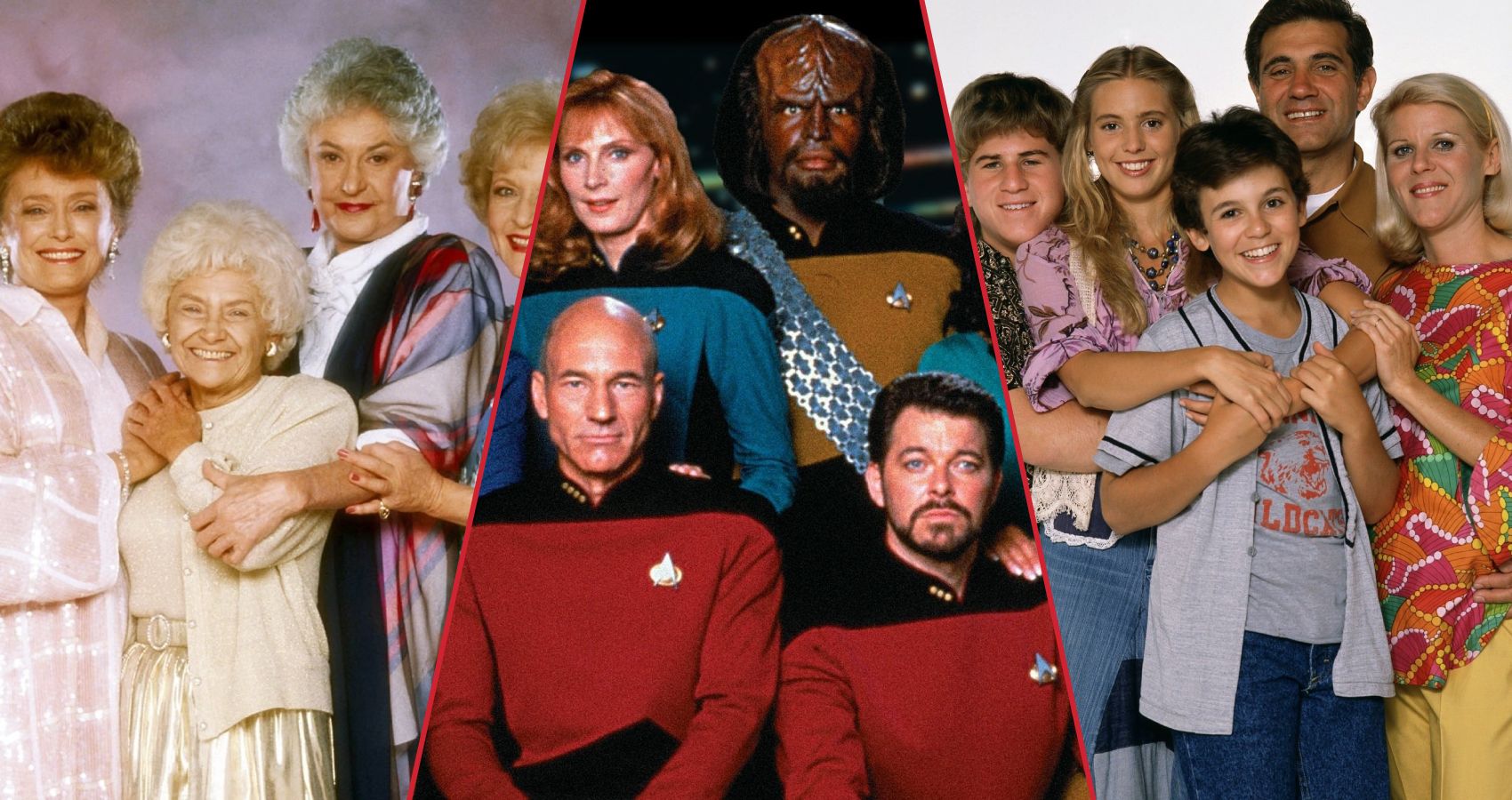
Betty White was already a veteran performer when she took on the role of the nave, optimistic Rose Nylund on NBC’s The Golden Girls (1985–1992). Set in Miami, the ensemble sitcom featuring White, Bea Arthur, Rue McClanahan, and Estelle Getty proved to network executives that a show focusing entirely on four mature, single women could dominate national ratings and achieve cultural dominance.
White’s brilliant deadpan delivery of Rose’s absurd "St. Olaf" childhood stories made her an indispensable comedic force on the show. Beyond the laughs, White and her co-stars used comedic storytelling to tackle previously taboo social issues, including aging, sexuality, grief, HIV/AIDS, and healthcare reform. Her work on The Golden Girls solidified her status as a national treasure and established a permanent blueprint for age-inclusive comedy programming.
10. David Hasselhoff – Knight Rider and Sci-Fi Pop Realism
David Hasselhoff became a global pop culture icon starring as Michael Knight in NBC’s action-adventure series Knight Rider (1982–1986). Playing a field agent for the Foundation for Law and Government operating alongside K.I.T.T.—an artificially intelligent, heavily armored, talking Pontiac Trans Am—Hasselhoff brought earnest charm and cool confidence to a high-concept sci-fi premise.
Hasselhoff’s black leather jackets, aviator sunglasses, and sleek aesthetics captivated international audiences, making Knight Rider a massive worldwide syndication success. His television popularity proved so enduring that it served as the springboard for his enormous international music career and his later starring role in Baywatch, establishing him as one of the most globally recognizable television figures of the late 20th century.
Comparative Analysis: Impact, Shows, and Cultural Legacy
The table below outlines how these iconic actors shaped television history, detailing their signature shows, defining cultural trends, and long-term legacy within media.
| Actor | Signature Character & Show | Defining Cultural Trend / Style | Long-Term Television Legacy |
|---|---|---|---|
| Don Johnson | Sonny Crockett (Miami Vice) | Pastel suit coats over T-shirts, stubble, synth-rock soundtracks | Established cinematic, music-driven police procedurals |
| Michael J. Fox | Alex P. Keaton (Family Ties) | Reagan-era yuppie ambition, suit-and-tie teens, sharp wit | Redefined the sitcom youth archetype; successful film crossover |
| Tom Selleck | Thomas Magnum (Magnum, P.I.) | Iconic mustache, Hawaiian shirts, Ferrari, relaxed action hero | Humanized Vietnam veterans; established modern TV P.I. template |
| Joan Collins | Alexis Colby (Dynasty) | Power dressing, shoulder pads, extravagant prime-time camp | Proven template for high-glamour, female-driven drama villains |
| Larry Hagman | J.R. Ewing (Dallas) | Stetsons, corporate ruthless ambition, global cliffhangers | Pioneer of the serialized broadcast TV antihero archetype |
| Ted Danson | Sam Malone (Cheers) | Romantic tension, working-class charm, ensemble leadership | Set the structural standard for sitcom "will-they-won't-they" chemistry |
| Mr. T | B.A. Baracus (The A-Team) | Gold chains, mohawk, catchphrases, youth empowerment | Pioneered modern multi-platform actor branding and merchandising |
| Bruce Willis | David Addison (Moonlighting) | Fourth-wall breaking, rapid-fire screwball banter | Proved TV dramedy leads could transition into elite movie stars |
| Betty White | Rose Nylund (The Golden Girls) | Naive deadpan delivery, absurd storytelling, ensemble warmth | Proved mature female casts could capture prime-time demographics |
| David Hasselhoff | Michael Knight (Knight Rider) | Leather jackets, high-tech automotive sci-fi adventure | Built international television syndication and crossover star power |
The Enduring Legacy of 80s TV Actors
The influence of 1980s television stars extends far into contemporary media. The narrative structures and character templates established during this era continue to inform modern television production:
- Aesthetic and Musical Integration: The visual style pioneered by Don Johnson in Miami Vice—where cinematic camera movements and commercial hit songs drive plot progression—remains a staple of modern prestige television dramas and streaming series.
- Complex Antihero Narratives: Larry Hagman’s depiction of J.R. Ewing proved that audiences would tune in faithfully for morally ambiguous leads, paving the direct historic path toward modern complex antiheroes in critically acclaimed dramas.
- Genre Hybridity and Meta-Humor: Bruce Willis' fourth-wall-breaking work in Moonlighting opened the door for self-referential comedy, high-concept dramedies, and stylistic experimentation in modern series.
- Demographic Expansion: Betty White and her co-stars demonstrated that compelling writing and expert acting transcend traditional youth-obsessed demographic constraints, leading directly to broader representation across broadcast networks and digital platforms.
How to Explore Classic 80s Television Today
For viewers looking to revisit these iconic performances or study the history of broadcast television, several avenues exist to access preserved and remastered content:
- Official Streaming Platforms: Many major broadcast series from the 1980s, including Cheers, Miami Vice, The Golden Girls, and Dallas, are available in HD or restored prints across official platforms such as Paramount+, Peacock, Hulu, and Amazon Prime Video.
- Physical Media and Remasters: Collectors can seek out official Blu-ray box sets from specialized home media publishers (such as Mill Creek Entertainment or Shout! Factory), which often restore original broadcast aspect ratios, color grading, and original musical licenses.
- Museum and Archival Resources: Organizations like the Paley Center for Media preserve historic television broadcasts, actor interviews, and panel discussions detailing the cultural impact of 1980s television programming.
- Academic and Historical Analysis: Media history books, such as those cataloged by the Pew Research Center on media consumption trends, offer deeper context into how 1980s network television shaped American public opinion and consumer behavior.
Frequently Asked Questions
Why was television in the 1980s so influential on global fashion and music?
During the 1980s, three major broadcast networks (NBC, CBS, ABC) commanded vast, concentrated audiences, allowing individual television shows to set national trends almost overnight. Series like Miami Vice worked directly with fashion houses and record labels to premiere current music and designer clothing lines, turning prime-time shows into weekly showcases for lifestyle aesthetics.
How did 80s prime-time TV actors influence modern antiheroes?
Actors like Larry Hagman (Dallas) demonstrated that lead characters did not need to be traditionally heroic to maintain high ratings. By playing J.R. Ewing with undeniable charm and humor, Hagman created a formula where audiences enjoyed watching strategic villainy, laying the historical groundwork for complex, morally grey television protagonists in later decades.
Which 1980s TV actor had the most successful transition to feature films?
Bruce Willis made one of the most successful jumps from television to film stardom in entertainment history. Leveraging the charm and rapid dialogue delivery showcased on Moonlighting, Willis was cast as John McClane in Die Hard (1988), which redefined the modern film action hero and launched a decades-long career as a top global box-office draw.
How did The Golden Girls change television representation for older actors?
Before The Golden Girls premiered in 1985, network executives largely assumed prime-time audiences were only interested in young or middle-aged leads. Betty White and her co-stars shattered this misconception by attracting massive ratings across all age demographics, proving that sharp writing and talent were more important to viewers than the age of the cast.
What made the "will-they-won't-they" trope popularized in 80s TV so lasting?
The romantic tension between Ted Danson and Shelley Long in Cheers (and Bruce Willis and Cybill Shepherd in Moonlighting) demonstrated how unresolved romantic dynamics could drive long-term character development and viewer engagement. Writers learned to carefully balance conflict, mutual respect, and comedic banter to keep audiences returning week after week.
Recommended Next Actions for Media Buffs
To fully appreciate how 1980s television actors shaped modern pop culture, start by analyzing pilot episodes alongside peak-season episodes of groundbreaking series like Miami Vice, Cheers, and Family Ties. Pay close attention to wardrobe, dialogue pacing, and how soundtrack integration evolved over the decade. Comparing these mid-80s network shows to early-80s television reveals the exact historical moment when American television shifted toward cinematic, youth-oriented, and fashion-conscious storytelling.