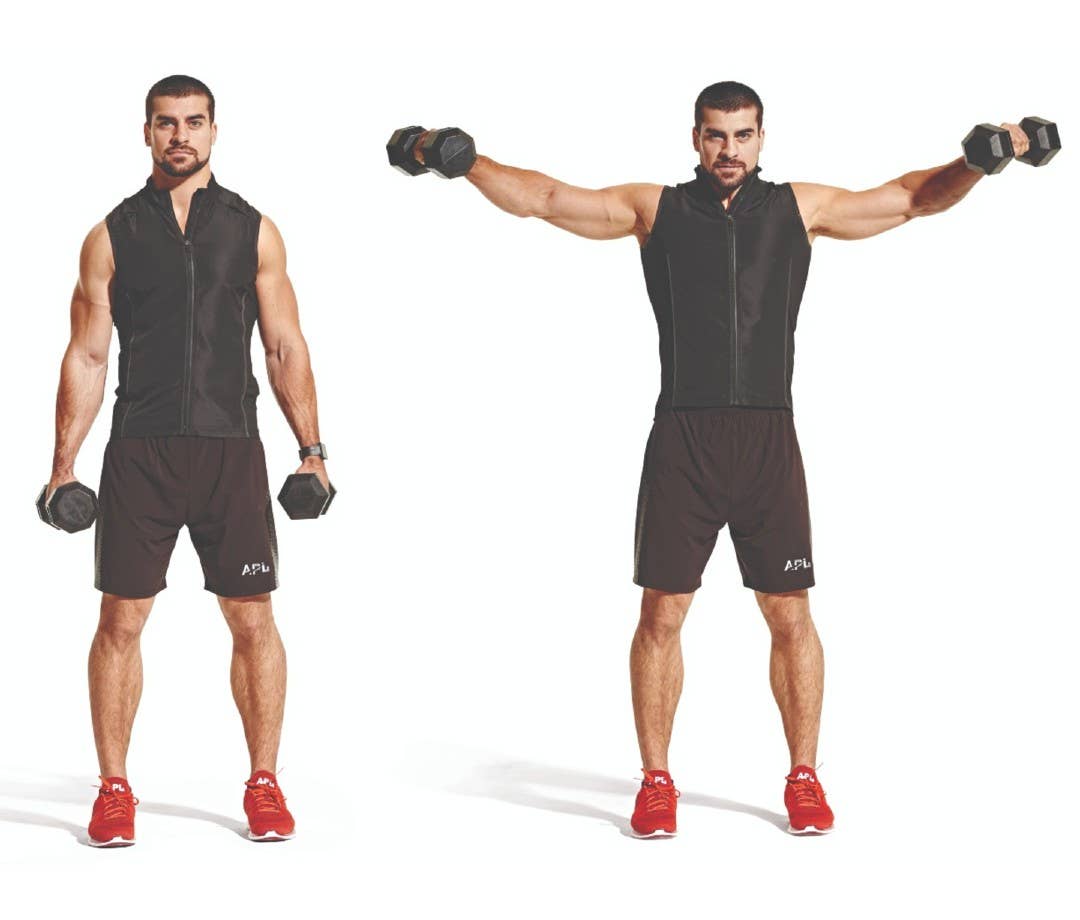
Building a classic V-taper physique requires a targeted training strategy focused on widening the upper back and shoulders while keeping the waist tight and lean. By prioritizing the lateral deltoids, latissimus dorsi, and upper chest while keeping body fat low and avoiding excessive oblique hypertrophy, you can construct the timeless proportions of classic bodybuilding.
Anatomy of the Classic V-Taper
The classic V-taper aesthetic popularized during the golden era of bodybuilding relies on visual illusion and structural balance. Rather than striving for raw size everywhere, a V-taper emphasizes key ratio markers: maximum broadness across the clavicles paired with a taper down to a trim midsection.
Understanding the primary target muscle groups and how they contribute to this silhouette ensures every movement in your routine serves a distinct structural purpose.
- Wide Lateral Deltoids
- Upper Chest
- Latissimus Dorsi
- Tapered Midsection
The Lateral Deltoids (Shoulder Width)
The deltoid complex consists of three heads: anterior (front), lateral (side), and posterior (rear). While heavy bench pressing and overhead pressing build the anterior deltoid, the lateral deltoid is primarily responsible for adding lateral breadth to your frame.
Building caps on the side of the shoulders stretches the top anchor point of the V-shape outward. Because the lateral deltoid is primarily an abductor of the arm in the frontal plane, isolating it requires precise lateral elevation movements rather than pure vertical pushing.
The Latissimus Dorsi and Teres Major (Back Width)
The latissimus dorsi (lats) are the largest muscles of the upper body, sweeping from the humerus down to the lumbar fascia. Broad lats create the dramatic flare beneath the armpits that forms the side boundaries of the upper torso.
Working alongside the lats is the teres major, often called "lats' little helper," which sits directly above the latissimus dorsi and adds upper back width just below the armpit. To maximize width, training must emphasize movements that pull the humerus toward the torso from an overhead position (vertical pulling) or from a high-to-low angle.
The Upper Chest (Clavicular Head)
A classic torso is incomplete without a full upper chest. The clavicular head of the pectoralis major sits directly beneath the collarbones.
Developing this upper region fills out the frame underneath the shoulders without adding excessive lower-chest bulk, which can create a drooping appearance and ruin the crisp, upward line of the taper. Incline pressing at low angles (15 to 30 degrees) targets this area precisely.
The Waistline: Obliques, Abs, and Transverse Abdominis
The bottom point of the V-taper relies on a narrow waist. This is achieved through two factors: maintaining a lower body fat percentage and training the core for control rather than sheer bulk.
Over-developing the external obliques through heavy side bends or high-resistance rotational work thickens the waistline, destroying the tapered illusion. Conversely, strengthening the transverse abdominis (TVA)—the deep muscular belt beneath the rectus abdominis—helps pull the abdominal wall tight, flattening the belly and narrowing the midsection.
Training Principles for the V-Taper Physique
Building an aesthetic frame requires balancing intensity, exercise selection, and fatigue management. Blindly lifting heavy without considering muscle activation can lead to overdeveloped traps or a blocky waist.
Progressive Overload and Mechanical Tension
Hypertrophy is primarily driven by mechanical tension—exerting force through a full range of motion under load over time. To ensure continuous growth:
- Record your working weights and repetitions.
- Strive to add weight, reps, or improve execution control (tempo, paused stretches) each week.
- Maintain a target proximity to failure of 1 to 3 Reps in Reserve (RIR) on major working sets.
Volume and Frequency Allocation
Muscles like the lateral deltoids and lats recover quickly compared to large compound leg movements. High-priority muscle groups benefit from being trained 2 to 3 times per week.
Allocating 10 to 16 weekly working sets to the lateral deltoids and lats—spread over two or three sessions—maintains elevated muscle protein synthesis while keeping fatigue manageable compared to doing all volume in a single session.
Strategic Exercise Selection
To prevent an overdeveloped, blocky appearance, avoid movements that expand the waist or make the neck and upper traps excessively thick at the expense of shoulder width.
Heavy barbell shrugs, for example, build vertical upper trap mass that can narrow the perceived width of your shoulders. Instead, focus on chest-supported rows, lateral raises, pulldowns, and incline presses.
The 4-Day V-Taper Hypertrophy Split
This 4-day split is structured to hit upper-body width twice per week while maintaining lower-body strength and core control. It balances volume, allowing maximum recovery for continuous overload.
Weekly Schedule Overview
| Day | Focus Area | High-Priority Target Muscles |
|---|---|---|
| Day 1 | Upper Body A (Width & Upper Chest Focus) | Lats, Lateral Delts, Upper Chest |
| Day 2 | Lower Body & TVA Core A | Quads, Hamstrings, Transverse Abdominis |
| Day 3 | Active Recovery / Rest | Mobility & Cardio |
| Day 4 | Upper Body B (Back Depth & Shoulder Caps) | Upper Back, Rear/Lateral Delts, Arms |
| Day 5 | Lower Body & TVA Core B | Glutes, Hamstrings, Calves, Abs |
| Day 6 | Rest / Vacuum Work | Core Control |
| Day 7 | Rest | Full Recovery |
Detailed Workout Routines
Day 1: Upper Body A (Width & Upper Chest)
Before starting, warm up with light shoulder internal/external rotations, band pull-aparts, and warm-up sets on the first exercise.
1. Wide-Grip Lat Pulldown or Weighted Pull-Up
- Sets: 4
- Reps: 6–8
- Rest: 2–3 minutes
- Execution: Grasp the bar slightly wider than shoulder-width using an overhand or neutral grip. Depress your shoulder blades before initiating the pull. Drive your elbows straight down toward your hip bones, pulling the bar to your upper chest. Pause briefly at full contraction and control the eccentric (lowering) phase for 2–3 seconds to maximize mechanical tension on the lats.
2. 30-Degree Incline Dumbbell Press
- Sets: 3
- Reps: 8–10
- Rest: 2 minutes
- Execution: Set an adjustable bench to a low 30-degree incline. Press the dumbbells upward, focusing on squeezing the clavicular head of the upper chest at the top. Lower the weights steadily until you feel a deep stretch across the upper chest, keeping your elbows angled at roughly 45 degrees to your torso to protect the shoulder joints.
3. Standing Cable Lateral Raise
- Sets: 4
- Reps: 10–12
- Rest: 90 seconds
- Execution: Set a cable pulley at hip height. Standing perpendicular or slightly in front of the cable, lift the handle outward to the side until your arm is parallel with the floor. Maintain a slight bend in your elbow and lead with your side deltoid, keeping your pinky slightly elevated or hand flat. Cables maintain constant tension throughout the movement compared to dumbbells.
4. Chest-Supported Neutral-Grip Row
- Sets: 3
- Reps: 10–12
- Rest: 90 seconds
- Execution: Lie face down on an incline bench to remove lower-back momentum. Pull the handles or dumbbells toward your lower ribs, driving with your elbows. Keep your elbows pulled close to your body to engage the lower lats rather than flaring them into the upper traps.
5. Cable Face Pulls
- Sets: 3
- Reps: 12–15
- Rest: 60–90 seconds
- Execution: Attach a rope to a high pulley. Stand back, grip the rope with thumbs pointing backward, and pull toward your nose. Externally rotate your shoulders at the end of the movement, squeezing your rear delts and upper back to reinforce posture and shoulder stability.
Day 2: Lower Body & TVA Core A
A classic physique requires well-developed legs to balance out a broad upper frame, but lower body work should avoid adding unnecessary waist circumference.
1. Barbell Back Squat or Hack Squat
- Sets: 4
- Reps: 6–8
- Rest: 2–3 minutes
- Execution: Perform full-range-of-motion squats, driving through the mid-foot. Focus on quad engagement by maintaining an upright torso posture.
2. Romanian Deadlift (RDL)
- Sets: 3
- Reps: 8–10
- Rest: 2 minutes
- Execution: Softly bend your knees and hinge at the hips, pushing your pelvis back until you feel a deep stretch in the hamstrings. Keep the bar close to your shins throughout the lift to protect your lumbar spine.
3. Leg Extension
- Sets: 3
- Reps: 12–15
- Rest: 90 seconds
- Execution: Squeeze the quadriceps forcefully at full extension, controlling the weight on the way down.
4. Standing Calf Raise
- Sets: 4
- Reps: 10–12
- Rest: 60 seconds
- Execution: Pause at the bottom of each rep for 2 seconds under full stretch to eliminate Achilles tendon bounce, then explode up onto the toes.
5. Stomach Vacuum & Plank Supersed
- Sets: 4
- Reps/Duration: 30-second vacuum hold / 45-second plank
- Rest: 60 seconds
- Execution: Exhale all air out of your lungs, pull your belly button inward toward your spine, and hold the contraction firmly without breathing in. Immediately drop into a front forearm plank, keeping your pelvis tucked and core braced.
Day 4: Upper Body B (Back Depth & Shoulder Caps)
1. Meadows Row or Single-Arm Dumbbell Row
- Sets: 3
- Reps: 8–10 per side
- Rest: 2 minutes
- Execution: Stagger your stance and hinge over. Drive your elbow back toward your hip in a sweeping arc, keeping your torso fixed to isolate the lats and lower traps.
2. Incline Barbell Bench Press
- Sets: 3
- Reps: 8–10
- Rest: 2 minutes
- Execution: Lower the bar under control to the collarbone region. Press upward firmly while keeping your shoulder blades retracted into the bench.
3. Dumbbell Lean-Away Lateral Raise
- Sets: 4
- Reps: 12–15 per arm
- Rest: 60 seconds
- Execution: Hold a dumbbell in one hand while holding onto a sturdy upright rack with the other. Lean your body outward at a 15-to-30-degree angle. Perform lateral raises from this tilted position to change the peak resistance profile of the side deltoid.
4. High-to-Low Cable Flye (Upper/Outer Chest)
- Sets: 3
- Reps: 12–15
- Rest: 90 seconds
- Execution: Set cable pulleys above shoulder height. Bring your hands down and forward in an sweeping arc, crossing your hands slightly at the bottom to maximize upper and inner chest recruitment.
5. Rear Delt Reverse Flyes (Dumbbell or Pec Deck)
- Sets: 4
- Reps: 15
- Rest: 60 seconds
- Execution: Focus on pulling with the back of the shoulders rather than squeezing the shoulder blades together, keeping continuous tension on the posterior deltoid.
Day 5: Lower Body & TVA Core B
1. Leg Press (Foot Placement Mid-Platform)
- Sets: 4
- Reps: 10–12
- Rest: 2 minutes
- Execution: Lower the sled until your knees reach a 90-degree angle or slightly below, keeping your lower back flat against the seat back.
2. Lying Leg Curl
- Sets: 4
- Reps: 10–12
- Rest: 90 seconds
- Execution: Control the eccentric phase of each rep, isolating the hamstrings without lifting your hips off the pad.
3. Dumbbell Walking Lunges
- Sets: 3
- Reps: 12 steps per leg
- Rest: 90 seconds
- Execution: Step forward with control, keeping your front knee tracking over your toes to build quad sweep.
4. Hanging Knee or Leg Raises
- Sets: 3
- Reps: 12–15
- Rest: 60 seconds
- Execution: Hang from a chin-up bar. Flex your pelvis upward toward your sternum as you lift your legs, emphasizing lower abdominal control rather than swinging hip flexors.
Exercise Technique Deep-Dive for Key V-Taper Movements
Executing key exercises with proper form ensures that tension is directed to the exact muscle fibers that shape the V-taper frame, rather than being absorbed by secondary stabilizer muscles.
- Pulldown Form Comparison:
- Incorrect: Leaning back excessivly: Converts move into a Row (Mid-Back Thickness)
- Correct: Slight 10–15° lean: Vertical Lat Pull (Lat Width)
Cable Lateral Raise vs. Dumbbell Lateral Raise
While dumbbell raises are an effective standard, they lack resistance at the bottom portion of the movement where the arm is hanging straight down.
Using a lower cable pulley keeps continuous tension on the lateral deltoid throughout the entire arc.
To maximize lateral deltoid isolation:
- Set the cable pulley at knee-to-hip height.
- Step slightly away from the machine.
- Raise your arm out to the side in the scapular plane (angled roughly 15 degrees forward from straight out to the side). This reduces shoulder impingement risk and isolates the side head cleanly.
Lat Pulldowns for Maximal Lat Width
A common error on lat pulldowns is leaning back excessively (at 45 degrees or more), turning the movement into a mid-back row that builds back thickness rather than outer width.
- Keep your chest up, but limit your backward lean to 10–15 degrees.
- Think about pulling through your elbows, driving them down into your side pockets.
- Avoid pulling the bar too low past your upper sternum; pulling down to your stomach disengages the lats and shifts tension to the biceps and forearms.
Stomach Vacuum Execution Protocol
The stomach vacuum targets the transverse abdominis (TVA), acting as an anatomical corset to keep the abdominal wall tight.
- Setup: Stand upright or bend over slightly with hands resting on a knee or table.
- Exhale: Completely blow all air out of your lungs.
- Vacuum: Without inhaling, draw your abdominal wall inward as hard as possible, pulling your navel toward your spine.
- Hold: Hold this vacuum contraction for 15 to 30 seconds.
- Release: Slowly inhale under control.
- Frequency: Perform 3–5 sets daily upon waking or at the end of core workouts.
Nutrition & Body Composition Strategy for a Narrow Waist
No workout routine can overcome high body fat levels if your goal is a classic V-taper. A wide upper frame paired with abdominal fat destroys the aesthetic taper.
- Broad Shoulders
- Caloric Status / Body Fat Level
- Body Fat > 15%: 200-300 Calorie Deficit (Slims waist to reveal taper)
- Body Fat 10-14%: Slight Surplus / Maint. (Builds shoulder & back width)
- Caloric Status / Body Fat Level
Determining Your Caloric Needs
- If Body Fat is above 15% (Men) or 23% (Women): Enter a moderate caloric deficit (200 to 400 calories below maintenance) to drop body fat. Removing waist circumference accelerates the appearance of a V-taper far faster than adding upper-body muscle alone.
- If Body Fat is between 10–14% (Men) or 18–21% (Women): Maintain calories at maintenance or a very slight surplus (100 to 200 calories above maintenance) to build shoulder and lat tissue while avoiding extra body fat gain.
Protein Guidelines for Hypertrophy
Protein intake should be kept high to support muscle repair and growth:
- Consume 1.6 to 2.2 grams of protein per kilogram of body weight (0.7 to 1.0 grams per pound) per day.
- Distribute protein evenly across 3 to 5 meals throughout the day to maximize muscular protein synthesis triggers.
Avoiding Waist-Thickening Training Errors
- Avoid Heavy Weighted Side Bends: Heavy lateral flexions build the oblique muscles outwards, widening your waist from the front. Stick to rotational core control work and static planks.
- Avoid Heavy Low-Bar Squats without Form Control: Extremely heavy low-bar squats paired with poor bracing mechanics can cause significant spinal stabilizer thickening over time. Use chest-up front squats, hack squats, or high-bar squats where possible.
Common V-Taper Mistakes to Avoid
1. Over-Training the Upper Trapezius
Large, towering upper traps narrow the slope of the shoulders, making the neck-to-shoulder transition look steep and narrowing your perceived frame. Limit heavy barbell shrugs. Let upper traps develop naturally as secondary stabilizers during deadlifts and overhead work.
2. Neglecting the Rear Delts
The posterior (rear) deltoid sits on the back of the shoulder joint. Leaving it underdeveloped creates an incomplete, flat look from the side and rear. Building strong rear delts pushes the lateral delts outward, giving the shoulders a three-dimensional, "capped" shape.
3. Relying Solely on Heavy Compound Pressing
Bench pressing and overhead pressing build front delts and chest mass, but they offer minimal activation of the lateral head of the shoulder. Dedicated isolation work—such as cable lateral raises—is required to maximize shoulder width.
4. Ignoring Eccentric Control
Swinging weights up using momentum during lateral raises or pulldowns removes tension from the target muscles. Control the lowering phase of every rep for 2 to 3 seconds to keep constant mechanical tension on the muscle fibers.
Frequently Asked Questions
Can you build a V-taper if you have naturally wide hips?
Yes. While bone structure (clavicle-to-hip ratio) sets your baseline frame, muscular hyperophy can significantly alter your visual proportions. By aggressively building the lateral deltoids and upper lats while dropping body fat to trim the waist, individuals with wider hips can create a strong V-taper illusion.
How long does it take to see noticeable V-taper results?
With consistent progressive overload and proper nutritional adherence, initial improvements in muscle fullness and waist tightness can be seen within 8 to 12 weeks. Substantial structural muscle changes typically require 6 to 12 months of consistent lifting.
Should I do heavy oblique work for a classic look?
No. Heavy weighted side bends or heavy cable twists build hypertrophy in the external obliques, adding volume to your sides and making your waist wider. Stick to bodyweight planks, hanging leg raises, and stomach vacuums for midsection conditioning.
Which grip is best on pull-ups for lat width?
A medium-wide overhand (pronated) grip or a neutral (palms facing each other) grip is optimal. Taking an excessively wide grip limits your range of motion and reduces overall lat stretching. Pick a grip width roughly 1.5 times shoulder-width apart to get a full contraction and stretch.
Do stomach vacuums actually shrink your waist size?
Stomach vacuums do not burn abdominal fat directly, but they strengthen the transverse abdominis (TVA). A stronger TVA pulls the internal abdominal contents inward like a belt, reducing belly protrusion and trimming static waist circumference.
Action Plan for Long-Term Classic Development
To start building your classic V-taper frame immediately, implement the following steps:
- Establish Your Baseline: Take baseline shoulder, chest, and waist measurements, along with progress photos.
- Commit to the 4-Day Split: Follow the detailed workout routine for at least 8 consecutive weeks without making major changes to exercise selection.
- Prioritize Progressive Overload: Record your working sets and reps in a logbook. Aim to add weight or reps once form and execution are locked in.
- Integrate Vacuum Holds Daily: Perform 4 sets of 20-to-30-second stomach vacuums every morning before eating.
- Adjust Nutrition Based on Body Fat: If your waist measurement is increasing, decrease daily intake by 200 calories until your body fat stabilizes.