Target retirement funds, often called target-date funds (TDFs), are generally considered an excellent "hands-off" investment for individuals who prefer a simplified approach to wealth building. They provide a diversified, professionally managed portfolio that automatically becomes more conservative as you approach your retirement year, making them a highly effective tool for long-term growth.
The decision to invest in a target retirement fund is one of the most consequential choices a modern investor can make. As we navigate the financial landscape of 2026, these funds have become the cornerstone of employer-sponsored retirement plans like 401(k)s and 403(b)s. However, while they offer a convenient "all-in-one" solution, determining whether they are "good" for your specific situation requires a deep dive into their mechanics, costs, and the psychological impact they have on investor behavior.
Understanding the Mechanics of Target-Date Funds
A target retirement fund is a "fund of funds." Instead of holding individual stocks or bonds directly, the manager buys shares of other mutual funds or exchange-traded funds (ETFs). The fund is named after the approximate year the investor plans to retire (e.g., Target Retirement 2050 or 2065).
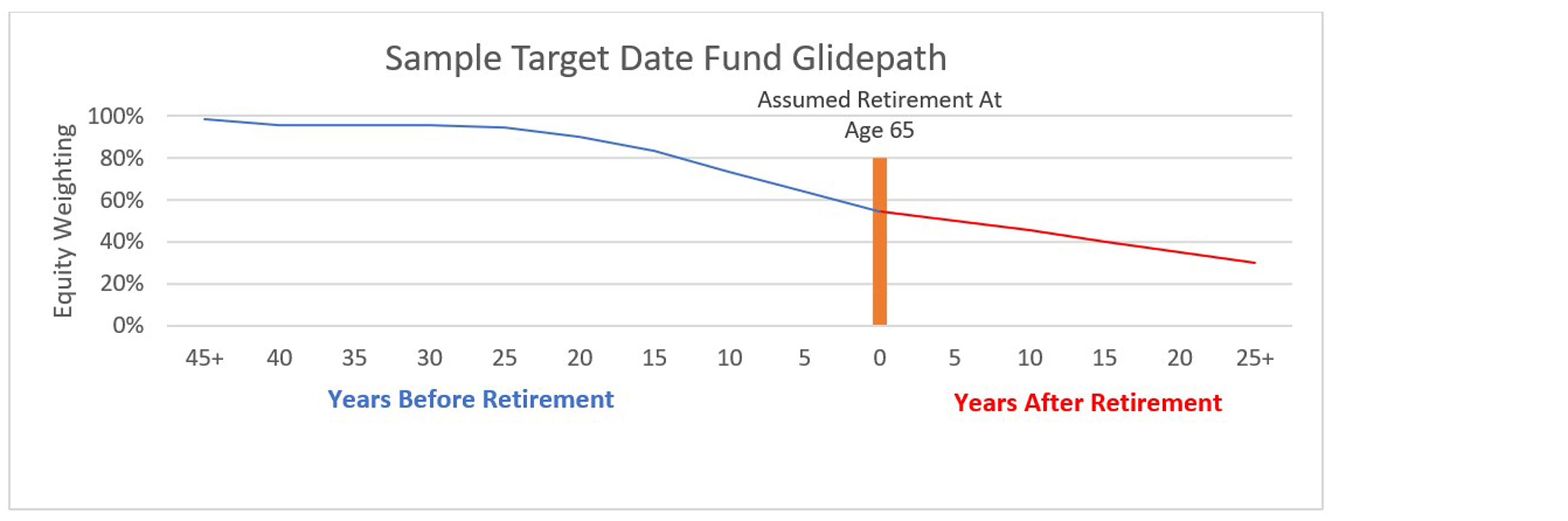
The primary appeal of these vehicles is the automated asset allocation. When you are decades away from retirement, the fund holds a high percentage of equities (stocks) to capture growth. As the "target date" approaches, the fund’s management team systematically sells stocks and buys fixed-income assets (bonds and cash equivalents). This transition is designed to protect the accumulated capital from market volatility during the years when the investor will actually need to withdraw the money.
The Evolution of TDFs in 2026
By 2026, the market has seen a distinct shift toward index-based target-date funds. While actively managed versions still exist, the majority of new capital flows into low-cost versions offered by providers like Vanguard, Fidelity, and Schwab. These funds use passive underlying holdings to keep expense ratios at a minimum, which has significantly improved the net returns for the average saver over the last decade.
The Core Concept: Decoding the "Glide Path"
The most critical technical component of any target retirement fund is its "glide path." This is the predetermined schedule that dictates how the asset mix changes over time. Not all glide paths are created equal, and understanding the difference is essential for determining if a specific fund is "good" for your risk tolerance.
"To" vs. "Through" Retirement Strategies
There are two primary philosophies when it comes to glide path construction:
- "To" Retirement Funds: These funds reach their most conservative allocation exactly at the target date. If you choose a 2030 fund, the asset shift stops changing in the year 2030. These are generally better for investors who plan to withdraw their entire balance or purchase an annuity immediately upon retiring.
- "Through" Retirement Funds: These funds continue to adjust their asset allocation for 10, 15, or even 20 years after the target date is reached. The logic here is that retirement can last 30 years or more, and the portfolio still needs some equity exposure to combat inflation.
According to FINRA guidelines, investors must check the prospectus to see which strategy their fund uses. A "through" fund will remain more aggressive (higher stock percentage) at the retirement date than a "to" fund, which could lead to higher volatility during your first years of retirement.
The Benefits: Why Target Retirement Funds Are Often the Right Choice
For the vast majority of investors, the benefits of a target-date fund far outweigh the downsides. The "goodness" of these funds is often found in the mistakes they prevent.
Professional Rebalancing
In a standard brokerage account, an investor must manually sell winning assets and buy losing ones to maintain a specific risk profile. This is psychologically difficult; it requires selling when things are going well and buying when the market is crashing. A target retirement fund does this automatically. This disciplined rebalancing ensures that you are constantly "buying low and selling high" within the fund's internal structure.
Simplified Diversification
A single target-date fund usually provides exposure to thousands of domestic stocks, international stocks, and various types of bonds (government, corporate, and international). This level of diversification protects the investor from the failure of any single company or economic sector.
Mitigation of "Decision Fatigue"
Financial markets in 2026 are complex. The sheer volume of available ETFs and stocks can lead to analysis paralysis. By choosing a target-date fund, the investor makes one high-level decision—when they plan to retire—rather than hundreds of smaller, stress-inducing tactical decisions every year.
The Drawbacks: Why They Might Not Be "Good" for Everyone
While the advantages are significant, target retirement funds are not a universal panacea. There are specific scenarios where these funds may underperform a custom-built portfolio.
The "One Size Fits All" Limitation
Target-date funds assume that every person retiring in a specific year has the same risk tolerance and financial situation. They do not account for:
- Outside Assets: If you have a large pension or significant real estate holdings, a target-date fund might be too conservative.
- Risk Appetite: Some investors are naturally more risk-averse or risk-tolerant than the "average" glide path accounts for.
- Tax Inefficiency: Because these funds frequently rebalance and internalize many different types of assets, they can be less tax-efficient in a taxable brokerage account compared to holding individual ETFs. They are best suited for tax-advantaged accounts like IRAs and 401(k)s.
The Layering of Fees
In some older or actively managed target-date funds, investors may face "double-dipping" on fees. This occurs when the target-date fund charges an administrative fee on top of the expense ratios of the underlying funds. By 2026, many providers have moved toward a single, transparent fee, but it is still vital to verify the "Total Annual Operating Expense" in the fund's summary prospectus.
Comparing Target Retirement Funds by Provider (2026 Data)
The following table compares the typical characteristics of major target-date fund providers as of 2026. Note that "Index-Based" refers to funds that primarily use passive underlying holdings.
| Provider | Primary Glide Path Style | Average Expense Ratio (Index) | Key Characteristic |
|---|---|---|---|
| Vanguard | Through | 0.08% | High simplicity, all-index approach |
| Fidelity (Freedom Index) | Through | 0.08% | Significant exposure to international markets |
| BlackRock (LifePath) | Through | 0.07% - 0.12% | Heavy focus on institutional-grade risk modeling |
| T. Rowe Price | Through | 0.30% - 0.45% | Often uses active management for potential alpha |
| Schwab | Through | 0.08% | Focus on ultra-low-cost underlying ETFs |
Data represents typical 2026 market averages for retail index series.
Evaluating Costs: What Is a "Good" Fee?
In the current 2026 investment environment, the definition of a "good" fee has shifted downward. A decade ago, paying 0.50% for a target-date fund was standard. Today, if you are using an index-based target-date fund, you should generally expect to pay between 0.05% and 0.15%.
If your employer's 401(k) only offers target-date funds with expense ratios above 0.50%, you may want to look at the underlying options. Often, you can "build your own" target-date fund using a simple three-fund portfolio (Total Stock Market, Total International Stock, and Total Bond Market) for a fraction of the cost. However, the trade-off is that you must handle the rebalancing and the glide path adjustments yourself.
Tax Considerations and Placement
Where you hold your target retirement fund is just as important as the fund itself.
The Case for Tax-Advantaged Accounts
Target-date funds are ideally designed for 401(k)s, 403(b)s, and IRAs. Because these funds rebalance internally, they may trigger capital gains distributions. In a tax-advantaged account, these distributions are not taxed. In a taxable brokerage account, you could be hit with a tax bill even if you didn't sell any shares of the fund.
The "Step-Up" Strategy
Some investors in 2026 use a "step-up" strategy where they choose a fund with a date 5 or 10 years later than their actual expected retirement. This allows them to maintain a higher equity exposure for longer, which can be beneficial if they have other sources of guaranteed income, like Social Security or a pension, that act as the "conservative" portion of their overall wealth.
Frequently Asked Questions
Can I lose money in a target retirement fund?
Yes. Target-date funds are not guaranteed and are subject to market risk. Because they hold stocks, the value of the fund can drop significantly during market downturns, especially when the target date is far in the future. Even as you approach the target date, the bond portion of the fund can lose value if interest rates rise sharply.
Is a 2050 fund better than a 2060 fund?
One is not "better" than the other; they simply have different risk profiles. A 2060 fund will be more aggressive (more stocks) for a longer period than a 2050 fund. You should choose the date that most closely aligns with when you expect to begin withdrawing the money, or adjust the date based on your personal risk tolerance.
Should I have more than one target-date fund?
Generally, no. The purpose of a target-date fund is to be a complete, diversified portfolio. Owning two different target-date funds (e.g., a 2040 and a 2045) usually results in unnecessary overlap and complicates your asset allocation without providing additional diversification benefits.
What happens when the target date is reached?
Once the fund reaches its target year, it typically merges into a "Retirement Income" fund. This fund has a static, conservative asset allocation (often 30% stocks and 70% bonds/cash) designed to preserve capital while providing modest growth to keep up with inflation and support regular withdrawals.
Are target-date funds better than robo-advisors?
Target-date funds are usually cheaper than robo-advisors because they don't charge an additional "wrap fee" for management (which is often 0.25% for robos). However, robo-advisors offer features like tax-loss harvesting and customized risk profiles that TDFs do not. If your assets are in a taxable account, a robo-advisor might be superior; in an IRA, a TDF is often the more cost-effective choice.
Final Recommendation: Are They Right for You?
Target retirement funds are "good" for investors who value their time and want to avoid the common pitfalls of emotional investing. They provide a sophisticated, institutional-level investment strategy for a very low cost.
You should choose a target retirement fund if:
- You want a "set it and forget it" investment strategy.
- You are investing within a tax-advantaged account (401(k) or IRA).
- You prefer a disciplined, automated approach to risk management.
- You want to ensure your portfolio automatically becomes more conservative as you age.
You should consider alternatives if:
- You enjoy managing your own portfolio and rebalancing manually.
- You have a very high or very low risk tolerance that doesn't fit standard glide paths.
- You are investing in a taxable brokerage account and require high tax efficiency.
- Your employer-sponsored plan only offers high-fee, actively managed TDFs.
In 2026, the target-date fund remains the most effective tool for the "everyman" investor to achieve long-term financial security with minimal effort. By selecting a low-cost, index-based version that aligns with your retirement timeline, you are positioning yourself for a disciplined and successful path to retirement.