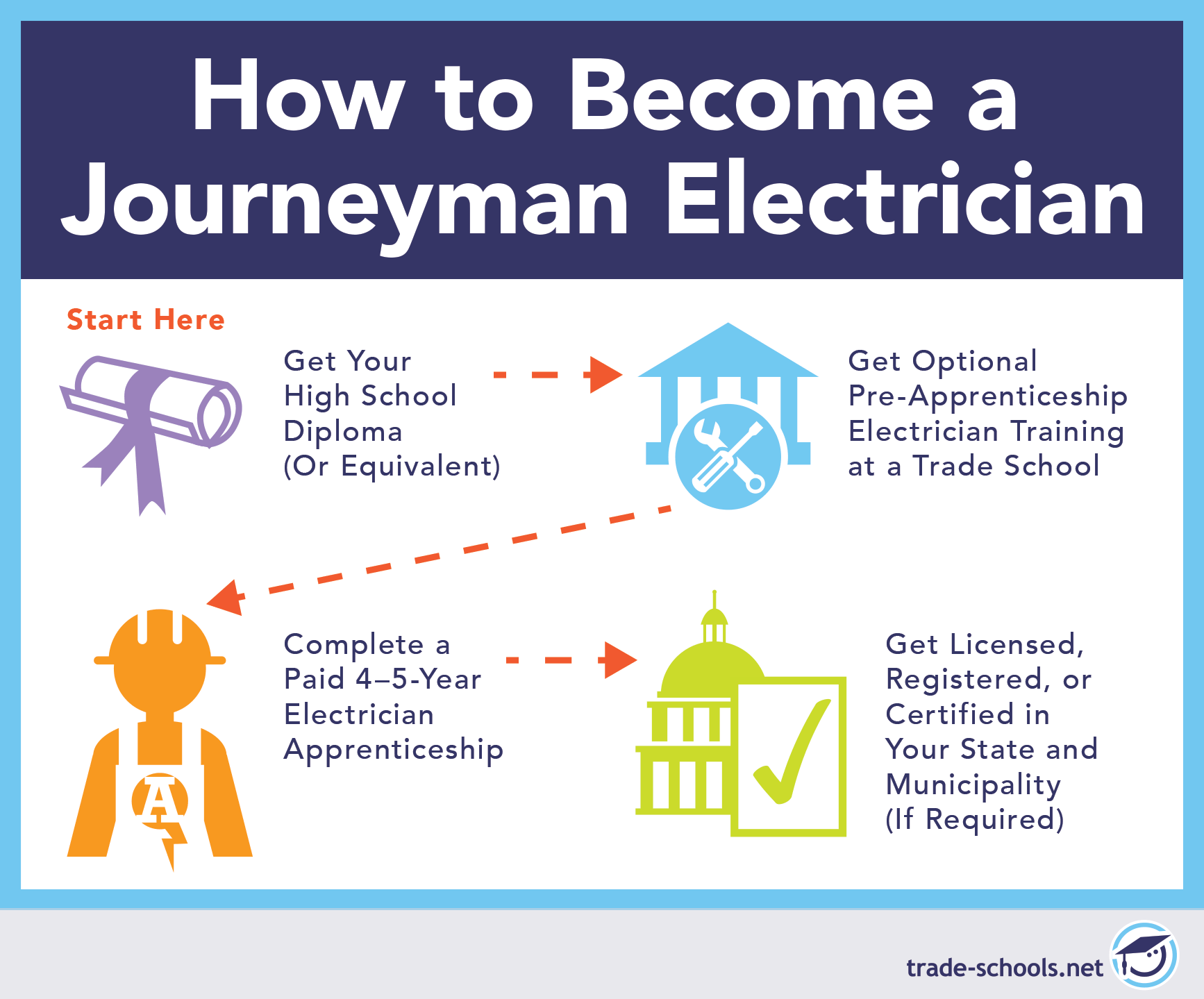
Becoming a professional electrician through a trade school program requires a strategic combination of classroom theory, hands-on shop practice, and state-mandated apprenticeship hours. Students must balance technical education with local licensing requirements, ensuring their chosen program aligns with the electrical code standards and labor regulations of their specific jurisdiction.
Understanding the Role of Trade School in Electrical Training
Many aspiring electricians view trade school as a shortcut to licensure, but in reality, it acts as a foundational acceleration phase. A trade school, or vocational technical college, typically offers a Certificate or an Associate Degree in Electrical Technology. Unlike an apprenticeship, which is primarily work-based, a trade school program allows you to practice complex wiring configurations, motor controls, and troubleshooting in a controlled, error-tolerant environment before applying those skills on a live commercial or residential job site.
The "realistic" aspect of this path depends entirely on your state's Department of Labor or Professional Licensing Board. In many jurisdictions, attending an accredited trade school can count toward your "related technical instruction" (RTI) requirement, and some states even allow a portion of your school shop hours to be credited toward the total work-hour requirement for a Journeyman license. However, trade school is rarely a standalone solution; it is a force-multiplier that makes you more attractive to electrical contractors and increases your competency once you begin the necessary field hours.
Determining Eligibility and Prerequisites
Before enrolling in a program, you must verify your eligibility. Most reputable trade schools in 2026 require a high school diploma or a GED equivalent. Because electrical work involves significant arithmetic, algebra, and geometry—used to calculate voltage drop, conduit fill, and circuit sizing—admissions departments will often assess your math proficiency. If your foundational math skills are weak, many programs offer preparatory workshops that you should prioritize before diving into complex electrical theory.
Furthermore, consider the physical requirements of the trade. You will be expected to work in tight crawlspaces, climb ladders, lift heavy spools of wire, and work in varied climate conditions. While trade school prepares you for the technical side, it cannot replicate the physical stamina required for a full-time electrical career. Ensure you are prepared for the physical demands before investing in tuition.
The Trade School Curriculum: What You Will Actually Learn
A high-quality electrical program is designed to move you toward the National Electrical Code (NEC). By 2026, most programs have transitioned to updated curriculum standards reflecting the latest NEC requirements. A standard syllabus includes:
- Electrical Theory: Understanding Ohm’s Law, Watt’s Law, series/parallel circuits, and AC/DC principles.
- Safety Standards: Rigorous training in OSHA 10 or 30-hour certification, lockout/tagout procedures, and personal protective equipment (PPE).
- Blueprint Reading: Learning to interpret architectural and electrical drawings to determine circuit layouts and service requirements.
- Residential Wiring: Installing device boxes, pulling Romex and conduit, and roughing-in multi-room electrical systems.
- Commercial and Industrial Systems: Working with rigid metal conduit (RMC), EMT, three-phase power systems, and industrial motor starters.
Comparing Training Paths: Trade School vs. Independent Apprenticeship
It is a common misconception that you must choose between a trade school and an apprenticeship. In practice, they are often complementary.
| Training Feature | Trade School (Vocational) | Independent Apprenticeship |
|---|---|---|
| Primary Focus | Theory and fundamentals | Hands-on field experience |
| Duration | 6 months to 2 years | 4 to 5 years |
| Cost | Significant tuition fees | Usually earns a wage while learning |
| Career Entry | Provides early foundation | Immediate entry into the field |
| License Credit | Partial credit for school hours | Full credit for all work hours |
The most realistic path for a career-focused individual is to seek an apprenticeship—either through a union (IBEW/NECA) or a non-union contractor (ABC)—and treat the trade school program as a way to "fast-track" the classroom learning requirements. Some states even offer "earn while you learn" models where the employer pays for the trade school portion as part of your employment contract.
Licensing Requirements and the Path to Journeyman Status
Once you complete your trade school program, you are not yet a licensed electrician. You are a student with foundational knowledge. To reach Journeyman status, you must meet the specific requirements of your state or municipality.
- Registration: Register as an Apprentice Electrician with your state’s licensing board immediately upon securing a job.
- Documented Hours: Keep a rigorous log of your work hours. Most states require 8,000 hours (roughly four years) of documented on-the-job training.
- Supervision: You must work under the direct supervision of a licensed Journeyman or Master Electrician.
- Testing: After completing your hours and your classroom education (which your trade school certificate satisfies), you will be eligible to sit for the state-administered Journeyman exam.
Never attempt to perform independent electrical work without the proper license. The legal penalties, potential for voiding insurance, and extreme safety risks associated with improper wiring are significant.
Common Pitfalls and How to Avoid Them
The most common mistake students make is failing to check if their trade school is "accredited" or "recognized" by their state board. An expensive private program may look impressive on a brochure, but if your state licensing board does not recognize its curriculum, you may find yourself repeating courses or struggling to qualify for your exams. Always verify with your state’s Department of Labor or Licensing website before signing a tuition contract.
Another mistake is neglecting the "soft skills." The electrical trade is as much about customer communication, reliability, and problem-solving as it is about bending conduit. Employers consistently report that they value punctuality and the ability to follow directions over initial technical perfection. Use your time in trade school to develop professional habits, such as keeping a clean workspace and maintaining your tools.
Financial Considerations and Return on Investment
Trade school can be an expensive upfront investment. Before enrolling, analyze the cost-to-benefit ratio. Ask the school for placement statistics: What percentage of graduates secure an apprenticeship within six months? Are there partnerships with local contractors?
In 2026, many regions face a high demand for skilled tradespeople, which means that the "realistic" path often involves being recruited before graduation. If you are in a region where local electrical contractors are desperate for talent, you might find that they are willing to hire you as a "helper" with zero experience, providing the training on the job. In this scenario, you could choose a shorter, more focused certification program rather than a two-year degree, saving money while still gaining the necessary technical background.
Taking Your Next Action
To begin your path, start by identifying your state’s electrical board—usually found under your state's Department of Labor or Department of Commerce. Find the section on "Licensing" and look for the "Apprentice" requirements. This document is your roadmap. Once you understand the required number of school hours and work hours, contact local trade schools and ask them specifically how their program hours align with the state’s apprenticeship requirements.
Do not rely on the school's marketing department to explain the law; verify it yourself against the state’s official administrative code. Once you have a clear understanding of the regulatory requirements, reach out to local IBEW training centers or non-union electrical contracting firms to inquire about current apprentice openings. Combining a solid school-based foundation with an active, supervised field position remains the most reliable and efficient way to become a licensed electrician.
Frequently Asked Questions
Does a trade school certificate allow me to work as an electrician? No. A certificate verifies that you have completed the educational requirements, but you must still register as an apprentice and log the mandatory field hours required by your state to obtain a Journeyman license.
Can I skip trade school and go straight to an apprenticeship? Yes. In many states, you can start as an entry-level apprentice, gaining hours on the job while taking the required theoretical classes at night or via online modules approved by the state. This is often the most cost-effective path.
How long does it take to become a fully licensed electrician? The timeframe is dictated by state law, but it generally takes four to five years to accumulate the required work hours and pass the necessary examinations for a Journeyman license.
Is it difficult to get into a trade school program? Entry requirements vary, but most programs require a high school diploma or GED and a basic assessment of math and reading skills. Because the trades are in high demand in 2026, many programs have waitlists, so apply well in advance of the semester.
What tools should I buy before starting school? Most trade schools provide a list of required hand tools. Focus on high-quality basics—a good pair of insulated screwdrivers, side cutters (dikes), linesman pliers, and a sturdy tool belt. Avoid buying expensive power tools until you are employed, as most contractors provide them.