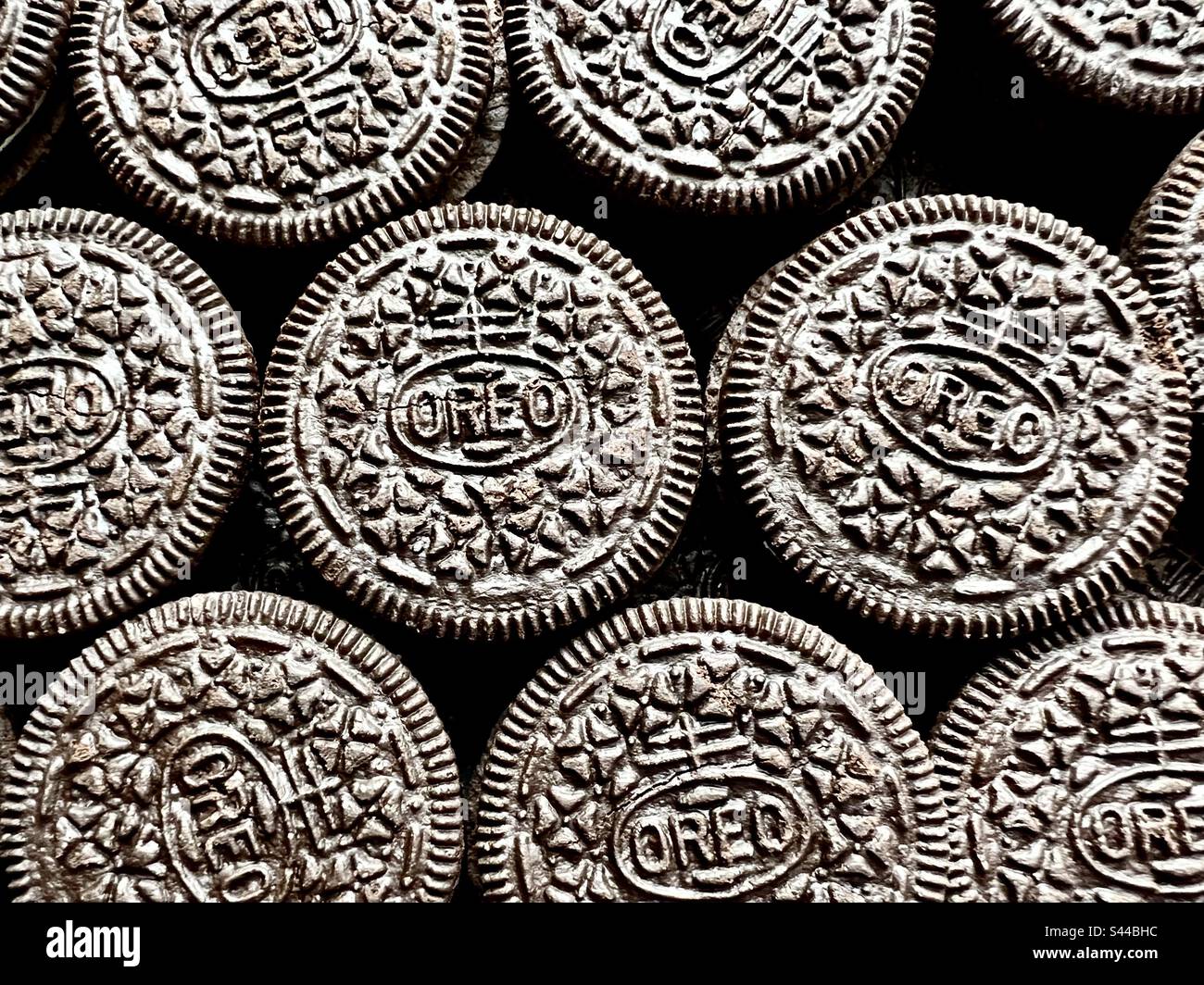
The iconic Oreo cookie wafer is technically a very dark shade of brown, achieved through the heavy alkalization of cocoa powder. While the human eye perceives the color as black—or "jet black"—due to its intense saturation and high contrast against the white crème filling, it does not contain black dye, but rather relies on the chemical transformation of cocoa solids.
The Chemistry of Cocoa and Color
To understand why Oreos appear the way they do, one must first look at the process of manufacturing cocoa. Cocoa beans, in their natural state, are relatively acidic and possess a lighter, reddish-brown hue. The process used to achieve the signature Oreo color is known as "Dutch-processing" or alkalization.
In this manufacturing step, cocoa powder is treated with an alkaline solution—most commonly potassium carbonate. This neutralizes the acidity of the cocoa. As the pH level of the cocoa rises, the color darkens significantly. While standard natural cocoa powder might range from tan to light brown, Dutch-processed cocoa can shift toward deep reds, dark browns, and eventually, a shade so deep that it mimics black.
The Oreo wafer is not just slightly Dutch-processed; it is heavily alkalized. This process removes the harsh, acidic notes of the chocolate while deepening the pigment. Because the wafer is thin and baked at specific temperatures, the resulting concentration of these alkalized cocoa particles creates a visual profile that the brain registers as black.
Perception vs. Pigment: Why We Call Them Black
Human color perception is highly context-dependent. The "Oreo black" is a prime example of contrast enhancement. When you look at an Oreo, your brain does not evaluate the wafer in isolation. It compares the wafer's color to the stark, bright white of the crème filling.
In color theory, the phenomenon of "simultaneous contrast" describes how the appearance of a color changes based on the colors surrounding it. By placing an extremely dark brown object against a white background, the darkness of the brown is intensified in the viewer’s perception. If you were to scrape the dark cookie crumb off the wafer and spread it thinly on a white plate, you would likely see that the powder itself has a deep, mahogany-brown undertone. However, in the solid, dense, and baked form of an Oreo wafer, the light-absorbing properties of the dark cocoa solids make it appear effectively black to the naked eye.
Is There Black Dye in Oreos?
A common misconception is that Oreo cookies must contain black food coloring to achieve their signature look. According to the ingredients list provided by the manufacturer, Mondelez International, the Oreo cookie wafer relies on "cocoa (processed with alkali)" to achieve its color.
There is no "Black 40" or other artificial black food dye used in the standard Oreo recipe. The intensity of the color is entirely a byproduct of the cocoa processing and the Maillard reaction—a chemical reaction between amino acids and reducing sugars that occurs during the baking process, which browns the food and creates complex flavor profiles. This reaction, combined with the high-intensity Dutch-processed cocoa, is sufficient to reach the dark aesthetic that has become a global standard for the brand.
Comparison of Dark Cocoa Applications
The use of alkalized cocoa to create "black" or near-black baked goods is not unique to Oreo, though they are the most prominent mass-market example. Many professional pastry chefs use "Black Cocoa," which is essentially ultra-alkalized cocoa, to create decorative elements.
| Cocoa Type | pH Level | Typical Color | Primary Use |
|---|---|---|---|
| Natural Cocoa | 5.0 – 5.8 | Light Brown | Traditional brownies, cookies |
| Lightly Alkalized | 6.0 – 7.0 | Reddish Brown | General baking, milk drinks |
| Heavily Alkalized | 7.0 – 8.0+ | Dark Brown/Black | Oreos, gourmet dark cookies |
As seen in the table above, the shift in pH directly correlates to the intensity of the pigment. When the pH climbs above 7.0, the chocolate begins to lose its reddish tones and moves into the deep brown/black spectrum.
The Role of Baking and Caramelization
While the Dutch-processed cocoa provides the base color, the heat of the oven plays a secondary role. As the cookies bake, the sugars in the dough caramelize. Caramelization adds a layer of depth to the brown pigment, effectively "sealing" the dark appearance. Because the dough for an Oreo is quite low in moisture compared to a standard soft cookie, the heat is able to toast the surface effectively, further darkening the cocoa-heavy dough.
The combination of the dark cocoa and the toasted sugars creates a surface that absorbs most of the light that hits it. In physics, when an object absorbs the majority of the visible light spectrum, it appears black. Since the Oreo wafer is opaque and densely packed, it acts as a light trap, cementing the "black" label in the minds of consumers.
Common Misconceptions and Troubleshooting
If you are attempting to replicate the "Oreo" color at home and finding that your cookies are coming out brown rather than black, the issue is almost always a lack of sufficiently alkalized cocoa or insufficient processing time.
- Check your cocoa: If you are using "Natural" cocoa powder, no amount of baking will turn the cookie black. You must specifically source "Dutch-Processed" or "Black" cocoa powder.
- pH Sensitivity: Baking soda is an alkaline ingredient. If your recipe uses a high ratio of baking soda, it will help darken the cocoa during the bake. However, too much will impart a soapy or metallic taste, so this must be balanced carefully.
- Consistency: The density of the dough matters. A more tightly packed, thinner wafer—like the commercial Oreo—allows for more uniform light absorption.
Frequently Asked Questions
Does the black color affect the taste of an Oreo? Yes. The alkalization process that creates the dark color also removes the acidic, sharp, fruity notes of natural cocoa. This results in a mellower, earthier, and more chocolatey flavor that balances the sweetness of the crème.
Are there different types of Oreos with different color profiles? While the classic Oreo is defined by its dark wafer, other varieties use different ingredients. For example, Golden Oreos use a vanilla-based dough without cocoa, resulting in a light tan color. These cookies do not undergo the alkalization process.
Can natural cocoa be used to make black cookies? It is nearly impossible to make a true black cookie using natural, acidic cocoa. You would need to add significant amounts of alkaline agents, which would fundamentally alter the chemistry and flavor of the dough, likely making it inedible.
Why do some people insist they are brown? People who argue that Oreos are brown are looking at the cookie through a lens of food chemistry rather than visual perception. When you crush the cookie into a fine dust or mix it into a liquid, the light-diffusing properties of the solid cookie are lost, revealing the true deep-brown nature of the cocoa particles.
Is the "black" color natural? Yes. It is derived from cocoa beans that have been processed with alkaline minerals (like potassium carbonate), which occur naturally. The color itself is the result of the physical transformation of the cocoa solids, not the addition of artificial dyes.
Practical Recommendation for Identifying Food Colors
If you ever want to verify the color of a dark food product yourself, the simplest method is to smear a small amount of the substance onto a white paper towel or a white plate and add a drop of water. By spreading the substance thinly (a technique called "streaking"), you allow light to pass through the particles. If the substance contains black dye, the streak will remain distinctly gray or black. If it is merely a highly concentrated natural pigment like dark cocoa, you will see the true underlying hue—usually a deep, dark brown—within the smear.
Ultimately, the Oreo remains a masterclass in food engineering. By using chemical alkalization to push cocoa to its visual limit, the manufacturer created a product that visually distinguishes itself from the sea of standard light-brown cookies on the market, while maintaining a flavor profile that relies on chemistry rather than synthetic additives. Whether you choose to classify them as "black" or "very dark brown," the reality is that the color is an inseparable part of the brand's identity and a direct result of precise, intentional chemical processing.