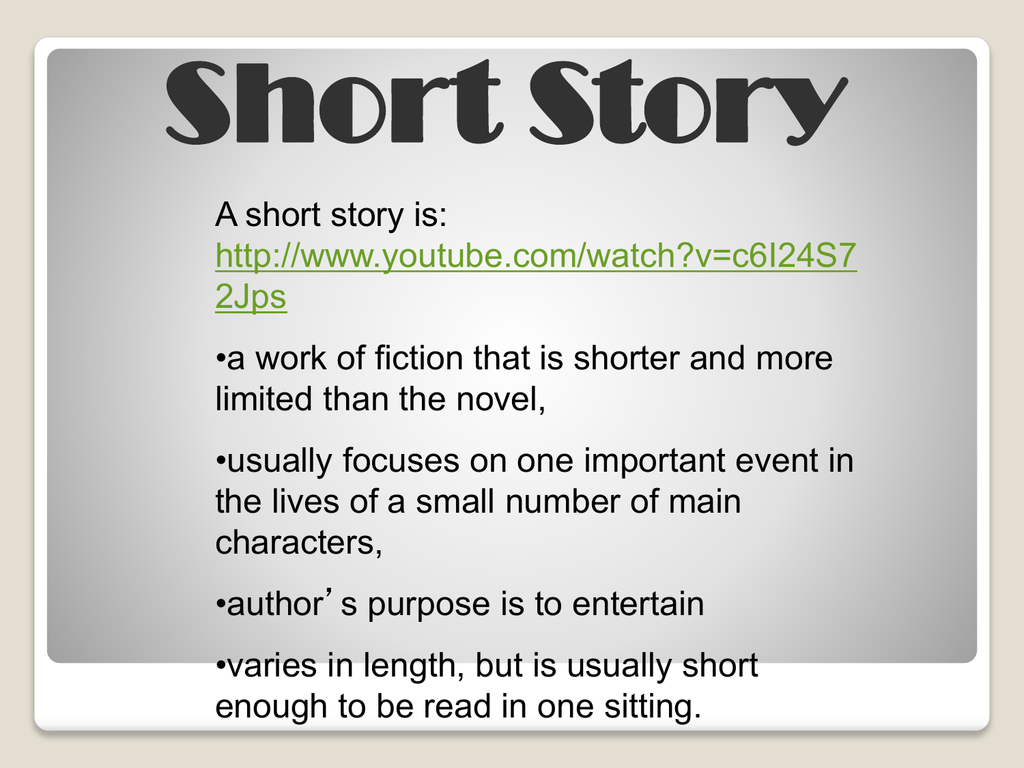
Short story length guidelines are categorized by industry-standard word counts, typically ranging from 1,000 to 7,500 words. These parameters help authors identify their work’s specific sub-genre, such as flash fiction or novelette, and ensure alignment with the submission requirements of literary magazines, anthologies, and professional writing organizations.
Understanding Industry Standards for Narrative Length
For writers navigating the publishing landscape in 2026, understanding the nomenclature of length is essential for both creative planning and professional submission. While creative expression is fluid, the business of publishing is highly structural. Editors and literary agents rely on standardized word count buckets to determine the scope of a manuscript, the associated production costs, and the expected reader experience.
When you submit a story, you are not merely offering a narrative; you are entering a specific market segment. If a journal calls for a "short story," they are rarely looking for a 20,000-word piece. Misunderstanding these boundaries can result in automatic rejections, regardless of the quality of the prose. By adhering to established word count conventions, you signal professionalism and an understanding of the industry's logistical realities.
The Standardized Classification Table
The following table outlines the universally accepted word count thresholds used by professional journals, the Science Fiction and Fantasy Writers Association (SFWA), and traditional print media. These tiers serve as the primary guide for writers targeting specific publication types.
| Category | Typical Word Count Range | Industry Context |
|---|---|---|
| Micro-Fiction | Under 500 words | Often published in online journals or social platforms |
| Flash Fiction | 500 – 1,000 words | Highly compressed, single-moment narratives |
| Short Story | 1,000 – 7,500 words | The standard length for most literary magazines |
| Novelette | 7,500 – 17,500 words | Explores deeper arcs; fewer venue opportunities |
| Novella | 17,500 – 40,000 words | Too long for journals; often serialized or stand-alone |
| Novel | 40,000+ words | Full-length book market requirements |
Defining the Segments: Why Length Matters
Each segment mentioned above carries distinct structural expectations. The shorter the piece, the less room there is for sprawling subplots, extensive backstories, or large casts of characters.
Micro-Fiction and Flash Fiction
Micro-fiction (often under 500 words) acts as a stylistic exercise in economy. Every word must serve a singular, sharp purpose. Because space is limited, character development must be implied through setting or a single pivotal reaction rather than through extended exposition. Flash fiction (500–1,000 words) provides slightly more breathing room, allowing for a distinct beginning, middle, and a more impactful "punch" at the resolution. Writers often use these formats to practice pacing and the art of the "in media res" opening.
The Traditional Short Story
The 1,000 to 7,500-word range is the primary domain of literary journals and anthologies. This length is the "sweet spot" for many editors because it is long enough to permit character arcs and thematic resonance, yet short enough to be consumed in a single sitting. When writing within this bracket, focus on a single narrative arc. If your story begins to exceed 7,500 words, you risk losing the tight thematic focus that defines the short story form, pushing the work into the nebulous category of a novelette, which is notoriously difficult to place in mainstream journals.
Novelettes and Novellas
When a story exceeds 7,500 words, you are entering the territory of the novelette. The primary challenge here is finding an outlet. Most magazines that publish short fiction operate on page budgets that prioritize shorter works. A 12,000-word story consumes the space of three or four regular submissions. Consequently, writers producing work at this length should research specialized venues or consider digital-only presses that are not bound by the physical space constraints of print media.
Prerequisites for Submission Success
Before finalizing your draft and checking the word count, verify the specific requirements of your target publication. Even within these industry norms, individual publications may have idiosyncratic rules.
- Check the Submission Guidelines: Never assume a publication accepts the industry-standard "maximum." Some journals specifically cap entries at 5,000 words to accommodate more authors in a single issue.
- Review Formatting Standards: Standard Manuscript Format (SMF) is still the gold standard for most editors in 2026. This includes 12-point Times New Roman font, double-spacing, and clear contact information in the header.
- Verify the Word Count: Do not rely solely on your word processor’s estimate. Remove non-narrative elements such as title pages or cover letters before checking the count. An accurate count demonstrates respect for an editor’s time.
- Identify the "Sweet Spot": Many journals express a preference for stories between 3,000 and 5,000 words. If your story is significantly shorter or longer, it may stand out for the wrong reasons.
Common Mistakes to Avoid
A frequent pitfall for emerging writers is "padding" or "slimming." Padding occurs when an author feels a story is "too short" and adds unnecessary adjectives or digressive subplots to reach a perceived minimum word count. This inevitably weakens the prose and dilutes the emotional impact. Conversely, "slimming" involves cutting essential narrative beats to fit a strict word count constraint.
If your story feels incomplete, it is likely that the concept itself is not suited for the intended length. A story that requires 10,000 words to breathe should not be forced into a 3,000-word constraint. Instead, evaluate whether the idea is better suited for a longer format or if it can be restructured into a series of interconnected shorter pieces.
Balancing Technical Depth and Creative Freedom
While the technical guidelines provide a framework, the quality of the narrative remains paramount. Editors are not scanning for specific word counts to the exclusion of all else; they are looking for a story that fits the publication’s aesthetic. A high-quality 8,000-word story might be accepted by a journal that usually caps at 7,500 words if the writing is exceptional. However, do not rely on this exception. When you are a new contributor, staying within the explicitly stated boundaries is the safest path to being read.
Use the word count guidelines as a map, not a cage. If you are writing a piece specifically for a contest, the word count may be a firm requirement rather than a guideline. In contest scenarios, exceeding the limit is often grounds for immediate disqualification, as these events are governed by strict administrative rules meant to facilitate fair judging.
Frequently Asked Questions
What is the minimum word count for a professional short story? Most professional journals and organizations consider anything over 1,000 words to be a standard short story. While flash fiction exists below this threshold, the "Short Story" category usually begins at 1,000 words and extends up to 7,500.
Does a title count toward my total word count? Generally, no. When an editor asks for a word count, they are interested in the narrative content. You should exclude the title, your contact information, and any header material from your final count.
Are there penalties for being slightly over the suggested limit? It depends on the venue. For a standard literary magazine, being 100 or 200 words over is rarely an issue. For a competition or an anthology with strict administrative requirements, exceeding the limit by even one word can lead to automatic disqualification. Always read the fine print.
How do I decide if my story is a short story or a novella? If the narrative focuses on a single arc, a central conflict, and a limited set of characters, it is likely a short story. If the narrative spans multiple subplots, significant time jumps, or a larger cast of characters that require substantial development, you are likely looking at a novella.
Should I mention my word count in my cover letter? Yes. Including your word count in the cover letter or at the top of your manuscript helps the editor immediately assess whether your submission fits their current needs. It shows you have read their guidelines and understand the logistical requirements of their publication.
Recommendations for Your Next Steps
To effectively utilize these guidelines, create a spreadsheet of your top five target publications. For each, record their stated word count minimums and maximums, their preferred submission format, and their typical response time. Before you begin your next project, look at your target list and select a word count range that aligns with the majority of these venues.
If you are currently writing, focus on completing the "zero draft" without worrying about the count. Once the story is fully realized, perform your first round of edits. If the draft is vastly outside the target range, you can then perform strategic cuts or expansions. Remember that editing is the process where the story is shaped to fit the medium; keep your focus on narrative integrity first, and technical constraints second.