A life insurance policy providing $50,000 of coverage until age 65 is a specialized form of term life insurance designed to offer a financial safety net during an individual's primary working years. This policy ensures that if the insured passes away before reaching age 65, a tax-free death benefit is paid to beneficiaries, typically to cover final expenses or bridge a financial gap.
Choosing a life insurance policy with a specific death benefit of $50,000 and an expiration age of 65 is a strategic decision often rooted in "gap-filling" financial planning. In 2026, as the landscape of retirement and personal debt continues to evolve, this specific configuration serves a distinct niche of consumers who require more than a basic burial policy but less than a multi-million dollar income replacement plan.
This guide provides a comprehensive look at how these policies function, who they are best suited for, the underwriting process, and the practical implications of a policy that expires at the traditional retirement threshold.
The Mechanics of "Term to Age 65" Insurance
Life insurance generally falls into two categories: permanent and term. A policy that provides coverage until age 65 is almost always a level term life insurance product. Unlike "10-year" or "20-year" terms, which last for a set duration regardless of your age, a "Term to 65" policy is age-terminating.
Level Premiums and Death Benefits
The primary characteristic of this policy is its stability. The "level" aspect means that the $50,000 death benefit remains constant from the day the policy is issued until the day it expires on the insured's 65th birthday. Simultaneously, the monthly or annual premiums are locked in at the time of purchase. Even if the insured develops a chronic illness at age 50, the premium will not increase, and the coverage cannot be canceled by the insurer as long as payments are made.
Why Age 65?
The age of 65 has historically been the benchmark for retirement in many developed economies, including the United States. By this age, many financial obligations are expected to have decreased:
- Mortgages: Ideally, home loans are nearing completion or are fully paid off.
- Dependents: Children are typically adults and financially independent.
- Retirement Savings: Individuals gain full access to 401(k)s, IRAs, and other pension funds.
- Social Security: Most individuals become eligible for at least partial Social Security benefits.
Because the financial risk of death is lower after these milestones are met, many policyholders find it unnecessary to pay the significantly higher premiums required for coverage that extends into their 70s or 80s.
Is $50,000 of Coverage Sufficient?
In 2026, the utility of a $50,000 payout must be weighed against current economic realities, including inflation and the rising cost of living. While $50,000 is not intended to replace a decades-long salary, it serves several critical functions.
Final Expense Coverage
The average cost of a funeral, burial, and associated end-of-life expenses in the mid-2020s can range from $10,000 to $15,000. A $50,000 policy comfortably covers these costs while leaving a remainder of roughly $35,000 to $40,000 for the surviving spouse or family to handle immediate needs.
Debt Liquidation
For many, $50,000 is the "tipping point" for manageable debt. This amount can be used to:
- Pay off a remaining auto loan.
- Clear high-interest credit card balances.
- Eliminate a small home equity line of credit (HELOC).
- Cover a year or two of property taxes and homeowners insurance for a surviving spouse.
The "Stay-at-Home" Protection
For households where one partner manages the home, a $50,000 policy provides the surviving partner with funds to hire childcare, housekeeping, or eldercare services that the deceased partner previously provided, allowing the survivor to continue working without immediate financial distress.
Cost Considerations and Premium Factors
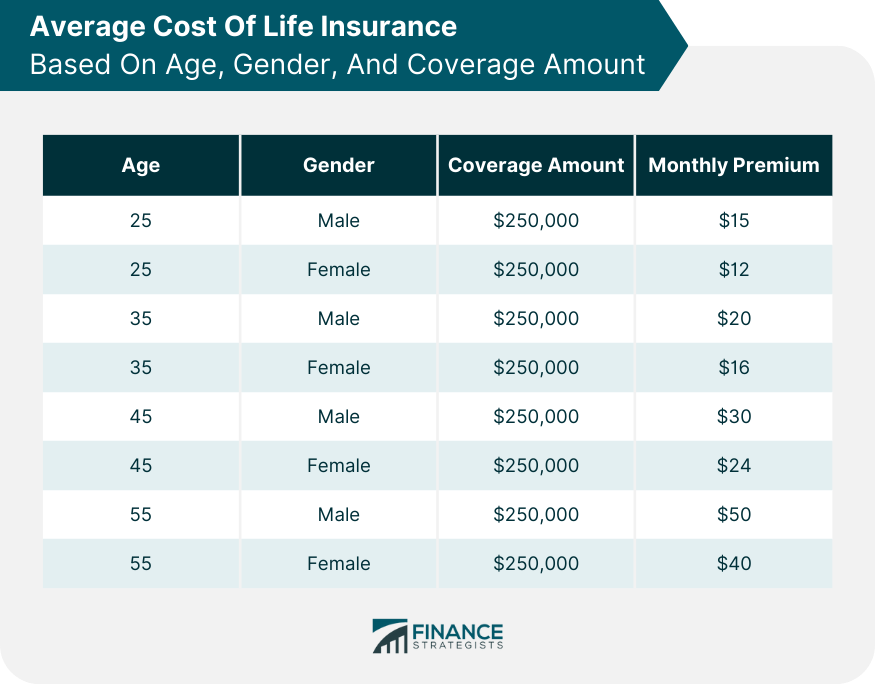
The cost of a $50,000 policy until age 65 is influenced by several variables. Because the insurer’s risk ends at age 65—when the likelihood of mortality begins to climb sharply—these policies are generally more affordable than whole life insurance.
| Factor | Impact on Premium |
|---|---|
| Age at Purchase | Buying at 25 is significantly cheaper than buying at 50, as the insurer has a longer period to collect premiums. |
| Health Status | Excellent health (Preferred Plus) can lower premiums by 30% or more compared to "Standard" rates. |
| Tobacco Use | In 2026, smokers continue to pay 2x to 3x more for the same $50,000 coverage. |
| Gender | Statistically, women have a longer life expectancy, often resulting in slightly lower premiums than men. |
| Occupation/Hobbies | High-risk jobs or hobbies (e.g., private aviation) may require a "flat extra" fee. |
Sample Monthly Premium Estimates (Non-Smoker, Standard Health)
| Issue Age | Estimated Monthly Premium (Male) | Estimated Monthly Premium (Female) |
|---|---|---|
| 30 | $15 - $22 | $12 - $18 |
| 40 | $25 - $35 | $20 - $28 |
| 50 | $55 - $75 | $45 - $60 |
Note: These are estimates based on 2026 market trends for level term policies ending at age 65. Actual quotes require individual underwriting.
The Underwriting Process in 2026
Underwriting is the process by which an insurance company evaluates the risk of insuring an applicant. In 2026, this process has become increasingly streamlined through Accelerated Underwriting (AU).
Traditional vs. Accelerated Underwriting
For a $50,000 policy—a relatively low face amount for many modern insurers—you may not be required to undergo a physical medical exam (paramex). Instead, insurers use "Big Data" to evaluate your risk profile. This includes:
- MIB Group Records: A database of previous insurance applications.
- Prescription History: A digital check of medications you have been prescribed over the last 7–10 years.
- Motor Vehicle Reports (MVR): Analyzing driving history for high-risk behaviors.
- Credit-Based Insurance Scores: Predicting longevity and policy persistence based on financial responsibility.
If you are young and healthy, approval for a $50,000 policy can often be granted within minutes or hours. However, if there are "red flags" (such as a history of heart disease or a recent DUI), the insurer may revert to traditional underwriting, requiring a blood draw and a physician's statement.
Essential Policy Riders to Consider
A $50,000 policy can be enhanced with "riders"—optional add-ons that provide extra benefits, often at an additional cost.
Accelerated Death Benefit (ADB)
Standard on many policies by 2026, this rider allows the insured to access a portion of the $50,000 death benefit while still alive if they are diagnosed with a terminal illness (usually defined as having 12–24 months to live). This money can be used for experimental medical treatments or to ensure the insured's comfort in their final days.
Waiver of Premium
If you become totally disabled and are unable to work, this rider ensures that your $50,000 policy remains in force without you having to pay the premiums. This is a critical safety net for a policy designed to protect you during your working years.
Children’s Term Rider
This allows you to add a small amount of coverage (e.g., $10,000) for your children under your own policy. It is often more cost-effective than buying separate policies for each child.
Common Pitfalls and Limitations
While a $50,000 policy until age 65 is a solid foundational tool, it is not without limitations. Prospective buyers should be aware of the following:
- The "Cliff" at Age 65: On your 65th birthday, the coverage simply stops. If you die at age 66, your beneficiaries receive nothing. If you find you still need coverage at that age, buying a new policy will be exponentially more expensive due to your age.
- No Cash Value: Unlike whole life or universal life insurance, this policy does not build equity. It is purely a death benefit. If you outlive the policy, you do not receive your premiums back (unless you purchased a specific "Return of Premium" rider, which significantly increases the cost).
- Inflation Risk: While $50,000 is a meaningful sum in 2026, its purchasing power may be lower by the time the policy nears expiration in 15 or 20 years.
Comparing Term to 65 with Other Options
To understand if this specific policy is right for you, it is helpful to see how it compares to other common insurance structures.
| Feature | Term to 65 ($50k) | 20-Year Term ($50k) | Whole Life ($50k) |
|---|---|---|---|
| Duration | Until age 65 | Exactly 20 years | Lifetime |
| Cost | Low/Moderate | Generally Lowest | Very High |
| Cash Value | No | No | Yes |
| Medical Exam | Often waived for $50k | Often waived for $50k | Usually required |
| Best For | Retirement gap planning | Specific mid-term debt | Estate planning/End-of-life |
Practical Next Steps for Applicants
If you have determined that a $50,000 policy until age 65 fits your financial plan, follow these steps to secure coverage:
- Audit Your Debts: Confirm that $50,000 actually covers your intended target (e.g., funeral + car loan + credit cards). If your mortgage is $200,000 and you want it paid off, this policy is insufficient.
- Check Convertibility: Ensure the policy has a Conversion Option. This allows you to "convert" your term policy into a permanent whole life policy before age 65 without taking a new medical exam. This is a vital feature if your health declines later in life.
- Compare Multiple Carriers: Even for a small $50,000 policy, prices vary. Use an independent agent or a digital comparison platform to view at least three different quotes.
- Review the Exclusion Clause: Most policies have a two-year contestability period and a suicide clause. Ensure you understand these legal limitations.
Frequently Asked Questions
What happens to the policy when I turn 65?
In most cases, the policy expires and coverage ceases. Some policies may allow for a "yearly renewable term" after age 65, but the premiums usually jump to an unaffordable level (often 5x to 10x the original cost) because the insurer is now covering a much higher risk of death.
Can I increase the $50,000 coverage later?
Generally, no. You cannot simply "add" more coverage to an existing term policy. If you find you need $100,000 later, you will likely need to apply for a second, separate policy or replace the existing one, which would require new underwriting based on your age and health at that time.
Is the $50,000 payout taxable for my beneficiaries?
Under current 2026 federal tax laws in the United States, life insurance death benefits are almost always paid to beneficiaries tax-free. They do not have to report the $50,000 as income. However, if the payout is delayed and earns interest, the interest portion may be taxable.
Can I cancel the policy if I no longer need it?
Yes. You can cancel a term life policy at any time by simply stopping premium payments. Because there is no cash value, you will not receive any money back, but you are under no obligation to continue the policy until age 65 if your financial situation changes.
Is $50,000 enough for "Final Expenses"?
For most people, yes. As of 2026, the cost of a standard funeral and cremation/burial is well under $20,000. The $50,000 amount provides a generous buffer for legal fees, outstanding medical bills, and short-term income for a spouse.
Summary Recommendation
A $50,000 life insurance policy until age 65 is an excellent "bridge" for individuals who are disciplined with their retirement savings but want to ensure their families are not burdened by debt or final expenses during their working years. It is particularly effective for those in their 30s or 40s who want a fixed, low-cost premium that aligns perfectly with the end of their professional career.