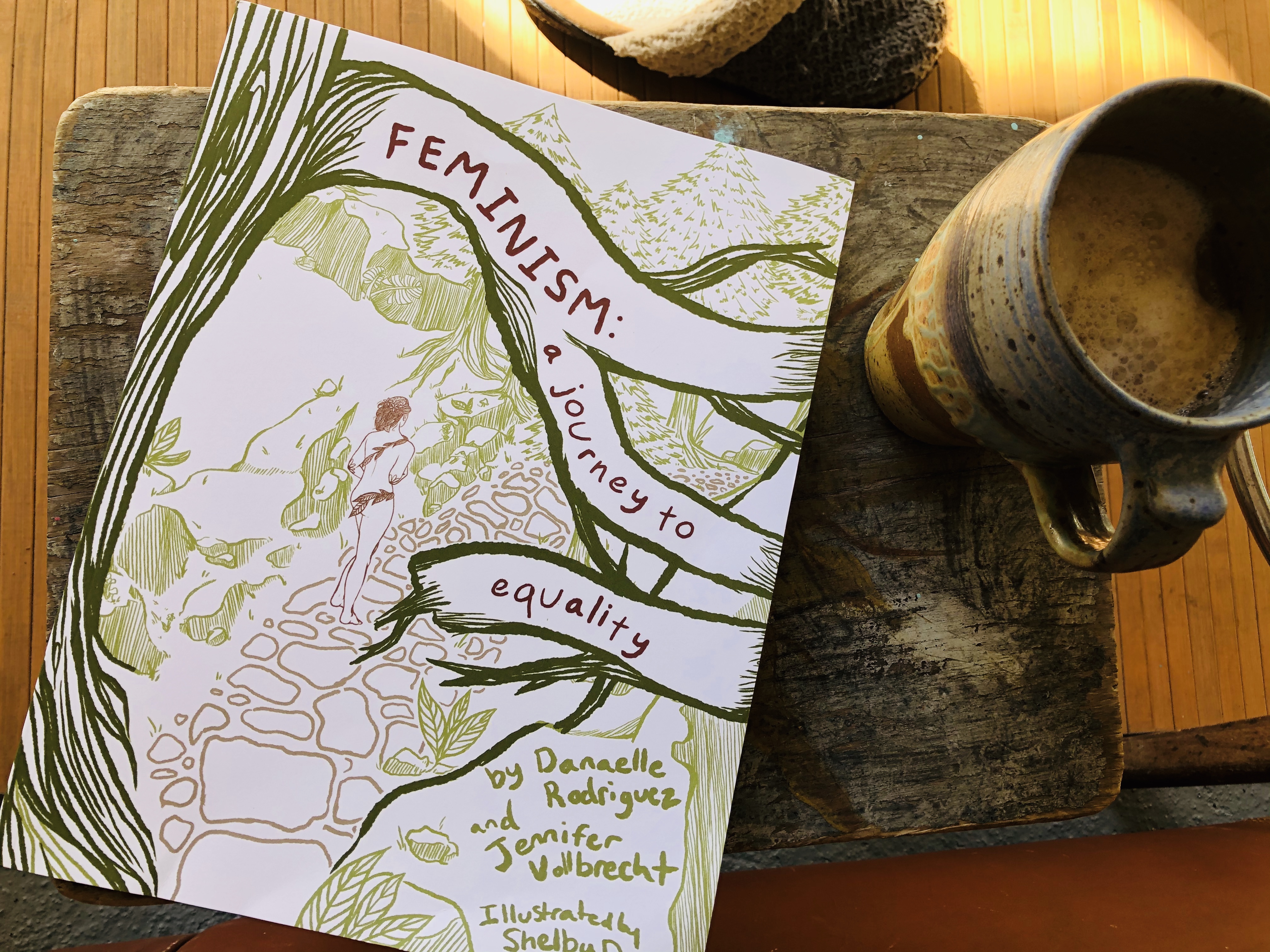
A journey through feminism books involves a structured exploration of the intellectual, social, and political movements that have advocated for gender equality over several centuries. To navigate this field effectively in 2026, readers must engage with a progression of texts—from 18th-century foundational manifestos and mid-20th-century social critiques to contemporary analyses of intersectionality, queer theory, and global gender justice.
Understanding the Framework of Feminist Literature
Embarking on a journey through feminism books requires more than a casual reading list; it demands an understanding of the "waves" or eras that define the movement. While the "wave" metaphor is sometimes criticized for oversimplifying the continuity of feminist thought, it remains a vital pedagogical tool for organizing the vast library of gender studies.
In 2026, scholars and readers alike categorize these works based on their primary objectives. Early texts focused on legal recognition and the right to vote (suffrage). The mid-20th century shifted toward cultural and social liberation, addressing the domestic sphere and reproductive rights. By the late 20th century and into the early 21st, the focus expanded to include the nuances of identity, race, and class, leading to the highly digitized and intersectional discourse we see today.
When selecting books for this journey, one must distinguish between primary sources—the original manifestos and essays—and secondary sources, which provide historical context and analysis. A comprehensive journey includes both to ensure the reader understands not just what was said, but why it was revolutionary at the time.
The Foundational Texts: Pre-20th Century
The roots of feminist literature lie in the Enlightenment and the early industrial era. These books were often dangerous to write and publish, as they challenged the biological and theological "certainties" of the time.
Mary Wollstonecraft: A Vindication of the Rights of Woman (1792)
Widely considered the cornerstone of feminist philosophy, Wollstonecraft’s work argues that women are not naturally inferior to men but appear to be only because they lack access to education. Her writing was a direct response to political theorists of the day who argued that women should receive only domestic training. In 2026, this text remains essential for understanding the origins of liberal feminism and the demand for rational education.
Sojourner Truth: Ain't I a Woman? (1851)
While originally a speech delivered at the Women's Rights Convention in Akron, Ohio, the transcriptions and subsequent publications of Truth’s words are vital "texts" in the feminist canon. Truth, a formerly enslaved woman, challenged the prevailing notions of womanhood that were often reserved for white, middle-class women. Her contribution marks the earliest published evidence of what would later be termed intersectionality—the understanding that race and gender cannot be separated in the struggle for justice.
The Second Wave: Social and Cultural Revolution
Mid-20th-century feminism moved the battleground from the ballot box to the home, the workplace, and the body. The books from this era are characterized by a deep interrogation of "womanhood" as a social construct rather than a biological destiny.
Simone de Beauvoir: The Second Sex (1949)
Beauvoir’s magnum opus is perhaps the most influential feminist book of the 20th century. Her famous dictum, "One is not born, but rather becomes, a woman," laid the groundwork for the distinction between sex (biological) and gender (social). The Stanford Encyclopedia of Philosophy notes that Beauvoir’s existentialist approach provided a rigorous framework for analyzing how society designates women as "The Other."
Betty Friedan: The Feminine Mystique (1963)
Friedan identified "the problem that has no name"—the widespread unhappiness of women in the 1950s and 60s who were confined to domestic roles despite having the education and desire for professional lives. While Friedan’s work has been criticized in later decades for focusing almost exclusively on white, suburban housewives, its historical importance in sparking the second wave in the United States is undeniable.
Bell Hooks: Ain't I a Woman? Black Women and Feminism (1981)
Writing at the tail end of the second wave, bell hooks (who chose to keep her name lowercase to focus on her work rather than her person) revolutionized the movement. She critiqued both the white-dominated feminist movement and the male-dominated Black liberation movement for failing to address the specific needs of Black women. Her work is a prerequisite for any modern journey through feminism books because it bridges the gap between historical activism and contemporary intersectionality.
The Transition to Intersectionality and Queer Theory
As the 20th century drew to a close, feminism underwent a radical transformation. Influenced by postmodernism, writers began to deconstruct the very category of "woman" and examine how various forms of oppression—racism, homophobia, transphobia, and classism—overlap.
Kimberlé Crenshaw: Mapping the Margins (1991)
Although originally a law review article, Crenshaw’s work on intersectionality has been collected in numerous volumes and is foundational to 21st-century feminism. She provided the terminology and the legal framework to explain why a Black woman might face discrimination that is not merely "racism plus sexism," but a unique, synergistic form of prejudice. This concept is the defining characteristic of feminist literature in 2026.
Judith Butler: Gender Trouble (1990)
Butler’s work introduced the concept of gender performativity. They argued that gender is not something we are, but something we do through repetitive acts. This text is technically demanding but essential for understanding the theoretical shift toward third-wave feminism and its inclusion of trans and non-binary perspectives.
Contemporary Perspectives: 2010s to 2026
Modern feminist literature is diverse, global, and often more accessible than the academic prose of the 1990s. These books translate complex theories into personal narratives and actionable social critiques.
Roxane Gay: Bad Feminist (2014)
Gay’s collection of essays was a cultural phenomenon because it embraced the contradictions of modern life. She acknowledged that one can be a feminist while also enjoying things that might seem "un-feminist," such as certain types of music or fashion. This book humanized the movement for a new generation.
Chimamanda Ngozi Adichie: We Should All Be Feminists (2014)
Adapted from her TED talk, Adichie’s book offers a clear, concise, and global perspective on gender equality. It focuses on the subtle ways gender expectations are ingrained in children and the universal benefits of dismantling these stereotypes.
Sara Ahmed: Living a Feminist Life (2017)
Ahmed’s work is highly regarded in 2026 for its concept of the "feminist killjoy." She explores how feminism is not just a theory but a way of navigating the world that often involves disrupting social "happiness" to point out injustice. Her writing style blends academic rigor with deeply personal reflection.
Navigating the Major Works: A Comparative Overview
To help organize a reading plan, the following table compares key attributes of landmark feminist texts across different eras.
| Era | Landmark Book | Primary Theme | Key Concept Introduced |
|---|---|---|---|
| First Wave | A Vindication of the Rights of Woman | Rationality & Education | Equal capacity for reason |
| Second Wave | The Second Sex | Existentialism & Alterity | Woman as "The Other" |
| Second Wave | The Feminine Mystique | Domestic Confinement | The problem that has no name |
| Intersectional | Sister Outsider (Audre Lorde) | Difference & Poetry | The master's tools vs. his house |
| Third Wave | Gender Trouble | Performativity | Gender as a social performance |
| Fourth Wave | Hood Feminism (Mikki Kendall) | Essential Needs | Feminism as a survival issue |
Technical Depth: Critical Concepts in Feminist Reading
When journeying through these books, readers will encounter specific terminology that is essential for a deep understanding of the subject.
- Patriarchy: In a feminist context, this refers to a social system in which men hold primary power and predominate in roles of political leadership, moral authority, social privilege, and control of property.
- Hegemony: Often used when discussing the work of Antonio Gramsci but applied to feminism, this refers to the dominance of one social group over others, not just through force, but through the shaping of "common sense" and cultural norms.
- The Male Gaze: A term coined by film theorist Laura Mulvey (often discussed in feminist media studies books) describing how visual arts and literature depict the world and women from a masculine, heterosexual point of view.
- Essentialism: The belief that men and women have inherent, unique natures or essences. Most modern feminist literature works to debunk essentialism in favor of social constructionism.
Expanding the Journey: Beyond the West
A truly comprehensive journey through feminism books in 2026 must look beyond Western, Anglocentric perspectives. Global feminism addresses issues such as the impact of colonialism, international labor exploitation, and diverse cultural interpretations of gender roles.
- Chandra Talpade Mohanty: Under Western Eyes: Feminist Scholarship and Colonial Discourses. This work critiques Western feminists for treating "Third World women" as a homogenous, powerless group.
- Naval El Saadawi: The Hidden Face of Eve. A crucial text from the Egyptian physician and activist exploring the status of women in the Arab world.
- Silvia Federici: Caliban and the Witch. This book links the rise of capitalism to the historic persecution of women, providing a "socialist feminist" perspective that remains highly influential in 2026's economic discussions.
Common Pitfalls and How to Avoid Them
The most common mistake when starting a journey through feminism books is reading in a vacuum. Feminism is a conversation that spans centuries; reading a book from 1960 without understanding the response written in 1980 can lead to a skewed perspective.
- Don't ignore the "Critiques": For every major text like The Feminine Mystique, there are equally important critiques (like bell hooks' Feminist Theory: From Margin to Center) that point out who was left out of the narrative.
- Balance Theory with Memoir: Academic texts like those by Judith Butler can be dense. Balancing them with memoirs such as I Know Why the Caged Bird Sings by Maya Angelou or Men Explain Things to Me by Rebecca Solnit helps ground abstract concepts in lived experience.
- Check the Context: In 2026, some older texts use language or harbor views (particularly regarding trans rights or racial issues) that are now considered outdated or harmful. Reading these with a critical eye and historical context—often provided in modern introductions—is necessary for a scholarly approach.
Frequently Asked Questions
Which book should a complete beginner start with?
For most readers in 2026, "We Should All Be Feminists" by Chimamanda Ngozi Adichie is the best entry point. It is short, accessible, and provides a clear definition of feminism that applies to modern life. After that, moving to "Bad Feminist" by Roxane Gay provides a contemporary look at the complexities of the movement.
What is the difference between radical and liberal feminism in literature?
Liberal feminism, exemplified by Mary Wollstonecraft and later Betty Friedan, focuses on achieving equality through legal and political reform within existing social structures. Radical feminism, seen in works like Shulamith Firestone’s "The Dialectic of Sex," argues that the entire patriarchal system must be dismantled and rebuilt, as it is fundamentally biased against women.
Does feminist literature include fiction?
Yes, fiction is a vital part of the journey. Novels like "The Handmaid's Tale" by Margaret Atwood, "The Color Purple" by Alice Walker, and "The Golden Notebook" by Doris Lessing allow readers to explore feminist themes through empathy and narrative. Fiction often illustrates the psychological impact of oppression more vividly than theoretical essays.
Are books from the 19th century still relevant in 2026?
Absolutely. While the specific legal battles (like the right to own property or vote) have largely been won in many nations, the underlying arguments about the nature of equality and the importance of female education remain the bedrock of modern thought. Understanding where these ideas started is essential for defending them today.
How has feminist literature changed in the 2020s?
Recent literature has become increasingly focused on trans-inclusion, climate change (ecofeminism), and digital activism. Books are now more likely to address the "gig economy," the impact of artificial intelligence on gender bias, and the globalized nature of the "care economy."
Practical Recommendation for Next Actions
To begin your journey through feminism books, start by creating a "chronological foundation." Purchase or borrow "A Vindication of the Rights of Woman" and "The Second Sex." Read these first to understand the historical stakes. Simultaneously, subscribe to a contemporary feminist journal or follow modern essayists on platforms like Substack to see how these historical ideas are being applied to current events in 2026. This dual approach—looking back while staying current—ensures a balanced and sophisticated understanding of the movement.