A.J. Foyt Jr. was the first driver in history to win the Indianapolis 500 four times, securing victories in 1961, 1964, 1967, and 1977. This milestone established a benchmark of excellence at the Brickyard that remained unmatched for a decade and serves as the foundation of his legacy as one of the greatest American racers.
The Significance of the Four-Win Club
In the world of motorsports, the Indianapolis 500 stands as the "Greatest Spectacle in Racing." Winning it once is a career-defining achievement; winning it four times is a feat of longevity, adaptability, and sheer mechanical prowess. As of 2026, A.J. Foyt Jr. remains the senior member of an elite quartet that includes Al Unser Sr., Rick Mears, and Helio Castroneves.
Foyt’s journey to four wins is particularly notable because it spanned two distinct eras of automotive engineering. He began his winning streak in the twilight of the front-engine "roadster" era and concluded it well into the dominance of the rear-engine, high-downforce era. This transition required a fundamental shift in driving style and technical understanding, a challenge that Foyt met with his trademark "tough-as-nails" approach. His ability to provide precise feedback to his mechanics and, in many cases, perform the mechanical work himself, set him apart from his contemporaries.
1961: The First Step into Legend
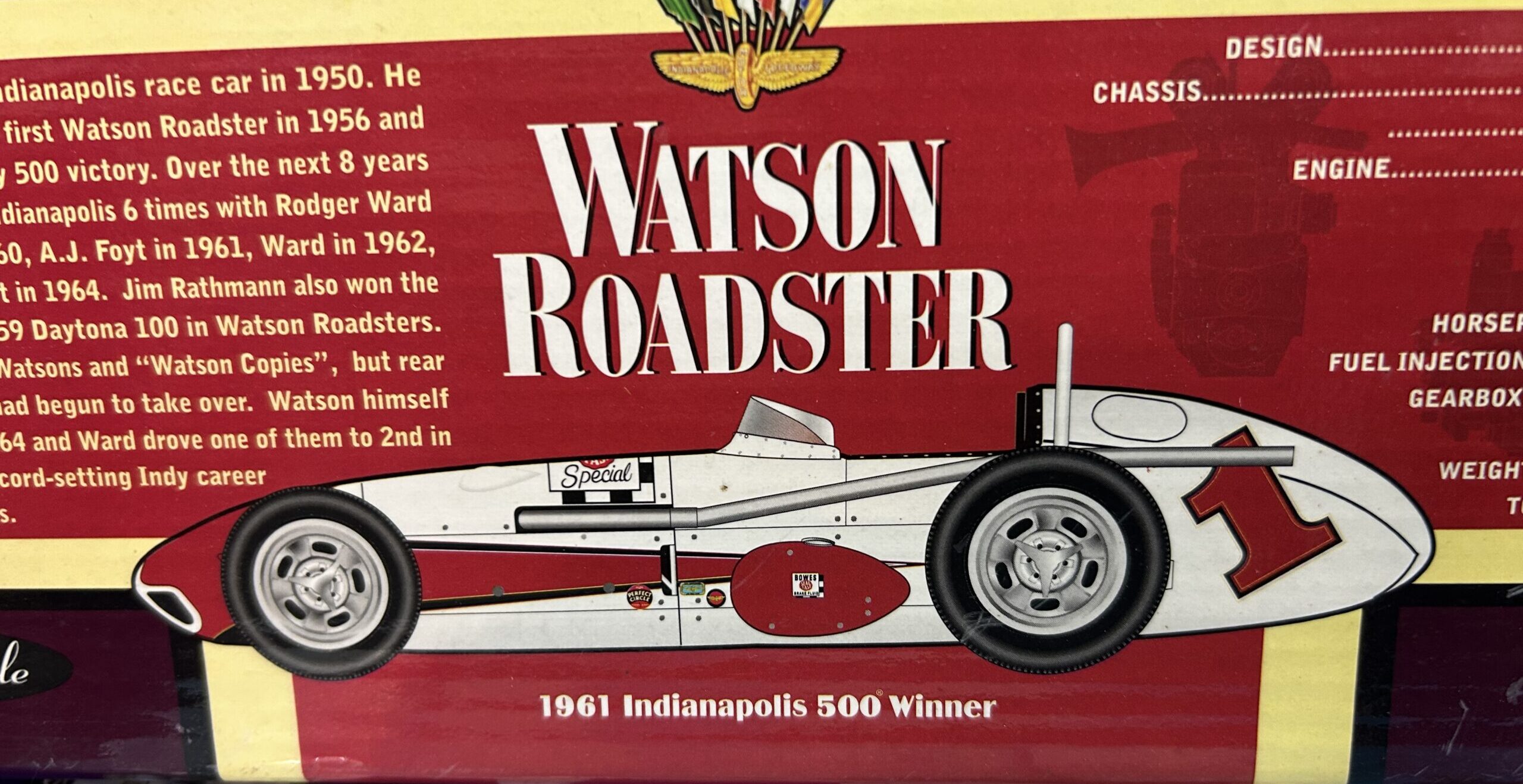
Foyt’s first victory in 1961 is remembered as one of the most thrilling duels in the history of the Speedway. Driving the No. 1 Bowes Seal Fast Trevis-Offenhauser, Foyt found himself locked in a relentless battle with Eddie Sachs. The race was a classic confrontation between two of the era's biggest personalities.
The 1961 race was the 50th anniversary of the inaugural event, and the technical landscape was still dominated by the front-engine roadster. These machines were heavy, powerful, and required immense physical strength to handle over 500 miles. Mid-way through the race, a refueling error in Foyt’s pit meant his car was not completely filled with fuel. This forced Foyt to drive at a blistering pace to build a gap before a necessary late-race pit stop.
Sachs took the lead when Foyt pitted, but in his pursuit to maintain the pace, Sachs wore his tires down to the cords. With only three laps remaining, Sachs was forced to pit for safety, handing the lead back to Foyt. This win proved that Foyt possessed not only the speed to compete but the discipline to capitalize on his opponents' misfortunes.
1964: The End of the Roadster Era
By 1964, the "British Invasion" led by Lotus and driver Jim Clark had introduced the rear-engine car to Indianapolis, threatening to make the traditional American roadster obsolete. Despite the superior handling and weight distribution of the rear-engine challengers, Foyt stuck with his trusted front-engine Watson-Offenhauser, prepared by George Bignotti.
The 1964 race was overshadowed by a tragic second-lap accident that claimed the lives of Dave MacDonald and Eddie Sachs, leading to the first red-flag stoppage in the race's history. When the race resumed, the Lotus-Fords of Jim Clark and Dan Gurney showed immense speed but suffered from tire and suspension failures.
Foyt’s victory in 1964 was a masterclass in reliability and endurance. He led 146 of the 200 laps, setting a then-record average speed of 147.350 mph. This victory remains historically significant as the last time a front-engine car won the Indianapolis 500. It marked the definitive end of an era, and Foyt, ever the pragmatist, knew he would have to adapt to rear-engine technology to win again.
1967: Master of the Rear-Engine Transition
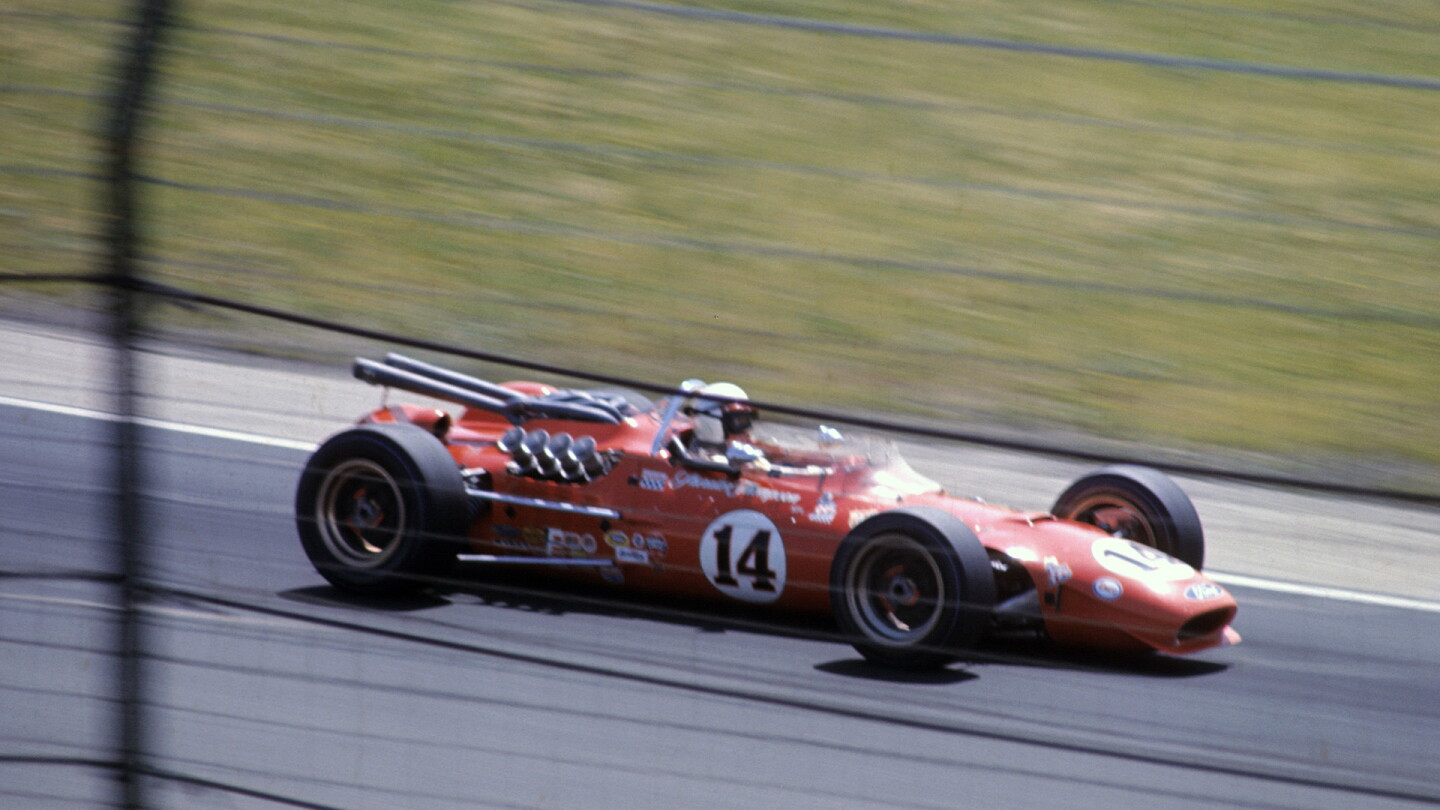
The 1967 Indianapolis 500 is often cited as the year of the "Silent Sam" turbine car. Parnelli Jones, driving the STP-Paxton Turbocar, dominated the field, leading almost the entire race with a car that hissed rather than roared. Foyt, now driving a rear-engine Coyote-Ford of his own design and manufacture, was the only driver capable of staying within striking distance of the turbine.
As the race neared its conclusion, the turbine car suffered a $6 bearing failure with just three laps to go. Foyt, who had been running second, inherited the lead. However, the drama was not over. On the final lap, a massive multi-car accident broke out in Turn 4, clogging the track with debris and spinning cars.
Foyt’s experience and intuition saved his race. Suspecting a wreck based on the behavior of the crowd and the smell of tire smoke, he slowed his car to a crawl, navigating through the carnage to take the checkered flag. This win was particularly meaningful as it was the first victory for his own "Coyote" chassis, proving that Foyt was as capable a constructor as he was a driver.
1977: The Historic Fourth and the "Coyote" Legacy
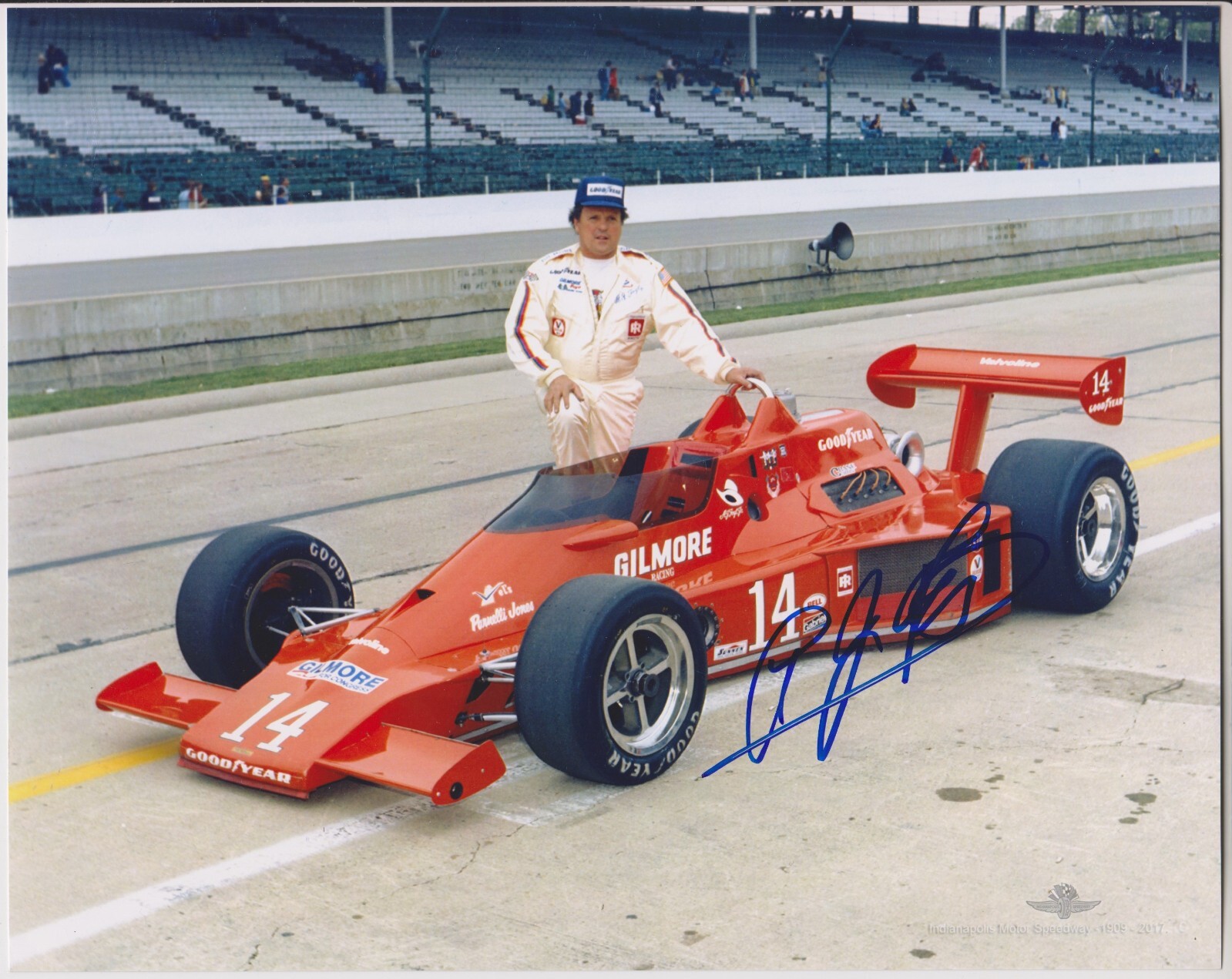
The decade following his third win was a period of frustration and near-misses at Indianapolis. By 1977, many critics believed Foyt’s best days were behind him. He arrived at the track with a revised Coyote chassis and the "Foyt-Indy" V8 engine—a heavily modified version of the Ford engine he had used previously.
The 1977 race was a battle of attrition and speed between Foyt and Gordon Johncock. Johncock’s Wildcat-DGS was arguably the faster car for much of the afternoon, leading 129 laps. However, the intense heat took a toll on the machinery. With 16 laps remaining, Johncock’s engine expired, allowing Foyt to take the lead.
When Foyt crossed the finish line to become the first four-time winner, the celebration was unparalleled. In a rare break from tradition, Speedway owner Tony Hulman joined Foyt in the pace car for a victory lap. This win cemented Foyt’s status as a living legend and set a record that many believed would never be broken.
Technical Evolution: Comparing the Winning Machines
Foyt’s four wins provide a snapshot of the rapid technological evolution in open-wheel racing during the mid-20th century.
| Year | Chassis | Engine | Drive Layout | Winning Speed (Avg) |
|---|---|---|---|---|
| 1961 | Trevis | Offenhauser | Front-Engine | 139.130 mph |
| 1964 | Watson | Offenhauser | Front-Engine | 147.350 mph |
| 1967 | Coyote | Ford V8 | Rear-Engine | 151.207 mph |
| 1977 | Coyote | Foyt V8 | Rear-Engine | 161.331 mph |
The Offenhauser Engine
In his first two wins, Foyt relied on the legendary Offenhauser (or "Offy") engine. This four-cylinder powerplant was the backbone of American racing for decades. Its simplicity and torque-rich power delivery made it ideal for the heavy roadsters. However, as aerodynamics became more critical, the Offy's tall profile became a liability, eventually giving way to more compact V8 designs.
The Coyote Chassis
Foyt’s 1967 and 1977 wins came in cars built by his own team. The Coyote chassis was inspired by the Lotus designs but ruggedized for the bumps and high-stress loads of the Indianapolis Motor Speedway. By 1977, the Coyote featured sophisticated aerodynamics, including front and rear wings that generated significant downforce, a far cry from the "wingless" roadsters of the early 60s.
The Rivalries and Context of the Foyt Era
A.J. Foyt’s career was defined by the quality of his competition. To win four times, he had to beat some of the greatest names in the history of the sport, including Mario Andretti, Parnelli Jones, the Unser brothers, and Dan Gurney.
His rivalry with Mario Andretti was particularly storied. While Andretti was often seen as the more "global" driver due to his success in Formula 1, Foyt was the undisputed king of the American oval. Their contrasting styles—Andretti’s technical finesse versus Foyt’s brute force and mechanical intuition—created a narrative that drove fan interest in IndyCar racing for decades.
Foyt's success also coincided with the rise of the United States Auto Club (USAC) and the eventual formation of CART (Championship Auto Racing Teams). Throughout the political turmoil of the sport, Foyt remained a staunch loyalist to the Indianapolis Motor Speedway and the traditional structures of American racing.
Legacy and Modern Standing in 2026
As of 2026, A.J. Foyt’s influence on the Indianapolis 500 remains pervasive. Although he retired from full-time driving in 1993, his team, A.J. Foyt Enterprises, continues to compete at the highest level of the NTT IndyCar Series.
His four-win record is no longer solitary, but it is often regarded as the most difficult to achieve because of the era in which it occurred. Unlike modern drivers who benefit from highly standardized chassis and engine packages, Foyt was often developing his own equipment while competing. He remains the only driver to win the Indianapolis 500, the Daytona 500 (NASCAR), and the 24 Hours of Le Mans (Sports Cars), a testament to a level of versatility that is almost non-existent in today’s specialized racing environment.
For fans and historians at the Brickyard, Foyt represents the "Ironman" era of racing—a time when drivers were expected to be as handy with a wrench as they were with a steering wheel.
Frequently Asked Questions
Who were the other drivers to win the Indy 500 four times?
Following Foyt's fourth win in 1977, Al Unser Sr. joined the club in 1987, followed by Rick Mears in 1991. Most recently, Helio Castroneves became the fourth member with his victory in 2021. As of 2026, no driver has yet won a fifth Indianapolis 500.
What was the secret to Foyt’s longevity at Indianapolis?
Foyt’s longevity was rooted in his deep mechanical understanding of his cars. Because he often built and maintained his own equipment, he knew exactly how much stress the car could take. This allowed him to manage his equipment over the 500-mile distance better than drivers who relied solely on their team’s feedback.
Did A.J. Foyt ever win the Indy 500 as an owner only?
Yes. In addition to his four wins as a driver, A.J. Foyt won the Indianapolis 500 as a team owner in 1999 with driver Kenny Bräck. This victory further solidified his status as one of the most successful figures in the history of the Speedway.
How did the 1977 win change the history of the race?
The 1977 win was a cultural milestone. It was the first time a driver reached the "four-win" mark, which many thought was a statistical impossibility. It also marked the first time a female driver, Janet Guthrie, qualified for the race, making the 1977 event one of the most significant in motorsports history.
What is the "Foyt-Indy" engine?
The Foyt-Indy engine was a turbocharged V8 based on the Ford quad-cam engine. Foyt purchased the rights to the engine design and developed it in-house at his shop in Houston, Texas. By the mid-70s, it was a highly competitive alternative to the dominant Cosworth DFX engines.
Recommendation for Further Exploration
To truly appreciate the magnitude of Foyt’s four victories, a visit to the Indianapolis Motor Speedway Museum is highly recommended. The museum houses several of Foyt’s winning cars, including the 1961 Trevis and the 1977 Coyote. For those unable to visit in person, the official Indianapolis 500 digital archives provide lap-by-lap charts and historical footage that illustrate the evolution of the race during Foyt’s twenty-year span of dominance. Understanding the mechanical differences between these cars provides the necessary context for why his achievement remains one of the greatest in all of sports.