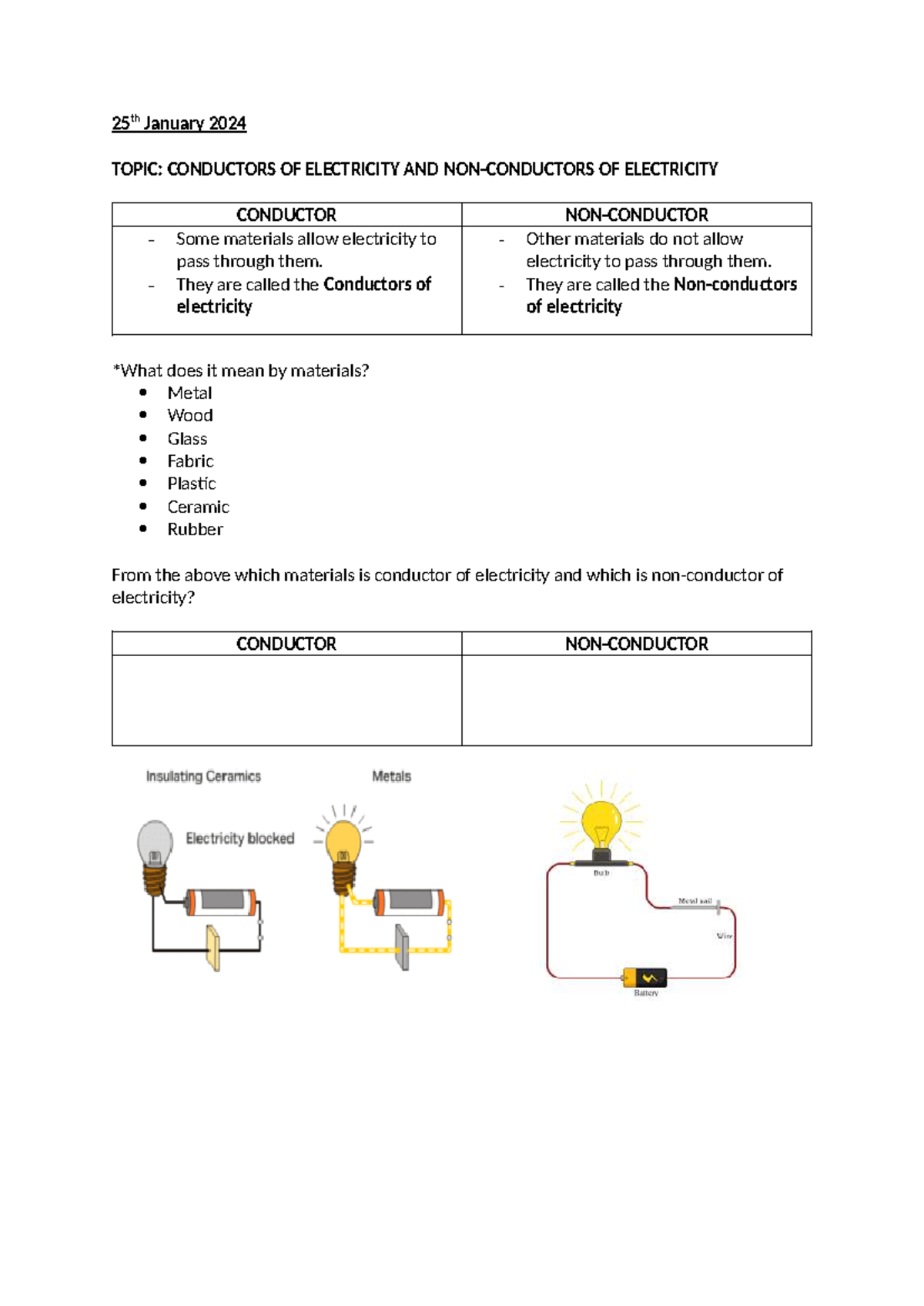
In an electrical circuit, a conductor will guide the current by providing a low-resistance path for the flow of charge carriers, typically electrons. By utilizing materials with high electron mobility, such as copper or aluminum, conductors ensure that electrical energy is directed from a power source to a specific load with minimal energy loss, effectively acting as the "piping" for electricity.
The Fundamental Mechanism of Electrical Conduction
To understand how a conductor will guide the current, one must first look at the atomic structure of the materials involved. Not all materials are created equal when it comes to the movement of electricity. Conductors are characterized by having a large number of "free electrons." In metallic elements, the outermost electrons (valence electrons) are not tightly bound to any single atom. Instead, they form what physicists call an "electron sea" or "electron cloud" that permeates the entire crystalline structure of the metal.
When a potential difference, or voltage, is applied across the ends of a conductor, an electric field is established within the material. This field exerts a force on the free electrons, causing them to drift in a specific direction—away from the negative terminal and toward the positive terminal. This organized drift of charge is what we define as electrical current. The conductor "guides" this current because the electrons find it significantly easier to move through the metallic lattice than through the surrounding air or insulating materials, which lack these free charge carriers.
The efficiency with which a conductor guides the current is determined by its conductivity. Conductivity is the inverse of resistivity; a material with high conductivity allows current to flow with very little opposition. In the engineering standards of 2026, maintaining high conductivity remains a primary goal for power distribution and electronic circuit design, as it directly impacts energy efficiency and heat management.
Material Selection: Why Specific Metals Guide Current Better
The choice of material is critical when determining how effectively a conductor will guide the current. While many substances can conduct electricity to some degree, only a few are practical for widespread industrial and residential use.
Copper: The Industry Standard
Copper remains the most prevalent material for guiding current in 2026. Its high conductivity—second only to silver—makes it ideal for everything from micro-electronics to heavy-duty building wiring. Beyond its electrical properties, copper is ductile, meaning it can be drawn into thin wires without breaking, and it possesses excellent thermal conductivity, which helps dissipate the heat generated by electron friction.
Aluminum: The Lightweight Alternative
Aluminum is frequently used in large-scale power transmission lines. Although it has only about 61% of the conductivity of copper, it is significantly lighter and less expensive. To guide the same amount of current as a copper wire, an aluminum wire must have a larger cross-sectional area. However, its reduced weight allows for longer spans between utility poles, reducing infrastructure costs.
Gold and Silver: Specialized Applications
Silver is the most conductive element, but its high cost and susceptibility to tarnishing (forming silver sulfide) limit its use to specialized audio connectors and high-end scientific instruments. Gold, while less conductive than copper or silver, is highly resistant to corrosion. This makes it the preferred material for "guiding" current across the delicate contact points in semiconductor chips and high-quality connectors where reliability is more important than raw conductivity.
Physical Factors Affecting Current Guidance
A conductor's ability to guide current is not solely dependent on the material; physical dimensions and environmental conditions play a massive role. Engineers in 2026 rely on precise calculations to ensure that conductors are appropriately sized for their intended application.
Cross-Sectional Area
The thickness of a wire, known as its gauge, is perhaps the most significant physical factor. A larger cross-sectional area provides more paths for electrons to flow, which reduces the overall resistance. If a wire is too thin to guide the required current, the "friction" of the electrons colliding with the atomic lattice will generate excessive heat, leading to energy loss and potential fire hazards.
Length of the Conductor
Resistance is directly proportional to the length of the conductor. The longer the path the current must take, the more collisions the electrons will experience, leading to a "voltage drop." To guide current effectively over long distances, such as from a power plant to a city, high-voltage transmission is used to minimize the current (amperage), thereby reducing the energy lost to the resistance of the long conductor.
Temperature Effects
In most metallic conductors, resistance increases as temperature rises. When a metal heats up, its atoms vibrate more vigorously. These vibrations interfere with the path of the drifting electrons, making it harder for the conductor to guide the current efficiently. This is why cooling systems are essential in high-performance computing and heavy power machinery; by keeping the conductors cool, the system maintains its efficiency.
The Role of Insulation in Guiding Current
A conductor cannot guide current effectively if the electricity is allowed to "leak" into the surrounding environment. This is where insulators come into play. Insulation serves as the walls of the "pipe," confining the electron flow to the conductive path.
Materials like PVC, cross-linked polyethylene (XLPE), and various rubbers are used to coat wires. These materials have very few free electrons; their valence electrons are tightly bound to their atoms. Consequently, when an electric field is applied, the electrons cannot move freely. By wrapping a conductor in an insulator, we ensure that the current follows the intended path and does not jump to other conductors (short circuits) or pass through humans (electric shock).
In 2026, advancements in polymer science have led to thinner, more heat-resistant insulators. These allow for more compact wiring in electric vehicles and aerospace applications while still providing the necessary containment to guide current safely at high voltages.
Comparative Analysis of Conducting Materials (2026 Standards)
The following table compares the physical and electrical properties of common materials used to guide current in modern engineering.
| Material | Relative Conductivity (IACS) | Resistivity (nΩ·m) | Primary Use Case in 2026 | Key Advantage |
|---|---|---|---|---|
| Silver | 105% | 15.9 | High-end electronics, audio | Highest conductivity |
| Copper | 100% | 16.8 | Building wire, motors, PCBs | Versatility & efficiency |
| Gold | 70% | 24.4 | Microchip leads, connectors | Corrosion resistance |
| Aluminum | 61% | 26.5 | Power grids, aircraft | Low weight, cost-effective |
| Steel | 3-15% | 100-700 | Supporting cores for lines | High tensile strength |
| Graphene | ~1000%+ | Variable | Experimental sensors, heat sinks | Ultra-high mobility |
Note: IACS stands for International Annealed Copper Standard.
Guiding Current in the Age of High-Frequency AC
When we discuss how a conductor will guide the current, we must distinguish between Direct Current (DC) and Alternating Current (AC). In DC systems, electrons flow uniformly through the entire cross-section of the wire. However, in AC systems—the type used in our power grids—a phenomenon known as the Skin Effect occurs.
As the frequency of the AC signal increases, the current tends to migrate toward the surface (the "skin") of the conductor. This means the center of the wire is barely used for guiding current. To combat this, engineers use "Litz wire"—a type of cable consisting of many thin, individually insulated strands twisted together. This increases the surface area available for current flow, allowing the conductor to guide high-frequency signals much more effectively than a solid wire of the same diameter.
Common Obstacles in Guiding Current
Even the best conductors face challenges that can impede their ability to guide current correctly. Identifying these issues is a core part of electrical maintenance and troubleshooting.
- Oxidation and Corrosion: When a conductor like copper is exposed to oxygen and moisture, it develops a layer of oxide. This layer is an insulator. If oxidation occurs at a connection point (like a terminal), it creates high resistance, which can lead to overheating and system failure.
- Mechanical Stress: Repeated bending or vibration can cause "work hardening" in metals, making them brittle. Eventually, small cracks form, reducing the effective cross-sectional area and making it harder for the conductor to guide the current.
- Electromagnetic Interference (EMI): When a conductor guides current, it creates a magnetic field around itself. Conversely, external magnetic fields can induce unwanted currents in a conductor. This is why sensitive data cables are "shielded" with a conductive foil or braid to protect the internal signal from being "misguided" by external noise.
The Future of Guiding Current: Superconductors
As of 2026, the frontier of electrical engineering involves the development of superconductors. These are materials that, when cooled to specific temperatures, exhibit zero electrical resistance. In a superconductor, the material doesn't just guide the current efficiently; it guides it perfectly.
While traditional conductors always lose some energy as heat, a current flowing through a superconducting loop could theoretically flow forever without a power source. Currently, most superconductors require extreme cooling (using liquid nitrogen or helium), but research into "Room-Temperature Superconductors" continues to be a major focus. If perfected, these materials would revolutionize the power grid, allowing us to guide current across continents with 0% loss.
Frequently Asked Questions
What happens if a conductor is too small to guide the current?
If a conductor is undersized for the amount of current passing through it, the resistance becomes too high. This results in significant voltage drops and the generation of heat. In extreme cases, the heat can melt the insulation, lead to a short circuit, or cause a fire. This is why fuse and circuit breaker ratings are strictly matched to the conductor's size.
Why is copper used more than silver if silver is more conductive?
The decision is purely economic. Silver is significantly more expensive than copper and offers only a marginal increase in conductivity (about 5-7%). For the vast majority of applications, the cost-benefit ratio favors copper. Silver is reserved for niche applications where every fraction of a percent of efficiency matters.
Does the shape of a conductor change how it guides current?
Yes. For most applications, a circular cross-section is used because it is the easiest to manufacture and provides a uniform electric field. However, in high-voltage busbars (found in power substations), flat rectangular bars are often used. This shape provides a larger surface area for heat dissipation and is easier to bolt together for high-current connections.
Can a gas or liquid guide current like a solid conductor?
Yes. Ionized gases (plasma) and electrolytes (liquids with dissolved salts or ions) can guide current. In a neon sign, an ionized gas acts as the conductor. In a car battery, the liquid electrolyte guides the current between the lead plates. However, these follow different physical rules than metallic conduction, as the charge carriers are often ions rather than free electrons.
How do "smart" conductors differ in 2026?
In 2026, "smart" conductors often refer to composite cables that include fiber-optic cores for data transmission alongside the metal strands for power. This allows the conductor to "guide" both energy and information simultaneously, enabling real-time monitoring of the cable’s temperature, strain, and electrical load.
Final Recommendations for Selecting Conductors
When designing a system where a conductor will guide the current, always prioritize the safety margin over material cost. Ensure that the wire gauge is rated for at least 125% of the expected continuous load to account for ambient temperature fluctuations and potential surges. In environments prone to moisture or chemical exposure, always opt for tinned copper or specific corrosion-resistant alloys to ensure the longevity of the conductive path. By understanding the atomic and physical principles of conduction, you can ensure that energy is moved safely, efficiently, and reliably.