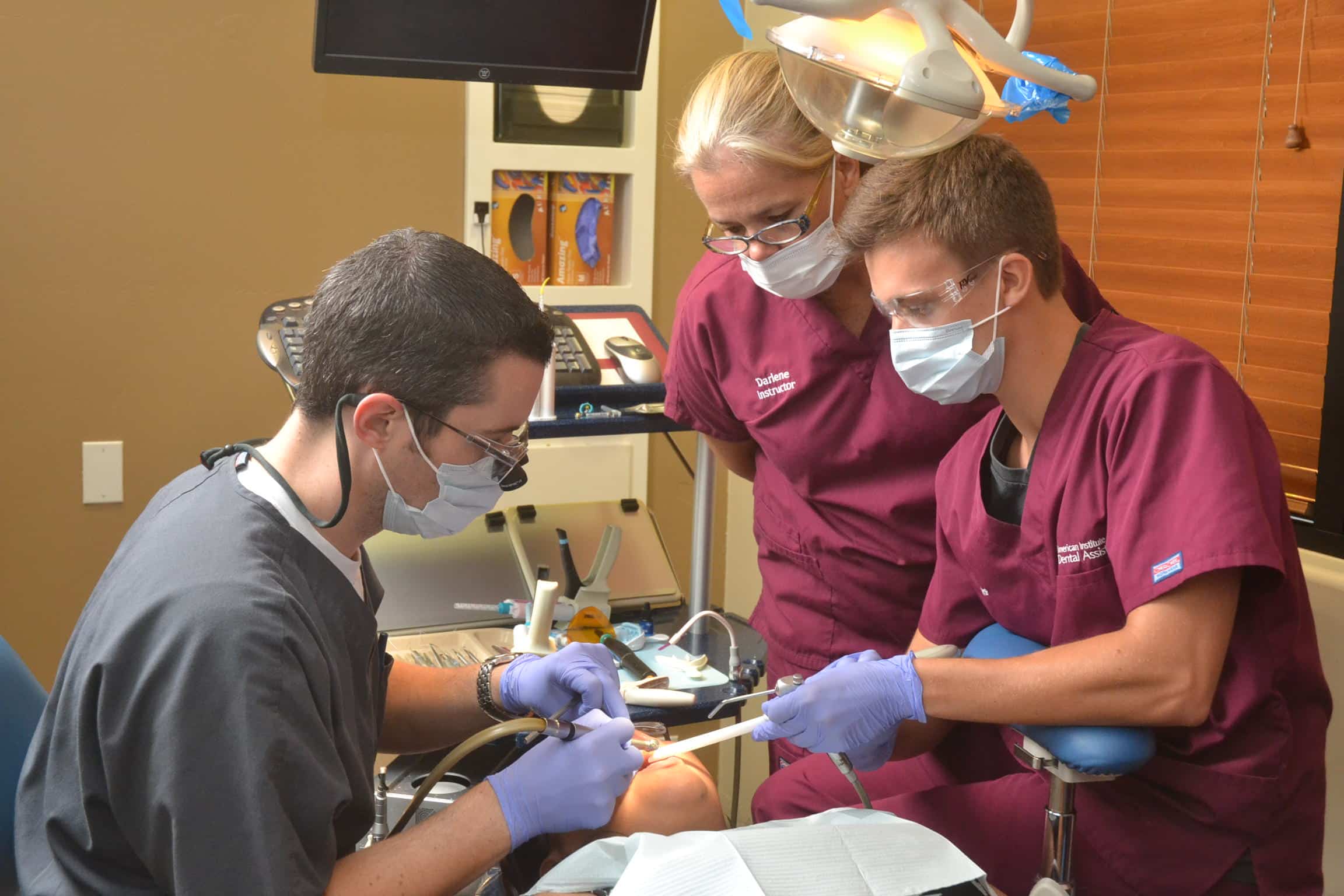
A dental assistant school program in Arlington provides the technical training and clinical hours required to become a Registered Dental Assistant (RDA) in Texas. These programs typically range from 10 weeks to 12 months, covering chairside assisting, dental radiology, and infection control to prepare students for the TSBDE certification exam and immediate employment.
The Role of a Dental Assistant in 2026
As of 2026, the dental assistant’s role has evolved into a highly technical position that blends clinical expertise with sophisticated patient management. In Arlington and the broader Dallas-Fort Worth (DFW) metroplex, dental assistants are the backbone of the dental office. They are responsible for ensuring that procedures run smoothly, patients feel comfortable, and the clinical environment remains sterile and safe.
A dental assistant is distinct from a dental hygienist. While hygienists focus primarily on cleaning teeth and assessing oral health, assistants work directly with the dentist during procedures. This involves "four-handed dentistry," where the assistant and dentist work in tandem to perform fillings, crowns, extractions, and root canals. Beyond chairside duties, dental assistants in Arlington are often trained in digital imaging, 3D printing for dental prosthetics, and managing electronic health records (EHR).
The demand for these professionals in Texas remains robust. As the population in Arlington continues to grow, so does the need for expanded dental services. Modern programs focus heavily on preparing students to meet this demand by providing a mix of classroom instruction and hands-on laboratory work.
Understanding Texas State Board Requirements
In Texas, the path to becoming a dental assistant is governed by the Texas State Board of Dental Examiners (TSBDE). While some entry-level positions may exist for "dental assistants" without specific credentials, to perform essential tasks such as taking X-rays (radiographs), an individual must become a Registered Dental Assistant (RDA).
To obtain RDA status in 2026, a student must:
- Complete a TSBDE-approved radiation health and safety course.
- Pass an exam covering jurisprudence, infection control, and radiology.
- Possess a current Basic Life Support (BLS) certification.
- Submit an application with the required fees and pass a criminal background check.
Most Arlington dental assistant programs are specifically designed to bake these requirements into their curriculum. This means that by the time you graduate, you have already completed the necessary coursework and are prepared to sit for the state exam. Some programs even host the exam on-site, streamlining the transition from student to professional.
Program Curriculum and Technical Training
A comprehensive dental assistant program in Arlington is divided into several core modules. Each module is designed to build upon the last, moving from theoretical knowledge to practical application.
Dental Science and Anatomy
Students begin by learning the "language" of dentistry. This includes oral anatomy, histology (the study of tissues), and physiology. Understanding the structure of the tooth—from the enamel and dentin to the pulp and root canal—is essential for assisting in restorative procedures. Programs also cover pharmacology, ensuring assistants understand the local anesthetics and antibiotics commonly prescribed in a dental setting.
Infection Control and Sterilization
In a post-pandemic landscape, infection control is the most critical technical skill a dental assistant possesses. Students learn the rigorous protocols set by OSHA (Occupational Safety and Health Administration) and the CDC (Centers for Disease Control and Prevention). This includes the operation of autoclaves (steam sterilizers), the use of chemical indicators to verify sterility, and the proper handling of "sharps" and biohazardous waste. Students practice "breaking down" a treatment room and setting it up for the next patient to prevent cross-contamination.
Radiology and Digital Imaging
Radiology is a major component of the RDA license. Students learn the physics of X-rays and how to capture high-quality intraoral and extraoral images. In 2026, almost all Arlington offices use digital sensors rather than traditional film. Training includes techniques like the paralleling technique and the bisecting angle technique, as well as the use of Panoramic and Cone Beam Computed Tomography (CBCT) machines for 3D imaging.
Chairside Assisting and Materials
This is the "hands-on" heart of the program. Students learn how to transfer instruments to the dentist efficiently, manage oral evacuation (high-volume suction), and prepare dental materials. This includes mixing alginate for impressions, preparing composite resins for fillings, and creating temporary crowns. Mastery of four-handed dentistry minimizes the time a patient spends in the chair and improves the precision of the procedure.
Typical Program Structures in Arlington
Arlington offers a variety of educational paths, ranging from short-term vocational certificates to more extensive associate degrees. The choice depends on your career goals and how quickly you wish to enter the workforce.
| Program Type | Duration | Primary Focus | Best For |
|---|---|---|---|
| Vocational Certificate | 10–14 Weeks | Clinical Skills & RDA Prep | Fast entry into the workforce; hands-on learners. |
| Diploma Program | 8–10 Months | Clinical + Admin Skills | Comprehensive training; includes externship. |
| Associate Degree (AAS) | 2 Years | Comprehensive + General Ed | Long-term career growth; potential dental hygiene path. |
| Saturday-Only Programs | 10–12 Weeks | Accelerated Clinical | Working professionals; career changers. |
The Accelerated 10-Week Model
Many schools in Arlington specialize in accelerated formats. These programs often meet on Saturdays or in the evenings, utilizing actual dental offices as their "classrooms." This model is highly effective because it immerses students in a real-world environment from day one. It focuses heavily on the technical skills required for the RDA exam and immediate chairside competency.
The Traditional Collegiate Model
Community colleges in the Arlington and Tarrant County area often offer 1-year certificates or 2-year degrees. These programs provide a deeper dive into the science behind dentistry and often include more hours of clinical externships. They are ideal for students who may eventually want to bridge into dental hygiene or office management.
The Importance of the Clinical Externship
The externship is a mandatory component of most reputable Arlington dental assistant programs. It acts as a bridge between the classroom and the professional world. During an externship, students are placed in a local dental office—usually for 80 to 200 hours—to work under the supervision of a practicing dentist and lead assistants.
This experience is invaluable for several reasons:
- Real-World Speed: Classroom labs are controlled environments. Externships teach you how to maintain quality and safety in a fast-paced office.
- Networking: Many Arlington dental assistants are hired directly by their externship sites. It is effectively a long-term job interview.
- Specialty Exposure: You might be placed in a general dentistry office, or you could explore specialties like Orthodontics, Oral Surgery, or Pediatrics.
- Soft Skills: You learn how to manage "dental anxiety" in patients, communicate treatment plans, and handle the administrative flow of a busy practice.
Cost and Financial Considerations for 2026
The cost of dental assistant school in Arlington varies significantly based on the type of institution. For 2026, students can expect the following price ranges:
- Proprietary/Vocational Schools: $3,500 – $6,000. These often include the cost of scrubs, textbooks, and the initial RDA exam fee.
- Community Colleges: $2,500 – $5,000 for Tarrant County residents, depending on the number of credit hours.
- Private Career Colleges: $12,000 – $18,000. These programs are more expensive but often offer more robust financial aid packages and career placement services.
Financial Aid and Scholarships
Many students qualify for federal financial aid (FAFSA) if attending an accredited college. For vocational schools, internal payment plans are common. Additionally, organizations like the Texas Dental Association (TDA) sometimes offer scholarships or grants for students pursuing dental auxiliary careers to help address the healthcare workforce shortage in North Texas.
Career Outlook and Salary in Arlington, Texas
The Dallas-Fort Worth-Arlington metroplex is one of the strongest markets for dental professionals in the United States. According to projections for 2026, the job growth for dental assistants remains well above the national average for all occupations.
Salary Expectations
In Arlington, the average salary for a Registered Dental Assistant in 2026 typically ranges from $42,000 to $58,000 per year, or roughly $20 to $28 per hour. Entry-level graduates usually start at the lower end of this range, while those with specialized certifications (such as Nitrous Oxide Monitoring or Pit and Fissure Sealants) or several years of experience can command higher wages.
Advancement Opportunities
Becoming an RDA is often just the beginning. With additional training and years of experience, dental assistants in Arlington can move into:
- Lead Dental Assistant: Managing the clinical team and supply ordering.
- Office Manager: Handling the business operations, insurance billing, and scheduling.
- Specialized Assistant: Working in high-paying fields like Endodontics or Periodontics.
- Dental Sales or Education: Transitioning into selling dental equipment or teaching at a dental assistant school.
How to Choose the Right School in Arlington
When evaluating programs, do not simply look at the price. Consider the following factors to ensure you are getting a quality education:
- TSBDE Approval: Ensure the program is recognized by the Texas State Board of Dental Examiners. Without this, your hours may not count toward your RDA license.
- Lab Facilities: Does the school have modern dental chairs, digital X-ray machines, and sterilization equipment? You should train on the same technology you will use in the workforce.
- Instructor Experience: Are the instructors current or former RDAs or Dentists? Their practical experience is more important than theoretical knowledge.
- Job Placement Assistance: Ask for the school’s placement rate. A good school will have strong relationships with local Arlington dentists and help you refine your resume and interview skills.
- Class Size: Smaller class sizes ensure you get enough "chair time" and one-on-one instruction during lab sessions.
Frequently Asked Questions
Do I need a college degree to be a dental assistant in Arlington?
No, you do not need a four-year or even a two-year college degree. Most dental assistants in Arlington complete a certificate or diploma program that lasts less than a year. However, you must have a high school diploma or GED to enroll in most programs and to apply for your RDA license with the TSBDE.
How long does it take to become a dental assistant?
In Arlington, the timeframe depends on the program you choose. Accelerated programs can be completed in as little as 10 to 12 weeks. Traditional community college programs usually take two semesters (about 9 months) to complete a certificate, or two years for an associate degree.
Can I work while I go to school?
Yes, many Arlington programs are designed for working adults. They offer evening or Saturday classes specifically so students can maintain their current jobs while training for their new career. Accelerated programs are particularly well-suited for this.
Is the RDA exam difficult?
The TSBDE RDA exam is designed to ensure you can safely capture X-rays and understand basic Texas dental law and infection control. Students who graduate from an approved Arlington program generally have high pass rates because the curriculum is specifically tailored to the exam's content.
Are there bilingual opportunities for dental assistants in Arlington?
Absolutely. Arlington has a diverse population, and there is a high demand for bilingual dental assistants, particularly those who speak English and Spanish. Being bilingual can often lead to higher starting salaries and more job opportunities in the North Texas region.
What is the difference between an RDA and a CDA?
An RDA (Registered Dental Assistant) is a state-level credential required by Texas to perform specific tasks like X-rays. A CDA (Certified Dental Assistant) is a national credential offered by the Dental Assisting National Board (DANB). While not required in Texas, having your CDA can demonstrate a higher level of expertise and may be preferred by some specialty practices.
Next Steps for Prospective Students
If you are ready to begin your career, your first step should be to visit at least two different schools in the Arlington area. Request a tour of their clinical labs and ask to speak with a current student or a recent graduate. Verify that their curriculum includes the TSBDE-required courses for radiology, infection control, and jurisprudence. Once you have selected a program, ensure your BLS (Basic Life Support) certification is up to date, as this is a prerequisite for both your externship and your eventual state registration.