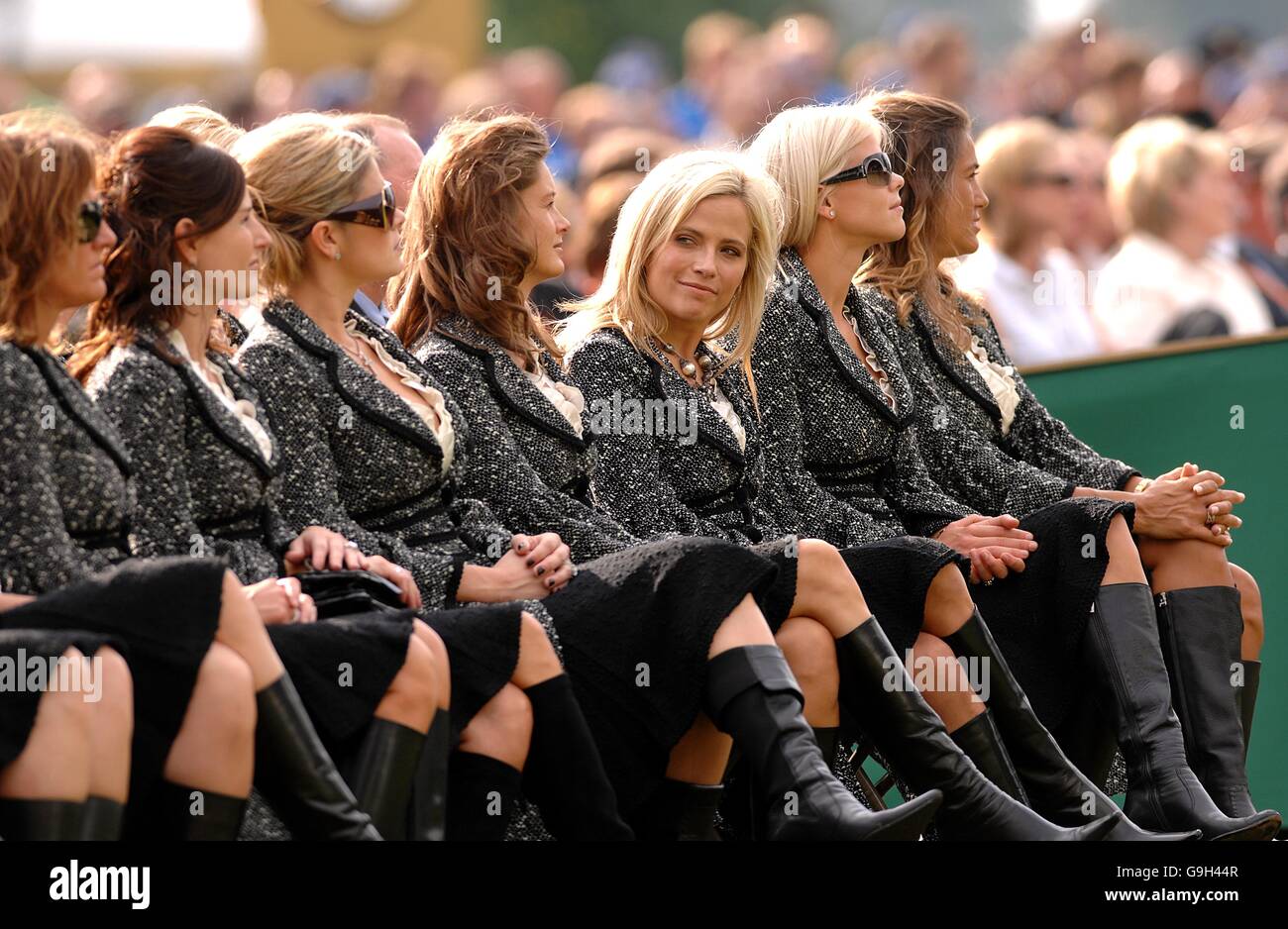
Amy Mickelson built a career spanning professional sports performance, executive non-profit leadership, and national health advocacy. Beginning as a dancer for the NBA’s Phoenix Suns, she transitioned into co-founding the Phil and Amy Mickelson Foundation, establishing the military support initiative Birdies for the Brave, and becoming a leading voice for breast cancer awareness following her 2009 diagnosis.
Early Career and Professional Background: Phoenix Suns & Academic Years
Before becoming one of the most visible figures in professional golf management and philanthropy, Amy Mickelson (née McBride) established her early professional career in athletic entertainment and public performance. While attending Arizona State University (ASU) in the early 1990s, she auditioned for and earned a spot on the Phoenix Suns Cheerleaders (the NBA franchise's high-profile dance team).
Working as a professional NBA dancer required rigorous physical training, choreography mastery, and extensive media representation. During her tenure with the Phoenix Suns, Mickelson engaged in regular community outreach, sponsor events, and public appearances across Arizona. This position provided her with foundational experience in:
- Public Relations and Media Handling: Navigating live television broadcasts, press interviews, and fan engagements within a major professional sports league.
- Event Logistics and Promotion: Coordinating large-scale promotional campaigns and charity drives hosted by the NBA.
- Community Outreach Execution: Participating in youth clinics, hospital visits, and regional philanthropic efforts managed by the Suns franchise.
It was during her time at Arizona State University in 1992 that she met Phil Mickelson, who was then a star collegiate golfer transitioning to the PGA Tour. They married in November 1996. While her early professional trajectory was rooted in communications and sports entertainment, her career evolved dramatically as she shifted toward executive charitable operations and community initiative design.
Transition to Executive Philanthropy: The Phil and Amy Mickelson Foundation
In 2004, Amy Mickelson co-founded the Phil and Amy Mickelson Foundation, serving as a core strategic leader. Rather than operating as a passive fundraising entity, the foundation was structured to directly design, fund, and oversee targeted community, educational, and emergency relief programs.
| Youth & K-12 STEM Education | Military Support & Veterans |
|---|---|
| - Mickelson ExxonMobil Academy- Special Project Grants | - Birdies for the Brave Co-Founding- Direct Family Financial Relief |
| Family & Community Upliftment | Disaster & Emergency Relief |
| - Regional Youth Athletics- College Access Scholarships | - Immediate Grant Distribution- Crisis Community Funding |
Educational Initiatives and STEM Training
One of the foundation's flagship efforts was the Mickelson ExxonMobil Teachers Academy, developed in partnership with ExxonMobil. Recognizing that early childhood science and mathematics education was crucial for long-term academic success, Amy and Phil Mickelson helped launch an intensive professional development academy for Grade 3–5 teachers.
The academy provided educators with innovative teaching tools, inquiry-based instructional strategies, and fully funded training sessions designed to inspire students in STEM (Science, Technology, Engineering, and Math) disciplines. Thousands of teachers across the United States participated in the program, indirectly impacting hundreds of thousands of elementary students.
Youth Athletics and College Access
Mickelson guided the foundation's focus toward youth access in sports and higher education. The foundation established scholarships and financial assistance programs targeting underprivileged youth, ensuring that financial barriers did not restrict access to secondary education or developmental athletic programs.
Disaster and Crisis Relief
Under Mickelson's guidance, the foundation repeatedly pivoted to address immediate humanitarian crises. Following natural disasters—such as major hurricanes impacting the American Gulf Coast—the foundation funneled direct financial aid to local distribution centers, first responders, and displaced families, demonstrating an operational model centered on rapid response and direct grantmaking.
Military Support Leadership: The Genesis of Birdies for the Brave
In 2004, driven by a desire to support post-9/11 military personnel and wounded veterans, Amy and Phil Mickelson created Birdies for the Brave. What began as a personal fundraising campaign quickly grew into one of the largest charity platforms in professional golf.
- Phil & Amy Mickelson Launch Birdies for the Brave (2004)
- Personal Pledge: $100 per Birdie / $500 per Eagle
- Direct Funding to Combat Veteran & Wounded Support Groups
- Adoption by PGA Tour as Circuit-Wide Philanthropic Platform
Strategic Concept and Rollout
The initiative originally tied financial contributions directly to performance on the golf course. Amy and Phil pledged $100 for every birdie and $500 for every eagle Phil made during the PGA Tour season. The proceeds were routed to non-profit organizations focused on supporting severely injured service members and combat veterans.
Key recipient organizations supported in the early stages included:
- Special Operations Warrior Foundation, providing college scholarships and educational counseling to surviving children of fallen special operations personnel.
- Homes for Our Troops, building specially adapted custom homes for severely injured post-9/11 veterans.
Expansion to PGA Tour-Wide Platform
Recognizing the potential for broader systemic impact, Amy Mickelson advocated for expanding the program beyond their personal foundation. The PGA Tour subsequently adopted Birdies for the Brave as a tour-wide national military outreach platform.
The program expanded to include military appreciation events at PGA Tour tournaments, free admission for military personnel, fundraising events organized by tour players' spouses, and millions of dollars raised annually for military homebuilding, rehabilitation, and family support services.
Health Advocacy: Breast Cancer Diagnosis and National Impact
In May 2009, Amy Mickelson was diagnosed with stage III breast cancer. The announcement led Phil Mickelson to suspend his PGA Tour schedule indefinitely to support her through intensive medical treatment, including surgery, chemotherapy, and radiation.
Her personal health battle quickly transformed into a high-visibility public advocacy campaign, leaving a lasting mark on health awareness and patient support networks within professional sports.
- May 2009: Diagnosis of Stage III Breast Cancer
- Public Openness & Demystification of Treatment
- April 2010: Masters Tournament Return & Public Milestone
- Long-Term Advocacy: Funding Research, Early Detection & Support
Raising Awareness and Demystifying Treatment
At a time when high-profile public figures often managed major health crises privately, the Mickelsons chose to share their journey openly. Amy's diagnosis brought significant national media attention to:
- Early Detection and Mammography: Highlighting the critical necessity of regular screenings for women in their 30s and 40s.
- Comprehensive Treatment Planning: Encouraging multi-disciplinary oncology approaches and strong family support systems.
- Emotional Resilience: Normalizing the physical and emotional challenges of chemotherapy, recovery, and long-term surveillance.
The 2010 Masters Tournament Moment
After nearly a year of treatment and physical absence from the public eye, Amy Mickelson traveled to Augusta National Golf Club in April 2010 to support Phil during the final round of the Masters Tournament. Phil won his third Green Jacket, and their emotional reunion behind the 18th green became one of the most iconic and poignant moments in modern sports media.
Beyond the emotional resonance, the moment served as a beacon of hope for cancer patients and families worldwide. It demonstrated survivor resilience and focused worldwide public attention on breast cancer advocacy organizations.
Long-Term Support for Cancer Charities
Following her recovery, Mickelson expanded her philanthropic scope to focus on cancer research funding, patient support networks, and community health access. She supported regional breast cancer foundations, participated in national awareness campaigns, and mentored other families navigating sudden, critical medical diagnoses.
Leadership in Golf Culture and Team Community Building
Beyond her named foundation work, Amy Mickelson has exercised substantial influence within the professional golf community for over three decades. Her involvement extended across organizational structures, spouse networks, and international team competitions.
PGA Tour Wives Association Leadership
Mickelson actively participated in the PGA Tour Wives Association, a non-profit organization managed by the spouses of professional golfers. The association conducts charitable events, youth hospital visits, and community renovation projects in host cities along the PGA Tour schedule. Her involvement helped elevate the scale of these events, leveraging sponsor partnerships to maximize charitable revenues.
Ryder Cup and Presidents Cup Team Unity
During Phil Mickelson’s record 12 Ryder Cup appearances and 12 Presidents Cup appearances, Amy played a prominent role in team logistics, spouse delegation leadership, and team morale. International team events require complex organization across family travel, host-city charitable commitments, and official functions.
Mickelson was widely recognized by players, team captains, and officials for fostering a cohesive, supportive environment among team families, helping establish traditions that remain part of U.S. team culture today.
Comparative Overview: Career Phases and Operational Scope
The following table summarizes Amy Mickelson’s career evolution, primary organizational roles, target populations, and documented impacts across four decades.
| Career Phase / Role | Timeframe | Primary Focus & Organization | Operational Scope & Key Impact |
|---|---|---|---|
| Sports Entertainment & Communications | Early 1990s | Phoenix Suns (NBA Dance Team) | Media appearances, live athletic entertainment, and community fan outreach across Arizona. |
| Foundation Co-Founder & Executive | 2004–Present | Phil and Amy Mickelson Foundation | Co-created K-12 STEM programs (ExxonMobil Teachers Academy), youth scholarships, and regional disaster relief. |
| Military Advocacy Director | 2004–Present | Birdies for the Brave | Originated performance-matched giving for wounded veterans; expanded platform across the entire PGA Tour. |
| Health Advocate & Public Ambassador | 2009–Present | Independent / Breast Cancer Alliances | Raised public awareness for stage III breast cancer, early detection protocols, and patient support networks. |
| Community & Team Leader | 1996–Present | PGA Tour Wives Assoc. / Ryder Cup | Led spouse charitable outreach, tournament community events, and U.S. team family integration. |
Frequently Asked Questions
What was Amy Mickelson’s career before marrying Phil Mickelson?
Amy Mickelson (née McBride) was a communications student at Arizona State University and a professional dancer/cheerleader for the NBA's Phoenix Suns. In this role, she participated in high-profile sports entertainment, live broadcasting, and team-sponsored community outreach projects.
How did Amy Mickelson help start Birdies for the Brave?
In 2004, Amy and Phil Mickelson launched Birdies for the Brave by pledging $100 for every birdie and $500 for every eagle Phil scored. The initiative initially raised funds for the Special Operations Warrior Foundation and Homes for Our Troops. Its immediate success led the PGA Tour to adopt and expand it into a tour-wide military appreciation initiative.
What was the impact of Amy Mickelson’s breast cancer diagnosis?
Diagnosed with stage III breast cancer in May 2009, Amy Mickelson utilized her national platform to promote early detection, regular mammograms, and open discussions about treatment. Her high-profile journey and emotionally charged return at the 2010 Masters Tournament brought widespread media coverage to breast cancer advocacy and patient recovery.
What does the Phil and Amy Mickelson Foundation do?
Founded in 2004, the foundation focuses on youth education, STEM teacher training, college access scholarships, military family assistance, and emergency crisis relief. One of its most notable educational initiatives was the Mickelson ExxonMobil Teachers Academy, which trained thousands of elementary school educators in science and mathematics instruction.
What role did Amy Mickelson play in international golf team competitions?
Throughout Phil Mickelson's career in the Ryder Cup and Presidents Cup, Amy Mickelson served as an informal leader among U.S. team spouses and families. She coordinated team support activities, community service initiatives in host cities, and team hospitality, contributing to team cohesion across decades of competition.
Legacy and Impact
Amy Mickelson’s career trajectory illustrates how high-visibility sports figures can construct sustainable platforms for social good. Moving from professional athletic entertainment into non-profit foundation governance, she demonstrated strategic vision in designing programs that addressed clear public needs—whether equipping elementary teachers with STEM tools, supporting wounded combat veterans, or funding cancer support networks.
For professionals and organizations aiming to design impactful philanthropic models, Mickelson’s work offers clear principles:
- Integrate Core Strengths: Tie charitable initiatives directly to visible platform mechanics (e.g., performance-based giving models like Birdies for the Brave).
- Leverage Institutional Partnerships: Scale local programs by partnering with major institutional entities (e.g., ExxonMobil for teacher academies or the PGA Tour for tour-wide charity platforms).
- Maintain Transparency in Advocacy: Use personal challenges openly to destigmatize health struggles and drive actionable public awareness for early disease detection.
Through structural leadership, institutional collaboration, and personal advocacy, Amy Mickelson built a career that extended well beyond the golf course, leaving a measurable impact on education, military veteran care, and public health awareness.