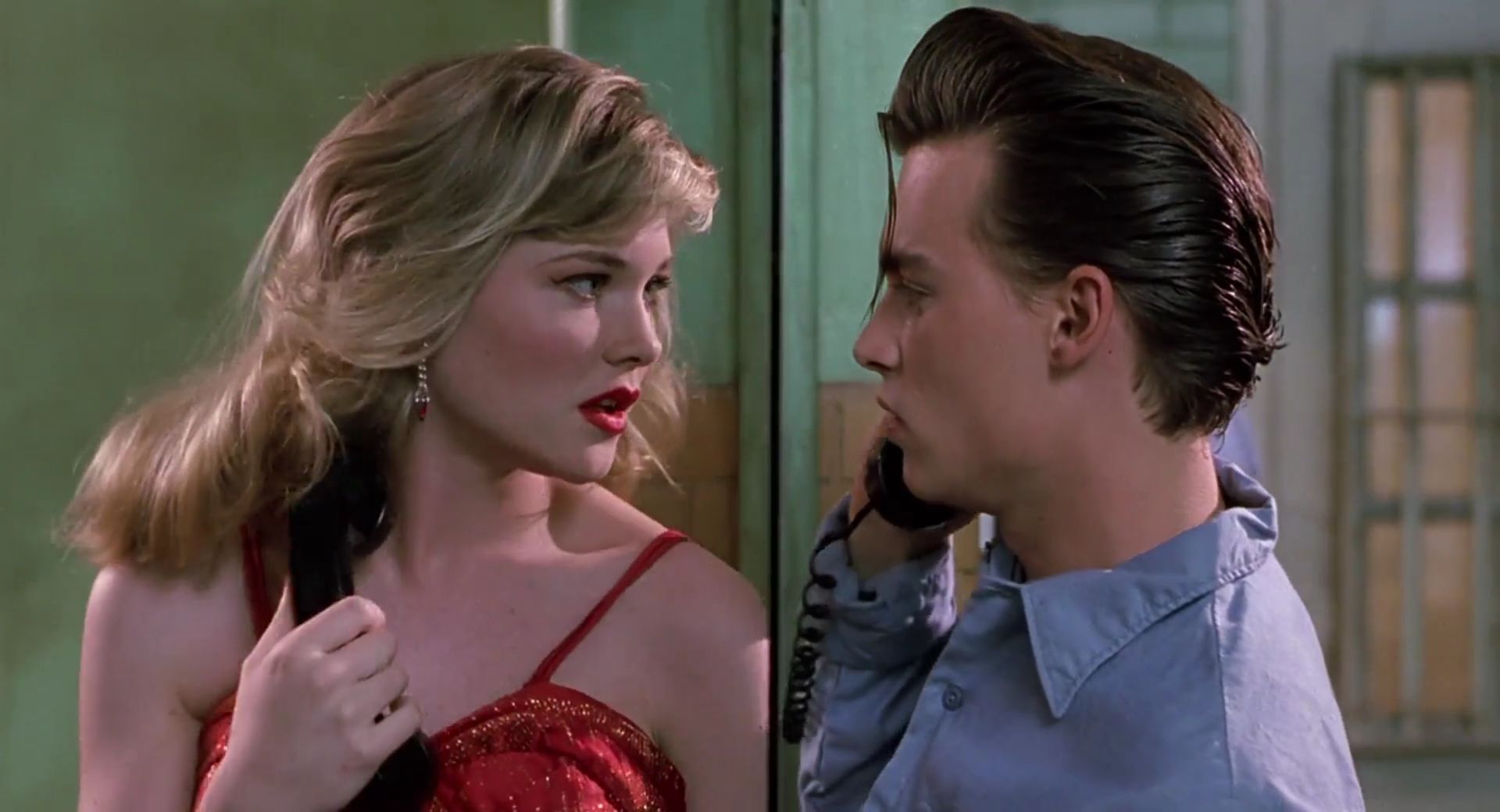
Amy Locane made her feature film debut in John Waters' 1990 musical comedy Cry-Baby, starring as Allison Vernon-Williams alongside Johnny Depp. As a teenager landing a lead role in a major studio release, Locane delivered a standout performance as the prim "Square" girl lured into the rebellious world of 1950s rock-and-roll "Drapes."
The Origin of a Debut: Casting Amy Locane in John Waters' Vision
When director John Waters set out to film Cry-Baby in 1989 as his follow-up to the crossover hit Hairspray (1988), he sought a lead actress who could embody the absolute purity of a 1950s suburban teenager while holding her own against a wild, eclectic ensemble cast. The role of Allison Vernon-Williams required a performer who looked like she stepped straight off a 1950s etiquette book cover, yet possessed the emotional range to credibly fall for a leather-clad, tear-dropping juvenile delinquent.
Amy Locane, a New Jersey native born in December 1971, was just seventeen years old when she landed the role. Before Cry-Baby, her professional acting experience was primarily limited to television commercials, minor stage work, and a brief appearance on the short-lived NBC sitcom Grooming for Success (also known as Hothouse in 1988). Auditioning for Waters—a auteur known for his underground "trash cinema" roots and unconventional casting choices—was a drastic leap into high-concept filmmaking.
Waters chose Locane because her natural innocence and classic aesthetic provided an ideal counterweight to Johnny Depp’s brooding, bad-boy persona. At the time, Depp was attempting to transition out of his teen-heartthrob television image from 21 Jump Street. The chemistry between the two young actors became the narrative foundation of the movie. Locane brought a sincerity to Allison Vernon-Williams that grounded the film’s outrageous satire, transforming what could have been a flat parody into a memorable romantic comedy.
Deconstructing Allison Vernon-Williams: The Square Who Loved a Drape
In the fictionalized Baltimore of 1954 constructed by John Waters, high school society is rigidly divided into two warring subcultures: the wealthy, squeaky-clean "Squares" and the working-class, leather-wearing "Drapes." Amy Locane’s character, Allison Vernon-Williams, represents the absolute peak of Square aristocracy. Raised by her proper grandmother, Mrs. Vernon-Williams (played by veteran actress Polly Bergen), Allison is trained in etiquette, ballroom dancing, and high-society deportment.
Despite her privileged upbringing, Allison harbors a deep-seated frustration with the stifling conformity of her social class. Her internal conflict drives the narrative arc of Cry-Baby:
- The Attraction to Danger: Allison is drawn to Wade "Cry-Baby" Walker (Johnny Depp), the leader of the Drapes, because he offers emotional authenticity and raw expression, symbolized by his ability to shed a single tear on command.
- The Social Defiance: By crossing the literal tracks to visit the Drape hangouts—such as the wild music haven "Turkey Point"—Allison actively rejects the bigoted classism of her Square peers, particularly her jealous boyfriend Baldwin (Stephen Mailer).
- The Musical Transformation: Throughout the film, Allison undergoes a stylistic and personal evolution, shedding her pastel cardigans and hair ribbons for red lipstick, hoop earrings, and a bolder sense of agency.
| THE SQUARES | THE DRAPES |
|---|---|
| • High fashion, pastel aesthetic | • Leather jackets, motorcycle boots |
| • Country club & etiquette focus | • Rockabilly, rhythm & blues, street culture |
| • Led by Baldwin & Mrs. Williams | • Led by Cry-Baby Walker & Pepper Parsons |
| • Values: Conformity, Status | • Values: Loyalty, Freedom, Rebellion |
| • Represented by Allison (Initial) | • Adopted by Allison (Climax) |
A crucial element of Locane's performance involved lip-syncing to recorded musical numbers. While Locane performed all her spoken dialogue and physical acting, her singing voice was dubbed by musician and singer-songwriter Rachel Sweet. This was a deliberate stylistic choice by Waters, who similarly had singer James Intveld dub Johnny Depp’s vocal solos. Sweet’s powerful, rockabilly-inflected vocals on tracks like "Teardrops on My Pillow" and "Please, Mr. Jailer" complemented Locane’s dramatic commitment on camera, making Allison's musical transitions one of the most memorable aspects of the film.
Ensemble Dynamics: Working Alongside Icons and Eccentrics
One of the defining features of Amy Locane’s 1990 acting debut was the extraordinary group of performers surrounding her. John Waters is famous for assembling cast lists that blend classic Hollywood stars, music legends, underground icons, and mainstream pop-culture figures. For an eighteen-year-old making her feature film debut, navigating this environment required exceptional poise.
Locane shared the screen with a wide array of talent:
- Johnny Depp (Wade "Cry-Baby" Walker): Serving as Locane’s principal scene partner, Depp was at a pivotal crossroads in his career. Their shared scenes required a delicate balance of melodrama and comedic timing.
- Polly Bergen (Mrs. Vernon-Williams): An Emmy Award-winning veteran actress, Bergen played Allison’s grandmother. Her screen experience provided a strong maternal anchor for Locane during high-intensity dramatic sequences.
- Iggy Pop (Belvedere Rickettes) & Susan Tyrrell (Ramona Rickettes): Playing Cry-Baby’s eccentric uncle and aunt, Pop and Tyrrell brought uninhibited energy to the Drape world, challenging Locane to react authentically to surreal comedic beats.
- Traci Lords (Ricki "Pepper" Parsons): Former adult film actress turned mainstream performer, Lords played a key Drape figure. Her presence added to the film's edgy, anti-establishment tone.
- Ricki Lake (Pepper Walker) & Kim McGuire (Mona "Hat-chet-Face" Malnorowski): As members of Cry-Baby’s inner circle, Lake and McGuire offered dynamic comedic performances that contrasted with Locane’s straight-laced character.
| ACTOR | CHARACTER | FACTION / GROUP | VOCAL PERFORMANCE |
|---|---|---|---|
| Amy Locane | Allison Vernon-Williams | Square / Drape | Dubbed (Rachel Sweet) |
| Johnny Depp | Wade "Cry-Baby" Walker | Drape Leader | Dubbed (James Intveld) |
| Stephen Mailer | Baldwin | Square Leader | Self / Ensemble |
| Polly Bergen | Mrs. Vernon-Williams | Square Matriarch | Self |
| Traci Lords | Ricki "Pepper" Parsons | Drape | Self / Ensemble |
| Kim McGuire | Mona "Hat-chet-Face" | Drape | Self / Ensemble |
| Ricki Lake | Pepper Walker | Drape | Self / Ensemble |
| Iggy Pop | Belvedere Rickettes | Drape Elder | Self |
Locane’s ability to anchor the narrative amid such contrasting performance styles was widely recognized by critics. Rather than being overshadowed by the film's eccentric characters, her sincere portrayal of Allison served as the audience's emotional entry point into Waters' stylized world.
Critical Reception and Initial Box Office Performance
When Universal Pictures released Cry-Baby in US theaters on April 6, 1990, expectations were high following the commercial success of Waters' Hairspray. However, Cry-Baby experienced a modest box office run, grossing approximately $8.3 million domestically against an estimated budget of $12 million.
Despite its initial theatrical struggle, critical appraisal of Amy Locane’s debut was generally positive. Film reviewers noted that Locane possessed the classic star quality of mid-century screen sirens, combined with an innate comedic awareness.
Critics highlighted several aspects of her performance:
- Authentic 1950s Aesthetic: Reviewers praised Locane’s expressive eyes and period-accurate charm, noting that she fit naturally into the stylized color palette of cinematographer David Insley.
- Comedic Timing: Locane demonstrated an aptitude for deadpan reactions and camp humor, navigating John Waters' heightened dialogue without winking at the camera.
- Vocal Syncing: Critics praised the seamless integration of Rachel Sweet’s vocals with Locane’s physical performance, particularly during the climax of "Please, Mr. Jailer."
In the years following its theatrical run, Cry-Baby found a massive audience on home video, cable television, and soundtrack releases, ultimately attaining cult-classic status. Locane’s role as Allison remains central to the film's enduring popularity.
Post-Cry-Baby Career: The 1990s Hollywood Trajectory
The visibility generated by her 1990 debut immediately established Amy Locane as one of Hollywood's most promising young talents. Her performance in Cry-Baby caught the attention of major casting directors, leading to a string of high-profile roles throughout the early to mid-1990s.
- 1990: Cry-Baby (Debut Feature)
- 1992: Melrose Place (Original Season Cast)
- 1992: School Ties (Co-starring Matt Damon)
- 1994: Airheads (Co-starring Brendan Fraser)
- 1994: Blue Sky (With Jessica Lange)
Key Milestones in Locane's Early 1990s Career:
- Melrose Place (1992): Locane was cast as Sandy Louise Harling, a Southern waitress and aspiring actress, in the original main lineup of Fox's Melrose Place. Though she departed after thirteen episodes as the show shifted its narrative format, the role kept her in front of millions of television viewers nationwide.
- School Ties (1992): Locane landed the female lead, Sally Wheeler, in the prestigious 1950s drama School Ties. She starred opposite a rising generation of Hollywood talent, including Brendan Fraser, Matt Damon, Ben Affleck, and Chris O'Donnell. Her experience in period storytelling from Cry-Baby translated directly into this serious drama about antisemitism and prep school elitism.
- Airheads (1994): Returning to comedy, Locane starred as Brenda, the girlfriend of Brendan Fraser’s character Chazz, in the rock comedy Airheads, featuring Steve Buscemi and Adam Sandler.
- Blue Sky (1994): Locane delivered a strong dramatic performance as Kelly Owens alongside Jessica Lange and Tommy Lee Jones. The film earned Jessica Lange an Academy Award for Best Actress, further cementing Locane's status as a capable actor in serious cinema.
Locane continued working steadily through the late 1990s and early 2000s in independent films and television movies before stepping back from full-time acting in the mid-2000s.
The Cinematic Legacy of Locane’s Debut
Amy Locane’s performance in Cry-Baby remains a key touchstone for 1990s cinema lovers and John Waters aficionados. The film represents a unique intersection of studio filmmaking and midnight-movie sensibilities.
| FEATURE | IMPACT ON FILM HISTORY |
|---|---|
| 1950s Satire | Subverted classical teen melodramas like Rebel Without a Cause and Gidget. |
| Ensemble Composition | Pioneered mixing mainstream talent, musicians, and cult figures in studio productions. |
| Soundtrack Influence | Re-popularized 1950s rockabilly and rhythm & blues for 1990s youth audiences. |
| Broadway Adaptation | Adapted into a 2008 Tony Award-nominated Broadway musical based on Waters' film. |
Analyzing Locane's role within Waters' filmography highlights several structural contributions:
- The Anchor of Sincerity: In a film filled with satirical exaggerations, Allison Vernon-Williams provides the narrative weight. Without a central romance that feels emotionally grounded, the stakes of the conflict between the Squares and the Drapes would collapse into pure farce.
- The Musical Paradigm: Locane’s lip-syncing efficiency set a template for retro-styled musical comedies. Her performance during numbers like "King Cry-Baby" showcased how physical movement and facial expression can convey narrative growth within stylized musical sequences.
- Defining 90s Vintage Aesthetics: The visuals of Cry-Baby helped spark a 1950s rockabilly revival in early 1990s youth fashion and alternative culture, with Locane’s wardrobe choices serving as a reference point for period design.
Frequently Asked Questions
How old was Amy Locane when she starred in Cry-Baby?
Amy Locane was born on December 19, 1971. Filming for Cry-Baby took place during the spring and summer of 1989, making her seventeen years old during production. She was eighteen when the film hit theaters in April 1990.
Did Amy Locane actually sing her songs in Cry-Baby?
No, Amy Locane did not sing her own musical numbers in the film. Her singing voice was dubbed by singer-songwriter Rachel Sweet. Locane performed all her spoken dialogue and handled the physical lip-syncing on set.
Was Cry-Baby Amy Locane's first acting role?
Cry-Baby was Amy Locane’s feature film debut. Prior to landing the role of Allison Vernon-Williams, she had appeared in television commercials, minor stage productions, and the brief 1988 television series Hothouse.
Why did Amy Locane leave Melrose Place after season one?
Amy Locane was part of the original main cast of Melrose Place in 1992, playing Sandy Louise Harling. Producers decided to retool the show after thirteen episodes to shift away from episodic storylines toward serial drama, leading to her character being written off.
Who played Cry-Baby Walker opposite Amy Locane?
Johnny Depp played Wade "Cry-Baby" Walker opposite Amy Locane. Like Locane, Depp’s singing vocals were dubbed for the film, with musician James Intveld providing his singing voice.
Next Steps for Film Enthusiasts & Researchers
For viewers exploring early 1990s cinema, cult film history, or the career trajectory of Amy Locane, the following actions offer a deeper look into the era:
- Watch the Director’s Cut: Examine the extended Director's Cut of Cry-Baby (released on home media formats), which contains additional deleted scenes featuring Locane and Depp that further flesh out the romance between Allison and Cry-Baby.
- Compare 1990s Teen Melodramas: Contrast Locane’s work in Cry-Baby (1990) with her dramatic role in School Ties (1992) to see how early 1990s filmmakers used her performance range across satirical and serious 1950s period settings.
- Explore the Soundtrack: Listen to the official Cry-Baby original motion picture soundtrack to appreciate the vocal arrangements by Rachel Sweet and James Intveld that brought Locane's and Depp's screen performances to life.