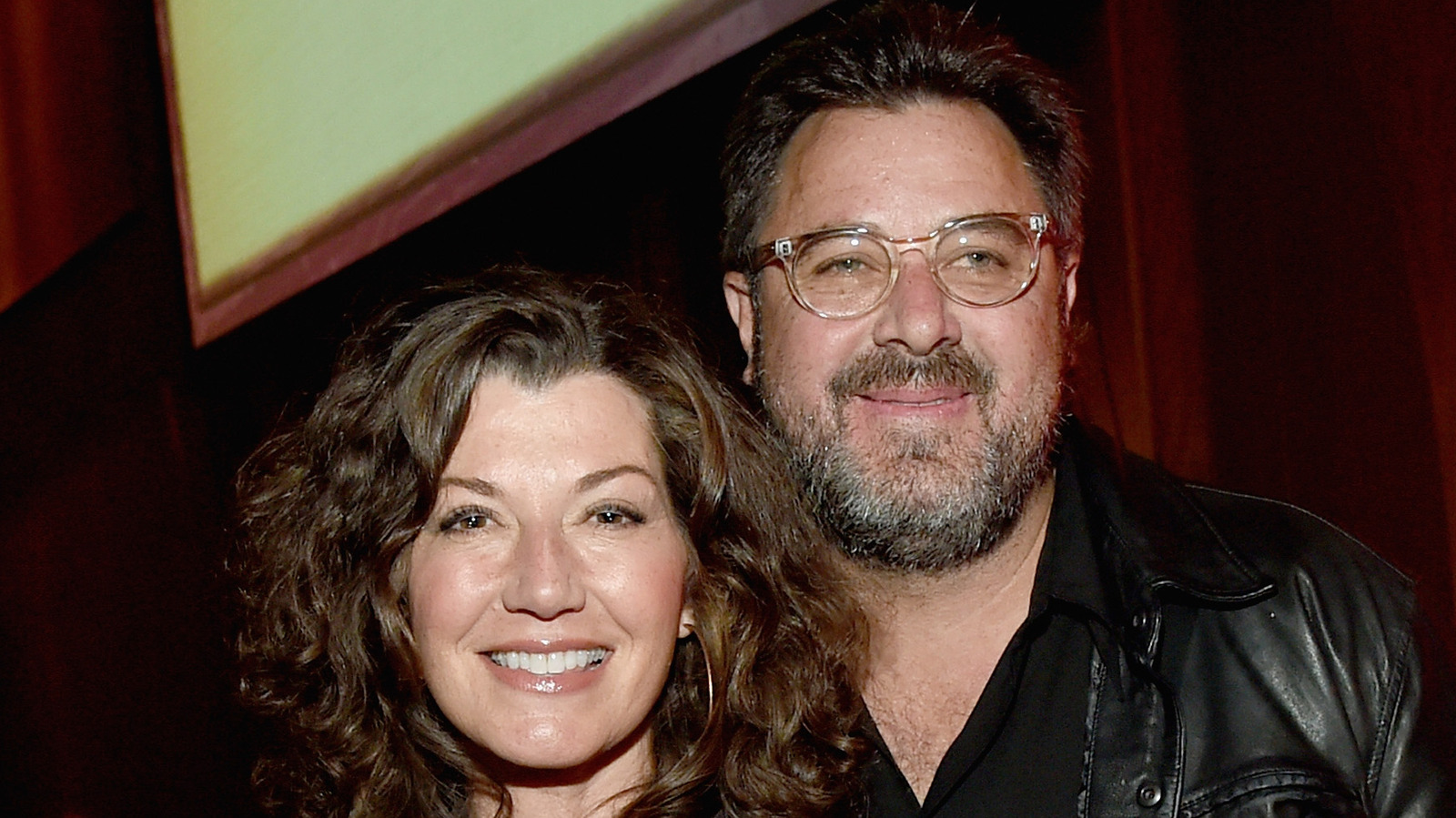
The relationship between Amy Grant and Vince Gill began as an intense emotional connection while both were married to other people in the 1990s. Although both parties have consistently denied having a physical affair before their respective divorces, the transition from their previous marriages to their union in 2000 caused significant controversy within the Christian music industry.
To understand the narrative surrounding the "Amy Grant affair," one must look beyond the tabloid headlines of the late 1990s. This story is not merely about a celebrity romance but represents a pivotal moment in the intersection of faith, fame, and the evolving standards of the Contemporary Christian Music (CCM) industry. As of 2026, Grant and Gill have been married for over a quarter-century, yet the circumstances of their meeting and the dissolution of their previous marriages remain a subject of historical interest and cultural analysis.
The Cultural Landscape: Amy Grant’s Position in the 1990s
In the early 1990s, Amy Grant was arguably the most significant figure in Christian music. She had successfully "crossed over" into the secular pop charts with hits like "Baby Baby" and "Every Heartbeat." This success brought her a level of scrutiny rarely seen by gospel artists. To her Christian audience, she was a moral exemplar; to the secular world, she was a wholesome pop star.
Grant had been married to fellow musician Gary Chapman since 1982. Their marriage was often presented as a partnership in faith and music, but behind the scenes, the relationship was fraught with difficulty. In subsequent interviews, Grant has described the marriage as a struggle from the beginning, citing differences in personality and Chapman’s private battles with substance abuse. The pressure to maintain the image of a perfect Christian marriage while navigating these internal conflicts created a volatile environment long before Vince Gill entered the picture.
The Meeting: "House of Love" and the Spark
The trajectory of Amy Grant's life changed in 1993 during the recording of the song "House of Love." Grant’s team suggested a duet with country star Vince Gill to broaden the track’s appeal. When they met to film the music video and perform the song, the chemistry was immediate and visible.
Vince Gill was at the time married to Janis Oliver, a member of the country duo Sweethearts of the Rodeo. Like Grant, Gill was a massive star in his genre, known for his incredible guitar skills and gentle tenor. Both Grant and Gill have reflected on that initial meeting as a moment where they felt they had found a "soulmate." However, they also recognized the complications of their existing commitments.
In the years following that 1993 meeting, the two remained "best friends." They appeared on television specials together and maintained a professional and personal rapport that fueled rumors in Nashville circles. This period of "emotional friendship" is what most critics point to when discussing the concept of an "affair." While not necessarily physical in the traditional sense, the depth of their bond was sufficient to cause strain on their respective households.
The Dissolution of Two Marriages
The timeline of the divorces is often scrutinized by those looking to verify the "affair" narrative. Vince Gill’s wife, Janis Oliver, filed for divorce in 1997 after 17 years of marriage. The filing cited irreconcilable differences, but the public perception was heavily influenced by Gill's known closeness with Grant.
Amy Grant’s divorce followed shortly after. She filed for divorce from Gary Chapman in 1999. The separation sent shockwaves through the Christian community. Unlike the secular world, where celebrity divorces are commonplace, the CCM industry of the 1990s held its stars to a rigid standard regarding the sanctity of marriage. Grant's divorce was viewed by some as a betrayal of the values she promoted in her music.
The specifics of the Grant-Chapman divorce were painful and public. Chapman spoke openly about his heartbreak, which further galvanized those who felt Grant was leaving the marriage for another man. Grant, conversely, maintained that the marriage had been broken for years and that her connection with Gill was a symptom, rather than the primary cause, of the marital failure.
The "Emotional Affair" vs. Physical Adultery
One of the most nuanced aspects of the "Amy Grant affair" is the distinction between an emotional connection and physical adultery. Both Grant and Gill have been adamant that they did not have a physical relationship while married to others. In a landmark 2002 interview with ABC News' Primetime, Grant addressed the rumors directly, stating that while they loved each other, they respected the boundaries of their marriages.
However, the concept of an "emotional affair" is often applied to their situation. This involves a level of intimacy and emotional dependence on someone outside of the marriage that rivals or exceeds the bond with the spouse. Grant has admitted that her heart was no longer in her marriage to Chapman long before the legal papers were filed, and Gill was the person who understood her in ways her husband did not.
For the Christian community, this distinction was often a "distinction without a difference." Many religious leaders at the time argued that the emotional exit from a marriage was just as damaging as a physical one. This led to a period of professional "blacklisting" for Grant within certain sectors of the Christian media.
Industry Backlash and Professional Consequences
Following the announcement of her divorce and her subsequent marriage to Vince Gill in March 2000, the repercussions within the CCM industry were swift. Several Christian radio stations pulled her music from their rotations, and some Christian bookstores stopped carrying her albums.
The backlash was a reflection of the era's cultural climate. Critics argued that Grant was no longer a suitable role model for Christian youth. The controversy surrounding the "affair" rumors overshadowed her musical contributions for several years. It wasn't until the mid-2000s that the industry began to embrace her again, recognizing her long-term impact on the genre and the reality that her personal life, however complicated, did not negate her faith or her talent.
Timeline of Key Events
The following table outlines the critical milestones in the history of Amy Grant and Vince Gill's relationship and the surrounding events.
| Year | Event | Significance |
|---|---|---|
| 1982 | Amy Grant marries Gary Chapman | The beginning of her high-profile Christian marriage. |
| 1993 | "House of Love" Collaboration | Grant and Gill meet for the first time; an immediate bond is formed. |
| 1994-1996 | Public Appearances | The duo performs together frequently, fueling Nashville rumors. |
| 1997 | Vince Gill's Divorce | Janis Oliver files for divorce, ending a 17-year marriage. |
| 1999 | Amy Grant's Divorce | Grant files for divorce from Chapman, citing a "long-term broken" marriage. |
| 2000 | Grant and Gill Marry | The couple weds in a private ceremony in Nashville. |
| 2001 | Birth of Corrina Grant Gill | The couple welcomes their only child together. |
| 2002 | Primetime Interview | The couple publicly addresses "affair" rumors and their history. |
| 2026 | 26th Anniversary | The couple remains a prominent and respected fixture in the music industry. |
The Long-Term Perspective: Life After 2000
In the decades since their marriage, Amy Grant and Vince Gill have built a life that many in the industry now view as a model of stability. They blended their families—Grant had three children with Chapman, and Gill had one daughter with Oliver—and eventually had a daughter together, Corrina.
Their collaborative work has also continued. They are well-known for their annual Christmas residencies at the Ryman Auditorium in Nashville, which have become a staple of the holiday season. The longevity of their marriage, now reaching 26 years in 2026, has for many tempered the initial criticisms of how the relationship began.
Vince Gill has often been credited with being a stabilizing force in Grant's life, especially during her health scares, such as her open-heart surgery in 2020 and her recovery from a bicycle accident in 2022. Their public support for one another has shifted the narrative from one of "scandal" to one of "enduring partnership."
Common Misconceptions and Clarifications
Despite the passage of time, certain misconceptions about the "affair" persist. Addressing these requires a look at the documented statements made by those involved.
- Misconception: They were caught in a physical affair. There is no evidence, nor has there ever been a report from a reputable source, that the two were "caught" in a physical act. Their relationship was characterized by public proximity and emotional intimacy.
- Misconception: The divorce was sudden. In the case of Amy Grant, she had sought marriage counseling and "maritally-intensive" therapy for years before the 1999 filing. The dissolution was the result of long-standing issues rather than a snap decision to be with someone else.
- Misconception: Amy Grant left the church. While she was criticized by religious institutions, Grant never renounced her faith. Her music continued to reflect her spiritual journey, though it became more introspective and "authentic" regarding her struggles.
The Legacy of the Controversy
The Amy Grant and Vince Gill story served as a catalyst for a broader conversation within the religious community about divorce and remarriage. In the decades following their union, the CCM industry became somewhat more permissive—or perhaps more realistic—about the personal lives of its artists.
The "affair" narrative also highlights the "Nashville Machine" of the 1990s, where the line between private life and public brand was incredibly thin. For Grant, the cost of her personal happiness was a period of professional exile, a price she has stated she was willing to pay for the "peace" she found with Gill.
Frequently Asked Questions
Did Amy Grant and Vince Gill ever admit to an affair?
They have admitted to being in love while married to others, which is often termed an "emotional affair." However, they have explicitly denied any physical infidelity prior to their respective divorces. They describe their connection as an immediate, soul-deep bond that they initially tried to manage within the bounds of their friendships.
How did Gary Chapman react to the relationship?
Gary Chapman was vocal about his pain during the divorce proceedings. In various interviews, he expressed that he felt blindsided by the depth of Grant's connection with Gill. Over the years, however, the tension has largely subsided for the sake of their three children, and both parties have moved on with their respective lives.
Why was Amy Grant's divorce such a big deal in the 1990s?
At the time, Amy Grant was the "face" of Contemporary Christian Music. The industry was much more conservative then, and divorce was often viewed as a disqualification from ministry. Because Grant's music was used in churches and sold in religious bookstores, her personal life was considered part of the "product" she was selling to families.
Are Amy Grant and Vince Gill still married?
Yes, as of 2026, Amy Grant and Vince Gill are still married. They celebrated their 26th wedding anniversary in March 2026. Their marriage is now considered one of the most enduring and stable in the Nashville music community.
What is the age difference between Amy Grant and Vince Gill?
Vince Gill is approximately three and a half years older than Amy Grant. Gill was born in April 1957, and Grant was born in November 1960. Their shared experiences as part of the same generation of musicians helped forge their strong connection.
Practical Recommendations for Researching Celebrity Histories
When investigating historical celebrity controversies like the "Amy Grant affair," it is essential to distinguish between contemporary tabloid reporting and long-form retrospective interviews. Tabloids of the late 90s were incentivized to frame the story as a "scandal," whereas later interviews (such as those on ABC News or in AARP Magazine) provide a more nuanced perspective from the individuals themselves.
For those interested in the sociological impact of this event, researching the archives of CCM Magazine from 1999-2001 provides a fascinating look at how the religious community grappled with the news in real-time. This historical context explains why the "affair" remains a search topic even decades after the events took place.