Amazon’s first office was a converted garage located at 10704 NE 28th St, Bellevue, Washington. In July 1994, Jeff Bezos rented the three-bedroom house specifically because it featured a garage, allowing him to follow the storied tradition of Silicon Valley "garage startups" while building the foundations of what would become a global retail and technology empire.
While the image of the garage startup is often romanticized as a matter of necessity, for Amazon, it was a deliberate choice. When Jeff Bezos left his position at the hedge fund D.E. Shaw & Co. in New York City, he and his then-wife, MacKenzie Scott, drove across the country with a plan to capitalize on the rapid growth of the internet. They chose the Seattle area not just for its proximity to Microsoft, but for the local pool of high-tech talent and the tax advantages of operating in a state with a relatively small population at the time.
The Bellevue garage was the site where the initial code for Amazon (then known as Cadabra) was written. It served as the company’s headquarters during its most formative months, housing the first servers, the first employees, and the now-iconic "door desks" that would define Amazon’s corporate culture of frugality for decades to come.
The Physical Logistics of the Bellevue Garage
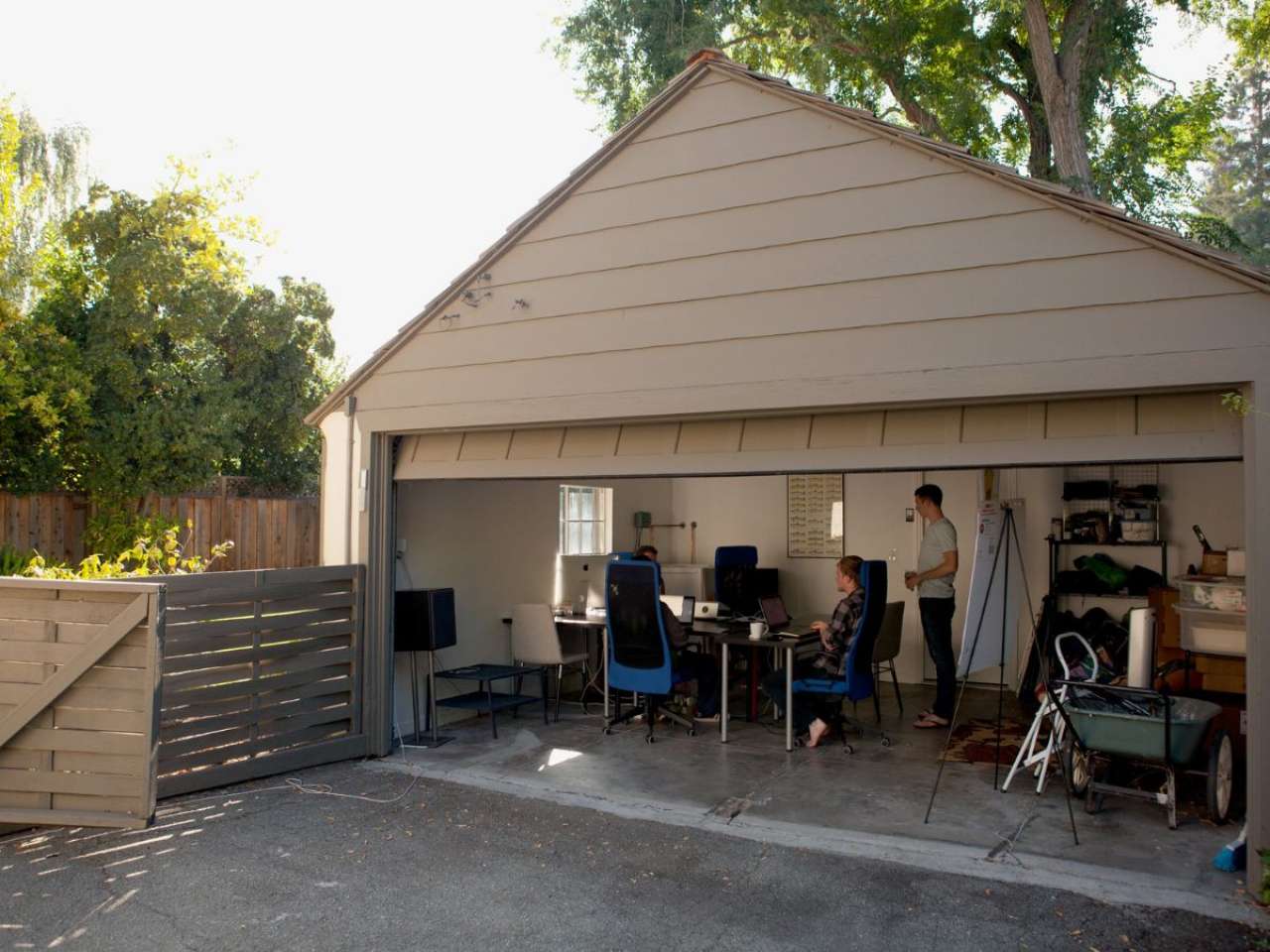
The house in Bellevue was a modest single-story residence. The garage itself was not an expansive industrial space; it was a standard two-car garage that required significant modification to function as a tech hub. To make the space usable for a burgeoning internet company, Bezos and his first employee, Shel Kaphan, had to run heavy-duty extension cords from the main house to power the workstations and servers.
The environment was far from the climate-controlled data centers Amazon operates today. During the summer of 1994, the garage became sweltering, forced to house both human beings and heat-generating Sun Microsystems SPARCstations. The noise from the cooling fans was constant, and the electrical infrastructure was so strained that the team had to be careful not to plug in a hair dryer or a vacuum cleaner inside the house, as doing so would frequently trip the circuit breakers and crash the entire network.
By the time Amazon.com officially launched to the public on July 16, 1995, the operation had already begun to outgrow the garage. However, those early months in Bellevue established the operational "lean" mindset. Every square inch of the garage was utilized for storage, server racks, or workspace. This physical constraint forced a level of prioritization that Bezos would later codify into the company’s leadership principles.
The Strategy Behind the Garage Choice
The decision to start in a garage was a calculated branding and financial move. In the mid-1990s, the "garage startup" was already a powerful archetype in the American tech narrative, popularized by Hewlett-Packard, Apple, and Microsoft. By choosing a garage, Bezos was signaling to potential investors and employees that the company was focused entirely on its mission rather than corporate fluff.
Furthermore, the location in Bellevue provided several strategic advantages:
- Talent Pool: Being in the shadow of Microsoft meant access to world-class software engineers who were already familiar with the challenges of scaling complex systems.
- Tax Efficiency: By establishing the business in Washington, Amazon did not have to collect sales tax from customers in high-population states like California or New York (under the tax laws of the 1990s), which gave the startup a competitive edge against established physical bookstores.
- Operating Costs: The rent for the Bellevue house was significantly lower than commercial office space in downtown Seattle or the burgeoning tech hubs of Silicon Valley.
Bezos has frequently noted that he searched for houses specifically with garages so he could "be like" the great innovators who came before him. This wasn't just about saving money; it was about adopting the persona of the underdog challenger.
The Invention of the Amazon Door Desks
One of the most enduring symbols of Amazon’s early days is the "door desk." When the team needed furniture for the garage, Bezos looked at the prices of professional office desks and found them prohibitively expensive. In an act of radical frugality, he went to a nearby Home Depot, purchased solid-core wooden doors, and bolted 4x4 wooden posts to them to serve as legs.
These makeshift desks were uneven, prone to wobbling, and often required shims made of folded cardboard to stay level. However, they sent a powerful message: at Amazon, money is spent on things that matter to customers (like lower prices and faster shipping), not on expensive office furniture.
Even as of 2026, the "Door Desk Award" remains a prestigious internal recognition at Amazon, given to employees who find ways to save the company money or create significant value through frugal innovation. The original door desks from the Bellevue garage are now part of the company’s historical archives, serving as a reminder of its humble beginnings.
Early Milestones in the Garage Era
The period between July 1994 and the move to a "real" office in 1995 was marked by intense development and the resolution of fundamental e-commerce challenges.
| Milestone | Date | Significance |
|---|---|---|
| Incorporation | July 5, 1994 | The company was initially incorporated as "Cadabra, Inc." |
| Hiring Shel Kaphan | October 1994 | Shel Kaphan became the first employee and the technical architect of the site. |
| The Name Change | November 1994 | Bezos changed the name to Amazon.com, after the world's largest river. |
| Beta Testing | Early 1995 | The site was opened to a small group of 300 beta testers to find bugs. |
| First Customer Sale | July 1995 | John Wainwright purchased "Fluid Concepts and Creative Analogies." |
| The "Bell" Ritual | Summer 1995 | A bell would ring in the garage every time a sale was made. |
The first book ever sold on Amazon.com, Fluid Concepts and Creative Analogies: Computer Models of the Fundamental Mechanisms of Thought by Douglas Hofstadter, was shipped from the garage era's logistics framework. Initially, Bezos and his small team would pack the books themselves on the floor of the garage. It was only after a few weeks of back-breaking work that MacKenzie Scott suggested they buy packing tables—a rare "luxury" in the early days.
Transitioning from "Cadabra" to Amazon
The garage was the birthplace of the company's branding. Initially, Bezos favored the name "Cadabra," as in "Abracadabra." However, his lawyer pointed out that over the phone, "Cadabra" often sounded like "Cadaver." This prompted a search for a new identity.
Bezos spent time looking through a dictionary and stopped at "Amazon." He liked the name because the Amazon River was the "biggest" in the world, and he intended to build the world's biggest bookstore. Additionally, in the early days of the internet, website directories were often alphabetized; a name starting with "A" would ensure Amazon appeared at the top of most lists. The transition from a necro-sounding startup to a brand synonymous with scale happened within the walls of that Bellevue garage.
Moving Out: From Bellevue to Seattle
By late 1995, the garage had become a liability. The volume of orders was increasing exponentially, and the physical space could no longer accommodate the inventory or the growing staff. The "bell" that rang for every sale had to be turned off because it was ringing so frequently it became a distraction.
Amazon moved its headquarters to a small, dilapidated office space on Second Avenue in a then-gritty part of downtown Seattle. This move marked the end of the garage phase and the beginning of Amazon's rapid scaling. While the Second Avenue office was technically a "real" office, it retained the garage's aesthetic: it was cramped, poorly ventilated, and filled with door desks.
The move to Seattle was essential for logistics. The company needed to be closer to distributors and needed a more robust electrical grid to support its growing server farm. However, the culture established in the Bellevue garage—one of intense focus, long hours, and absolute frugality—moved with them.
The Garage Myth vs. Reality in Tech History
The "garage startup" is a staple of business lore, but it is important to distinguish between the myth and the reality. While companies like Apple and Google also started in garages, their founders often had significant technical resources or academic backing.
In Amazon's case, the garage was a bridge between a high-level corporate career and a global enterprise. Bezos wasn't a "starving student" when he started in the garage; he was a successful Wall Street executive who took a calculated risk. He used $10,000 of his own money to bootstrap the operation, followed shortly by a $245,573 investment from his parents. This capital allowed the garage operation to survive the initial months where revenue was non-existent.
The garage, therefore, was not a sign of poverty, but a sign of operational efficiency. It allowed the company to keep its "burn rate" low while it figured out the complex logistics of online retail, such as credit card processing and database management for millions of book titles.
The Legacy of the Garage in 2026
As of 2026, the Bellevue house at 10704 NE 28th St remains a site of historical interest. While it is a private residence and not a public museum, it is frequently visited by entrepreneurs seeking inspiration. The house sold in 2019 for over $1.5 million, reflecting both the high real estate values of the Seattle suburbs and the cultural cachet of the property.
Inside Amazon, the garage legacy is maintained through the "Day 1" philosophy. Jeff Bezos famously insisted that "it is always Day 1" at Amazon, meaning the company must act with the same urgency, curiosity, and willingness to fail that it had when it was operating out of the Bellevue garage. When a company enters "Day 2," Bezos argued, it begins a slow decline into irrelevance.
The garage period taught the company three vital lessons that still drive its 2026 operations:
- Customer Obsession over Competitor Obsession: In the garage, there were no competitors to look at; there was only the customer and the screen.
- Frugality Breeds Innovation: When you don't have a budget for expensive solutions, you are forced to invent your own (like the door desks).
- High-Velocity Decision Making: The team in the garage couldn't afford long meetings or bureaucratic delays. They had to ship code and books every day to survive.
Frequently Asked Questions
Did Jeff Bezos own the house with the garage?
No, Jeff Bezos and MacKenzie Scott rented the house in Bellevue. It was a standard suburban rental property. They chose it specifically because it had a garage where the business could be legally headquartered.
What was the first item sold from the Amazon garage?
The first item was a book titled Fluid Concepts and Creative Analogies: Computer Models of the Fundamental Mechanisms of Thought by Douglas Hofstadter. It was sold to John Wainwright on April 3, 1995, though the site didn't "officially" launch to the general public until July of that year.
Is the Amazon garage still there?
The house and the garage still exist at 10704 NE 28th St in Bellevue, Washington. However, the garage was remodeled by subsequent owners and no longer looks exactly as it did in 1994. The home remains a private residence.
How many people worked in the Amazon garage?
At its peak, the garage housed Jeff Bezos, MacKenzie Scott, and the company’s first few employees, most notably Shel Kaphan. By the time the headcount reached double digits, the company had already begun the process of moving to a commercial office in Seattle.
Why did Amazon move out of the garage?
The primary reasons were electrical capacity and physical space. The servers were drawing so much power that they blew the house's fuses, and there was no room to store the growing volume of books being ordered or to house the additional staff needed to manage the website.
Practical Recommendation for Entrepreneurs
If you are an aspiring entrepreneur in 2026, the lesson of the Amazon garage is not that you must start in a garage, but that you should start with minimal overhead. In the modern era, a "garage" might be a shared co-working space, a home office, or even a completely remote setup.
The goal is to direct every possible resource toward your product and your customers. Avoid "Day 2" thinking—the trap of focusing on office aesthetics, titles, and corporate hierarchy—before you have even proven your business model. Like Bezos in 1994, prioritize the "why" of your location and your equipment over the "look" of your company.