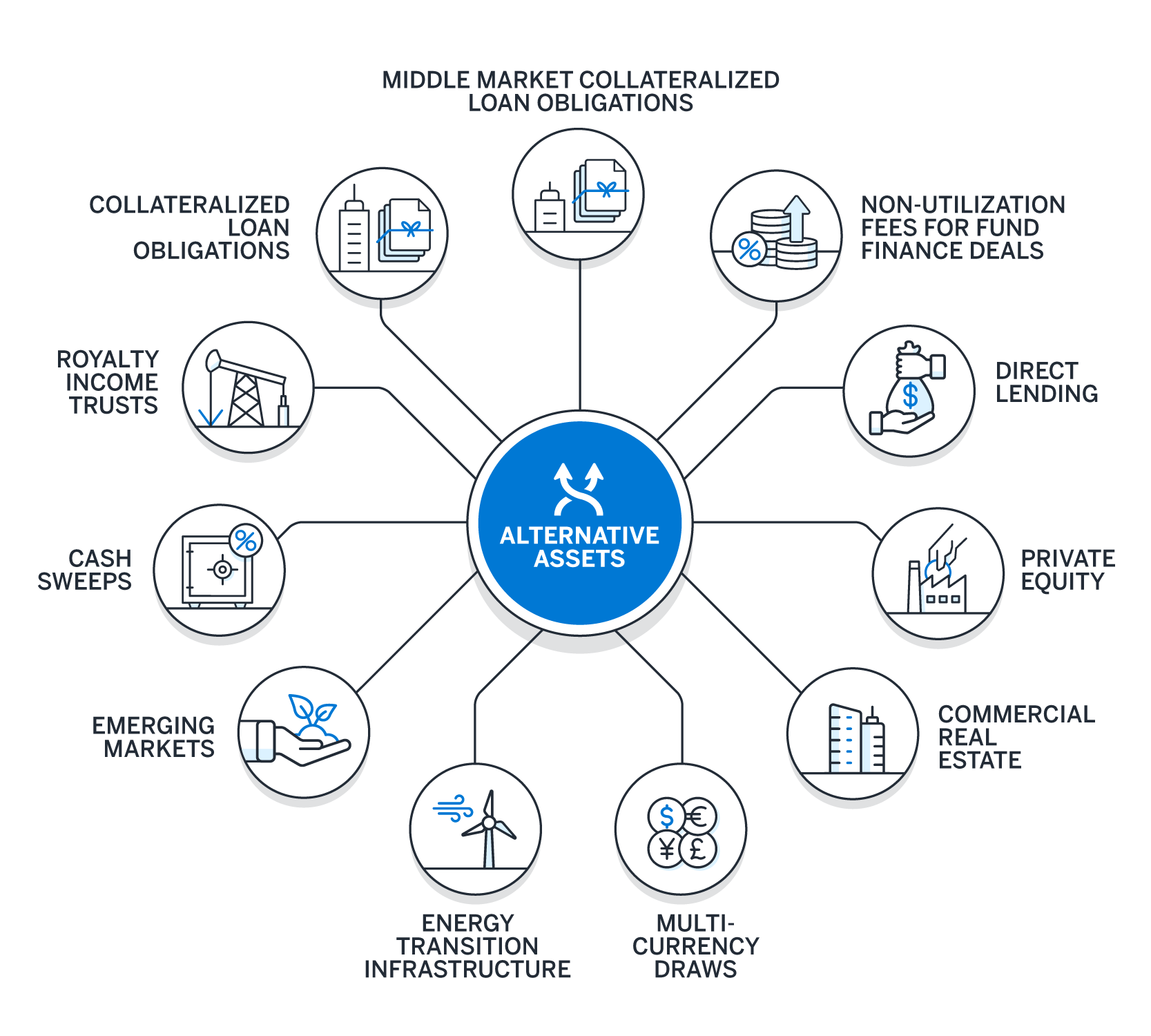
Alternative investments beyond life insurance and Roth IRAs include private equity, real estate syndications, private credit, and tangible assets like farmland or collectibles. These vehicles offer diversification from public markets, higher potential returns, and unique tax advantages—such as depreciation—that traditional tax-advantaged accounts and insurance policies often lack in a balanced 2026 portfolio.
The Shift Toward Alternative Assets in 2026
For decades, the standard financial advice for wealth building centered on a two-pillar system: tax-advantaged retirement accounts like the Roth IRA and the protective "forced savings" of whole life or indexed universal life insurance. However, as we navigate 2026, the limitations of these vehicles have become more apparent for high-net-worth individuals and sophisticated retail investors alike.
Roth IRAs, while excellent for tax-free growth, are restricted by strict annual contribution limits and income phase-outs. Life insurance policies, though useful for estate planning, often carry high administrative fees and offer lower internal rates of return (IRR) compared to direct market investments. To achieve true alpha—returns exceeding the market average—investors are increasingly looking toward alternative investments. These are assets that do not fall into the conventional categories of stocks, bonds, or cash. They are characterized by lower correlation to the S&P 500, higher potential for "outsized" returns, and, frequently, a higher degree of illiquidity.
Private Equity and Venture Capital
Private equity (PE) involves investing directly in private companies or conducting buyouts of public companies to take them private. Venture capital (VC) is a subset of private equity focused on startups and early-stage firms with high growth potential.
Access and the J-Curve Effect
Historically, private equity was the exclusive playground of institutional investors like pension funds. In 2026, the landscape has shifted through "feeder funds" and digital platforms that allow accredited investors to participate with lower minimums—sometimes as low as $25,000.
When entering private equity, investors must understand the J-Curve. In the early years of a PE fund, returns are often negative due to management fees and the time required to restructure acquired companies. Wealth is typically realized in years seven through ten. This illiquidity premium is the "reward" for locking up capital, often resulting in annual returns that outperform the public markets by 3% to 5%.
The Role of Secondaries
A significant development in 2026 is the robust secondary market for private equity. If an investor needs liquidity before a fund’s ten-year term expires, they can now more easily sell their "LP interests" (Limited Partner interests) to other investors. While this may involve a haircut on the net asset value (NAV), it provides a safety valve that was previously unavailable.
Private Credit and Direct Lending
As traditional banks have tightened their lending standards due to regulatory shifts and capital requirements, the "shadow banking" sector—specifically private credit—has exploded. Private credit involves non-bank institutions lending money to small and medium-sized enterprises (SMEs).
Why Private Credit Outperforms Bonds
In 2026, private credit often offers yields in the 9% to 12% range, significantly higher than investment-grade corporate bonds. These loans are typically senior secured debt, meaning the investor is first in line to be paid back if the company liquidates, and the loan is backed by the company's assets.
Most private credit deals use floating-rate structures. In the current interest rate environment, this protects investors from inflation, as the interest they receive increases if benchmark rates rise. For an investor moving beyond a Roth IRA, private credit provides a consistent cash flow profile that is difficult to replicate with traditional fixed-income assets.
Real Estate Beyond the Primary Residence
While many investors start with a rental property, the real "alternative" power lies in Real Estate Syndications and Qualified Opportunity Zones (QOZs).
Syndications vs. REITs
A Real Estate Investment Trust (REIT) is often traded on the stock market and behaves much like a stock. A syndication, however, is a direct investment in a specific asset, such as an apartment complex, a self-storage facility, or an industrial warehouse.
- Tax Benefits: Through a syndication, investors receive a Schedule K-1. This allows them to benefit from "pass-through" deductions like depreciation. In 2026, sophisticated tax planning often involves using "cost segregation studies" to accelerate depreciation, effectively showing a paper loss on an investment that is actually producing positive cash flow.
- Structure: Investors typically act as Limited Partners (LPs), while the "Sponsor" or General Partner (GP) manages the property.
Qualified Opportunity Zones (QOZs)
For those with significant capital gains from the sale of stocks or businesses, QOZs remain a powerful 2026 strategy. By reinvesting capital gains into designated economically distressed areas, investors can defer taxes on those gains and, if the investment is held for at least ten years, pay zero capital gains tax on the appreciation of the new QOZ investment. This is a massive "alternative" to the Roth IRA for those with gains that exceed IRA contribution limits.
Tangible Assets: Farmland and Timberland
Farmland is often referred to as "gold with a coupon." It is a finite resource that provides two sources of return: the annual rent paid by farmers to use the land and the long-term appreciation of the land itself.
Inflation Hedging
Farmland has historically shown a strong positive correlation with inflation. As food prices rise, the value of the land that produces that food typically rises as well. According to the U.S. Department of Agriculture (USDA), farmland has maintained steady value even during periods of extreme stock market volatility.
In 2026, investment platforms have made it possible to buy fractional shares of specific farms, allowing investors to choose between row crops (like corn and soy) or permanent crops (like almonds or citrus), each with different risk and return profiles.
Comparison of Alternative Investment Vehicles
The following table compares the primary alternative assets available in 2026 for those looking to expand beyond traditional retirement accounts.
| Asset Class | Typical Minimum | Liquidity Profile | Primary Tax Advantage | Risk Level |
|---|---|---|---|---|
| Private Equity | $50,000+ | Very Low (7-10 yrs) | Long-term Cap Gains | High |
| Private Credit | $10,000 - $25,000 | Moderate (1-3 yrs) | Often taxed as Ordinary Income | Moderate |
| RE Syndication | $25,000 - $100,000 | Low (3-7 yrs) | Depreciation (K-1) | Moderate |
| Farmland | $15,000+ | Low (5-10 yrs) | Favorable Land Valuation | Low to Moderate |
| Fine Art | $1,000 (Fractional) | Moderate | Capital Gains | High |
| Digital Assets | No Minimum | High | 24/7 Market Access | Very High |
The Role of Collectibles and Fine Art
In a world of digital abundance, physical scarcity has become a premium. Fine art, rare wine, and classic cars have emerged as legitimate asset classes.
Fractional Ownership in Art
In 2026, you no longer need $10 million to own a Warhol or a Banksy. Fractional platforms allow investors to buy "shares" in a painting. The platform handles the insurance, storage, and eventual sale of the piece. Fine art has historically outperformed the S&P 500 during periods of high inflation, making it a strategic addition to a portfolio that is already "maxed out" on traditional insurance and retirement products.
Digital Assets and Decentralized Finance (DeFi)
By 2026, the conversation around digital assets has moved past mere speculation on Bitcoin. The focus is now on Real World Asset (RWA) Tokenization.
This involves placing traditional assets—like a piece of real estate or a private loan—onto a blockchain. This increases transparency and allows for 24/7 trading of otherwise illiquid assets. For the alternative investor, "staking" or providing liquidity in decentralized protocols can offer yields that far exceed the 2-4% found in traditional high-yield savings accounts or the cash value of a life insurance policy. However, the regulatory environment remains complex, and investors should consult the Securities and Exchange Commission (SEC) guidelines regarding digital asset classifications.
Due Diligence: The Risks of Alternatives
While the upside of alternative investments is compelling, they are not without significant risks. Unlike a Roth IRA, where you might simply buy a low-cost index fund, alternative investments require deep due diligence.
- Manager Risk: In private equity or real estate, you are betting on the "Sponsor." If the management team makes poor decisions, you could lose your entire principal. Check their track record across multiple economic cycles.
- Valuation Complexity: Unlike stocks, which have a ticker price updated every second, alternative assets are valued periodically (often quarterly). This can mask volatility, leading to a "smoothing" effect that might not reflect the true market value in a crisis.
- Capital Calls: Some private equity funds require a "commitment." You don't give them all the money upfront; instead, they "call" the capital as they find deals. You must have that cash ready when the call comes, or you may face stiff penalties.
Frequently Asked Questions
Do I need to be an "Accredited Investor" to invest in alternatives?
For many high-level private equity and hedge fund opportunities, yes. As of 2026, the SEC generally defines an accredited investor as someone with a net worth of at least $1 million (excluding their primary residence) or an annual income of over $200,000 ($300,000 for couples). However, many new crowdfunding platforms for real estate and art have created offerings under "Regulation A+" that allow non-accredited investors to participate.
How do alternative investments affect my taxes compared to a Roth IRA?
A Roth IRA is simple: you pay taxes now, and everything later is tax-free. Alternatives are more complex. Many provide passive losses through depreciation that can offset passive gains. Some assets, like gold, are taxed at a higher "collectible" rate (28%), while others qualify for long-term capital gains rates. Always look for investments that issue a Schedule K-1 if you are looking for advanced tax-sheltering opportunities.
Can I hold alternative investments inside a retirement account?
Yes, through a Self-Directed IRA (SDIRA). While a standard Roth IRA at a big-box brokerage usually limits you to stocks and bonds, an SDIRA allows you to hold real estate, private notes, and even physical gold. This combines the tax-free nature of the Roth with the high growth of alternatives. However, you must be careful to avoid "prohibited transactions," such as buying a rental property from yourself or your parents.
Why not just stick with a Whole Life Insurance policy?
Whole Life insurance offers a guaranteed death benefit and a slow-growing cash value, but the opportunity cost is high. The "internal rate of return" on a policy rarely exceeds 4-5% over the long term. In contrast, a diversified portfolio of private credit and real estate syndications can target 8-12% returns. For most investors in 2026, insurance should be used for protection (Term Life), while wealth accumulation should be handled through more efficient investment vehicles.
What is the ideal percentage of my portfolio for alternatives?
Most institutional investors, like the Yale Endowment, allocate between 30% and 50% to alternatives. For a sophisticated individual investor, a common 2026 recommendation is to start with 10% to 20% of your total net worth in alternatives to provide a "buffer" against public market crashes without sacrificing too much liquidity.
Practical Recommendation for 2026
If you have already maxed out your Roth IRA and secured your necessary insurance coverage, your next step should be to assess your liquidity needs. If you do not need access to your capital for the next five years, consider allocating a portion of your portfolio to a Real Estate Syndication or a Private Credit Fund. These offer a balance of cash flow and tax efficiency that is difficult to find elsewhere.
Before committing capital, verify the Sponsor's history through the Investment Adviser Public Disclosure (IAPD) and ensure the investment aligns with your overall risk tolerance. Always consult with a qualified tax professional, as the reporting requirements for alternative assets are significantly more rigorous than for traditional equities.