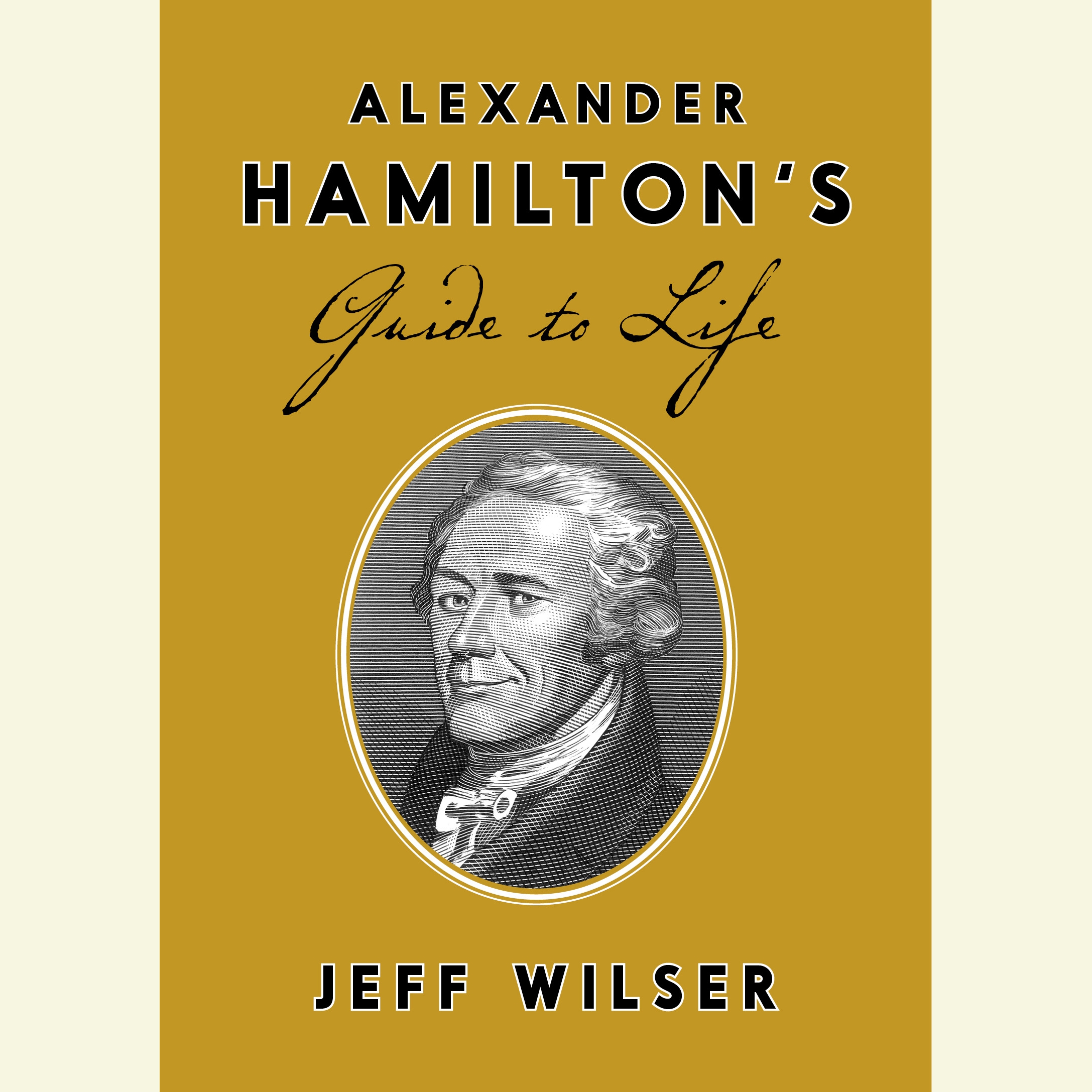
To say Alexander Hamilton was a genius is to recognize his unparalleled role in designing the structural foundations of the United States. His brilliance lay in a rare synthetic intelligence—the ability to fuse legal theory, economic strategy, and administrative precision into a functioning government framework that has survived and scaled through two and a half centuries of global change.
The Financial Synthesis: Turning Debt into Capital
The most profound evidence that Alexander Hamilton was a genius lies in his transformation of the fledgling United States from a bankrupt confederation into a credible financial power. When Hamilton took office as the first Secretary of the Treasury in 1789, the nation was drowning in debt from the Revolutionary War. While many of his contemporaries viewed this debt as a crushing burden to be avoided or partially repudiated, Hamilton saw it as an opportunity to cement the Union.
In his "First Report on the Public Credit," Hamilton proposed the "assumption" of state debts by the federal government. This was not merely an accounting maneuver; it was a masterstroke of political engineering. By making the federal government responsible for state debts, Hamilton ensured that the wealthiest citizens—who held the debt certificates—had a direct financial stake in the survival and success of the central government. This alignment of private interest with national stability is a hallmark of Hamiltonian thought.
Furthermore, Hamilton understood the concept of "monetizing" debt. By establishing a system to pay interest on the national debt through customs duties and excise taxes, he turned government bonds into a liquid form of capital. These bonds could be used as collateral for loans, effectively increasing the money supply in a specie-starved economy. This foresight into the mechanisms of modern finance allowed the United States to develop a credit rating that eventually surpassed many established European powers.
The Intellectual Engine of the Federalist Papers
Hamilton’s genius was not confined to ledger sheets; it was equally potent in the realm of political philosophy and rhetoric. Of the 85 essays that make up The Federalist Papers, Hamilton wrote 51. The sheer volume of this output is impressive, but the intellectual depth is what defines his legacy. Writing under the pseudonym "Publius," Hamilton provided the definitive defense of the U.S. Constitution and the necessity of a strong executive branch.
His contributions, particularly in essays like Federalist No. 70 and Federalist No. 78, laid the groundwork for how the American government operates in 2026. In Federalist No. 70, he argued for "energy in the executive," asserting that a vigorous, single-person presidency was essential for protecting the nation against foreign attacks and ensuring the steady administration of laws. In Federalist No. 78, he articulated the concept of judicial review, describing the judiciary as the "least dangerous" branch because it possessed neither the sword nor the purse, but was essential for keeping the legislature within its constitutional bounds.
Hamilton’s ability to anticipate the practical friction of governance remains striking. He did not merely theorize about democracy; he engineered a system of checks and balances that accounted for human ambition and fallibility. His writing in the Federalist Papers serves as the primary source for originalist interpretations of the Constitution, proving that his intellectual fingerprints are still active in the legal deliberations of the 21st century.
Constitutional Law and the Doctrine of Implied Powers
The debate over the creation of the First Bank of the United States in 1791 provided the stage for one of Hamilton’s most significant legal contributions: the doctrine of "implied powers." Thomas Jefferson and James Madison argued for a "strict constructionist" view of the Constitution, asserting that since the document did not explicitly grant Congress the power to incorporate a bank, it was unconstitutional.
Hamilton’s rebuttal was a masterpiece of legal reasoning. He argued that the "Necessary and Proper" clause (Article I, Section 8) gave the federal government the authority to employ all means necessary to carry out its enumerated powers, such as collecting taxes and regulating commerce. He posited that a sovereign government, by its very nature, possesses "implied" powers to fulfill its duties unless specifically prohibited by the Constitution.
This expansive view of federal power was later codified by the Supreme Court in the landmark case McCulloch v. Maryland (1819). Chief Justice John Marshall’s opinion leaned heavily on Hamiltonian logic. Without Hamilton’s legal framework, the federal government would likely have remained a weak, decentralized entity, unable to manage a continental economy or respond to national crises.
The Visionary of the Industrial State
While Thomas Jefferson envisioned an American future rooted in small-scale agrarianism, Hamilton possessed the foresight to see an industrial and commercial powerhouse. His "Report on Manufactures" (1791) was centuries ahead of its time. In this document, Hamilton argued that for the United States to be truly independent, it needed to develop its own manufacturing base rather than remaining dependent on European imports.
Hamilton advocated for:
- Bounties (subsidies): To encourage the development of new industries.
- Protective Tariffs: To shield nascent American businesses from foreign competition.
- Infrastructure Investment: Recognizing that the movement of goods required improved roads and canals.
Hamilton’s vision essentially predicted the "American System" of the 19th century and the eventual rise of the United States as a global industrial leader. He understood that a diverse economy—combining agriculture, commerce, and manufacturing—offered greater stability and opportunity for its citizens than a monoculture of farming.
Administrative Genius and the Creation of the Treasury
Genius often founders on the rocks of implementation, but Hamilton was a rare "doer" as well as a "thinker." As the first Treasury Secretary, he had to build a department from scratch. When he started, there were no standardized forms, no systematic way to collect revenue, and no established protocol for government accounting.
Hamilton designed the administrative architecture of the Treasury Department so effectively that much of its original structure remains intact today. He established the United States Coast Guard (originally the Revenue Cutter Service) to combat smuggling and ensure the collection of customs duties, which were the primary source of federal income at the time.
He also oversaw the creation of the United States Mint and formulated the first coinage act. His meticulous attention to detail extended to the design of the bureaucratic processes themselves, ensuring that the government could function efficiently even as it scaled. This administrative stamina was vital during the 1790s, a period of immense volatility and political polarization.
Hamilton vs. Jefferson: Comparing Visions for America
To understand the magnitude of Hamilton's genius, it is helpful to compare his vision with the prevailing alternatives of his era.
| Feature | Hamiltonian Vision | Jeffersonian Vision | 2026 Reality |
|---|---|---|---|
| Economic Base | Industrial and Commercial | Agrarian and Rural | Predominantly Industrial/Service |
| Federal Power | Strong Central Government | States' Rights/Weak Central | Strong Federal Oversight |
| National Debt | A "Public Blessing" (if managed) | A Curse to be Eliminated | Integral to Global Finance |
| Constitutional View | Broad Construction (Implied Powers) | Strict Construction | Predominantly Broad/Flexible |
| Foreign Policy | Pro-British (Stability/Trade) | Pro-French (Revolutionary Ideals) | Pragmatic/Globalist |
The table illustrates that the modern American state is almost entirely Hamiltonian in its execution. While Jeffersonian rhetoric remains popular in political discourse, the operational reality of the United States—its central bank, its industrial capacity, and its federal authority—is the fulfillment of Hamilton's design.
The Social and Human Capital Genius
Hamilton’s personal trajectory is itself a testament to his unique intellect. Born in the West Indies as a "bastard" child with no social standing or wealth, he ascended to the highest levels of power purely through his mental output and work ethic. This background gave him a different perspective on "genius" than his Virginia-born peers.
Hamilton was a meritocrat. He believed that the success of the United States depended on its ability to harness the talents of all its citizens, regardless of their birth. This is why he was an early and vocal critic of slavery, serving as a founding member of the New York Manumission Society. While his record on abolition is complex and debated by modern historians, his economic arguments consistently highlighted that a system of free labor was more efficient and innovative than a slave-based economy.
His ability to operate as George Washington’s "right-hand man" during the Revolutionary War also showcased his strategic military genius. He wasn't just a clerk; he was a battlefield commander (most notably at Yorktown) and a diplomatic liaison who could translate Washington’s broad objectives into actionable orders.
Common Criticisms and Rebuttals
Critics often point to Hamilton’s perceived elitism or his supposed desire for a monarchy as evidence against his genius. However, a deeper look at his writings suggests these were pragmatic concerns rather than ideological ones.
- The Charge of Elitism: Hamilton did fear "the mob," but this was rooted in his observation of the French Revolution's excesses. He believed in a "natural aristocracy" of talent, not a hereditary one.
- The Charge of Monarchism: During the Constitutional Convention, Hamilton proposed a "President for Life" during good behavior. While this was rejected, his goal was not a king but a Chief Executive insulated from the short-term whims of public passion—a concept that eventually manifested in the life tenure of federal judges.
- Financial Self-Interest: Despite handling millions of dollars as Treasury Secretary, Hamilton died in significant debt. He never used his office for personal enrichment, a rarity in an era where public and private funds were often blurred. This integrity reinforces the idea that his genius was dedicated to the state, not the self.
FAQs About Alexander Hamilton’s Genius
Was Alexander Hamilton actually a financial expert before becoming Secretary of the Treasury?
Hamilton was largely self-taught in finance. He spent years during the Revolutionary War studying European economic texts (such as Adam Smith's The Wealth of Nations) while in winter quarters. His "genius" was his ability to adapt these complex European theories to the unique, resource-rich but cash-poor environment of the early United States.
How did Hamilton’s genius influence the modern Federal Reserve?
While the Federal Reserve was not created until 1913, it is the direct descendant of Hamilton’s First Bank of the United States. Hamilton established the precedent that a central body should manage the nation’s credit, issue a uniform currency, and act as a lender of last resort. His belief that the money supply should be managed to promote economic growth is the bedrock of modern central banking.
Did Hamilton write the majority of the Federalist Papers?
Yes. Out of the 85 essays, Hamilton wrote 51, James Madison wrote 29, and John Jay wrote 5. Hamilton’s prolific output is even more remarkable considering he wrote many of these essays while also maintaining a busy legal practice and serving as a key political advisor.
Why is Hamilton considered a genius in the context of the 2026 economy?
In 2026, the global economy relies on the stability of the U.S. dollar as the world's reserve currency and the reliability of U.S. Treasury bonds. Both of these pillars were established by Hamilton. His understanding that a nation’s power is derived from its creditworthiness remains the fundamental rule of global geopolitics.
What was Hamilton’s most "genius" legal argument?
His most influential legal argument was his 1791 "Opinion on the Constitutionality of a National Bank." In it, he pioneered the "implied powers" doctrine, which allows the Constitution to remain a living, flexible document that can adapt to technological and social changes without requiring a constant stream of new amendments.
Final Recommendation for Students of Hamiltonian Thought
To truly appreciate why Alexander Hamilton was a genius, one should move beyond modern pop-culture interpretations and read his primary reports to Congress. Start with the Report on Public Credit and the Report on Manufactures. These documents reveal a mind that was not just reacting to the problems of 1790, but actively building the infrastructure for a superpower.
For those interested in the legal and political applications of his genius, a focused study of Federalist No. 78 provides the best insight into how he envisioned the balance of power. Understanding Hamilton is the key to understanding the "operating system" of the American government as it functions today.