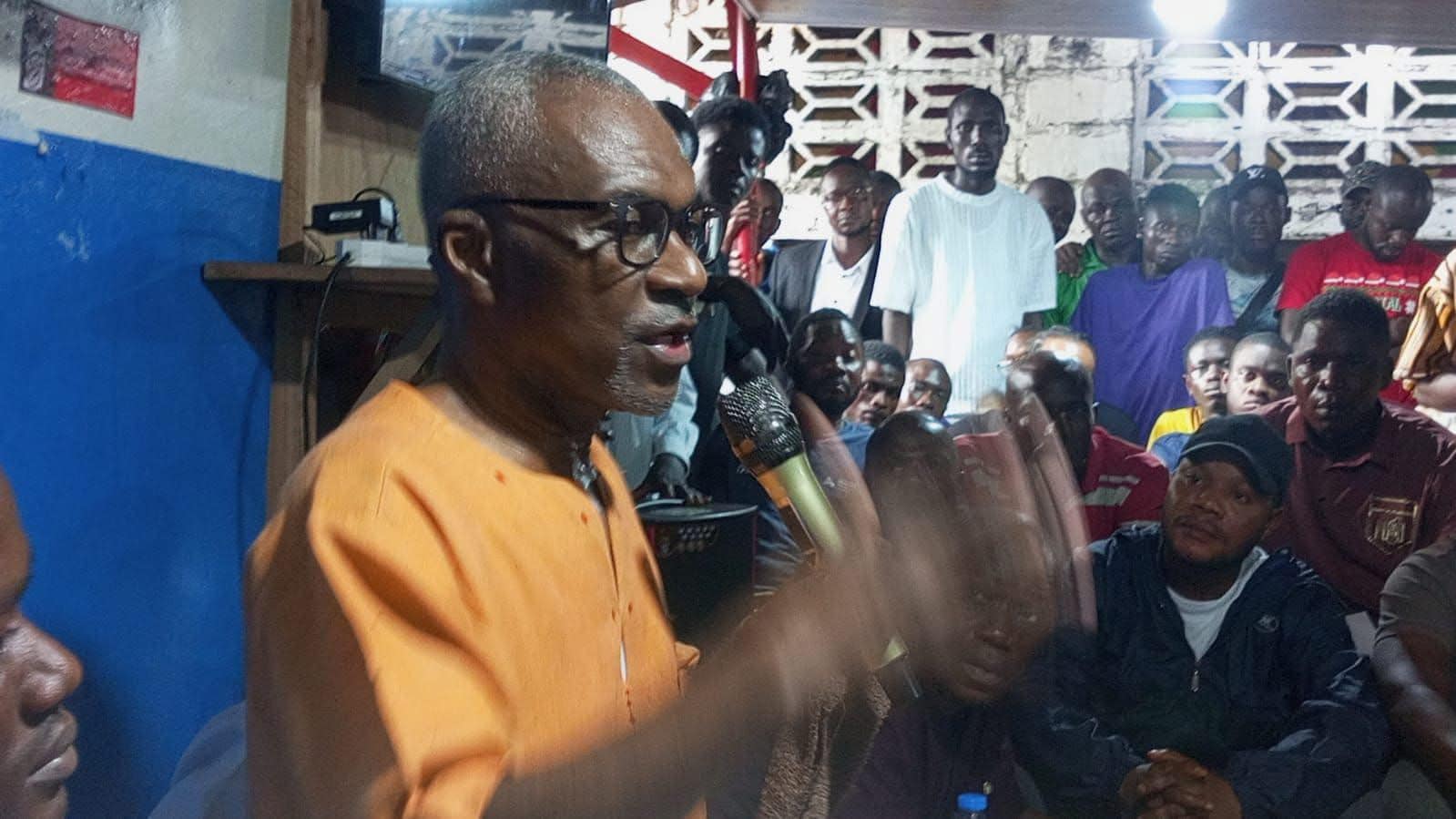
Alexander B. Cummings Jr. is a prominent Liberian politician, philanthropist, and former global business executive who served as the Executive Vice President and Chief Administrative Officer of The Coca-Cola Company. As the leader of the Alternative National Congress (ANC), he remains a central figure in Liberia’s pursuit of economic reform and technocratic governance.
The Executive Foundation: A Legacy at Coca-Cola
Before entering the volatile arena of West African politics, Alexander Cummings established himself as one of the most successful African corporate leaders on the global stage. His tenure at The Coca-Cola Company spanned over 18 years, during which he ascended to some of the highest positions within the multinational corporation.
Cummings joined Coca-Cola in 1997 as the Region Manager for Nigeria. His performance in West Africa quickly garnered attention, leading to his appointment as President of the Coca-Cola Africa Group in 2001. In this role, he oversaw operations across 56 countries and territories on the continent. His leadership was defined by a focus on infrastructure investment, supply chain optimization, and the expansion of the "Coca-Cola Africa Foundation," which addressed local challenges such as access to clean water and HIV/AIDS prevention.
In 2008, Cummings was named Executive Vice President and Chief Administrative Officer (CAO) of the global company. Based in Atlanta, Georgia, he managed a vast portfolio that included legal, people (HR), strategic planning, information technology, and several other global service functions. Managing a multi-billion dollar budget and a workforce of nearly 100,000 employees, Cummings honed a "results-oriented" philosophy that would later become the cornerstone of his political identity. His retirement in 2016 marked the beginning of his transition from corporate titan to political reformer.
Transition to Public Service: The Birth of the ANC
Alexander Cummings’ decision to enter Liberian politics was driven by a belief that the country’s systemic poverty and infrastructure deficits could be solved through corporate efficiency and transparent management. Upon returning to Liberia, he became the face of the Alternative National Congress (ANC), a party that broke away from the then-ruling Unity Party (UP).
The ANC positioned itself as a third-way alternative to the traditional political establishment. While many Liberian politicians relied on populist rhetoric or historical ethnic allegiances, Cummings focused on "Real Change." His platform emphasized three primary pillars:
- Economic Revitalization: Leveraging private sector growth to create jobs.
- Infrastructure Development: Prioritizing electricity, roads, and water.
- Governance Reform: Eliminating corruption through systemic transparency rather than just political will.
His transition was not without skepticism. Critics often labeled him an "outsider" or a "Johnny-just-come," citing his decades-long residence in the United States as evidence that he was disconnected from the daily struggles of the average Liberian. However, his supporters viewed his international success as proof that he could manage the nation’s resources more effectively than career politicians.
Navigating the 2017 Presidential Election
The 2017 general election was a watershed moment for Liberia, marking the first democratic transition of power between elected leaders in decades. Alexander Cummings entered the race as a dark horse candidate. Despite having significantly less name recognition than veterans like Joseph Boakai or George Weah, Cummings’ campaign gained rapid momentum.
His campaign was noted for its organization and modern communication strategies. He utilized town halls and digital media to present detailed policy papers, a rarity in Liberian electoral history. When the results were tallied, Cummings finished fifth, securing roughly 7.2% of the national vote. While he did not make the runoff, his performance established the ANC as a formidable force in the legislature and demonstrated a significant appetite among the urban youth and business community for a technocratic leader.
The Rise and Fragmentation of the CPP Alliance
Following the 2017 elections, the opposition recognized that a fractured field would likely lead to a second term for President George Weah. This realization led to the formation of the Collaborating Political Parties (CPP), an alliance consisting of the ANC, the Unity Party (UP), the Liberty Party (LP), and the All Liberian Party (ALP).
Alexander Cummings was a key architect of this alliance, which aimed to present a single ticket for the 2023 elections. However, the CPP was plagued by internal power struggles and disputes over the framework document that governed the coalition.
The Forgery Allegations and Legal Battles
The most significant challenge to Cummings’ political career occurred in 2022. Benoni Urey of the ALP accused Cummings of "forging" sections of the CPP framework document to favor the ANC’s interests. The Liberian government, through the Solicitor General, pursued criminal charges against Cummings.
The case was highly controversial, with many international observers viewing it as a politically motivated attempt to disqualify a leading opposition figure. After months of legal proceedings, the charges were eventually dropped "with prejudice" in June 2022, after the prosecution failed to provide sufficient evidence. Cummings was exonerated, but the legal battle contributed to the ultimate collapse of the CPP, as the Unity Party and the ALP eventually exited the coalition.
The 2023 Presidential Bid: Challenges and Outcomes
In the 2023 elections, Cummings ran as the standard-bearer of a reconstituted CPP, which now consisted primarily of the ANC and a faction of the Liberty Party led by Musa Bility. His campaign, titled "The Real Change," focused heavily on his "fixer" reputation. He argued that the Weah administration had failed to manage the economy, citing rising inflation and the depreciation of the Liberian dollar.
However, the 2023 election landscape was dominated by a binary choice for many voters: the incumbency of George Weah versus the "rescue mission" of Joseph Boakai. Despite a high-energy campaign and significant financial investment, Cummings’ vote share in 2023 was lower than in 2017, finishing with approximately 1.6% of the vote.
Analysts point to several factors for this outcome:
- Voter Polarization: The intense rivalry between Weah and Boakai squeezed out third-party candidates.
- The CPP Split: The dissolution of the original four-party alliance diluted the opposition's strength and confused the electorate.
- Grassroots Messaging: While his policy-heavy approach appealed to intellectuals and the diaspora, it struggled to penetrate rural areas where traditional political patronage remains influential.
Philanthropy and the Cummings Africa Foundation (CAF)
Parallel to his political life, Alexander Cummings has maintained a significant impact through the Cummings Africa Foundation (CAF). Founded by Alexander and his wife, Teresa Cummings, the foundation focuses on health, education, agriculture, and the arts.
The CAF has been instrumental in providing medical supplies to major Liberian hospitals, including the Jackson F. Doe Memorial Hospital and the CH Rennie Hospital. During the COVID-19 pandemic, the foundation donated oxygen concentrators and personal protective equipment (PPE) when national stocks were critically low. In the education sector, the foundation has provided hundreds of scholarships to underprivileged students, particularly those pursuing STEM (Science, Technology, Engineering, and Mathematics) fields. This philanthropic work has allowed Cummings to maintain a presence in Liberian public life outside of election cycles, reinforcing his commitment to human capital development.
The "Corporate Leader" Paradigm in African Politics
Alexander Cummings represents a specific archetype in African politics: the globalized technocrat. His career mirrors those of figures like Tony Elumelu in Nigeria or Tidjane Thiam in Ivory Coast—leaders who believe that the principles of efficiency, accountability, and meritocracy found in the private sector are the "missing ingredients" in African governance.
This paradigm faces unique hurdles in Liberia. The country’s political system is heavily influenced by the "Big Man" syndrome, where personal loyalty and the distribution of immediate favors often outweigh long-term policy proposals. Cummings’ insistence on "doing things the right way" rather than the "expedient way" has been both his greatest strength and his primary political obstacle.
Comparative Milestone Analysis
The following table summarizes the key milestones in Alexander Cummings' career and their impact on his public standing as of 2026.
| Period | Role/Event | Key Impact & Outcome |
|---|---|---|
| 2001–2008 | President, Coca-Cola Africa | Expanded beverage infrastructure across 56 countries; launched Africa Foundation. |
| 2008–2016 | CAO, The Coca-Cola Company | Managed global operations and multi-billion dollar budgets; solidified "fixer" reputation. |
| 2017 | Presidential Candidate (ANC) | Secured 5th place; established ANC as a credible third party in Liberia. |
| 2019–2022 | CPP Alliance Leadership | Led efforts to unite the opposition; survived legal challenges regarding forgery. |
| 2023 | Presidential Candidate (CPP) | Focused on economic reform; faced challenges from voter polarization. |
| 2024–2026 | Post-Election Status | Remains a key opposition voice; focuses on CAF philanthropy and private sector advocacy. |
Frequently Asked Questions
What is Alexander Cummings' stance on dual citizenship in Liberia?
Alexander Cummings has been a vocal proponent of dual citizenship. He argues that the Liberian diaspora represents a massive reservoir of talent and capital that is currently underutilized. He has consistently advocated for laws that would allow Liberians who took other citizenships during the civil war to retain their Liberian identity, arguing that this would spur investment and "brain gain."
How did the forgery case affect his political reputation?
While the case was eventually dismissed "with prejudice," the months of litigation were a double-edged sword. To his supporters, the dismissal was a vindication that proved he was a victim of a "witch hunt" by the political establishment. To his critics, the infighting within the CPP during the trial suggested that he was unable to maintain unity within his own coalition, which some used to question his broader leadership capabilities.
Is Alexander Cummings still active in Liberian politics in 2026?
As of 2026, Alexander Cummings remains the political leader of the ANC. While he has taken a less visible role in daily partisan bickering following the 2023 elections, he continues to issue policy recommendations and remains a critical voice regarding the country’s economic management. He is often consulted as an elder statesman on matters of trade and international relations.
What are the primary goals of the Cummings Africa Foundation?
The foundation focuses on "empowerment through opportunity." Its primary goals include increasing access to quality healthcare, providing financial support for vocational and academic education, and supporting small-scale entrepreneurs. Unlike many political foundations, CAF operates year-round, independent of the electoral calendar.
Why did the CPP alliance fail?
The failure of the Collaborating Political Parties (CPP) was primarily due to a lack of consensus on the mechanism for selecting a single presidential candidate. Personal ambitions of the various party leaders, combined with disputes over the interpretation of the alliance’s framework document, led to a breakdown in trust. This was exacerbated by external political pressures and legal challenges that pitted the leaders against one another.
Practical Recommendation for Observers
For those tracking the political and economic landscape of Liberia through 2026, Alexander Cummings should be viewed not just as a former candidate, but as a barometer for the country’s technocratic appetite. His influence is best measured by the extent to which his policy ideas—such as civil service reform and centralized accounting—are adopted by the current administration.
Stakeholders should monitor the ANC’s performance in legislative by-elections and the ongoing activities of the Cummings Africa Foundation. While the 2023 results were a setback, the "Cummings model" of governance remains a significant intellectual force in West Africa. Understanding his career provides deep insights into the challenges of applying global corporate standards to the complex socio-political realities of a post-conflict nation.