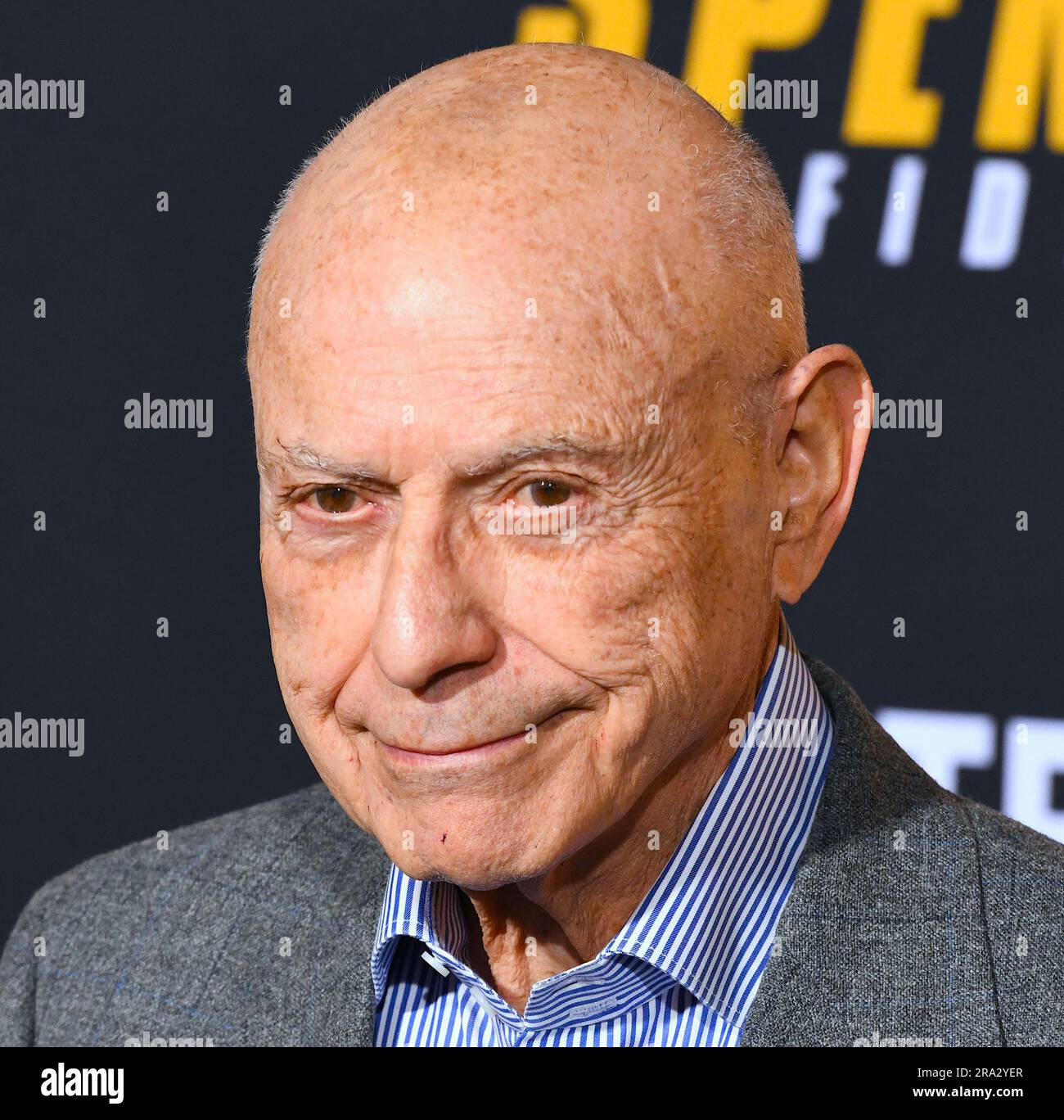
Alan Arkin was a transformative figure in American cinema and theater, celebrated for a career that spanned seven decades and earned him an Academy Award, a Tony Award, and a Golden Globe. Known for his unique blend of improvisational wit and profound dramatic depth, Arkin mastered the art of the "everyman" while maintaining a distinct, often eccentric, screen presence.
Throughout his long and prolific career, Alan Arkin (1934–2023) established himself as one of the few actors who could move seamlessly between broad comedy and searing drama. His work was characterized by a rare intelligence and an uncanny ability to find the humanity in even the most cynical or curmudgeonly characters. In the landscape of 2026, his filmography remains a foundational syllabus for aspiring actors and a treasure trove for cinephiles.
The Foundations of a Master: From Folk Music to Second City
To understand Alan Arkin’s success as an award-winning actor, one must look at his beginnings in the mid-1950s. Arkin did not start as a traditional dramatic student; rather, his roots were in folk music and improvisational comedy. As a member of the folk group The Tarriers, Arkin actually co-wrote and performed the hit version of "The Banana Boat Song" in 1956. This musical background contributed to the rhythmic precision of his later comedic timing.
However, it was his involvement with The Second City in Chicago that fundamentally shaped his acting philosophy. Arkin was an early member of this legendary improvisational troupe, where he learned to build characters from the ground up through interaction and spontaneity. This "outside-in" approach allowed him to inhabit roles with a naturalism that was rare in the mid-20th century. By the time he reached Broadway in the early 1960s, he was already a seasoned performer. He won a Tony Award for Best Featured Actor in a Play for his performance in Enter Laughing (1963), a victory that signaled his arrival as a major force in the industry.
The 1960s Breakthrough: An Instant Oscar Contender
Most actors spend decades striving for an Academy Award nomination. Alan Arkin achieved this with his very first feature film role. In the 1966 comedy The Russians Are Coming, the Russians Are Coming, Arkin played Lieutenant Rozanov, a Soviet submariner who runs aground off the coast of New England.
This role was a masterclass in controlled absurdity. While the film was a satire of Cold War tensions, Arkin played the part with a straight-faced desperation that made the comedy resonate. His performance earned him a nomination for Best Actor, a rare feat for a debut performance in a comedic role.
The late 1960s further proved his range. In 1967, he terrified audiences as the murderous Roat in the thriller Wait Until Dark, playing opposite Audrey Hepburn. Just a year later, he pivoted back to high drama in The Heart Is a Lonely Hunter (1968), playing John Singer, a deaf-mute man. His performance was so nuanced and physically expressive that it earned him his second Academy Award nomination for Best Actor. This era established the "Arkin Archetype": a character who is often socially isolated but possesses an internal life that is vibrant, complex, and occasionally volatile.
The Middle Years: Directing and Iconic Collaborations
During the 1970s and 1980s, Arkin expanded his repertoire by moving behind the camera and forming iconic partnerships. He directed the dark comedy Little Murders (1971), based on the play by Jules Feiffer, which showcased his cynical, urban sensibility.
As an actor, his most enduring contribution during this period was arguably his partnership with Peter Falk. In the 1979 cult classic The In-Laws, Arkin played Sheldon Kornpett, a mild-mannered dentist dragged into a chaotic international conspiracy by Falk’s wild-eyed CIA agent. The chemistry between the two was legendary; Arkin’s "straight man" was just as funny as Falk’s eccentric lead because Arkin understood that the secret to comedy is reacting with absolute, terrified sincerity.
Key Milestones in Alan Arkin’s Award History
The following table summarizes the pivotal roles that defined Arkin's status as an award-winning elite in the industry.
| Year | Project | Role | Primary Award/Recognition | Genre |
|---|---|---|---|---|
| 1963 | Enter Laughing | David Kolowitz | Tony Award (Winner) | Stage Comedy |
| 1966 | The Russians Are Coming... | Lt. Rozanov | Academy Award Nomination | Comedy |
| 1967 | Wait Until Dark | Roat | Golden Globe Nomination | Thriller |
| 1968 | The Heart Is a Lonely Hunter | John Singer | Academy Award Nomination | Drama |
| 2006 | Little Miss Sunshine | Edwin Hoover | Academy Award (Winner) | Dark Comedy |
| 2012 | Argo | Lester Siegel | Academy Award Nomination | Historical Drama |
| 2018 | The Kominsky Method | Norman Newlander | Emmy & Golden Globe Noms | TV Dramedy |
The Late-Career Renaissance: Little Miss Sunshine and Beyond
While Arkin remained consistently employed throughout the 90s (with memorable turns in Edward Scissorhands and Glengarry Glen Ross), the 21st century brought a resurgence that redefined his legacy for a new generation.
In 2006, Arkin took the role of Edwin Hoover, the foul-mouthed, heroin-snorting, but deeply loving grandfather in the indie hit Little Miss Sunshine. It was a performance that combined all the elements of the Arkin style: the gruff exterior, the razor-sharp wit, and an underlying sweetness that never felt unearned or sentimental. After 40 years of being one of the industry's most respected actors, Arkin finally won the Academy Award for Best Supporting Actor.
His victory was not a "lifetime achievement" award; it was a recognition of a performance that stole every scene it was in. He followed this success with another Academy Award nomination for his role in Ben Affleck's Argo (2012). As Lester Siegel, a veteran Hollywood producer helping the CIA, Arkin delivered the film's most famous line ("Argo fuck yourself"), proving that even in his late 70s, his comedic timing was sharper than actors half his age.
The Technical Mastery of the Arkin Style
What made Alan Arkin a perennial award-winner was his technical approach to the craft. He was a vocal critic of "The Method" as it was commonly taught in the US, which he felt often led to self-indulgent performances. Instead, Arkin advocated for a style rooted in listening and reacting.
- Understatement vs. Explosion: Arkin often played characters who were boiling underneath a calm surface. He knew exactly when to let that pressure out for comedic or dramatic effect.
- Rhythmic Dialogue: Because of his musical background, Arkin treated scripts like scores. He understood the "rest" as much as the "note," using pauses to let the audience catch up to his character's internal logic.
- Physicality: In roles like The Heart Is a Lonely Hunter, Arkin proved he didn't need words to convey complex emotion. His posture and eye movement did the heavy lifting.
- Ensemble Play: Arkin was never an actor who tried to "outshine" his costars. Whether working with Peter Falk, Michael Caine, or Michael Douglas, he understood that the scene was only as good as the interaction between the performers.
Television Success and The Kominsky Method
In his final decade of work, Arkin found a new home on streaming television. His role as Norman Newlander in the Netflix series The Kominsky Method (2018–2021) paired him with Michael Douglas. The show dealt with the indignities of aging, the loss of loved ones, and the enduring power of friendship.
Arkin's performance was masterfully dry. As Norman, a high-powered agent mourning his wife, he used his signature deadpan delivery to explore grief in a way that was both hilarious and heartbreaking. This role earned him multiple Primetime Emmy and Golden Globe nominations, proving that his appeal was timeless and not limited to the silver screen.
Alan Arkin's Philosophical Impact on Acting
Beyond the awards and the accolades, Arkin was a teacher and a writer. His memoir, An Improvised Life, provides deep insight into how he viewed the world. He believed that acting was a way to explore the human condition and that the best work came from a place of "not knowing." This humility is perhaps why his characters always felt so real; they were never caricatures, even when they were absurd.
For students of acting in 2026, Arkin represents the bridge between the classical theatrical tradition and the modern, naturalistic style found in contemporary cinema. He showed that you could be a character actor and a leading man simultaneously, provided you had the range and the discipline.
Frequently Asked Questions
How many Academy Awards did Alan Arkin win?
Alan Arkin won one Academy Award for Best Supporting Actor for his role as Grandpa Edwin Hoover in Little Miss Sunshine (2006). However, he was nominated a total of four times throughout his career: twice for Best Actor (The Russians Are Coming, the Russians Are Coming and The Heart Is a Lonely Hunter) and twice for Best Supporting Actor (Little Miss Sunshine and Argo).
What was Alan Arkin's first major award?
Arkin's first major industry award was the Tony Award for Best Featured Actor in a Play, which he won in 1963 for his performance in Enter Laughing. This award was crucial in transitioning his career from improvisational comedy to the prestigious stages of New York and eventually to Hollywood.
Did Alan Arkin ever direct films?
Yes, Alan Arkin was an accomplished director. His most notable film directorial effort was the 1971 dark comedy Little Murders. He also directed several Broadway plays, including the original production of The Sunshine Boys (1972) by Neil Simon, for which he received a Tony Award nomination for Best Direction of a Play.
What is considered Alan Arkin's best comedic performance?
While subjective, most critics and fans point to his role in The In-Laws (1979) as his comedic peak. His performance as the panicked, high-strung Sheldon Kornpett opposite Peter Falk is often cited as a definitive example of the "straight man" role in American comedy. Others point to his Oscar-winning turn in Little Miss Sunshine for its perfect blend of edge and heart.
Why is Alan Arkin considered an influential actor?
Arkin is influential because he brought the techniques of improvisational comedy into serious dramatic acting. He prioritized the "truth of the moment" over rehearsed mannerisms. This influenced a generation of actors who sought to bring more spontaneity and unpredictability to their performances.
Recommended Viewing for the Modern Audience
If you are looking to appreciate the full breadth of Alan Arkin’s talent, the following three-film marathon is recommended to see his evolution:
- The Russians Are Coming, the Russians Are Coming (1966): To see the explosive comedic energy of his early career.
- The Heart Is a Lonely Hunter (1968): To witness his profound capability for silent, dramatic storytelling.
- Little Miss Sunshine (2006): To see the elder statesman of acting at the height of his powers, delivering a performance that is both iconic and deeply human.
Alan Arkin’s legacy as an award-winning actor is not just found in the statues on a shelf, but in the hundreds of characters he brought to life with a unique spirit that remains unmatched in the history of film.