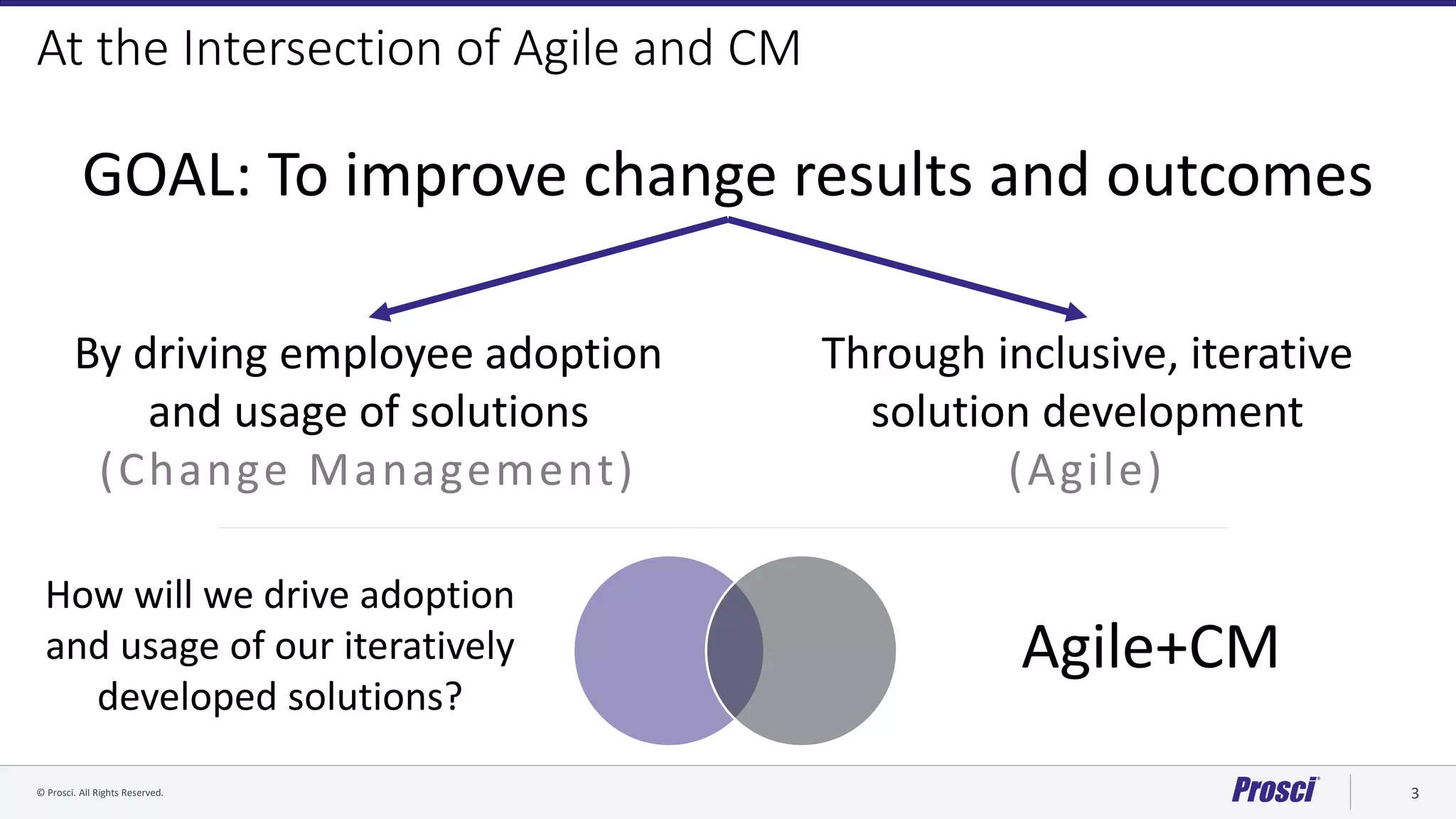
In 2026, Agile IT serves as the primary engine for technological change by replacing rigid, long-term planning with iterative cycles and cross-functional collaboration. This methodology enables organizations to integrate emerging technologies—such as generative AI and distributed cloud—rapidly while maintaining system stability and aligning technical debt with strategic business outcomes.
Agile IT is no longer just a software development methodology; it has evolved into a comprehensive framework for organizational adaptability. By emphasizing responsiveness over adherence to a fixed plan, Agile IT allows businesses to navigate the complexities of a modern tech landscape where the half-life of technical skills and software versions continues to shrink. This transition from "project-centric" to "product-centric" thinking ensures that technological change is not a disruptive event but a continuous, manageable flow of value.
The Evolution of Agile IT in the Mid-2020s
As we navigate 2026, the definition of Agile IT has shifted significantly from its 2001 origins. While the core values of the Agile Manifesto remain relevant, the application has matured to handle the hyper-scale demands of modern enterprises. The focus has moved beyond simple Scrum teams to "Business Agility," where the entire value chain—from procurement to operations—operates under Agile principles to facilitate tech-driven change.
The integration of artificial intelligence into the development lifecycle has been a major catalyst for this evolution. AI-driven automation in testing, code generation, and deployment allows Agile teams to maintain high velocity without sacrificing quality. In this environment, technological change is driven by data-driven insights rather than executive intuition. Agile IT frameworks provide the structure to absorb these AI advancements, ensuring that the technology stack remains current without requiring massive, risky "big bang" upgrades.
Furthermore, the concept of "Agile at Scale" has been refined. Organizations are increasingly adopting frameworks like the Scaled Agile Framework (SAFe) or Large-Scale Scrum (LeSS) not as rigid templates, but as flexible guides to coordinate massive technological shifts across thousands of developers. This coordination is essential for driving change in complex environments like microservices architectures and multi-cloud deployments, where a change in one component can have cascading effects across the ecosystem.
Core Mechanisms: How Agile IT Fuels Tech Transformation
The ability of Agile IT to drive technological change rests on several fundamental mechanisms that dismantle the barriers typical of traditional IT management. By focusing on flow, feedback, and autonomy, Agile creates an environment where new technologies can be vetted and implemented with minimal friction.
Iterative Development and Rapid Prototyping
Traditional "Waterfall" methodologies often delay technological change because they require months of planning before a single line of code is written. By the time the project is delivered, the technology may already be obsolete. Agile IT reverses this by mandating short development cycles, typically two to four weeks.
This iterative approach allows teams to experiment with new tools—such as a new vector database for AI search or a serverless computing framework—in a low-risk environment. If a technology fails to deliver the expected value during a sprint, the team can pivot immediately. This "fail fast" mentality is crucial for driving tech change because it lowers the cost of experimentation, encouraging teams to stay at the cutting edge of the industry.
CI/CD and the Automation of Change
Continuous Integration and Continuous Deployment (CI/CD) are the technical heart of Agile IT. In 2026, these pipelines have reached a level of sophistication where technological change is baked into the daily workflow. When a developer updates a component to utilize a new API or a more efficient library, the CI/CD pipeline automatically tests, secures, and deploys that change.
This automation eliminates the "human bottleneck" that historically slowed down technological adoption. It allows organizations to implement hundreds of small, incremental changes per day rather than one large, risky update per quarter. By making change routine, Agile IT reduces the organizational anxiety often associated with adopting new technologies, creating a culture that views technical evolution as a standard operational procedure.
Cross-Functional Autonomy
One of the most significant ways Agile IT drives change is through the creation of cross-functional teams. By bringing together developers, security specialists (DevSecOps), data scientists, and business analysts, Agile breaks down the silos that typically resist change.
In a siloed organization, the infrastructure team might block a developer’s request for a new cloud resource because it doesn't fit their current manual processes. In an Agile IT model, the team has the autonomy and the multidisciplinary expertise to manage their own resources within established guardrails. This autonomy accelerates the adoption of new tech because the people closest to the problem have the power to implement the solution.
Addressing the Complexity of Modern Tech Stacks
In 2026, IT environments are more complex than ever, involving a mix of edge computing, quantum-ready encryption, and legacy core systems. Agile IT provides the necessary abstraction layers to manage this complexity while still driving forward-looking change.
Managing Legacy Systems Alongside Cloud-Native Apps
A common misconception is that Agile IT only works for "greenfield" projects. In reality, Agile is a vital tool for modernizing legacy systems. By applying the "Strangler Fig" pattern—where new functionality is built using modern tech around the edges of a legacy system—Agile teams can incrementally migrate an organization away from outdated infrastructure.
This incremental approach reduces the risk of total system failure and allows the organization to realize the benefits of new technology (such as reduced latency or lower hosting costs) much sooner than a full rewrite would allow. Agile IT ensures that "change" isn't an all-or-nothing proposition, making it feasible for risk-averse industries like banking and healthcare to modernize their tech stacks.
Agile's Role in AI Integration
The rapid rise of Large Language Models (LLMs) and specialized AI agents has forced IT departments to rethink their architectures. Agile IT is uniquely suited for this "AI-first" era because AI integration is rarely a linear process. It requires constant tuning, data retraining, and prompt engineering.
Agile's feedback loops allow teams to integrate AI components, measure their performance against real-world user data, and refine the implementation in real-time. This prevents organizations from over-investing in a specific AI model that might be superseded by a more efficient version just weeks later. The flexibility of Agile IT ensures that the technological change driven by AI is both sustainable and aligned with actual business needs.
Structural Changes: From Hierarchies to Value Streams
Driving technological change effectively in 2026 requires moving away from traditional hierarchical reporting structures toward "Value Streams." This structural shift is a hallmark of mature Agile IT organizations.
| Feature | Traditional IT Change Management | Agile IT (2026 Standard) |
|---|---|---|
| Change Frequency | Monthly or Quarterly | Continuous / Multiple times daily |
| Risk Management | Extensive documentation and approval boards | Automated testing, canary deployments, and observability |
| Team Structure | Siloed by function (DBAs, Devs, QA) | Cross-functional Product Teams |
| Primary Metric | Adherence to project timeline/budget | Flow velocity and Business Value delivered |
| Tech Adoption | Top-down mandates | Bottom-up experimentation within guardrails |
| Failure Response | Root cause analysis and blame | Blameless post-mortems and rapid rollback |
The Rise of Platform Engineering
To support Agile teams in driving tech change without creating chaos, the role of "Platform Engineering" has become central. Platform teams build an Internal Developer Platform (IDP) that provides "golden paths"—pre-approved, automated ways to use new technologies.
For example, if a team wants to adopt a new graph database, the Platform team ensures the IDP has a self-service module that includes the necessary security configurations, backup protocols, and monitoring tools. This allows the Agile team to adopt the new technology instantly while ensuring it meets enterprise standards. In this way, Agile IT drives change that is both fast and governed.
Overcoming Hurdles in Agile Tech Adoption
Despite its benefits, using Agile IT to drive technological change is not without challenges. In 2026, the primary obstacles are no longer technical, but cultural and cognitive.
Cultural Resistance and the "Frozen Middle"
While executive leadership often embraces the idea of Agile change, and frontline developers enjoy the autonomy, middle management can often become a bottleneck. Known as the "frozen middle," these managers may feel threatened by the decentralized decision-making inherent in Agile.
Overcoming this requires a shift in the role of management from "command and control" to "servant leadership." Change is driven most effectively when managers focus on removing obstacles for their teams rather than managing individual tasks. Organizations that fail to address this cultural shift often find that their "Agile" transformation is merely a faster way of doing the same old things, failing to drive true technological innovation.
Managing Technical Debt
A potential downside of rapid, Agile-driven change is the accumulation of technical debt. When teams move fast to implement new features or technologies, they may take shortcuts that lead to messy code or suboptimal architecture.
In 2026, high-performing Agile IT organizations manage this by dedicating a specific percentage of every sprint (often 20%) to "refactoring" and debt reduction. This ensures that the foundation remains solid enough to support future technological changes. Without this discipline, the very agility that drives change can eventually lead to a "code base of cards" that is too fragile to modify.
Future-Proofing IT with Agile Principles
As we look toward the latter half of the decade, the pace of technological change shows no signs of slowing. Agile IT remains the most robust framework for future-proofing an organization because it prioritizes adaptability over specific technical outcomes.
By fostering a culture of continuous learning, Agile IT ensures that the workforce is always ready for the next wave of innovation, whether that be ambient computing, advanced biometrics, or decentralized autonomous organizations (DAOs). The "change" driven by Agile IT is not a destination, but a permanent state of evolution that allows the enterprise to thrive in an unpredictable market.
FAQ
How does Agile IT handle large-scale hardware changes? While Agile originated in software, its principles are increasingly applied to hardware through "Agile Hardware Development." This involves using digital twins and high-fidelity simulations to run virtual "sprints" before physical manufacturing. In 2026, IT departments use this to plan data center migrations or edge device rollouts, allowing for iterative testing of the system's logic before the physical components are finalized.
Can Agile IT drive change in highly regulated industries? Yes, but it requires "Compliance as Code." In sectors like finance or aerospace, Agile teams integrate regulatory checks directly into their CI/CD pipelines. This ensures that every technological change is automatically verified against legal requirements, allowing for rapid evolution even within strict governance frameworks. Organizations like the Agile Alliance provide extensive resources on adapting these frameworks for regulated environments.
What is the role of the "Product Owner" in driving tech change? The Product Owner (PO) is the bridge between technical possibilities and business value. Their role is to prioritize the "Backlog" so that technological changes are implemented in an order that maximizes ROI. A good PO ensures that the team isn't just "changing for the sake of change" but is adopting technologies that solve specific customer pain points or operational inefficiencies.
How do we measure if Agile IT is successfully driving change? Success is measured through DORA metrics (DevOps Research and Assessment): Deployment Frequency, Lead Time for Changes, Change Failure Rate, and Failed Service Recovery Time. If these metrics are improving while the organization adopts new technologies, the Agile framework is effectively managing and driving change. More information on these benchmarks can be found at Google Cloud's DORA research page.
Does Agile IT increase the risk of security vulnerabilities? If implemented correctly via DevSecOps, Agile actually improves security. By integrating security scanning into every sprint and every deployment, vulnerabilities are caught much earlier than in traditional models. This "shift left" approach ensures that technological change does not come at the expense of the organization’s security posture.
Practical Recommendation for 2026
To effectively leverage Agile IT for technological change, organizations should prioritize the development of an Internal Developer Platform (IDP). By providing developers with self-service access to vetted, modern technologies, you reduce the "cognitive load" on teams, allowing them to focus on delivering business value rather than wrestling with infrastructure. Start by identifying the most common bottlenecks in your current deployment process and automate those "golden paths" first. This creates a foundation where technological change becomes a competitive advantage rather than an operational burden.