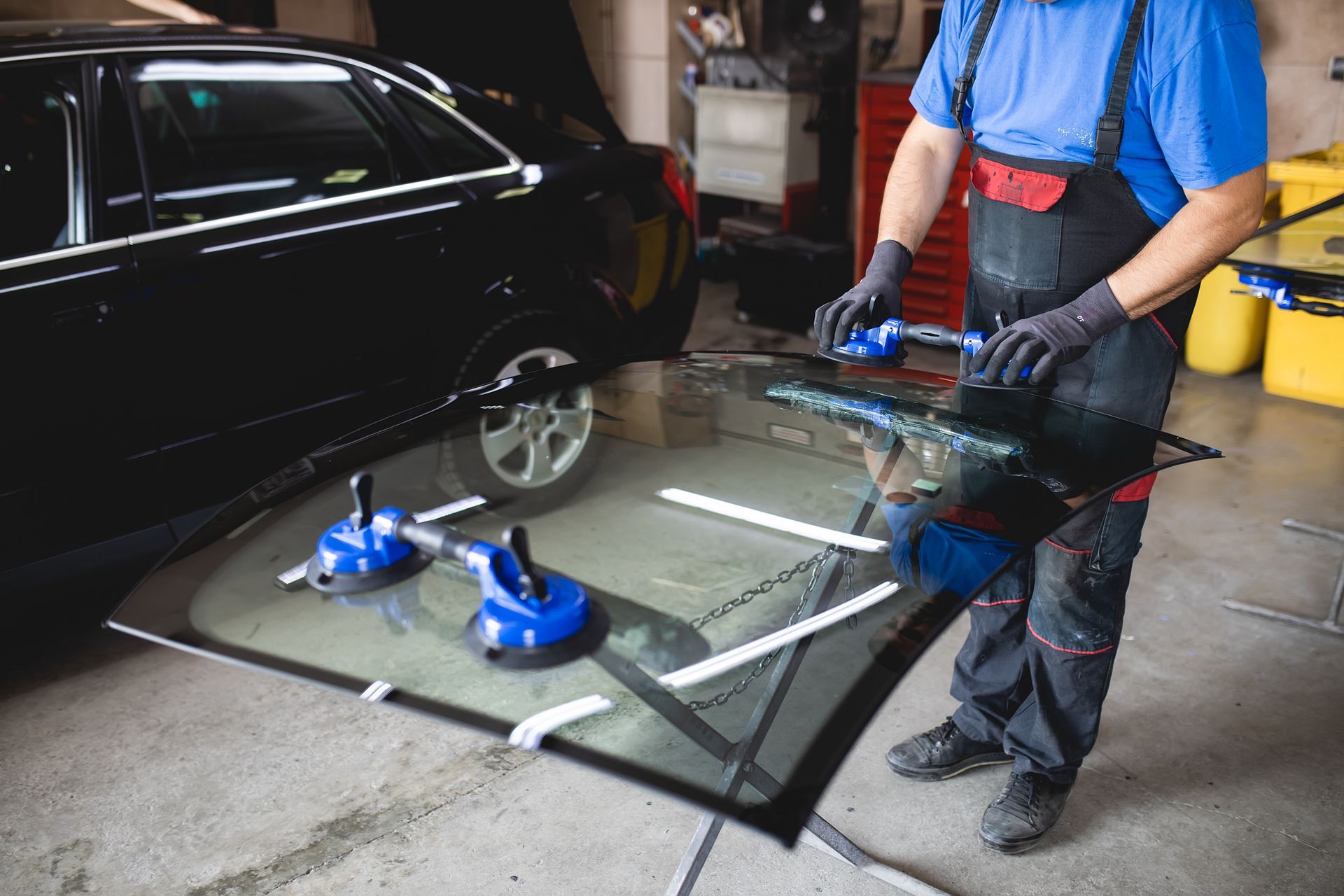
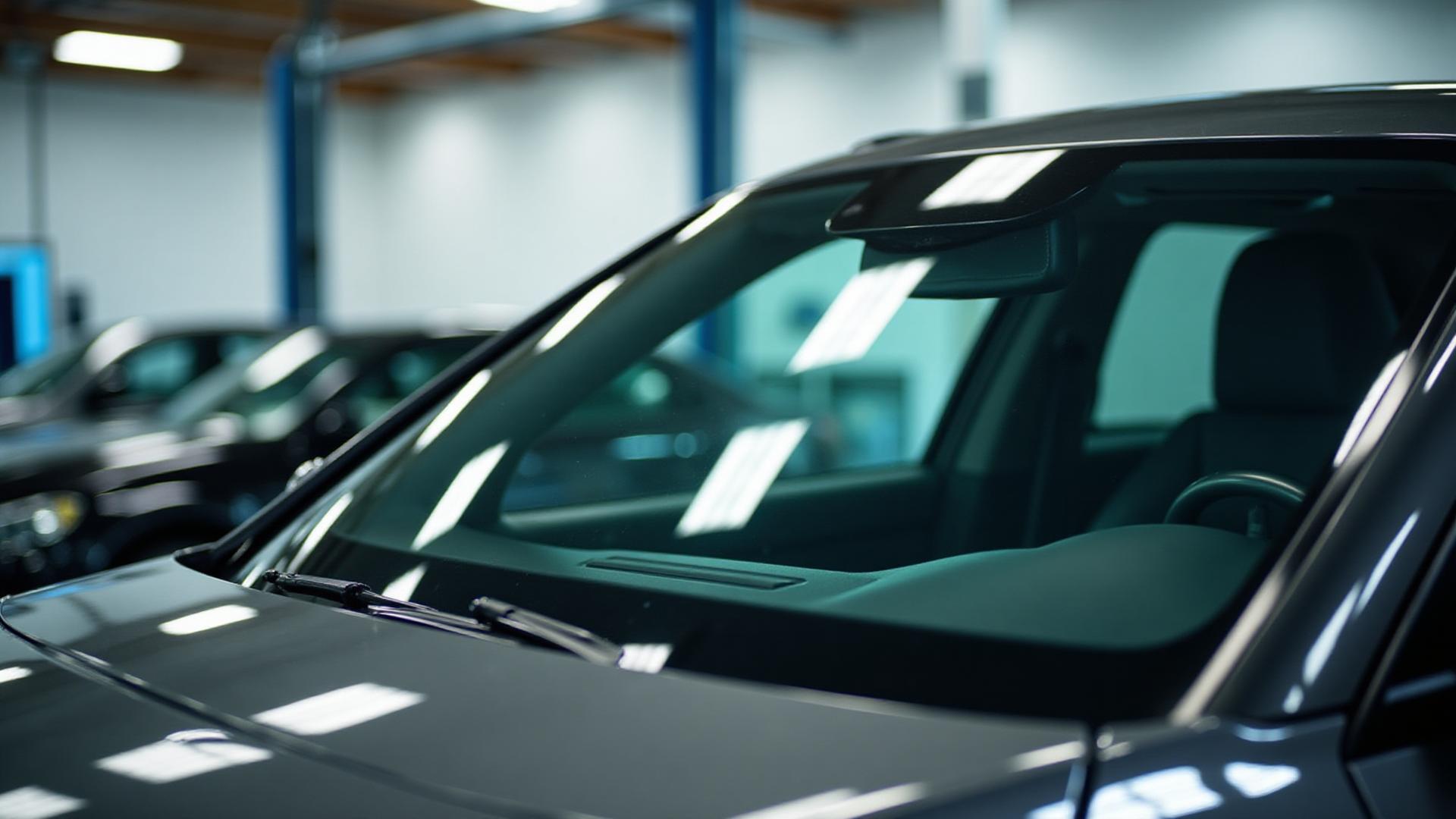
Aftermarket auto glass is replacement vehicle glass produced by independent manufacturers that did not supply the original windshield or windows fitted at the factory. Manufactured to meet federal safety guidelines, aftermarket glass offers a cost-effective alternative to Original Equipment Manufacturer (OEM) parts, though variations in optical clarity, sensor brackets, and acoustic dampening require careful evaluation.
Understanding Auto Glass Types: OEM, OEE, and Aftermarket
Navigating the auto glass replacement market requires distinguishing between three primary categories of replacement glass: Original Equipment Manufacturer (OEM), Original Equipment Equivalent (OEE), and non-OEM aftermarket glass. While all three must meet baseline automotive safety regulations, their manufacturing pipelines, licensing agreements, and structural tolerances differ significantly.
Original Equipment Manufacturer (OEM) Glass
OEM glass is manufactured by the exact company that produced the original glass installed on the vehicle during factory assembly. These units bear the vehicle automaker's logo alongside the glass manufacturer's stamp (such as Pilkington, Saint-Gobain Sekurit, PGW/AGC, or Fuyao). OEM glass is built using the exact tooling, blueprints, dimensions, tint levels, and thickness specifications mandated by the vehicle manufacturer. Choosing OEM glass ensures 100% fidelity to the original factory specifications, minimizing risks associated with fitment gap tolerances, sensor mount placement, or optical distortion. However, OEM glass carries the highest price point in the automotive replacement industry.
Original Equipment Equivalent (OEE) Glass
OEE glass is produced by major glass manufacturers that supply original equipment to vehicle makers, but the specific glass unit purchased is manufactured for the aftermarket supply chain without the vehicle brand's logo. For example, a company like Pilkington may manufacture windshields for Toyota vehicles on the assembly line, while simultaneously producing identical or slightly modified replacement glass under their own brand label for independent repair shops. OEE glass typically adheres to stringent quality controls, maintaining near-identical dimensions, curvature, and structural thickness as OEM parts while selling at a lower retail price.
Non-OEM Aftermarket Glass
Standard aftermarket glass is produced by independent glass fabricators that hold no direct manufacturing contract with the vehicle’s original producer. These companies reverse-engineer factory windshields to create their own molding tools and production dies. Because aftermarket manufacturers operate outside automaker licensing constraints, minor variances can occur in glass curvature, edge finishing, overall thickness, and attachment hardware (such as camera mounting brackets or rain sensor gels). Despite these variances, legally distributed aftermarket auto glass in the United States must comply with Department of Transportation (DOT) certification standards and Federal Motor Vehicle Safety Standards (FMVSS).
Safety Regulations and Manufacturing Standards
Auto glass is a critical structural element of a modern vehicle's safety cage. To sell replacement auto glass legally, manufacturers must meet defined regulatory compliance markers and structural design thresholds.
- FMVSS 205 & ANSI Z26.1: Federal Safety Glazing Specifications
- Laminated Glass (Windshields / Front)
- 2 Glass Layers + PVB
- Retains Shards on Impact
- Supports Airbag Force
- Maintains Roof Structure
- Tempered Glass (Side & Rear Windows)
- Rapid Heat/Cool Treated
- High Impact Resistance
- Fractures into Dull Granular Cubes
- Laminated Glass (Windshields / Front)
Federal Regulations and Certification Identifiers
In North America, all automotive safety glazing materials are governed by Federal Motor Vehicle Safety Standard 205 (FMVSS 205) and ANSI Z26.1, enforced by the National Highway Traffic Safety Administration (NHTSA). These standards establish mechanical strength, optical clarity, shatter resistance, and flammability parameters.
Every legitimate piece of replacement glass features a permanently etched bug (code stamp) in one of the lower corners. This stamp reveals crucial compliance data:
- DOT Number: A unique identification number assigned by the Department of Transportation to the manufacturing plant (e.g., DOT-177, DOT-43). This allows technicians to track the original manufacturer of the glass regardless of the brand label on the packaging.
- M-Number: A manufacturer-specific model number indicating glass attributes, including thickness, color tint, and laminated layer composition.
- AS Rating (American Standard): Indicates where on the vehicle the glass may legally be used.
- AS1 glass exhibits at least 70% light transmission and is mandatory for windshields.
- AS2 glass is approved for side and rear windows (side wings and backlights) but not front windshields.
- AS3 glass offers less than 70% light transmission and is restricted to rear privacy windows or specialized installations.
Structural Role in Collision Dynamics
A vehicle windshield serves functions far beyond blocking wind and debris. In modern unibody vehicle designs, the windshield provides up to 45% of the cabin's structural integrity in a frontal collision and up to 60% of roof collapse prevention during a rollover accident.
Furthermore, the front passenger airbag relies on the windshield for support. When deployed, the passenger airbag fires upward against the interior face of the windshield at speeds exceeding 150 mph, deflecting off the glass toward the occupant. If an aftermarket windshield uses substandard laminate interlayers or improper polyurethane bonding, the forces can cause the glass to detach from the pinchweld, rendering the airbag completely ineffective.
The Impact of ADAS Calibration on Aftermarket Glass
The integration of Advanced Driver Assistance Systems (ADAS) has fundamentally changed auto glass replacement. Modern windshields no longer function merely as passive barriers; they act as optical housings for complex sensor arrays, cameras, and display systems.
| Critical ADAS Glass Considerations | Description |
|---|---|
| 1. OPTICAL CLARITY | Camera field of view must be free of glass waves, refraction bugs, or inconsistent tint density. |
| 2. BRACKET TOLERANCE | Factory-bonded camera brackets must align to millimeter tolerances to prevent pitch/yaw offset. |
| 3. CALIBRATION | Static (target boards) or Dynamic (test drive) re-alignment mandatory following glass fitment. |
Forward-Facing Cameras and Optical Clarity
Features such as Lane Departure Warning (LDW), Automatic Emergency Braking (AEB), Adaptive Cruise Control (ACC), and Traffic Sign Recognition depend on forward-facing optical cameras mounted directly behind the upper portion of the windshield.
When replacing glass on an ADAS-equipped vehicle, the glass within the camera's line of sight must exhibit zero optical distortion. Inferior aftermarket windshields occasionally possess subtle thickness variations or curvature waves known as optical refraction errors. While these imperceptible waves may not bother a human driver, they distort the light entering the camera lens, causing system error codes, false emergency braking triggers, or complete ADAS failure.
Factory Bracket Alignment Tolerances
High-quality aftermarket and OEM glass units arrive with pre-installed camera brackets bonded directly to the glass at the manufacturing plant. The positioning tolerance for these brackets is tight—often measured in fractions of a millimeter. If an aftermarket supplier uses inaccurate bracket geometry, the camera sits at an incorrect angle relative to the road surface. Even a 1-degree pitch or yaw offset can cause the ADAS module to misjudge road markings or obstacles by several feet at highway speeds.
Static vs. Dynamic ADAS Calibration
Whenever a windshield on an ADAS-equipped vehicle is removed or replaced, the camera system must undergo re-calibration to ensure proper function. Calibration falls into two technical categories:
- Static Calibration: Conducted in a controlled workshop environment. Technicians position physical target boards (coaxial targets or geometric patterns) at precise distances, heights, and angles from the vehicle's front bumper. The vehicle's diagnostic computer is connected to align the optical sensors to these static references.
- Dynamic Calibration: Performed while driving the vehicle under specific conditions. The technician plugs a scan tool into the OBD-II port and drives the vehicle on clearly marked roads at target speeds (typically 40 to 65 mph) for a specified duration until the camera re-indexes itself against road lanes and environmental features.
- Dual Calibration: Many modern vehicles (such as select Honda, Subaru, and Mercedes-Benz models) require both static target setup followed immediately by a dynamic road calibration.
If an aftermarket windshield possesses improper optical characteristics or poorly aligned hardware, the vehicle's computer may fail to complete the calibration routine, throwing persistent Diagnostic Trouble Codes (DTCs).
Technical Comparison: OEM vs. OEE vs. Aftermarket Auto Glass
Selecting the appropriate glass type requires evaluating tradeoffs between cost, component precision, and vehicle equipment levels.
| Evaluation Metric | OEM (Original Equipment Manufacturer) | OEE (Original Equipment Equivalent) | Non-OEM Aftermarket Glass |
|---|---|---|---|
| Manufacturing Blueprint | Original factory CAD models and specs | Reverse-engineered or shared specs | Reverse-engineered independent dies |
| Brand Markings | Vehicle automaker logo present | Glass maker logo only (No automaker logo) | Aftermarket manufacturer logo only |
| Dimensional Tolerance | Exact (0.0mm variance standard) | Near-exact (<0.5mm variance standard) | Minor variances possible (0.5mm - 1.5mm) |
| ADAS Bracket Alignment | Factory-calibrated precision | Highly reliable alignment | Potential minor bracket offset |
| Optical Clarity Rating | Superior (Zero refraction distortion) | High quality | Variable (Risk of edge distortion) |
| Acoustic Layer Availability | Matches original factory option | Available on select part numbers | Rarely included in entry-level parts |
| Heads-Up Display (HUD) Compatibility | Fully compatible (Wedge interlayer) | Fully compatible (If specified as HUD part) | High risk of double-image (ghosting) |
| Relative Cost Range | High ($500 – $1,800+ before calibration) | Moderate ($350 – $900) | Low ($200 – $500) |
Financial Considerations: Out-of-Pocket Costs, Claims, and Deductibles
The financial impact of windshield replacement depends heavily on glass selection, vehicle features, and insurance policy provisions.
| Cost Component | Estimated Cost (2026) |
|---|---|
| Base Aftermarket Windshield | $200 – $450 |
| Base OEM Windshield | $500 – $1,400 |
| Urethane & Installation Hardware | $50 – $100 |
| ADAS Sensor Recalibration | $250 – $600 |
| ESTIMATED TOTAL OUT-OF-POCKET | $500 (Basic) to $2,000+ (ADAS / OEM) |
Insurance Coverage and Comprehensive Policy Rules
In many jurisdictions, auto glass replacement is covered under the Comprehensive section of an auto insurance policy. Comprehensive insurance covers damage caused by road hazards, flying rocks, falling debris, vandalism, or extreme weather.
- Zero-Deductible States / Provisions: Certain US states (such as Florida, South Carolina, and Kentucky) have enacted statutes requiring insurance carriers to offer zero-deductible windshield repair and replacement for comprehensive policyholders. In these regions, policyholders can replace damaged glass without paying out-of-pocket fees.
- Standard Comprehensive Deductibles: In states without mandatory zero-deductible glass statutes, insured drivers must pay their chosen comprehensive deductible ($100, $250, $500, or $1,000) before insurance covers the remaining repair balance.
- OEM Endorsement Riders: Standard auto insurance policies typically contractually guarantee only the installation of quality aftermarket glass. If a vehicle owner insists on receiving genuine OEM glass, insurance companies may require the driver to pay the price differential between aftermarket and OEM parts out of pocket. Alternatively, drivers can purchase an optional OEM Endorsement Rider on their policy, which guarantees factory-branded replacement parts in exchange for a minor increase in annual policy premiums.
Comparative Repair vs. Replacement Costs
When assessing damage, technicians look at whether the glass can be repaired or must be completely replaced:
- Windshield Repair: Small bullseyes, star fractures, or combination cracks under 3 inches in length—and located outside the driver's direct line of sight—can often be repaired using optically clear resin injection. Resin repair restores structural integrity for $75 to $150, preserving the original factory seal.
- Windshield Replacement: Cracks extending past 3 to 6 inches, deep chips penetrating the inner PVB laminate layer, or damage situated directly over ADAS camera windows mandate full replacement. Out-of-pocket costs for an entry-level aftermarket replacement on a basic vehicle generally range from $250 to $500. For modern vehicles featuring ADAS cameras, rain sensors, acoustic interlayers, and heated wiper grids, total replacement combined with system recalibration typically ranges between $800 and $2,200.
Verifying Quality and Spotting Installation Errors
Not all aftermarket glass installations yield identical outcomes. Vehicle owners should evaluate both the physical glass component and the quality of the glass installation service.
Testing Optical Quality and Acoustic Performance
Following glass installation, inspect the windshield for manufacturing defects:
- Optical Distortion Checks: Sit in the driver's seat and look through the glass at a straight line, such as a curb, fence post, or garage door frame. Move your head slowly from side to side and up and down. If the straight line appears to wave, bend, or ripple, the glass contains optical refraction distortions. This issue is most common along the lower perimeter and curved side edges of lower-grade aftermarket glass.
- Heads-Up Display (HUD) Ghosting: Vehicles equipped with a windshield-projected HUD require specialized windshields containing a wedge-shaped internal Polyvinyl Butyral (PVB) interlayer. Standard flat-laminate aftermarket windshields reflect two distinct images, producing a blurry double-image or "ghosting" effect on the display.
- Acoustic Interlayer Verification: High-end OEM and OEE windshields often feature an integrated acoustic dampening vinyl interlayer (frequently designated by an acoustic icon or the word "Sound-Acoustic" on the glass stamp). Installing a budget aftermarket windshield that lacks this sound-dampening layer increases interior cabin road and engine noise by 3 to 5 decibels.
Proper Urethane Adhesive Application and Safe Drive-Away Time
The structural safety of replacement glass depends heavily on the chemical bond between the glass and the vehicle's steel pinchweld frame.
CRITICAL INSTALLATION STAGES
- Pinchweld Surface Preparation
- Old urethane trimmed to 1-2mm base
- Bare metal treated with primer
- Prevents oxidation & bonding failure
- Degreased with OEM activator
- Polyurethane Cure & SDAT Requirements
- Single-component polyurethane used
- Minimum Safe Drive-Away Time (SDAT) ranges from 1 to 4 hours
- Vehicle must remain stationary
- Pinchweld Surface Preparation
Pinchweld Surface Preparation: When removing old glass, technicians must trim the old urethane bead down to a uniform layer of approximately 1 to 2 millimeters without scratching the vehicle's underlying paint. Exposed metal surfaces must be coated with an anti-corrosion primer. Skipping primer application causes corrosion behind the seal, leading to water leaks, cabin rust, and eventual bond failure.
Polyurethane Cure Requirements and SDAT: Automotive glass adhesives require specific ambient temperature and humidity levels to cross-link correctly. Safe Drive-Away Time (SDAT) is the minimum time required after glass installation for the polyurethane adhesive to achieve sufficient lap shear strength to withstand passenger airbag deployment and roof crush forces. Depending on the chemical formulation (high-modulus vs. non-conductive urethanes), standard SDAT windows range from 1 to 4 hours. Driving a vehicle before the specified SDAT window expires compromises occupant safety and risks shifting the glass out of alignment.
Signs of Substandard Installation:
- Wind Noise and Whistling: Indicates a void or gap in the polyurethane bead along the perimeter seal.
- Water Ingress: Moisture accumulation on the dash, A-pillars, or headliner after rain or a car wash.
- Misaligned Molding Trim: Exterior rubber trim strips or plastic cowl covers that bulge, gap, or flutter at highway speeds.
Frequently Asked Questions
Will installing aftermarket auto glass void my vehicle manufacturer's warranty?
No. Under federal legislation in the United States (the Magnuson-Moss Warranty Act), a vehicle manufacturer cannot void your overall vehicle warranty simply because you installed an aftermarket component. However, the automaker's warranty will not cover repairs if the aftermarket glass itself fails, leaks, or directly causes damage to associated vehicle components, such as damaging an ADAS camera module due to incorrect mounting.
What is the difference between laminated glass and tempered glass?
Laminated glass consists of two sheets of glass bonded around a flexible plastic interlayer (Polyvinyl Butyral or PVB). When impacted, the glass fractures but remains adhered to the plastic interlayer, preventing sharp shards from flying into the passenger cabin. All front windshields are required by law to be laminated glass. Tempered glass is a single sheet of glass treated through rapid heating and cooling processes, making it roughly four times stronger than standard glass. When shattered, tempered glass breaks into small, dull granular pieces. It is primarily used for side passenger windows and rear backlights.
Why does my Heads-Up Display (HUD) look blurry after a windshield replacement?
If your vehicle features a Heads-Up Display that projects navigation or speed data directly onto the windshield, blurry images or "ghosting" usually occur because a standard non-HUD windshield was installed. HUD-compatible windshields contain a precise wedge-shaped inner laminate layer that aligns the primary and secondary reflections into a single image. Standard budget aftermarket glass lacks this angled interlayer, producing a doubled, out-of-focus display.
How long must I wait to drive my car after replacing the windshield?
You must wait for the full Safe Drive-Away Time (SDAT) specified by the technician and the adhesive manufacturer. Depending on the polyurethane chemical formula, temperature, and humidity, SDAT typically ranges from 60 minutes to 4 hours. Driving prior to this timeframe puts you at risk because the adhesive lacks the strength needed to hold the windshield in place during an accident or support passenger airbag deployment.
Does aftermarket auto glass come with sound-dampening insulation?
Some aftermarket glass manufacturers produce acoustic glass, but it is not standard across all entry-level aftermarket product lines. Acoustic windshields feature a specialized sound-absorbent acoustic layer sandwiched within the glass laminate, reducing exterior wind noise and tire roar by several decibels. If your original factory glass featured an acoustic rating (often indicated by a speaker or ear icon etched into the corner bug), ensure your replacement quote explicitly includes acoustic-rated replacement glass.
Recommended Next Steps for Vehicle Owners
When faced with a cracked or shattered windshield, follow these practical steps to select the right replacement option for your vehicle:
- Audit Your Vehicle's Technology Package: Check if your vehicle is equipped with ADAS features (lane keep assistance, forward collision warning), rain-sensing wipers, heated windshield wiper grids, or a Heads-Up Display. Make a list of these features before requesting quotes.
- Review Insurance Coverage: Contact your auto insurance provider to verify your comprehensive deductible, inquire about state-specific zero-deductible glass rules, and check if your policy includes or permits an OEM replacement rider.
- Request Full Line-Item Quotes: When contacting certified auto glass replacement providers, request detailed written estimates that break down costs for:
- Glass brand and manufacturing origin (OEM vs. OEE vs. Aftermarket).
- Adhesive cure times and warranty duration on installation workmanship.
- ADAS camera and sensor recalibration fees (static, dynamic, or dual).
- Verify Technician Certification: Confirm that the auto glass installation facility employs technicians certified by recognized industry bodies, such as the Auto Glass Safety Council (AGSC), and that they use adhesives meeting OEM structural strength requirements.
- Perform a Post-Installation Inspection: Before driving away, visually inspect the glass bug logo for proper DOT numbers, check for optical clarity around all edges, verify that rubber moldings lay flush, and confirm that your installer provides a documented Safe Drive-Away Time.