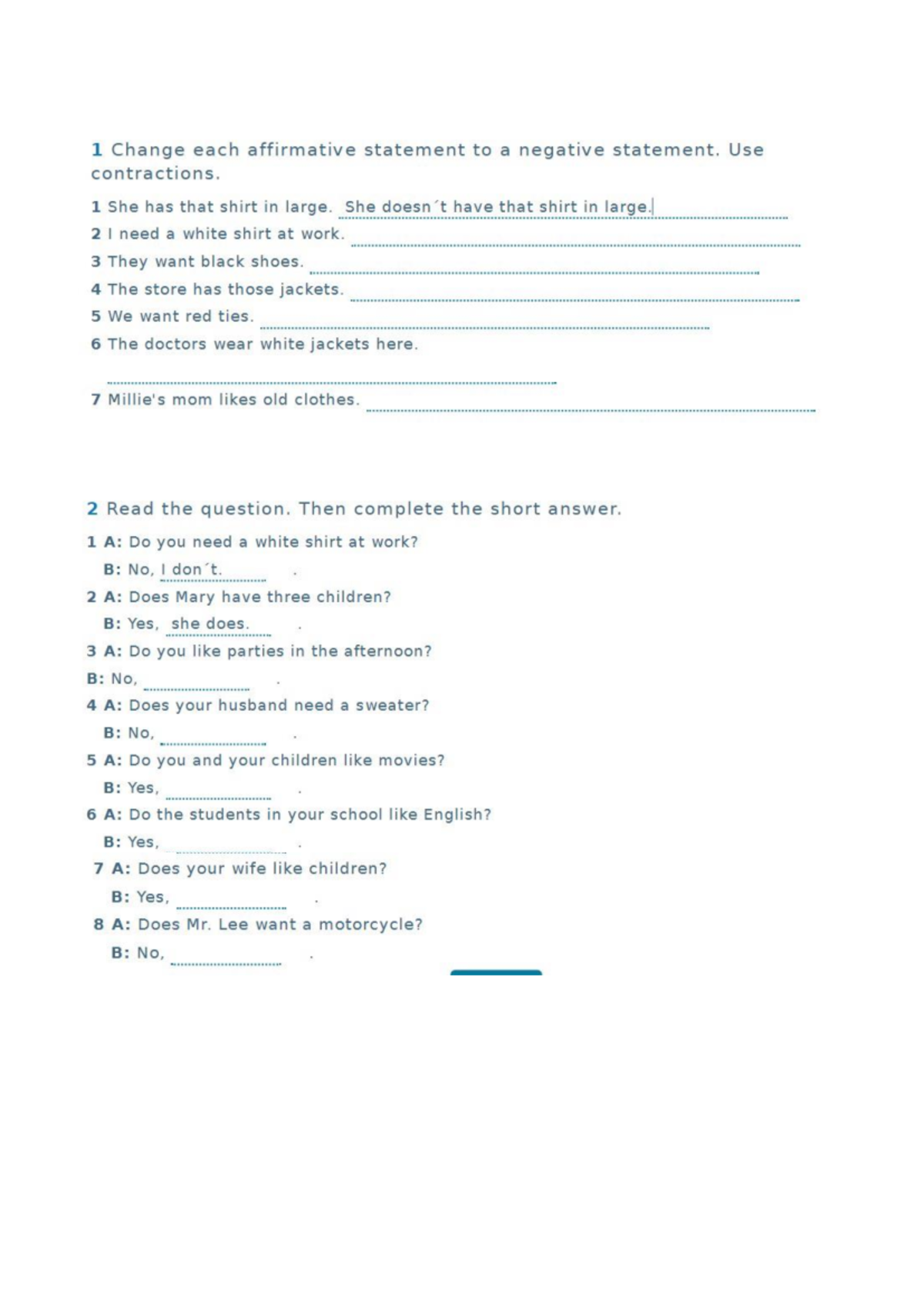
An affirmative statement is a sentence, proposition, or declaration that asserts the truth, occurrence, or existence of a fact, state, or condition. Rather than denying or negating a proposition, an affirmative statement expresses that something is true or does exist. It serves as a foundational element in grammar, formal logic, legal proceedings, and effective professional communication.
What Is an Affirmative Statement?
In linguistics and grammar, an affirmative statement is any declarative clause that lacks negative markers such as not, never, no, nobody, or nothing. Its primary function is to express agreement, confirmation, or positive assertion.
When you make an affirmative statement, you state a position as a reality. For example, the sentence "The board approved the budget proposal" is an affirmative statement because it confirms an event occurred. Conversely, "The board did not approve the budget proposal" is a negative statement because it relies on the negation particle not to assert the absence of that occurrence.
From a structural perspective, an affirmative statement establishes a positive predicate relationship with the subject. In standard English syntax, this typically follows a Subject + Verb (+ Object/Complement) structure:
- Subject: The auditor
- Verb: verified
- Object: the transaction logs.
Cognitive and Syntactic Features
Linguistic research and cognitive science demonstrate that human readers process affirmative statements more rapidly and with lower cognitive load than negative statements. When a sentence contains a negative modifier, the brain must first construct the underlying concept and then mentally negate it.
An affirmative statement delivers the concept directly. Consider these two variations:
- Negative framing: "Do not submit the report late."
- Affirmative framing: "Submit the report by 5:00 PM."
The second sentence provides a concrete action rather than an abstract restriction, making it clearer and more actionable.
Affirmative Statements vs. Negative Statements
Understanding the distinction between affirmative and negative statements requires examining how negation alters sentence structure and logical validity.
Key Differences
| Feature | Affirmative Statement | Negative Statement |
|---|---|---|
| Primary Function | Asserts the presence, truth, or occurrence of an idea or fact. | Asserts the absence, falsity, or non-occurrence of an idea or fact. |
| Syntactic Markers | Standard verbs, positive adverbs, affirmative pronouns (everyone, always, somewhere). | Negative particles (not, n't), negative adverbs (never, rarely), negative pronouns (nobody, nothing). |
| Processing Speed | Direct mental mapping; faster reader comprehension. | Indirect mental mapping; requires processing the core concept before reversing it. |
| Tone | Constructive, clear, declarative. | Restrictive, corrective, cautionary. |
| Example (Past Tense) | "The team completed the audit ahead of schedule." | "The team did not finish the audit on time." |
| Example (Conditional) | "Keep the files accessible during office hours." | "Do not lock the files outside of office hours." |
The Complexity of Double Negatives
A common source of confusion in English grammar is the double negative. When two negative words are used in the same clause, they can logically cancel each other out, creating an affirmative meaning, though often with reduced clarity and awkward syntax.
- Grammatically Negative / Logically Affirmative: "It is not impossible to resolve the issue."
- Direct Affirmative Equivalent: "It is possible to resolve the issue."
While double negatives can function as affirmative statements in formal logic, style guides generally advise against them in professional and technical writing. They introduce unnecessary ambiguity and force the reader to perform mental arithmetic to deduce the intended meaning.
Usage Across Key Disciplines
While the basic definition of an affirmative statement remains consistent, its application varies significantly depending on the field.
Affirmative Statement:
- Grammar & Style
- Formal Logic & Philosophy
- Legal / Regulatory Proceedings
- Business Communication
1. English Grammar and Style
In written English, style guides consistently advocate for using affirmative phrasing wherever possible. The Chicago Manual of Style and the APA Publication Manual recommend affirmative construction because it improves sentence clarity and keeps prose concise.
Using affirmative phrasing eliminates unnecessary auxiliary verbs. For instance:
- Wordy / Negative: "They were not in agreement with the policy terms." (8 words)
- Concise / Affirmative: "They disagreed with the policy terms." (5 words)
Note that an affirmative statement can contain a word with a negative inherent meaning—such as disagreed, failed, or absent—provided the grammatical structure itself does not rely on a negative particle like not.
2. Formal Logic and Philosophical Argumentation
In classical Aristotelian logic, propositions are classified by quality (affirmative or negative) and quantity (universal or particular). An affirmative proposition asserts that a subject class is included within a predicate class.
There are two primary types of affirmative propositions in categorical logic:
- Universal Affirmative (A Proposition): Asserts that every member of the subject class belongs to the predicate class.
- Format: All S are P.
- Example: "All audited accounts are compliant."
- Particular Affirmative (I Proposition): Asserts that at least one member of the subject class belongs to the predicate class.
- Format: Some S are P.
- Example: "Some systems are secure."
In logical proofs, mixing affirmative and negative premises dictates what valid conclusions can be drawn. For example, a valid categorical syllogism cannot derive an affirmative conclusion from two negative premises.
3. Legal and Regulatory Writing
In legal contexts, an affirmative statement carries specific formal duties and consequences.
Affirmative Defenses
In civil and criminal litigation, an affirmative defense is a set of facts introduced by a defendant that, if proven, defeats or mitigates the legal consequences of the defendant's otherwise unlawful conduct. Rather than simply denying the plaintiff's allegations, the defendant makes an affirmative assertion: "Even if the alleged actions occurred, the defendant acted under self-defense."
Affirmative Representation and Declarations
When signing legal contracts, affidavits, or regulatory compliance disclosures, parties make affirmative representations. These are explicit assertions of factual conditions—such as asserting that a business holds valid licensing or that financial records are accurate. Under penalty of perjury or breach of contract, making a false affirmative statement carries severe legal liability.
4. Business Communication and Customer Service
In corporate messaging, user interface (UI) design, and customer relations, affirmative statements shape user experience and perception. Negative framing often sounds adversarial, whereas affirmative statements create a professional, solutions-focused tone.
- Adversarial (Negative): "We cannot process your refund unless you provide your original receipt."
- Constructive (Affirmative): "We will process your refund as soon as you provide your original receipt."
How to Convert Negative Statements to Affirmative Statements
Transforming negative sentences into clear, affirmative statements is one of the most effective ways to improve writing quality. Follow this three-step process to refactor weak or negative prose.
- Step 1: Identify Negation Markers
- Look for words like "not," "no," "never," or "cannot."
- Step 2: Locate the Underlying Action or State
- Determine what the subject IS doing or SHOULD do.
- Step 3: Replace Negated Verbs with Direct Alternatives
- Swap negative constructs with strong positive verbs.
Step 1: Identify Negation Markers
Locate words like not, no, never, cannot, or fail to. These indicate that the sentence relies on negation to convey its message.
Step 2: Locate the Underlying Action or State
Determine what the subject is doing or should do, rather than focusing on what is missing or prohibited.
Step 3: Replace Negated Phrases with Direct Alternatives
Swap negated verbs with strong, precise antonyms or direct positive action verbs.
Real-World Conversion Examples
Original (Negative): "The application will not function if you do not update the configuration file."
Revised (Affirmative): "The application requires an updated configuration file to function."
Original (Negative): "Users must not leave the storage room unlocked after 6:00 PM."
Revised (Affirmative): "Users must lock the storage room by 6:00 PM."
Original (Negative): "The quality assurance team did not find any defects in the release candidate."
Revised (Affirmative): "The quality assurance team verified that the release candidate is defect-free."
Misconceptions: Affirmative Statements vs. Positive Affirmations
It is common to confuse an affirmative statement (a grammatical term) with a positive affirmation (a psychological tool). While they share root vocabulary, their contexts and requirements differ completely.
| Affirmative Statement (Grammar & Formal Logic) | Positive Affirmation (Psychology & Self-Improvement) |
|---|---|
| • Focuses on structural validity and asserting a factual condition.• Example: "The audit is complete." | • Focuses on psychological reinforcement and mindset.• Example: "I am confident." |
Grammatical Affirmative Statements
An affirmative statement is simply a sentence structure that states a proposition without negation markers. It does not need to be optimistic, motivational, or emotionally positive.
- Example: "The company reported a severe financial loss this quarter."
- Analysis: This is grammatically an affirmative statement because it asserts a fact without using not or no, even though the news itself is negative.
Positive Affirmations (Self-Improvement)
A positive affirmation is a self-talk phrase designed to foster self-efficacy, reduce stress, or reframe cognitive patterns.
- Example: "I handle difficult workplace challenges with calm focus."
- Analysis: While this phrase uses an affirmative grammatical structure, its purpose is psychological reinforcement rather than logical proposition or factual reporting.
Rules and Best Practices for Writing Effective Affirmative Statements
To maximize clarity when crafting affirmative statements in technical, business, or academic writing, apply these core rules:
1. Prefer Positive Action Verbs
Instead of relying on to be verbs combined with negatives, select action verbs that explicitly describe the intended behavior.
- Avoid: "Do not allow unauthorized personnel to enter."
- Use: "Restrict entry to authorized personnel."
2. Guard Against False Affirmatives via Double Negatives
Double negatives often sound evasive or uncertain. Avoid combining negative prefixes (un-, in-, dis-) with negative auxiliary verbs unless you intentionally want to convey hesitation.
- Unclear: "The results were not inconsistent with our hypothesis."
- Clear: "The results aligned with our hypothesis."
3. Maintain Exact Precision in Legal and Technical Contexts
While affirmative phrasing is preferred for readability, there are rare exceptions where a negative statement is legally or operationally necessary to establish absolute prohibition.
- Example: "No employee shall disclose proprietary encryption keys under any circumstances."
In safety-critical or zero-tolerance compliance mandates, explicit negative prohibitions eliminate potential legal loopholes that a positive statement might inadvertently create. Use affirmative phrasing as your default, but retain negative prohibitions when establishing strict boundaries.
Frequently Asked Questions
What is the main purpose of an affirmative statement?
The main purpose of an affirmative statement is to declare that a fact, condition, or event is true or present. It conveys information directly without relying on negative modifiers like not or never, which makes reading faster and improves clarity.
Can an affirmative statement contain words like "fail", "deny", or "refuse"?
Yes. An affirmative statement can contain words with inherently negative meanings (e.g., "The software failed to load" or "The witness denied the charge"). Grammatically, the statement remains affirmative because it does not use structural negation particles like not or no. It positively asserts that an act of failure or denial occurred.
How does an affirmative statement work in formal logic?
In formal logic, an affirmative statement asserts that a subject class is included within a predicate class (such as "All A are B" or "Some A are B"). It establishes a positive connection between terms, which dictates how the proposition functions within a syllogism.
Why do style guides prefer affirmative phrasing over negative phrasing?
Style guides recommend affirmative phrasing because it reduces word count, eliminates syntactic ambiguity, and provides direct instructions. Readers process positive actions faster than prohibitions, leading to fewer misunderstandings in technical documentation and operational policies.
Is an affirmative sentence the same as a declarative sentence?
Not always. A declarative sentence can be either affirmative or negative. For example, "The sky is blue" is a declarative affirmative sentence, while "The sky is not green" is a declarative negative sentence. All affirmative statements are declarative, but not all declarative statements are affirmative.
Next Steps for Improving Your Writing
To integrate affirmative statements effectively into your everyday communication, audit your recent reports, emails, or technical documentation:
- Run a Negation Audit: Search your text for common negation markers, including not, n't, cannot, and never.
- Refactor Prohibitions: Convert policy instructions from prohibition-focused ("Do not...") to action-focused ("Please ensure...").
- Simplify Double Negatives: Replace evasive phrases like "not unhelpful" or "not impossible" with direct adjectives like "helpful" or "possible."
By consistently choosing affirmative structures, you produce clear, direct, and authoritative prose across any professional discipline.