The landmark U.S. Supreme Court case Aetna Life Insurance Co. v. Lavoie, 475 U.S. 813 (1986), established that a judge’s participation in a legal proceeding violates the Due Process Clause of the Fourteenth Amendment if that judge has a "direct, personal, substantial, pecuniary interest" in the outcome. The ruling vacated a multi-million dollar judgment against Aetna because an Alabama Supreme Court justice failed to recuse himself despite having a concurrent lawsuit involving nearly identical legal issues.
In the landscape of American jurisprudence as of 2026, this case remains a foundational pillar for judicial ethics and the constitutional requirements for an impartial tribunal. While it originated as a dispute over a health insurance claim, its legacy provides the definitive standard for when a judge's financial interests cross the line from "minor" to "unconstitutional."
The Origin of the Dispute: Aetna’s Denial of Coverage
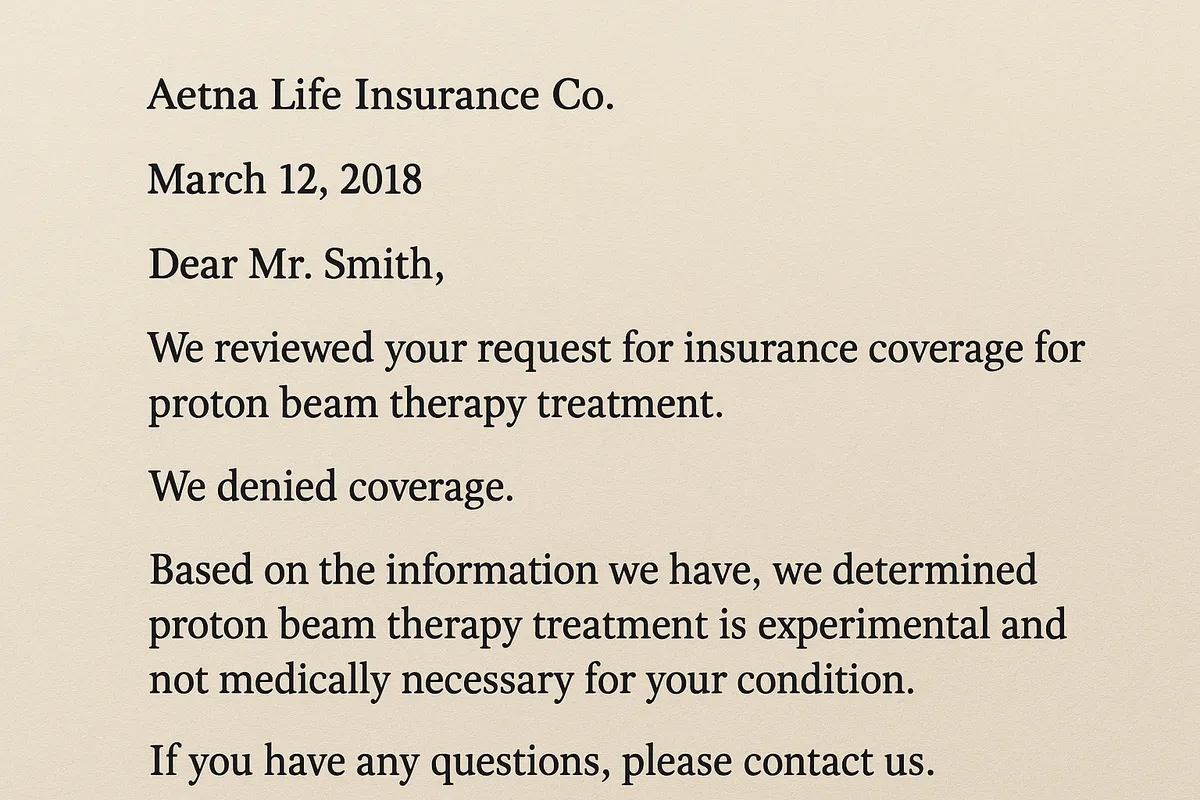
The case began with a relatively small insurance claim. Margaret Lavoie was a policyholder with Aetna Life Insurance Company. Following a period of hospitalization and back surgery, she submitted a claim for medical expenses totaling approximately $3,028.92. Aetna paid a portion of the claim but refused to pay the remaining $1,375.50, asserting that the extended hospital stay was not "medically necessary."
Mrs. Lavoie and her husband eventually filed suit in an Alabama state court, alleging that Aetna had acted in bad faith by refusing to pay the full claim. At the time, the legal concept of "bad-faith refusal to pay" was a developing area of tort law in Alabama. It allowed plaintiffs to seek not just the unpaid benefits, but also significant punitive damages if they could prove the insurer had no "debatable reason" for the denial.
A jury eventually awarded the Lavoies $3.5 million in punitive damages—a staggering sum compared to the original $1,375 dispute. Aetna appealed the decision to the Alabama Supreme Court, setting the stage for a constitutional crisis regarding judicial impartiality.
The Conflict of Interest: Justice Embry’s Parallel Litigation
When the case reached the Alabama Supreme Court, it was heard by a panel of justices, including Justice T. Eric Embry. In a narrow 5-4 decision, the court affirmed the $3.5 million award against Aetna. Justice Embry not only voted with the majority but also authored the court’s per curiam opinion.
However, a significant conflict of interest was unfolding behind the scenes. At the exact time Justice Embry was deciding the Lavoie case, he was a lead plaintiff in a massive class-action lawsuit against Blue Cross-Blue Shield of Alabama. Justice Embry’s personal lawsuit involved the same legal theory: the bad-faith refusal of an insurance company to pay claims.
By authoring the opinion in Lavoie, Justice Embry was effectively shaping the very law that would determine the success of his own multi-million dollar class-action suit. Specifically, the Lavoie decision clarified and expanded the requirements for proving "bad faith" in Alabama, making it easier for plaintiffs—including Justice Embry himself—to secure punitive damages against insurers.
The Motion for Recusal and Discovery
Aetna became aware of Justice Embry’s personal litigation while their application for a rehearing was pending. They filed a motion for recusal, arguing that Justice Embry’s participation violated their constitutional right to a fair trial.
Discovery revealed the following critical facts:
- Justice Embry had two active lawsuits against insurance companies.
- One of these was a class action on behalf of all Alabama state employees, which sought to establish the same legal precedents he was currently ruling on in Lavoie.
- Justice Embry had recently received a $30,000 settlement from another insurance company in a similar bad-faith dispute shortly before the Lavoie decision was released.
Despite these revelations, the Alabama Supreme Court denied the motion for recusal, and the U.S. Supreme Court eventually granted certiorari to address the Due Process implications.
The U.S. Supreme Court’s Constitutional Analysis
The U.S. Supreme Court, in an opinion delivered by Chief Justice Warren Burger, focused on the Fourteenth Amendment’s Due Process Clause. The Court had to determine whether Justice Embry’s interest in the outcome of the Lavoie case was sufficient to disqualify him as a matter of constitutional law.
The "Direct, Personal, Substantial, Pecuniary Interest" Test
The Court relied on the precedent set in Tumey v. Ohio (1927), which held that it violates Due Process to subject a defendant to a judge who has a direct financial stake in the conviction. In Lavoie, the Court expanded upon this, ruling that the "probability of actual bias" is too high when a judge is asked to decide a case that will directly affect his own financial interests in separate, pending litigation.
The Court noted that Justice Embry’s own lawsuit was not just a tangential interest. The Lavoie decision "raised the stakes" for all insurers in Alabama. By casting the deciding vote and writing the opinion, Embry was effectively acting as a judge in his own cause. The Court famously stated:
"The Due Process Clause may sometimes bar trial by judges who have no actual bias and who would do their very best to weigh the scales of justice equally between contending parties. But to perform its high function in the best way, justice must satisfy the appearance of justice."
Distinguishing Minor Interests
The Court was careful to distinguish between a "substantial" interest and a "de minimis" (minor) interest. For example, if a judge is merely one of millions of policyholders in a mutual insurance company, that interest is usually too remote to require constitutional recusal. However, Justice Embry’s interest was unique because he was a representative plaintiff in an active lawsuit seeking the same legal relief.
Key Differences in Judicial Disqualification Standards
Understanding the impact of Aetna v. Lavoie requires comparing it to other historical and contemporary standards of judicial disqualification.
| Standard Type | Source of Authority | Threshold for Disqualification | Key Limitation |
|---|---|---|---|
| Due Process (Constitutional) | 14th Amendment | Direct, personal, substantial, pecuniary interest; "Probability of bias." | High bar; only applies to extreme conflicts of interest. |
| Statutory (Federal) | 28 U.S.C. § 455 | Where "impartiality might reasonably be questioned" or financial interest exists. | Broader than the Constitution; applies specifically to federal judges. |
| Ethical (Model Code) | ABA Model Code of Judicial Conduct | Avoidance of the "appearance of impropriety." | Often lacks direct enforcement as a grounds for vacating a judgment. |
| The Rule of Necessity | Common Law | Allows a biased judge to sit if no other judge is available. | Used sparingly; does not apply if a quorum of unbiased judges exists. |
The Aftermath and Legal Significance in 2026
The Supreme Court ultimately vacated the Alabama Supreme Court’s judgment and remanded the case. The ruling sent a shockwave through the American legal system, reinforcing the idea that the judiciary must be above suspicion, particularly in high-stakes civil litigation involving punitive damages.
Impact on Insurance Bad-Faith Law
Following the Lavoie decision, insurance companies gained a powerful procedural tool. If a state supreme court justice has a known history of litigation against the insurance industry or holds specific investments that could be impacted by a "bad faith" ruling, the Lavoie precedent provides the constitutional basis for a recusal motion.
The Evolution into Caperton v. Massey (2009)
The principles established in Aetna v. Lavoie were further expanded decades later in Caperton v. A.T. Massey Coal Co.. In that case, the Supreme Court ruled that Due Process required the recusal of a justice who had received $3 million in campaign contributions from the CEO of one of the parties. Lavoie served as the foundational case that allowed the Court to move beyond "pecuniary interest" into the broader territory of "extraordinary campaign influence."
Current Status in 2026
In 2026, the Lavoie standard is frequently cited in cases involving:
- Class Action Certification: When judges own stock in companies affected by a class certification, Lavoie helps determine if that ownership constitutes a "substantial" interest.
- State Supreme Court Elections: As judicial elections become increasingly expensive, the "probability of bias" standard from Lavoie is the primary defense against perceived "pay-to-play" justice.
- Third-Party Litigation Funding: In the modern era, where outside investors fund lawsuits, Lavoie is often invoked when a judge has financial ties to a funding group involved in a case before them.
Requirements for a Recusal Motion Based on Lavoie
To successfully invoke the Aetna v. Lavoie precedent to challenge a judge's participation, a litigant must typically demonstrate the following:
- Identification of the Interest: One must prove the judge has a financial stake (pecuniary) that is not shared by the general public.
- Substantiality: The interest must be "substantial" enough that it creates a "probability of bias." A judge owning one share of stock in a trillion-dollar company might not meet this bar, whereas being a lead plaintiff in a similar suit against a competitor does.
- Direct Connection: The outcome of the current case must have a predictable and significant effect on the judge's personal financial situation or his other litigation.
- Timeliness: Under most court rules, the challenge must be made as soon as the conflict is discovered. Waiting until after an unfavorable ruling to "reveal" a known conflict is often treated as a waiver of the right.
Common Misconceptions Regarding the Case
Misconception 1: The Supreme Court ruled that Aetna didn't act in bad faith. This is incorrect. The U.S. Supreme Court expressed no opinion on whether Aetna actually committed "bad faith" or whether the $3.5 million award was appropriate. They only ruled that the process by which the decision was reached was unconstitutional.
Misconception 2: Any judge who has an insurance policy must recuse themselves from insurance cases. The Supreme Court explicitly rejected this. In Lavoie, the Court noted that if a judge is just one of many policyholders, their interest is too small and shared too broadly to violate Due Process. It was Justice Embry's status as a litigant that made the difference.
Misconception 3: The decision was based on "Actual Bias." The Court did not need to find that Justice Embry was actually biased or that he intentionally ruled to help his own case. The standard is the "probability of bias." If the circumstances would lead a reasonable person to doubt the judge's impartiality, the Due Process Clause is triggered.
Frequently Asked Questions
What happens to a case if a judge is found to have been biased under Lavoie?
If a higher court finds a violation of the Lavoie standard, the original judgment is typically vacated. This means the decision is legally erased, and the case is sent back to the lower court to be reheard by a different, impartial panel or judge.
Does Lavoie apply to federal judges as well as state judges?
Yes. While federal judges are also bound by stricter statutory requirements under 28 U.S.C. § 455, the Due Process Clause of the Fourteenth Amendment (and the Fifth Amendment for federal actions) sets a constitutional "floor" that no judge—state or federal—can fall below.
Why was authoring the opinion considered so significant in this case?
While a judge's mere vote is enough for a conflict, authoring the opinion is seen as particularly problematic. An opinion sets "stare decisis" (precedent). By writing the legal rules for bad-faith claims in Alabama, Justice Embry was effectively drafting the playbook he would use to win his own personal lawsuit.
Can a party waive their right to an impartial judge?
Yes. If a party is aware of a judge's conflict of interest and proceeds with the trial or appeal without objection, they are generally considered to have waived their Due Process claim. This prevents parties from "holding" a conflict as an insurance policy to be used only if they lose the case.
How does Lavoie affect punitive damages awards today?
Lavoie remains a cautionary tale for state supreme courts when reviewing large punitive damages awards. It ensures that the "expansion" of tort liability—such as the definition of bad faith—is done by a neutral body, preventing the perception that judges are creating lucrative new legal theories for their own benefit.
Practical Recommendation for Legal Practitioners
When dealing with high-stakes insurance litigation or any case involving significant punitive damages, it is imperative to conduct a thorough background check on the presiding judicial panel. In the modern era of 2026, transparency tools and public financial disclosure reports make it easier to identify potential conflicts.
If a "direct, personal, and substantial" interest is discovered, a motion for recusal should be filed immediately, citing the Aetna Life Insurance Co. v. Lavoie standard. This not only protects the integrity of the current case but also preserves the issue for federal appeal should the state court deny the motion. The goal is to ensure that the "scales of justice" are not tipped by a judge's personal portfolio or parallel legal battles.