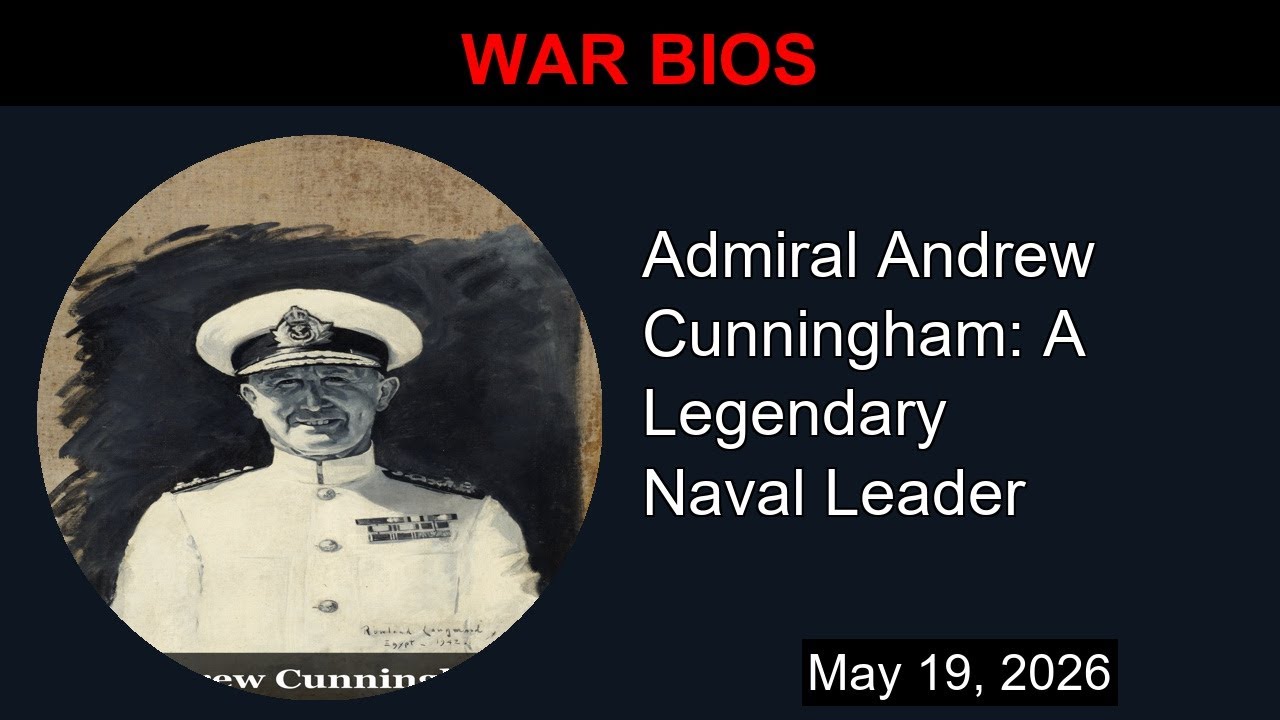
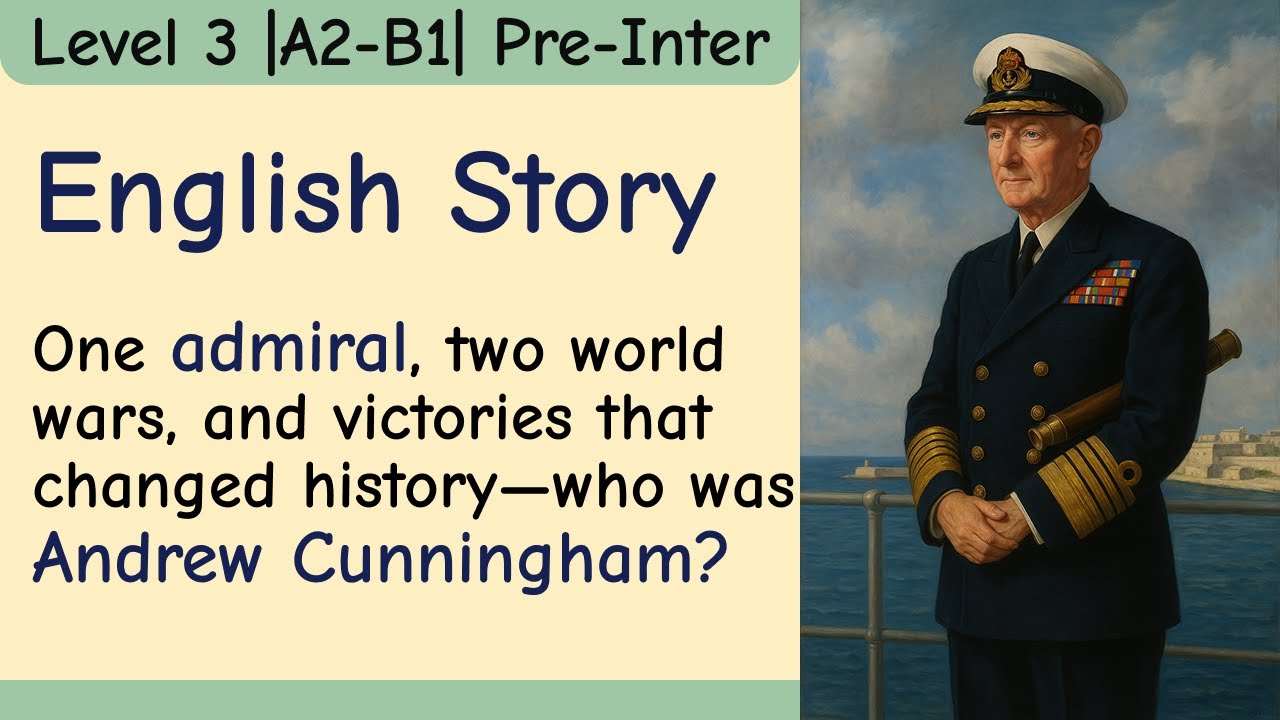
Admiral of the Fleet Sir Andrew Browne Cunningham transformed World War II naval strategy by integrating carrier-based air power with aggressive night-surface combat. His leadership in the Mediterranean theater demonstrated that a technologically inferior but tactically superior force could dominate sea lanes through decisive offensive action, pioneering the modern use of naval aviation and radar-guided engagements.
As of 2026, historians recognize Admiral Andrew Browne Cunningham (often referred to as "ABC") as one of the most significant naval commanders since Nelson. His tenure as Commander-in-Chief of the Mediterranean Fleet from 1939 to 1942, and later as First Sea Lord, fundamentally altered the Royal Navy's approach to modern warfare. At a time when the Mediterranean was considered an "Italian Lake," Cunningham's refusal to concede control reshaped the logistics of the entire European conflict.
The Strategic Environment of the Mediterranean (1939–1940)
To understand how Cunningham reshaped strategy, one must first grasp the dire situation of the British Mediterranean Fleet at the start of the war. With the fall of France in 1940, the Royal Navy lost its primary maritime ally. The Italian Regia Marina possessed a modern, fast fleet that significantly outnumbered Cunningham’s aging battleships and limited carrier support.
The prevailing naval doctrine of the time emphasized the "Fleet in Being"—the idea that a navy could exert influence simply by existing and remaining a threat, without necessarily engaging in risky battles. Cunningham rejected this. He believed that the Mediterranean was the "hinge of the war" and that British survival depended on maintaining the sea lanes to Malta and the Suez Canal.
Cunningham’s strategy focused on three pillars:
- Continuous Offensive Action: Keeping the enemy off balance to mask British numerical weakness.
- Integrated Naval Aviation: Moving beyond reconnaissance to use aircraft as primary strike weapons.
- Technological Mastery: Utilizing radar and night-fighting techniques to negate the speed advantages of Italian ships.
The Birth of Modern Carrier Warfare: The Battle of Taranto
The most significant strategic shift orchestrated by Cunningham was the Battle of Taranto in November 1940. Before this engagement, many naval traditionalists viewed the aircraft carrier as a secondary support vessel for the "big guns" of the battleships.
Cunningham, working with Rear Admiral Denis Boyd and Captain Bridge of the HMS Illustrious, executed "Operation Judgement." This was a daring night-time torpedo-bomber attack on the Italian fleet anchored in the heavily defended harbor of Taranto. Using only 21 Fairey Swordfish biplanes—aircraft that were technically obsolete even by 1940 standards—Cunningham’s forces sank or severely damaged three Italian battleships.
The Strategic Shift Following Taranto
Taranto proved that the "impenetrable" naval base was a myth. It demonstrated that air power could destroy a fleet even while it was protected by anti-aircraft batteries and torpedo nets. This event was studied closely by the Imperial Japanese Navy and served as a tactical blueprint for the attack on Pearl Harbor a year later. Cunningham had effectively ended the era of the battleship as the undisputed king of the seas, shifting the strategic focus to the carrier strike group.
Mastering the Dark: The Battle of Cape Matapan
In March 1941, Cunningham faced a major Italian sortie aimed at intercepting British convoys heading to Greece. The resulting Battle of Cape Matapan remains a masterclass in the integration of technology and night-surface tactics.
While the Italian fleet relied on speed and daytime visibility, Cunningham leveraged the Royal Navy’s nascent radar technology (specifically the Type 281 and 279 sets). At the time, the Italian Navy lacked radar and generally avoided night combat, believing it to be too chaotic for organized maneuvers.
Cunningham exploited this weakness. By using carrier-based aircraft to slow the Italian cruiser Polara during the day, he drew the main Italian force into a night-time engagement. In a brutal, close-range action that lasted only minutes, British battleships Warspite, Valiant, and Barham used their main batteries to annihilate three Italian heavy cruisers and two destroyers.
This engagement reshaped naval strategy by:
- Standardizing Night Combat: Proving that with radar and trained crews, night engagements were not only possible but advantageous.
- Psychological Dominance: The Regia Marina would not challenge the Royal Navy in open waters for the remainder of the year, granting the British a strategic "breathing room" during the critical defense of Malta.
The Cost of Sea Control: The Evacuation of Crete
Not all of Cunningham’s strategic reshuffling was offensive. In May 1941, during the Battle of Crete, the Royal Navy faced overwhelming German air superiority (the Luftwaffe). Cunningham was ordered to evacuate British and Commonwealth troops from the island despite the lack of air cover.
The losses were catastrophic: three cruisers and six destroyers were sunk, and many other vessels, including the carrier Formidable and the battleship Warspite, were heavily damaged. When his staff suggested that the losses were too high and the fleet should withdraw, Cunningham famously replied: "It takes the Navy three years to build a ship. It will take three hundred years to rebuild a reputation. The evacuation will continue."
This decision reshaped British military philosophy regarding the "Senior Service." It established that the Navy’s role was not merely to survive, but to serve the broader strategic needs of the Army and Air Force, even at the risk of its own existence. This "Joint Force" mindset became the standard for the later Mediterranean landings in North Africa and Sicily.
Strategic Comparison: Traditional vs. Cunningham Doctrine
The following table highlights the specific ways Cunningham moved away from established 1930s naval norms to create the winning strategy of the 1940s.
| Strategic Element | Traditional Naval Doctrine (Pre-1940) | Cunningham’s Reshaped Strategy |
|---|---|---|
| Capital Ship Role | Battleships as the primary strike force. | Carriers as the primary strike force; Battleships as "finishers." |
| Fleet Movement | Conservative "Fleet in Being" strategy. | Constant offensive patrolling and raid tactics. |
| Night Operations | High-risk, generally avoided by large fleets. | Proactive night-time engagement using radar. |
| Air Integration | Aircraft used for spotting and reconnaissance. | Aircraft used for primary ship-to-ship destruction. |
| Inter-Service Role | Navy operates independently of ground forces. | Navy as the vital transport and support link for ground campaigns. |
| Logistics | Secondary to fleet-on-fleet engagement. | Focus on protecting supply convoys (Malta/Suez) as the primary goal. |
The Push for Amphibious Warfare: Torch and Husky
In 1942 and 1943, Cunningham’s strategic focus shifted toward amphibious operations. He served as the Naval Commander-in-Chief for the Allied Expeditionary Force under General Dwight D. Eisenhower. His contribution to Operation Torch (the invasion of North Africa) and Operation Husky (the invasion of Sicily) was instrumental in refining how a navy supports a continental invasion.
Before Cunningham, amphibious landings were often poorly coordinated and relied on static defenses. Cunningham insisted on a "mobile fire support" model, where naval guns acted as floating artillery for the troops on the beach. This required a level of communication between naval observers and army batteries that had never been seen before. The success of these operations provided the tactical framework for the eventual D-Day landings in Normandy in 1944.
Technical Specifications and Tactical Innovations
Cunningham’s strategic success was not just about "spirit"; it was rooted in the technical application of the tools at his disposal.
The Fairey Swordfish Modification
At Taranto, the standard torpedoes were modified with "wooden fins" to prevent them from diving too deep into the mud of the shallow harbor. This technical workaround, sanctioned by Cunningham’s command, allowed for the first successful torpedo strike in a confined naval base.
Radar-Directed Fire Control
Cunningham was an early adopter of using radar for more than just navigation. By Matapan, the Royal Navy was using radar to track enemy bearing and range, passing this data directly to the gunnery officers. This allowed the British battleships to fire their first salvos with extreme accuracy before the Italian ships even knew they were being targeted.
The "Mediterranean Destroyer" Tactics
Because he was often short on capital ships, Cunningham utilized destroyers in high-speed "hit and run" night attacks. He encouraged his destroyer captains to operate with a degree of autonomy that was unusual in the rigid Royal Navy hierarchy of the time. This fostered an environment of tactical innovation at the lower officer levels.
FAQs: Admiral Cunningham’s Strategy
How did Cunningham influence the attack on Pearl Harbor?
While Cunningham did not directly consult with the Japanese, the Battle of Taranto served as a proof of concept for Admiral Isoroku Yamamoto. Japanese naval attachés studied the Taranto raid extensively, particularly the use of torpedoes in shallow water and the effectiveness of aircraft carriers against stationary battleships. Taranto proved that the Pacific Fleet at Pearl Harbor was vulnerable despite its land-based defenses.
Why was Cunningham’s leadership in the Mediterranean so critical?
The Mediterranean was the lifeline of the British Empire. If Cunningham had lost control, the Axis powers would have seized the Suez Canal, cutting off Britain from its resources in India and Australia. Furthermore, it would have allowed the Axis to link up with forces in the Middle East, potentially securing oil supplies that would have made the German war machine nearly unstoppable.
What was Cunningham's "Aggressive Spirit" doctrine?
This was the belief that the Royal Navy should always seek contact with the enemy, regardless of the odds. Cunningham argued that by maintaining the initiative, the British could dictate the terms of engagement and compensate for their lack of modern vessels. This mindset was crucial for maintaining morale during the darkest days of 1940 and 1941.
Did Cunningham have conflicts with other Allied leaders?
Yes, Cunningham was known for his bluntness and high standards. He occasionally clashed with Winston Churchill over the allocation of resources and with American commanders over the priority of Mediterranean operations versus the cross-channel invasion (Normandy). However, he maintained a strong working relationship with General Eisenhower, who valued Cunningham’s tactical brilliance and naval expertise.
How did Cunningham's strategy change after 1943?
After the surrender of the Italian fleet in September 1943—where Cunningham famously signaled the Admiralty, "Be pleased to inform their Lordships that the Italian Battle Fleet now lies at anchor under the guns of the fortress of Malta"—his focus shifted to global strategy as First Sea Lord. He oversaw the transition of the Royal Navy from a Mediterranean-focused force to the British Pacific Fleet, adapting his carrier-based strategies to the vast distances of the Pacific theater.
Legacy and Impact on Modern Naval Thought
The strategic changes initiated by Admiral Cunningham remain relevant in 2026. The shift from surface-centric fleets to carrier-centric power projection is the foundation of modern naval doctrine. Furthermore, his emphasis on the "information edge"—represented in his day by early radar—has evolved into the modern focus on cyber warfare and electronic intelligence.
Cunningham’s ability to adapt to new technologies while maintaining the core principles of naval leadership allowed the Royal Navy to survive its most significant existential threat. He did not just "win battles"; he systematically dismantled the traditionalist hurdles that prevented the Navy from entering the modern age of combined-arms warfare.
For those studying military history or strategic leadership, Cunningham’s career offers a definitive guide on how to manage limited resources against a numerically superior foe. His primary recommendation for any commander was simple but profound: maintain the offensive, leverage every technological advantage, and never prioritize the safety of a ship over the success of the mission.