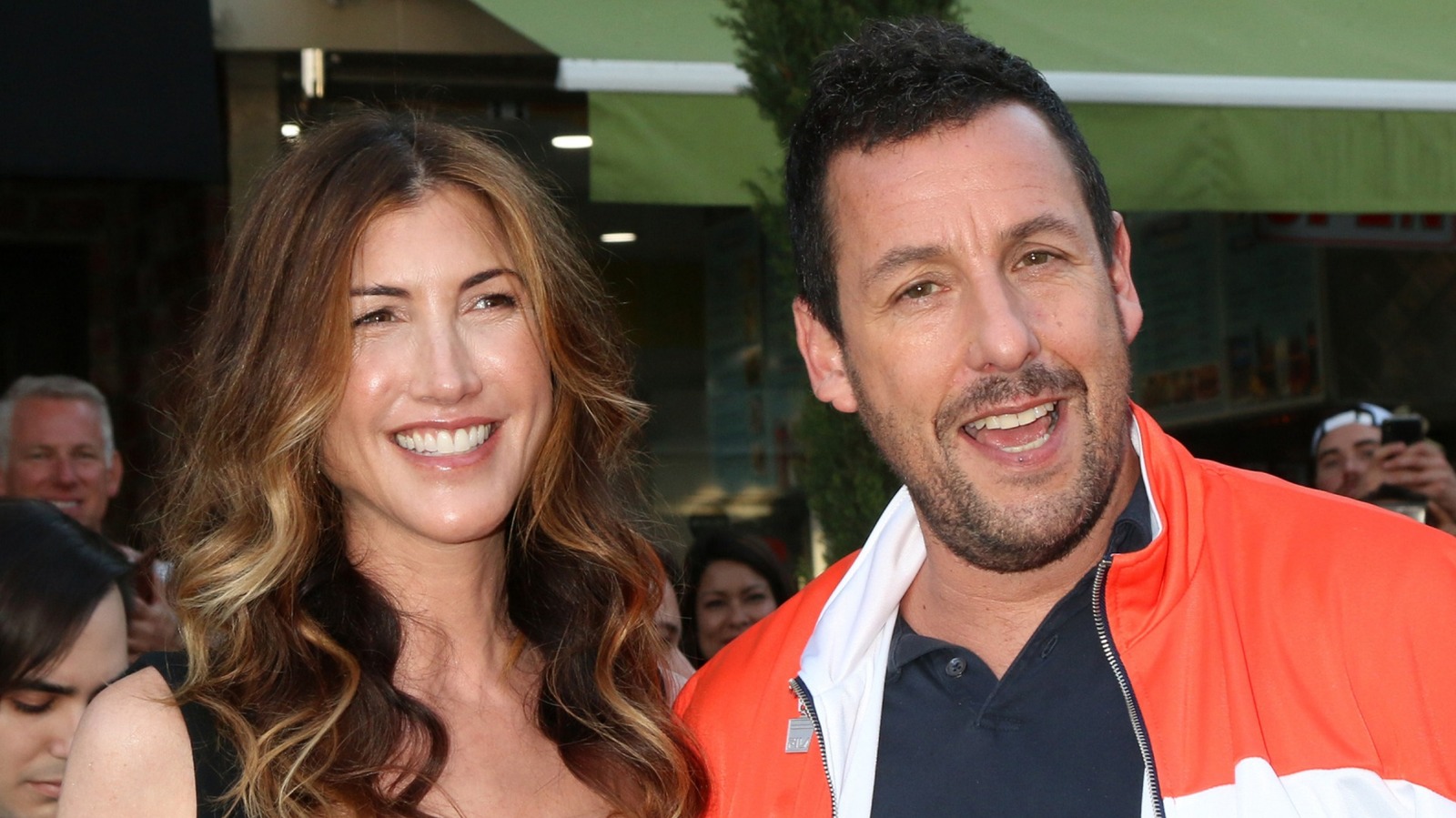
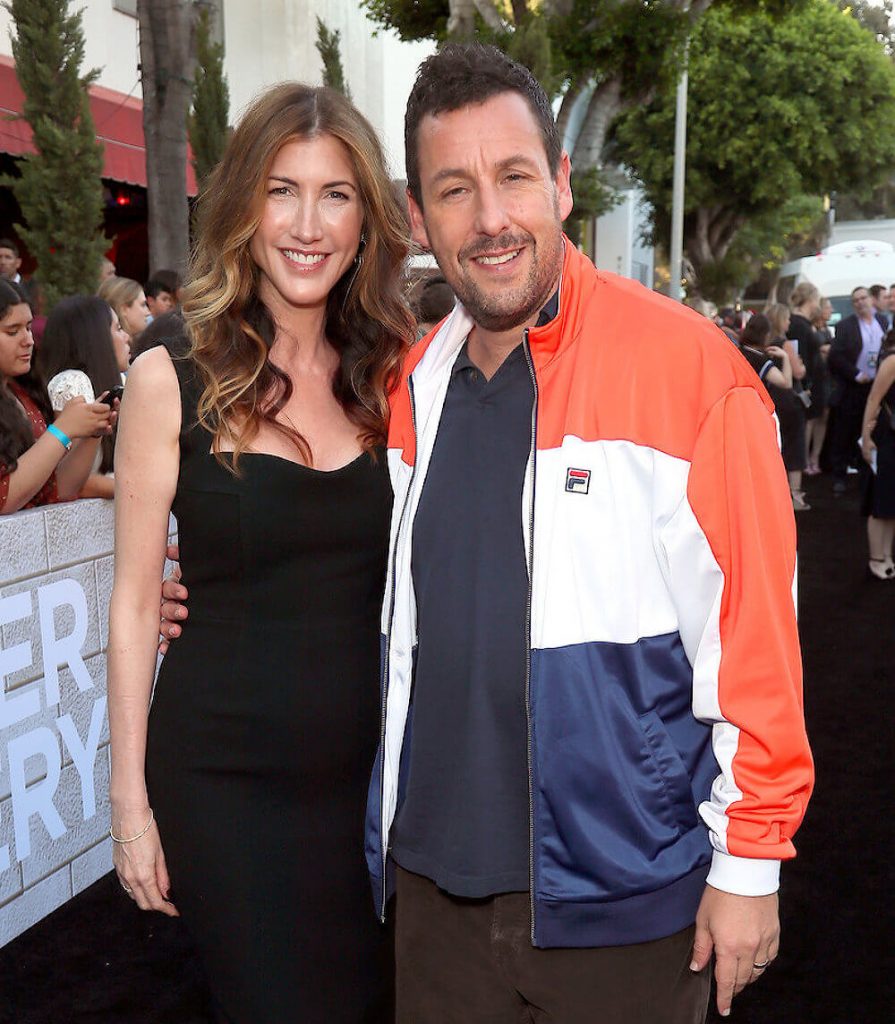
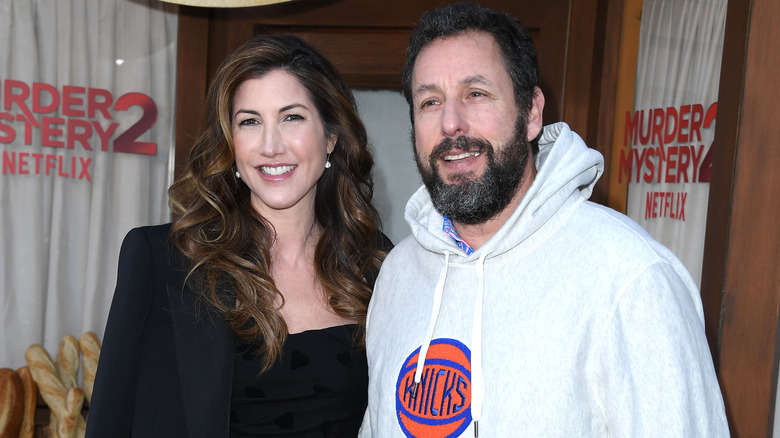
Jackie Sandler is a multifaceted professional in the entertainment industry, widely recognized for her consistent collaboration with Adam Sandler and her own independent contributions as an actress and producer. While frequently identified by her marriage to the comedian and filmmaker, Jackie, born Jacqueline Samantha Titone, has established a distinct career path that spans over two decades in film, television, and production, contributing significantly to the success of many Happy Madison Productions projects.
Early Life and Professional Beginnings
Before her prominence in major Hollywood productions, Jacqueline Samantha Titone was born in Coral Springs, Florida. Her early career began in the modeling industry, where she pursued opportunities that eventually transitioned into the entertainment sphere. This transition into acting was marked by her debut in the 1999 film Deuce Bigalow: Male Gigolo. Her introduction to Adam Sandler occurred through a mutual connection, specifically Rob Schneider, who worked with Titone on Deuce Bigalow.
This professional networking proved foundational. In 1999, she appeared in Big Daddy, a project that cemented her working relationship with Sandler. Since that time, her career has evolved from smaller, character-driven roles into a steady presence in ensemble-heavy comedies. Her trajectory highlights a persistent commitment to the industry, characterized by a transition from early supporting roles to becoming a recurring collaborator in high-profile comedic releases.
The Partnership with Happy Madison Productions
The primary professional lens through which the public views Jackie Sandler is her frequent inclusion in Happy Madison Productions films. Her work is not merely limited to a single genre or type of character; rather, she provides a versatile range of performances across various projects.
Key Contributions and Performance Range
Unlike actors who may stick to a single type of role, Jackie Sandler has demonstrated a capacity for "straight-man" comedy—roles that require reacting to the eccentricities of the lead characters. This is a critical component of ensemble comedies, as the grounding force of such characters allows the more overt comedy of the leads to land effectively.
Her contributions include notable appearances in:
- 50 First Dates (2004)
- The Benchwarmers (2006)
- I Now Pronounce You Chuck & Larry (2007)
- Grown Ups (2010)
- Hubie Halloween (2020)
These roles, while often appearing as cameos or supporting characters, require a specific set of technical skills: precise timing, an understanding of improvisational dynamics, and the ability to maintain tonal consistency within a feature-length production.
Collaborative Dynamics: Acting and Producing
Beyond acting, Jackie Sandler is involved in the creative ecosystem surrounding her husband's work. This involvement goes beyond appearing on screen; it encompasses the logistics and creative decision-making that define a modern production company. Working within a high-output environment like Happy Madison requires a deep understanding of production timelines, casting requirements, and the collaborative needs of a long-term production team.
In the industry, there is often a misunderstanding regarding "spousal casting." In practice, successful long-term production houses prioritize professional reliability and chemistry. Jackie Sandler’s longevity in these films suggests a value proposition grounded in consistency. She functions as a reliable anchor in the chaotic, high-energy settings typically found in Sandler-led comedies. By maintaining a professional presence on set, she assists in facilitating the specific creative flow that the production team aims to achieve.
Impact on Film Production
When assessing her impact, one must look at the cohesion of the ensemble. In films such as Grown Ups, the chemistry of the supporting cast is paramount. Her ability to integrate into these groups, often playing characters that are either foils or partners to the leads, contributes to the overall reception of the project by the target audience. Her work reflects an understanding of the specific brand of humor that defines Adam Sandler’s filmography—a blend of slapstick, heart, and observational comedy.
Career Comparative Analysis
To understand the scope of Jackie Sandler’s career, it is helpful to compare her trajectory with standard industry practices for supporting character actors. The following table illustrates the development of her professional engagement over distinct periods.
| Period | Primary Focus | Role Complexity | Involvement Type |
|---|---|---|---|
| 1999–2003 | Modeling / Minor Acting | Low (Cameos) | Transient |
| 2004–2012 | Comedic Supporting Roles | Medium (Dialogue-heavy) | Consistent Recurring |
| 2013–2020 | Expanded Ensemble Presence | Medium (Interactive) | Collaborator |
| 2021–2026 | Multi-project Integration | High (Cohesion) | Core Production Entity |
This progression indicates an upward trend in responsibility and integration. While early roles were localized to single scenes, her later contributions are integral to the narrative structure of the films in which she appears.
Family Life and Professional Balance
Navigating a high-profile marriage while maintaining a professional identity in the same industry presents unique logistical challenges. The Sandlers have maintained a private family life while working in the public eye. They married in 2003 in a ceremony that reflected their shared values and background. Since then, they have raised two daughters, Sadie and Sunny.
The integration of family into professional life is a recurring theme in the Sandler brand. It is common for family members to appear in minor roles in his films, creating a self-referential, tight-knit production culture. For Jackie, this has meant that her work life and home life are often symbiotic. This is not uncommon in family-led production businesses, where the trust between partners often leads to more efficient, albeit high-pressure, creative output.
Essential Questions Regarding the Life of Jackie Sandler
For those seeking to understand the specifics of her career and personal public profile, the following questions address common inquiries:
How did Jackie Sandler begin her career in entertainment?
She began as a model in the late 1990s. Her transition into acting was facilitated by her work on Deuce Bigalow: Male Gigolo, which caught the attention of Adam Sandler, leading to a long-term professional and personal partnership.
What is the nature of her collaboration with Adam Sandler?
She serves as both an actress and a collaborator on his production projects. She provides consistent, reliable performances in various comedic roles, assisting in the successful execution of ensemble-led narratives.
Does she have a career outside of Happy Madison Productions?
While the majority of her high-profile work is through Happy Madison, her early career and occasional independent projects outside this sphere highlight her work as an actress who has maintained a consistent presence in the industry for over 25 years.
How has her role evolved over the last two decades?
Her roles have matured from early, small-scale appearances into more significant supporting roles that require deeper interaction with the ensemble cast, demonstrating an evolution in both her acting range and her professional comfort within large-scale film sets.
What is the secret to her longevity in the industry?
Longevity in Hollywood is rarely about a single trait. In her case, it is a combination of professional reliability, an innate understanding of the comedic brand she works within, and the capacity to adapt to the changing needs of the production teams she has been associated with since the late 1990s.
Professional Perspective and Future Outlook
As of 2026, Jackie Sandler remains a fixture in the comedic landscape. Her career is a testament to the viability of long-term professional partnerships in the entertainment industry. Unlike trends that focus on the fleeting nature of fame, her career trajectory is marked by steady, iterative growth.
Observers of the film industry note that the success of production houses like Happy Madison relies heavily on the stability of the creative team. Jackie Sandler acts as a stabilizing force, ensuring that the comedic chemistry required for these projects remains consistent across different films and directors. This professional consistency is a rare commodity in modern cinema, where turnover rates for recurring characters are high.
For aspiring actors or those interested in the behind-the-scenes of production, the career of Jackie Sandler offers a blueprint for how professional relationships can be leveraged to build a sustainable, long-term career. Her work underscores the importance of reliability, adaptability, and the ability to function effectively within a tight-knit creative group. Moving forward, it is anticipated that she will continue to balance her professional endeavors with her personal commitments, maintaining her role as both a collaborative partner in production and an essential performer in the comedy genre.
The most effective next step for those interested in her work is to examine her filmography through the lens of ensemble comedy, specifically looking at how her supporting performances have shifted in tone and frequency as the industry’s demand for comedic content has evolved into the streaming era.