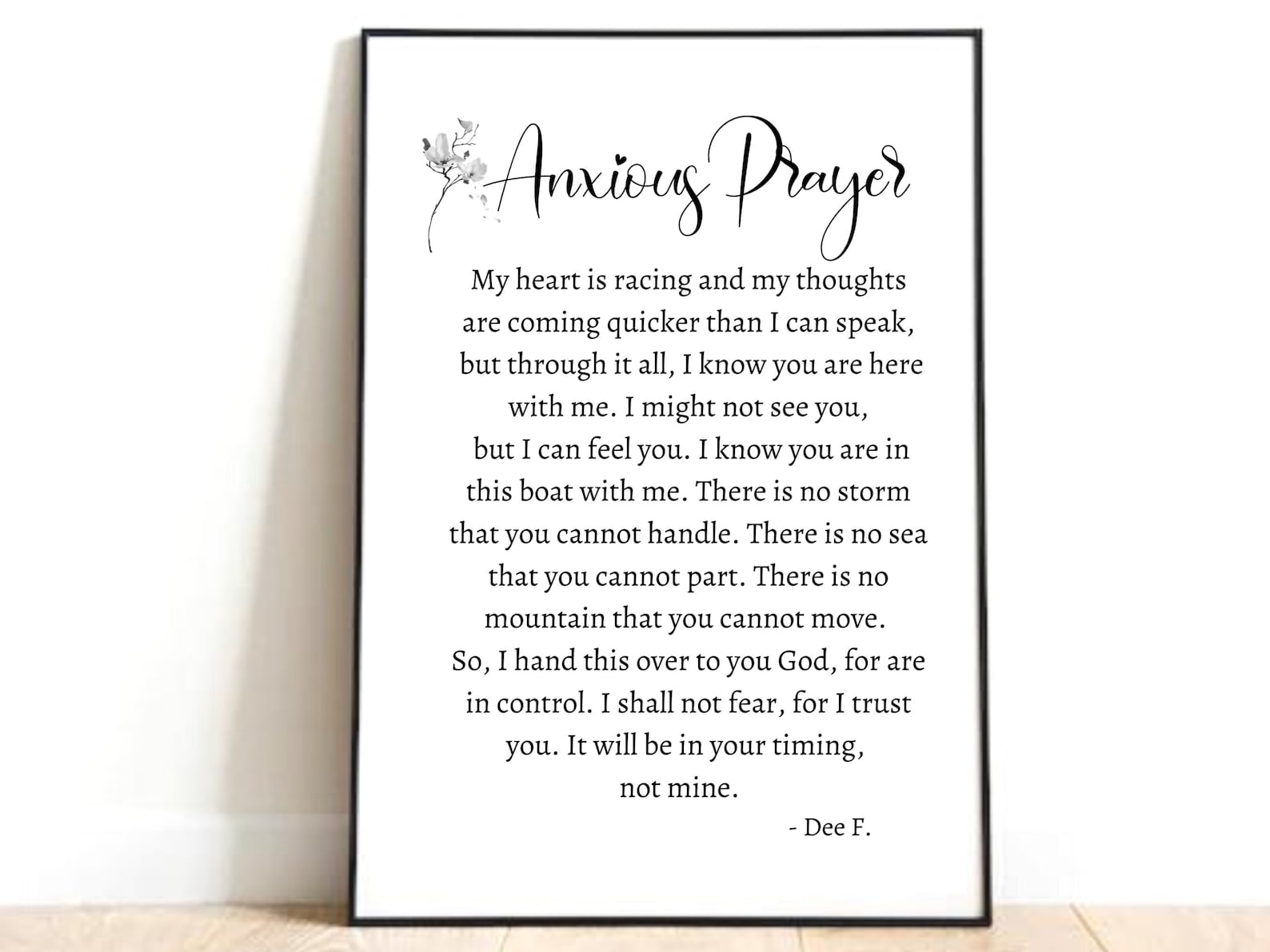
The "AA prayer for anxiety" typically refers to the Serenity Prayer, a foundational tool used by members of Alcoholics Anonymous to navigate overwhelming emotional distress, fear, and daily stressors. By turning to these structured words, individuals in recovery find a grounding mechanism that separates elements within their control from those outside of it, effectively reducing acute psychological tension.
The Origins and Structure of the Serenity Prayer in Alcoholics Anonymous
To understand why a simple 24-word verse holds such profound psychological and emotional weight within Alcoholics Anonymous (AA), it is necessary to examine its roots and internal architecture. While the exact authorship of the Serenity Prayer has been a subject of historical debate, its integration into the twelve-step framework is universally attributed to Dr. Bob Smith, one of the co-founders of AA, in the early 1940s.
The prayer is deceptively concise:
"God, grant me the serenity to accept the things I cannot change, Courage to change the things I can, And wisdom to know the difference."
Despite its brevity, the prayer divides mental processing into three distinct cognitive steps. First, it addresses acceptance, targeting the root cause of much existential anxiety—the exhausting attempt to control uncontrollable external events, past actions, or other people's behaviors. Second, it shifts the focus to empowerment and agency, acknowledging that while the macro-environment cannot be bent to one's will, personal reactions, choices, and immediate behaviors remain within the individual's sphere of influence. Third, it calls for discernment, bridging the gap between passive surrender and proactive intervention.
For individuals managing anxiety disorders alongside substance use disorder, this structural clarity prevents the paralysis of overthinking. When an anxiety spike occurs, the mind often races across dozens of hypothetical future scenarios. The Serenity Prayer acts as a cognitive circuit breaker, forcing the individual to categorize stressors into binary columns: mutable versus immutable.
Psychological Mechanisms: How the AA Prayer Alleviates Anxiety
While framed in spiritual language, the daily utility of the AA prayer for anxiety aligns closely with evidence-based psychological frameworks, particularly Acceptance and Commitment Therapy (ACT) and Cognitive Behavioral Therapy (CBT).
Cognitive Reframing and Locus of Control
Anxiety frequently stems from a distorted locus of control—believing that one must manage, fix, or anticipate every variable in an uncertain environment. By reciting the prayer, individuals actively reframe their perception of threat. They explicitly acknowledge boundaries. Stating "the things I cannot change" gives explicit permission to let go of hyper-vigilance, which is a primary driver of chronic anxiety and nervous system exhaustion.
Mindfulness and Present-Moment Grounding
An acute anxiety attack pulls the human brain out of the present moment, projecting catastrophe into the future or agonizing over the past. The act of pausing to recite a memorized, rhythmic piece of text serves as an anchor. It functions similarly to box breathing or tactile grounding techniques. The physiological heart rate drops slightly, cortisol spikes are interrupted, and the prefrontal cortex regains executive control over the amygdala's fight-or-flight response.
Surrender as a Stress-Reduction Tool
In clinical terms, "surrender" in twelve-step programs is not synonymous with helplessness; rather, it is the cessation of maladaptive striving. Trying to force outcomes against reality creates friction, which manifests as anxiety, insomnia, and irritability. Accepting reality as it is—even when painful or imperfect—neutralizes the secondary suffering caused by fighting against facts.
Expanded Variations and Deeper Recovery Verses
While the short version of the Serenity Prayer is the most widely recognized, the full historical text penned by theologian Reinhold Niebuhr offers a deeper exploration of peace in the face of anxiety and chaos. Examining the extended version provides additional context for individuals seeking comprehensive emotional stabilization:
"God, grant me the serenity to accept the things I cannot change, Courage to change the things I can, And wisdom to know the difference. Living one day at a time, Enjoying one moment at a time, Accepting hardships as the pathway to peace. Taking, as He did, this sinful world as it is, Not as I would have it. Trusting that He will make all things right If I surrender to His will. That I may be reasonably happy in this life, And supremely happy with Him forever in the next. Amen."
In the context of anxiety management, the lines "Living one day at a time" and "Accepting hardships as the pathway to peace" are particularly powerful. Anxiety is fundamentally a future-oriented emotion. It asks, "What if?" and "How will I survive tomorrow?" By forcing the mental horizon inward to the immediate twenty-four-hour period—a core tenet of AA philosophy—the individual breaks a massive, terrifying future down into manageable, bite-sized increments.
| Aspect of Anxiety | Traditional Psychological Approach | AA Serenity Prayer Application |
|---|---|---|
| Catastrophizing | Cognitive restructuring (identifying cognitive distortions) | Acceptance of unchangeable external outcomes |
| Loss of Control | Locus of control mapping | Separation of actionable steps from unviable wishes |
| Overwhelm | Mindfulness and pacing | "One day at a time" temporal grounding |
| Resistance to Reality | Radical acceptance (DBT) | Acknowledging hardships as a pathway to peace |
Practical Implementation: Integrating the Prayer into Daily Anxiety Management
Knowing a tool exists and knowing how to deploy it during a high-stress moment are two different challenges. For the prayer to function effectively as an anti-anxiety intervention, it must be practiced before an emergency arises, much like a fire drill.
1. Memorization and Internal Rote
Anxiety impairs working memory and cognitive flexibility. When a panic attack or severe anxiety spike hits, trying to read a passage or remember complex coping mechanisms can fail. Memorizing the Serenity Prayer allows an individual to recall it instantly, bypassing executive function deficits during moments of distress.
2. Somatic Pairing
To maximize the calming effect, individuals should pair the recitation of the prayer with somatic regulation techniques:
- Inhale deeply while acknowledging the things that cannot be changed ("God, grant me the serenity...").
- Exhale slowly while focusing on the courage to address what can be changed ("...courage to change the things I can").
- Pause and ground while seeking discernment ("...and wisdom to know the difference").
3. Journaling and Stress Sorting
When dealing with generalized anxiety rather than acute panic, writing out the prayer can serve as a structural prompt for a journaling session. An individual can draw a simple two-column ledger:
- Column A (Cannot Change): Other people's opinions, macroeconomic trends, past mistakes, traffic conditions.
- Column B (Can Change): Daily schedule, boundary-setting, immediate reaction, attendance at a support meeting.
By physically sorting stressors into these categories, the abstract comfort of the prayer translates into concrete, actionable life adjustments.
Complementary Tools: Combining AA Principles with Professional Care
It is vital to recognize that while spiritual practices and peer support programs like Alcoholics Anonymous offer immense psychological scaffolding, they are not a replacement for clinical mental healthcare when dealing with clinical anxiety disorders (such as Generalized Anxiety Disorder, Panic Disorder, or PTSD).
Dual diagnosis—the coexistence of a substance use disorder and a mental health condition—requires a comprehensive treatment plan. Professional interventions often include:
- Cognitive Behavioral Therapy (CBT): To systematically identify and alter unhelpful thought patterns.
- Medication Management: Utilizing selective serotonin reuptake inhibitors (SSRIs) or other prescribed pharmaceuticals under the supervision of a licensed psychiatrist.
- Medical Detoxification and Stabilization: Ensuring that physiological withdrawal symptoms are safely managed before psychological work begins.
The AA prayer for anxiety works best as part of an integrated lifestyle that respects both spiritual community support and medical science. Relying exclusively on prayer while ignoring clinical diagnoses can leave underlying neurological imbalances unaddressed, just as relying solely on medication without lifestyle or community support may leave emotional coping skills underdeveloped.
Frequently Asked Questions
Is the Serenity Prayer religious, and can non-believers use it for anxiety?
While the prayer begins with the word "God," its structural and philosophical utility transcends traditional theology. Many secular, agnostic, and atheist members of twelve-step programs adapt the opening address to fit their worldview—directing the request inward to their higher self, the recovery group, the universe, or simply framing it as an affirmation of objective reality. The core mechanism is the psychological process of radical acceptance, categorization, and release of control, which functions independently of religious dogma.
How is the AA prayer different from standard mindfulness meditation?
While both practices aim to reduce stress and center the mind in the present, mindfulness meditation often emphasizes passive observation of thoughts without judgment. The Serenity Prayer, by contrast, is an active cognitive sorting tool. It acknowledges distress, immediately divides the problem into actionable and non-actionable components, and demands a conscious choice regarding where to invest emotional energy.
Can reciting the prayer stop a full-blown panic attack?
For mild to moderate anxiety spikes, the rhythmic recitation and cognitive reframing of the prayer can effectively interrupt the escalation of panic. However, during a severe panic attack, physiological symptoms (such as hyperventilation, chest tightness, or severe dizziness) often require immediate somatic interventions like controlled diaphragmatic breathing, temperature changes (such as cold water on the wrists), or professional medical support.
Where did the tradition of using the prayer in AA begin?
The prayer was introduced to Alcoholics Anonymous in 1941 by a member who spotted it in an obituary notice in the New York Herald Tribune. Recognizing its profound alignment with the core principles of surrender and acceptance, Dr. Bob and Bill Wilson (AA's co-founders) printed and distributed it to members, quickly making it a staple of meeting structures worldwide.
Is it normal for anxiety to increase during early recovery?
Yes. When individuals cease using alcohol or other substances, they lose their primary maladaptive coping mechanism for emotional distress. The nervous system, long suppressed or artificially modulated by substances, undergoes a period of dysregulation. During this vulnerable phase, structural tools like the Serenity Prayer, daily meeting attendance, sponsor communication, and professional counseling are critical for managing the temporary surge in anxiety.
Next Actions for Managing Recovery and Anxiety
If you or someone you know is navigating the complex intersection of recovery and anxiety, start by taking structured, practical steps:
- Connect with a Support Network: Locate a local or online Alcoholics Anonymous or dual-recovery meeting to share experiences with peers facing similar challenges.
- Consult a Healthcare Professional: Speak with a physician or licensed mental health clinician to evaluate whether clinical anxiety is present and to build a tailored treatment plan.
- Practice Daily Grounding: Integrate the Serenity Prayer into your morning or evening routine as a proactive mental exercise, rather than waiting for an emotional crisis to occur.