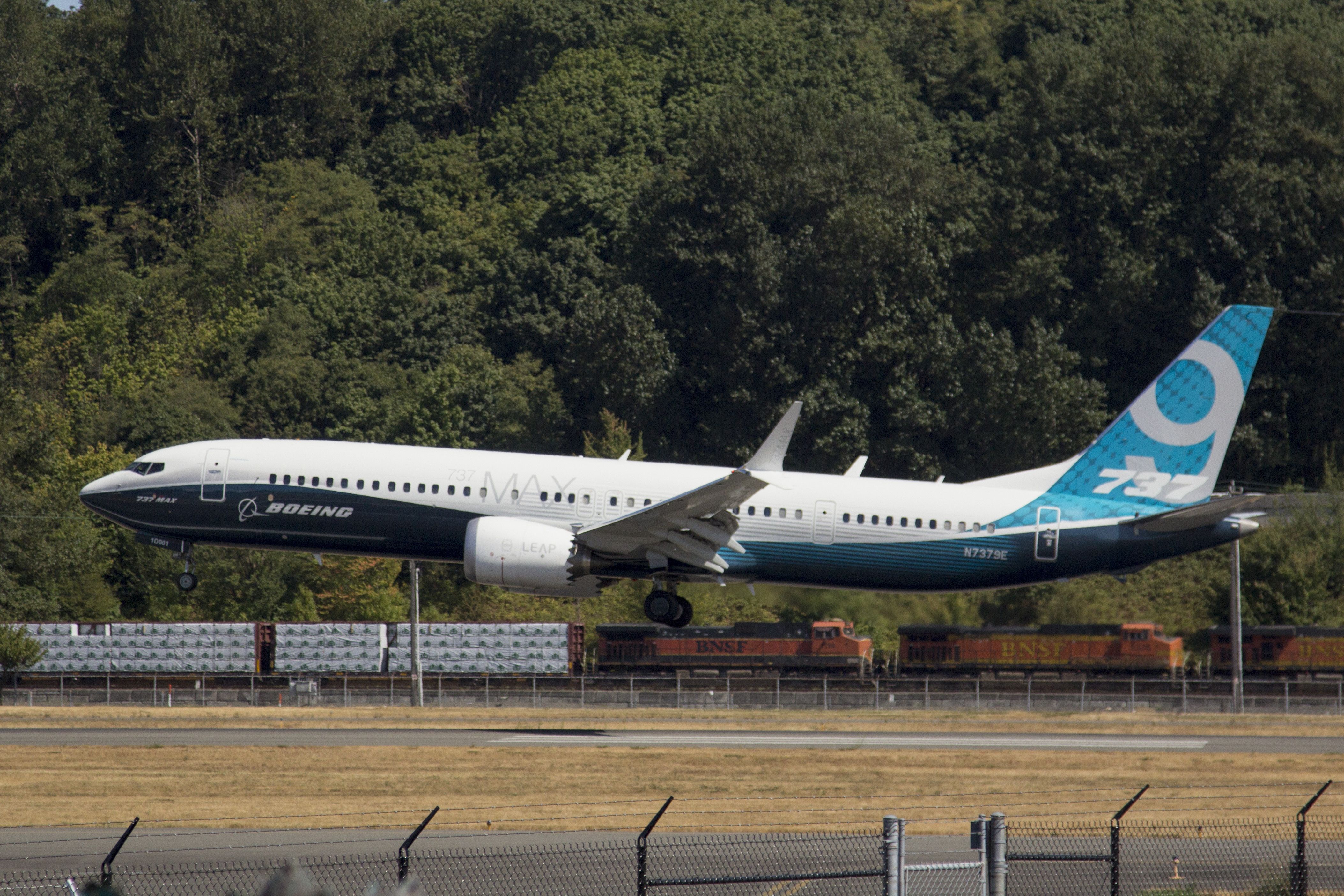
The primary 737 MAX design flaw centered on the Maneuvering Characteristics Augmentation System (MCAS), a flight control software designed to prevent the aircraft from stalling. The system relied on a single Angle of Attack (AOA) sensor, which, when faulty, triggered repeated, uncommanded nose-down stabilizer movements that pilots could not easily override.
The Genesis of the 737 MAX Design
To understand the 737 MAX design flaw, one must first understand the competitive landscape of the early 2010s. Boeing was facing significant pressure from its primary rival, Airbus, which had announced the A320neo—a more fuel-efficient version of its popular narrow-body jet. Rather than designing a completely new "clean-sheet" aircraft, which would have taken a decade and cost tens of billions of dollars, Boeing opted to update its venerable 737 platform, which originally entered service in the late 1960s.
The 737 MAX was the fourth generation of this airframe. The core of its efficiency gains came from the CFM International LEAP-1B engines. These engines were larger and featured a significantly wider fan diameter than the engines on the previous 737 Next Generation (NG) models. However, the 737 sits very low to the ground—a design choice from the 1960s intended to allow baggage loading without specialized equipment.
Because the new engines were so large, they could not fit under the wings in the traditional position. Engineers had to move the engine nacelles further forward and higher up on the wing. This relocation fundamentally altered the aircraft's aerodynamics. Specifically, at high angles of attack (when the nose is pointed up significantly), the engine nacelles themselves generated lift. This additional lift in front of the center of gravity created a tendency for the nose to pitch up even further, potentially leading to an aerodynamic stall.
The Role of MCAS: Maneuvering Characteristics Augmentation System
To satisfy Federal Aviation Administration (FAA) certification requirements, an aircraft must exhibit linear handling characteristics. In simpler terms, the plane should not have a natural tendency to pitch up uncontrollably during certain maneuvers. To fix this aerodynamic quirk without changing the physical shape of the plane, Boeing developed MCAS.
MCAS was designed to be a background software process. Its purpose was to make the 737 MAX "feel" like the 737 NG to the pilot. When the software detected that the plane’s Angle of Attack (AOA) was too high, it would automatically trigger the horizontal stabilizer—the small wings on the tail—to trim the nose down.
The fatal flaw in the initial design of MCAS was its reliance on a single AOA sensor. Most modern commercial aircraft utilize redundant sensors for critical flight data. However, in the original 737 MAX configuration, MCAS looked at data from only one of the two AOA vanes located on the exterior of the cockpit. If that single sensor provided a "false positive" (indicating the nose was high when it was actually level), MCAS would activate and force the nose down.
Technical Breakdown of the Failure Mechanism
The 737 MAX design flaw was not just the existence of MCAS, but the aggressive way the software was implemented. In the original version of the software, MCAS had several catastrophic characteristics that contributed to the 2018 Lion Air and 2019 Ethiopian Airlines accidents:
- Unlimited Iterations: If the AOA sensor continued to provide high readings, MCAS would reset itself and fire again. This resulted in a "tug-of-war" between the pilots, who were pulling back on the yoke to climb, and the computer, which was repeatedly trimming the nose down.
- Stabilizer Authority: The software was granted the power to move the horizontal stabilizer to its physical limit. This made the nose-down force so strong that pilots physically could not pull the nose back up using the control column alone.
- Lack of Pilot Awareness: Boeing initially omitted MCAS from pilot manuals and training materials. The rationale was to keep the 737 MAX's "type rating" the same as the 737 NG, allowing airlines to transition pilots to the new plane with minimal, computer-based training rather than expensive simulator time.
- Inadequate Warning Systems: An "AOA Disagree" light, which would have alerted pilots if the two sensors were providing different data, was an optional, paid feature. Many airlines, including Lion Air, did not have this alert active.
When the AOA sensor failed on the two ill-fated flights, MCAS misidentified a normal flight path as a dangerous stall condition. It repeatedly pushed the nose down. The pilots, unaware that MCAS even existed, followed standard "runaway stabilizer" checklists, but the repetitive nature of the MCAS activation made the situation far more complex than the scenarios they had been trained for.
The Regulatory Oversight Gap
A critical component of the 737 MAX design flaw was the failure of the regulatory process. The FAA’s Organization Designation Authorization (ODA) program allowed Boeing employees to act as representatives of the FAA when certifying certain systems. This "self-certification" process came under intense scrutiny following the groundings.
Investigations revealed that Boeing had downplayed the significance of MCAS to the FAA. By characterizing it as a minor enhancement to an existing flight control system rather than a new, high-authority safety system, Boeing avoided the rigorous safety analysis that might have caught the single-point-of-failure risk. Furthermore, internal communications later surfaced showing a corporate culture that prioritized production speed and cost-saving over transparent engineering safety assessments.
Redesign and Recertification: The 2026 Perspective
As of 2026, the 737 MAX has been back in service for several years, following one of the most comprehensive aircraft recertifications in aviation history. The "design flaw" has been addressed through a multi-layered approach mandated by global regulators.
Key Technical Improvements
- Dual-Sensor Comparison: MCAS now compares inputs from both AOA sensors. If the sensors disagree by more than 5.5 degrees, MCAS will not activate, and the pilots are alerted.
- Activation Limits: MCAS is now designed to activate only once for a single high-AOA event. It no longer "resets" to push the nose down repeatedly.
- Pilot Override Power: The amount of stabilizer movement MCAS can command has been limited. It can no longer override the pilot's ability to control the aircraft using the control column. Pilots always have the "final say."
- Mandatory Simulator Training: Every 737 MAX pilot must now undergo specific simulator training that covers MCAS behavior and multiple failure scenarios, ensuring they are prepared for the specific handling characteristics of the MAX.
Comparative Evolution of the 737 MAX Systems
| Feature | Original 2017 Configuration | 2026 Post-Fix Standard |
|---|---|---|
| AOA Sensor Input | Single sensor (No redundancy) | Dual sensor comparison (Required) |
| MCAS Activation | Repeated/Continuous | Single activation per event |
| Control Authority | High (Could override pilot) | Low (Cannot override pilot) |
| Pilot Training | 1-hour iPad session | Full Motion Simulator training |
| AOA Disagree Alert | Optional (Paid add-on) | Mandatory/Standard |
| Failsafe Logic | System-driven priority | Pilot-driven priority |
Ongoing Challenges and Quality Control in 2026
While the MCAS design flaw was technically resolved, the 737 MAX program has faced additional hurdles leading into 2026. The 2024 Alaska Airlines door plug blowout incident shifted the conversation from "design flaws" to "manufacturing and quality control flaws." This distinction is vital for safety investigators.
The MCAS issue was an engineering design error—the plane was built exactly how it was designed, but the design was fundamentally unsafe. The subsequent issues, such as misdrilled holes in pressure bulkheads or unsecured bolts on door plugs, were manufacturing defects. As a result, the FAA and international bodies like EASA have maintained an unprecedented level of oversight at Boeing production facilities through 2025 and 2026.
For the traveling public in 2026, the 737 MAX is arguably the most scrutinized aircraft in the sky. The transparency forced upon Boeing has led to the public release of technical manuals and safety data that were previously proprietary, allowing independent safety experts to verify the integrity of the current flight control software.
Practical Guidance for Travelers and Pilots
For those concerned about the safety of the 737 MAX in 2026, it is important to distinguish between the historical design flaw and the current operational status.
- Verification of Safety: The software fixes for MCAS have been verified by the FAA, EASA (Europe), Transport Canada, and CAAC (China). These agencies have independently flight-tested the updates.
- Identifying the Aircraft: You can identify a 737 MAX by its "split-tip" winglets (scimitar-like extensions) and the serrated (chevron) edges on the back of the engine nacelles. In your booking app, it will be listed as "737 MAX," "737-8," or "737-9."
- The "Safety Limit" Concept: In 2026, the aviation industry has moved toward a "Systems Safety" approach. This means that no single component failure should ever lead to a catastrophic event. The 737 MAX now adheres to this principle.
FAQ: The 737 MAX Design Flaw
Was the 737 MAX engine too big for the wing?
The engine was not "too big" for the wing in terms of structural integrity, but it was too large to fit in the original 737 position without hitting the ground. By moving the engine forward and up, Boeing solved the ground clearance issue but created the aerodynamic pitch-up tendency that MCAS was designed to mask.
Why didn't pilots just turn off MCAS?
In the initial accidents, pilots were not fully aware of what MCAS was or that it was the system causing the nose-down trim. While they attempted to use the "STAB TRIM CUTOUT" switches, the manual trim wheels were physically difficult to turn at high speeds, and the repetitive nature of the software's commands made it difficult to diagnose the problem in a high-stress, low-altitude environment.
Has MCAS been removed from the 737 MAX?
No, MCAS has not been removed because it is necessary for the aircraft to meet certification standards regarding handling at high angles of attack. However, the software was completely rewritten to include redundancies and limitations that prevent it from acting without pilot consent or based on a single faulty sensor.
Is the 737 MAX safe to fly in 2026?
According to global aviation authorities, the 737 MAX is safe. The specific design flaw related to MCAS has been solved. While the aircraft has faced separate manufacturing quality issues in recent years, the core aerodynamic and software problems that led to the groundings in 2019 have been comprehensively addressed and verified through millions of flight hours since the return to service.
What is the "AOA Disagree" alert?
This is a cockpit warning that appears when the two Angle of Attack sensors provide significantly different readings. In the original design flaw, this was a "premium" feature. Today, it is a mandatory safety requirement on all 737 MAX aircraft to ensure pilots are immediately aware of a sensor failure.
Final Recommendation: Navigating Aviation Safety
If you are an aviation professional or a frequent traveler, the best course of action is to stay informed via official regulatory updates from the FAA or NTSB. The 737 MAX serves as a landmark case study in both engineering ethics and the dangers of single-point failure in complex systems. While the design flaw is a dark chapter in aviation history, the resulting changes in pilot training, software redundancy, and regulatory oversight have set a new, more rigorous standard for aircraft certification worldwide. In 2026, travelers can feel confident that the specific MCAS flaw is a resolved technical issue, though continued vigilance regarding manufacturing quality remains a priority for the industry.