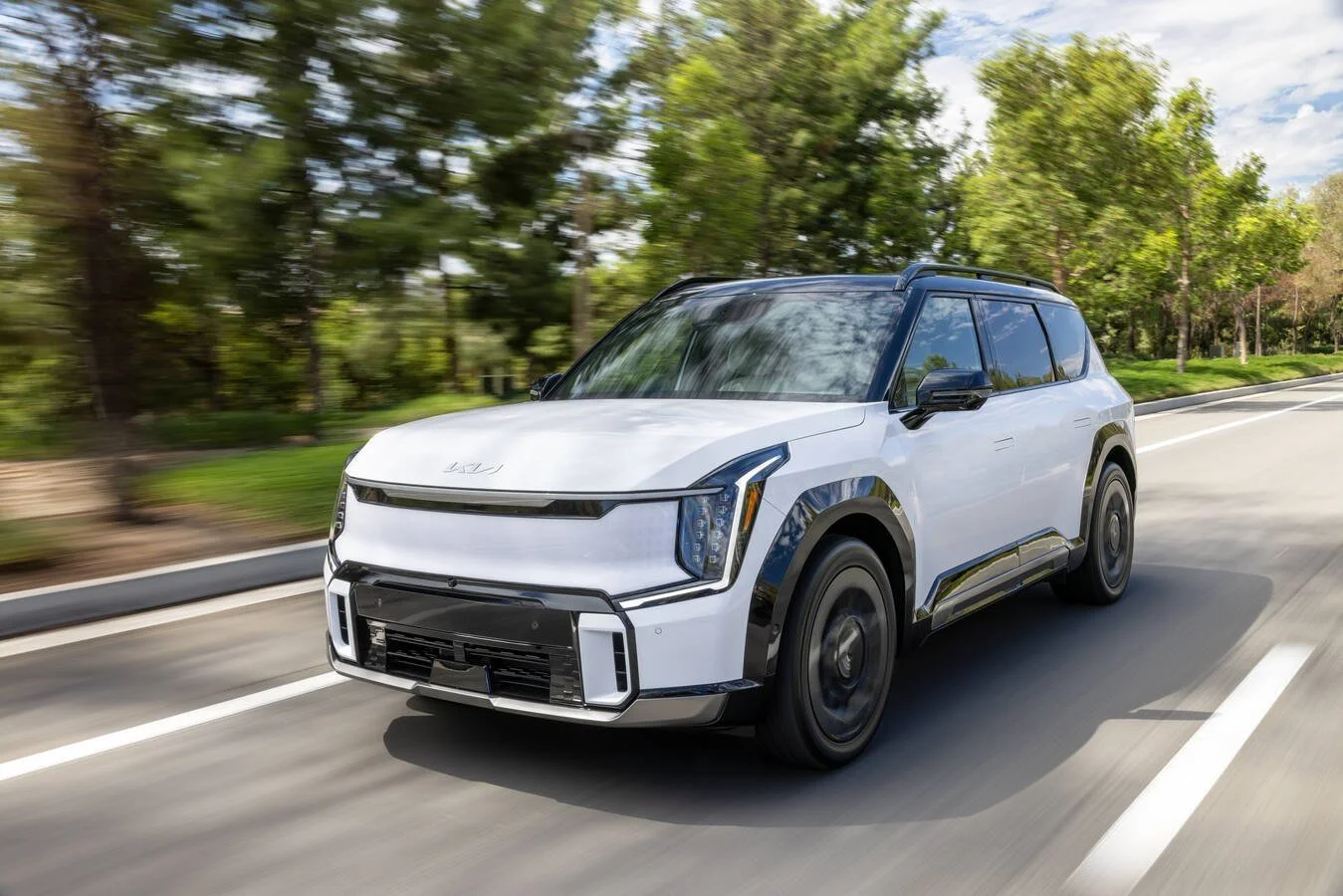
A 7 passenger car provides a three-row seating configuration designed to accommodate larger families or groups. These vehicles typically fall into three primary categories: minivans, mid-size crossovers, and full-size SUVs. Choosing the right one requires balancing seating flexibility, cargo capacity, safety ratings, and powertrain efficiency for your specific lifestyle needs.
Understanding the Varieties of 7 Passenger Cars
As we move through 2026, the market for multi-passenger vehicles has become more specialized than ever. While the goal remains the same—moving more than five people comfortably—the engineering approaches vary significantly. To select the right vehicle, you must first understand the fundamental differences between the three main segments.
The Modern Minivan
Often overlooked in favor of more rugged-looking counterparts, the minivan remains the most space-efficient 7 passenger car. Brands like Toyota, Honda, and Chrysler have refined this segment to prioritize "ingress and egress"—the ease of getting in and out. Sliding doors are the hallmark of this category, allowing for easy access in tight parking spaces where large SUV doors would be restricted. In 2026, the minivan segment is dominated by hybrid and plug-in hybrid powertrains, prioritizing low-speed efficiency for school runs and city driving.
Mid-Size Three-Row Crossovers
This is currently the most popular segment for families. These vehicles are built on unibody platforms, similar to sedans, which allows them to handle more like a car and less like a truck. Models such as the Kia Telluride, Honda Pilot, and Hyundai Palisade offer a "2+2+3" or "2+3+2" seating arrangement. While they offer the styling many parents prefer, the third row in a mid-size crossover is often best reserved for children or shorter trips, as the floor is usually higher to accommodate the rear suspension and exhaust components.
Full-Size Body-on-Frame SUVs
For those who need to tow a boat or a trailer while carrying seven people, the full-size SUV is the only viable option. Vehicles like the Chevrolet Tahoe, Ford Expedition, and Jeep Wagoneer utilize truck-based frames. This provides immense durability and high towing capacities (often exceeding 8,000 lbs). However, the trade-off is a higher step-in height and generally lower fuel economy, though 2026 models have seen significant improvements through mild-hybrid systems and turbocharged downsized engines.
Key Technical Specifications: Measuring Interior Volume and Accessibility
When comparing 7 passenger cars, the specification sheet can be deceptive. A vehicle might be labeled as a "seven-seater," but the actual utility of those seats varies. You must look beyond the number of seatbelts and examine the specific dimensions that affect daily comfort.
Legroom and Knee Clearance
Automotive manufacturers measure legroom in inches, but for the third row, the "hip-to-heel" ratio is more important. In many compact or mid-size 7 passenger cars, the third-row seat is bolted very close to the floor, forcing adult passengers to sit with their knees in an elevated, uncomfortable position. A "true" 7-passenger vehicle should ideally offer at least 30 inches of third-row legroom for occasional adult use.
Cargo Volume Behind the Third Row
One of the most common mistakes buyers make is ignoring the storage space remaining when all seven seats are in use. If you are using all seven seats for a road trip, you need space for seven bags. Minivans typically win this category due to their deep "trunk wells." In contrast, many mid-size SUVs offer less than 20 cubic feet of space behind the third row, which may only fit a few grocery bags or a slim stroller.
The Importance of the LATCH System
For families with young children, the number and location of Lower Anchors and Tethers for Children (LATCH) points are critical. A 7 passenger car may have three rows, but if it only has LATCH anchors in the second row, it limits your seating configurations. High-end 2026 models now frequently include at least one or two LATCH positions in the third row, allowing for more flexibility in where car seats can be installed.
Comparing Popular 7 Passenger Car Segments
The following table compares the typical characteristics of the three main types of 7-passenger vehicles available in 2026. Note that these are averages based on industry-standard configurations.
| Feature | Minivan (e.g., Toyota Sienna) | Mid-Size SUV (e.g., Kia Telluride) | Full-Size SUV (e.g., Chevy Tahoe) |
|---|---|---|---|
| Average Fuel Economy | 30–36 MPG (Hybrid) | 20–26 MPG | 16–22 MPG |
| Max Towing Capacity | 3,500 lbs | 5,000 lbs | 8,000+ lbs |
| Third-Row Accessibility | Excellent (Sliding Doors) | Moderate (Tilt/Slide Seats) | Difficult (High Step-in) |
| Cargo Space (All Seats Up) | 33–39 cu. ft. | 16–21 cu. ft. | 25–28 cu. ft. |
| Drive Configuration | FWD or AWD | FWD or AWD | RWD or 4WD |
| Primary Use Case | Urban/Suburban Family Life | Style-Conscious Commuting | Heavy Towing/Off-Road |
Electrification and the Future of Large Family Transport
By 2026, the landscape of 7 passenger cars has shifted significantly toward electrification. This transition is not just about environmental impact; it has fundamentally changed how these vehicles are designed.
Dedicated EV Platforms
Electric vehicles (EVs) like the Kia EV9 or the Rivian R1S utilize a "skateboard" platform where the battery is located entirely beneath the floor. This eliminates the "hump" in the middle of the cabin (the transmission tunnel), resulting in a completely flat floor. For a 7 passenger car, this is a game-changer. It allows for more legroom in all three rows and creates a sense of "open-concept" living within the vehicle.
Charging vs. Refueling for Large Groups
The primary concern for 7-passenger EV buyers in 2026 remains range and charging speed. A fully loaded vehicle with seven passengers and luggage is heavier and creates more aerodynamic drag, which can reduce the stated range by 15-20%. When researching an electric 7 passenger car, look for vehicles with 800-volt architecture, which allows for much faster DC fast-charging (10% to 80% in under 25 minutes), minimizing downtime during family road trips.
Hybrid and Plug-In Hybrid (PHEV) Options
For those not ready to go fully electric, the 2026 market offers robust PHEV options. Vehicles like the Mazda CX-90 PHEV or the Chrysler Pacifica Hybrid allow for 25-40 miles of all-electric driving—enough for most daily errands—while maintaining a gasoline engine for long-distance travel. This "best of both worlds" approach is often the most practical for the one-car family.
Safety Considerations for Multi-Passenger Vehicles
Safety is the top priority for the 7-passenger demographic. Because these vehicles carry more precious cargo, the engineering standards are rigorous. When evaluating a 7 passenger car, you should check the latest data from the Insurance Institute for Highway Safety (IIHS) and the National Highway Traffic Safety Administration (NHTSA).
Side-Impact Protection for the Third Row
A common safety gap in older three-row vehicles was the lack of side-curtain airbag coverage for the very back row. In 2026, standard safety suites must include full-length side-curtain airbags that protect all three rows of passengers. Additionally, look for "structural reinforcement" in the D-pillar (the rear-most pillar of the car) to ensure protection in the event of a rear-end collision.
Advanced Driver Assistance Systems (ADAS)
Given the size and weight of a 7 passenger car, braking distances are longer than those of a compact car. Standard ADAS features are now essential:
- Automatic Emergency Braking (AEB) with Pedestrian Detection: Helps mitigate or avoid frontal collisions.
- Blind Spot Monitoring: Essential for large vehicles with significant C-pillar and D-pillar blind spots.
- Rear Cross-Traffic Alert: Vital when reversing a long vehicle out of a driveway or parking space.
- Driver Attention Monitors: Using infrared cameras to ensure the driver is not fatigued during long hauls.
Financial Considerations: Pricing, Maintenance, and Resale Value
The total cost of ownership for a 7 passenger car extends far beyond the initial MSRP. These are larger, more complex machines that require a different financial outlook than a standard sedan.
Maintenance of All-Wheel Drive Systems
Many 7-passenger SUVs come standard with All-Wheel Drive (AWD). While this provides better traction in snow and rain, it adds complexity. Tires on AWD vehicles must often be replaced in sets of four to avoid damaging the center differential. Furthermore, the additional weight of three-row vehicles leads to faster wear on brake pads and rotors compared to lighter cars.
Depreciation and Resale Value
Historically, certain 7-passenger vehicles hold their value better than others. Mid-size SUVs from brands like Honda and Toyota tend to have the highest "residual value" (the value remaining after 3-5 years). This is an important factor if you plan to trade the vehicle in once your children are older and you no longer need the third row. In 2026, electric 7-passenger vehicles are seeing more stable resale values as charging infrastructure has become more ubiquitous, though battery health remains a key variable in long-term valuation.
Common Mistakes to Avoid
- Buying "Too Much" Car: If you only need seven seats twice a year, you might be better off with a 5-passenger SUV and renting a larger vehicle for those specific occasions. The extra weight and size of a 7 passenger car result in higher fuel costs and more difficult parking every day of the year.
- Ignoring the "Tumble" Mechanism: Test how the second-row seats move. If it takes a lot of strength to fold or slide the middle row, children will struggle to get into the back, and you will end up having to help them every single time.
- Forgetting the Garage Check: 7-passenger vehicles, especially full-size SUVs, are long and tall. Measure your garage depth and door height before purchasing. Many modern full-size SUVs will not fit in a standard suburban garage with the door closed.
Frequently Asked Questions
Which 7 passenger car has the most legroom in the third row?
In the 2026 market, the Chevrolet Suburban and its siblings (GMC Yukon XL) offer the most objective legroom in the third row due to their extended wheelbases. Among minivans, the Toyota Sienna and Honda Odyssey provide the most comfortable third-row experience for adults because of their lower floor height and generous knee room.
Are 7 passenger cars safe in rear-end collisions?
Yes, modern 7-passenger vehicles are designed with "crumple zones" that extend behind the third row. However, it is essential that the third row is not positioned too close to the rear glass. For maximum safety, look for vehicles that have earned the IIHS "Top Safety Pick+" award, which includes specific testing for rear-occupant protection.
Do I need All-Wheel Drive (AWD) in a 7 passenger car?
While AWD is helpful for climbing snowy driveways, it is not a substitute for winter tires. For most drivers in suburban environments, a Front-Wheel Drive (FWD) minivan with a good set of winter tires will perform better than an AWD SUV with "all-season" tires. AWD is primarily necessary if you live in a mountainous region or frequently drive on unpaved roads.
What is the difference between 7-passenger and 8-passenger configurations?
The difference usually lies in the second row. A 7-passenger vehicle often features captain's chairs in the second row (two individual seats with an aisle in between). An 8-passenger vehicle uses a bench seat in the second row (seating three across). Captain's chairs are generally more comfortable and provide easier access to the third row.
Are there any hybrid 7 passenger cars that can tow?
Yes, several 2026 models offer this capability. The Toyota Sequoia comes standard as a hybrid and can tow over 9,000 lbs. Additionally, many mid-size hybrid SUVs, such as the Toyota Highlander Hybrid or the Ford Explorer Hybrid, can tow between 3,500 and 5,000 lbs, making them suitable for small campers or utility trailers.
Final Recommendation: How to Choose
To make the final decision on a 7 passenger car, prioritize your daily use case over your maximum use case. If your daily life involves city driving, tight parking, and carrying small children, a minivan is the most logical and efficient tool for the job. If you prioritize styling and need occasional extra seating for carpooling, a mid-size crossover offers the best balance of drivability and utility. Finally, if your lifestyle involves towing heavy loads or frequent off-road excursions, the investment in a full-size body-on-frame SUV is justified. Always bring the entire family—and your largest car seats—to the dealership for a practical "fit test" before signing any paperwork.