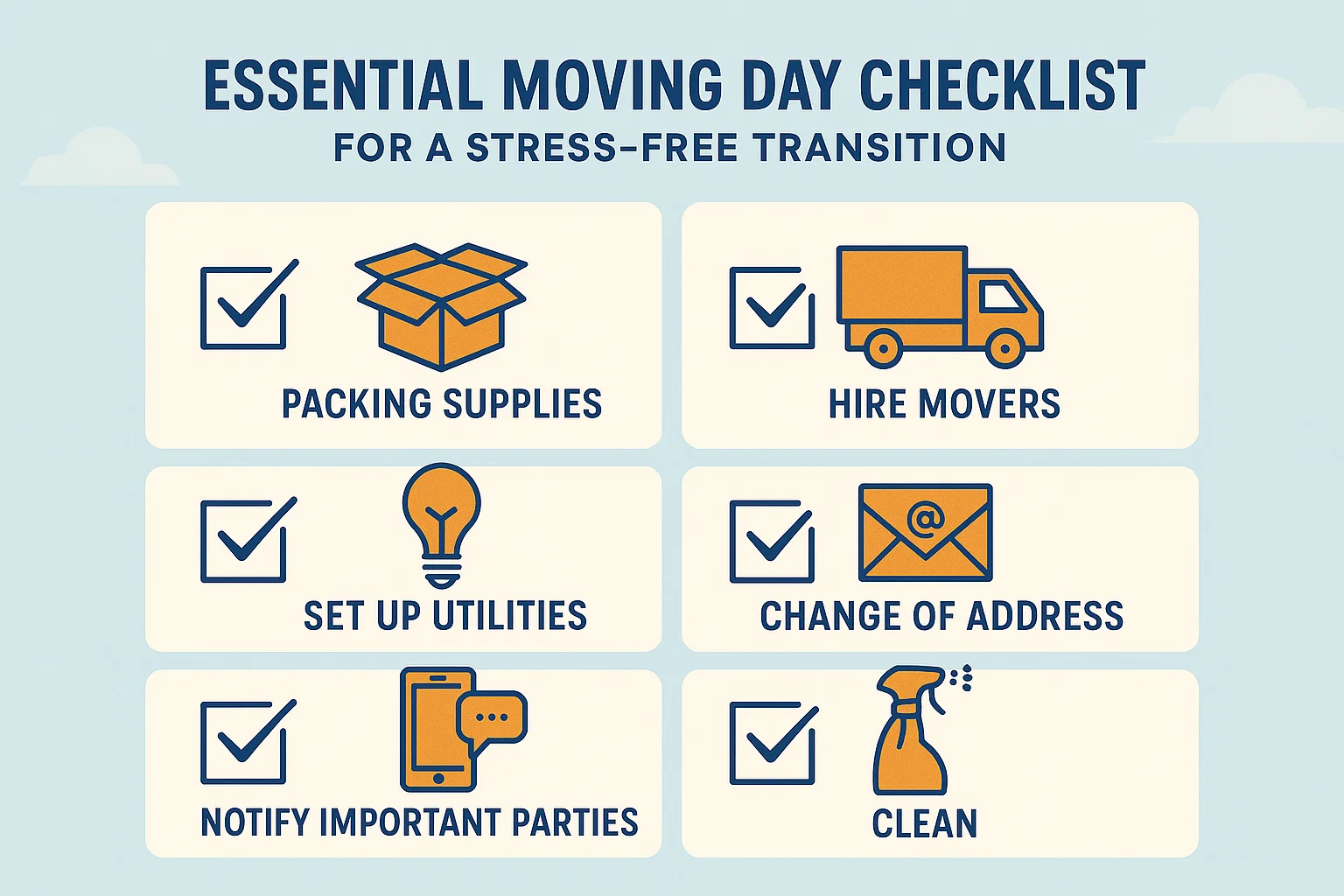
Executing a successful relocation requires a balance of strategic logistics, inventory management, and timeline adherence. By following a structured, seven-step checklist, you can mitigate the common stressors associated with moving, ensuring your belongings are packed efficiently, utilities are transitioned without gaps, and your arrival at a new residence is organized rather than chaotic.
1. Establish a Master Inventory and Decluttering Schedule
Before you pack a single box, you must determine exactly what is moving with you. Moving items you no longer use is a primary driver of unnecessary costs, especially for those paying for professional services based on weight or volume. Start this process at least eight weeks before your move.
Go room-by-room to categorize items into three distinct piles: donate, sell, and discard. Be ruthless with your evaluation. If you have not utilized an item in the past 12 months, the utility of moving that object is statistically low. For items in good condition, research local charities that offer pick-up services, or use digital marketplaces to recoup some of your moving expenses. Reducing your inventory at this stage reduces the physical labor of packing and the total square footage required in your moving truck or storage unit.
2. Procure High-Quality Packing Materials
The durability of your belongings during transit is directly proportional to the quality of your packing supplies. Avoid the temptation to source used boxes from grocery stores, as these may have compromised structural integrity, contain pests, or be sized inconsistently, making them difficult to stack in a moving vehicle.
Invest in double-walled corrugated boxes for heavy items like books, and use specialized dish barrels with cell dividers for fragile kitchenware. You will also require high-quality packing tape, bubble wrap, packing paper (newsprint can leave ink smudges on linens and upholstery), and permanent markers for labeling. Labeling should be descriptive—rather than just "Kitchen," use "Kitchen: Pots, Pans, Daily Use"—to ensure you know exactly where items are located when you arrive at your new destination.
3. Coordinate Logistics and Professional Services
Whether you are hiring a professional moving company or conducting a DIY move with a rented truck, scheduling is paramount. If you intend to hire movers, obtain at least three written estimates based on an in-person or high-definition video walkthrough of your home. Ensure the moving company provides a Bill of Lading and verify their standing with the Federal Motor Carrier Safety Administration (FMCSA) if the move involves crossing state lines.
If you are moving in 2026, keep in mind that peak season demand—typically late spring through early autumn—significantly impacts pricing and availability. Book your services at least six to eight weeks in advance. If you are renting a truck, confirm your reservation one week before the move date and verify the pickup location requirements and insurance coverage options.
4. Manage Utility Transfers and Address Updates
A seamless transition into a new home requires your utilities to be operational the moment you arrive. Creating a "Service Transition Calendar" is the best way to avoid gaps in essential services. Contact your providers for electricity, gas, water, internet, and waste management to schedule disconnection at your current address for the day after your departure and connection at your new address for the day before your arrival.
Simultaneously, initiate your change-of-address process. Visit the United States Postal Service (USPS) website to set up mail forwarding. Update your address with your bank, insurance providers, employer, and any subscription services. Failing to do this promptly can lead to identity security risks or missed payments that may affect your credit standing.
5. Prepare an Essential "First-Night" Survival Kit
When you arrive at your new home, the last thing you want to do is hunt through twenty identical boxes to find a toothbrush or a phone charger. Pack a clear, easily accessible suitcase or box with "First-Night Essentials." This should be transported in your personal vehicle, not the moving truck.
Your kit should include:
- Bed linens and towels for every household member.
- Basic toiletries, soap, and toilet paper.
- A set of basic tools (screwdriver, wrench, utility knife).
- Charging cables and power banks.
- Essential medications and first-aid supplies.
- Documents including your lease or deed, identification, and a printed copy of the inventory list.
- Paper plates, plastic utensils, and non-perishable snacks.
6. Protect High-Value Items and Important Documents
Certain assets require special handling that standard moving boxes cannot provide. Important documents—such as passports, birth certificates, social security cards, marriage licenses, and financial records—should never be placed in a moving truck. Keep these in a secure, fireproof, and waterproof folder that stays with you at all times.
For high-value items like jewelry, artwork, or high-end electronics, consult your homeowners or renters insurance policy before the move. Some policies provide "transit coverage," but many require a specific rider or a separate appraisal to cover items during a relocation. If you are using a professional moving company, ask about their valuation coverage options, but be aware that standard liability is often based on the weight of the item rather than its monetary value.
7. Conduct a Final Walkthrough and Documentation
On the day of the move, perform a detailed final walkthrough of your old property once the movers have cleared every room. Check all closets, attic spaces, cabinets, the garage, and any outdoor sheds. This is the moment to verify that no items were overlooked and that you have not left any messes that could result in fees or deductions from a rental security deposit.
Take photographs of the empty rooms to document the condition in which you left the property. Similarly, once you arrive at your new location, conduct a walkthrough before any boxes are unloaded. Note any pre-existing damage to the walls, flooring, or fixtures and take photographs of these as well. This documentation is your primary defense in any disputes regarding security deposits or damage claims.
Comparison of Moving Methods
The following table outlines the trade-offs associated with different moving strategies to help you decide which approach aligns best with your budget and requirements in 2026.
| Method | Best For | Pros | Cons |
|---|---|---|---|
| Professional Movers | Long-distance or high volume | Expert handling, insurance, speed | Most expensive; requires advance booking |
| DIY Rental Truck | Local or budget-focused | Full control; lower upfront costs | High labor intensity; potential for injury |
| Portable Containers | Flexible timelines | Pack at your pace; secure storage | Dependent on driveway space/permits |
| Hybrid Services | Balance of cost and labor | Professionals drive; you pack | Requires coordination of multiple parties |
Frequently Asked Questions
What is the most cost-effective time of year to move? The most cost-effective time to move is generally during the "off-season," which spans from late autumn through winter. During these months, moving companies are less busy, which often results in lower rates and greater flexibility for scheduling. Mid-week moves are also consistently cheaper than weekend moves, regardless of the season.
How do I ensure my fragile items arrive safely? The "box-in-a-box" method is the industry standard for fragile items. Wrap each item individually in three layers of bubble wrap, place it in a small box, and then place that box inside a larger, sturdier box lined with crumpled packing paper on all sides. This creates a shock-absorption zone that protects contents from vibrations and impacts.
When should I notify my employer about my change of address? You should notify your employer at least two to four weeks before your move. This lead time ensures that your payroll department has sufficient time to update tax withholdings, which may change depending on your state or local jurisdiction, and to ensure that any physical correspondence from the company reaches you at the correct location.
What should I do if my items are damaged during the move? If you discover damage, document it immediately with high-resolution photographs. Check your contract to determine the window for filing a claim—this is often very short, sometimes as little as 24 to 48 hours. Submit a formal, written notice to the moving company, including your Bill of Lading and a detailed description of the damaged items.
Is it necessary to tip professional movers? Tipping is standard practice in the moving industry, though not legally required. A common guideline is to tip between $5 and $10 per mover per hour, or roughly 5% to 10% of the total cost of the move, depending on the complexity, the number of stairs involved, and the speed and care of the team.
Final Recommendation
To maximize your efficiency, prioritize the "First-Night Survival Kit" and the master inventory list. These two steps eliminate the most common points of frustration during a move. As you finalize your 2026 moving plans, ensure all service contracts and insurance documentation are organized in a single, accessible folder. Preparation is the primary factor that transforms a stressful relocation into an organized transition.