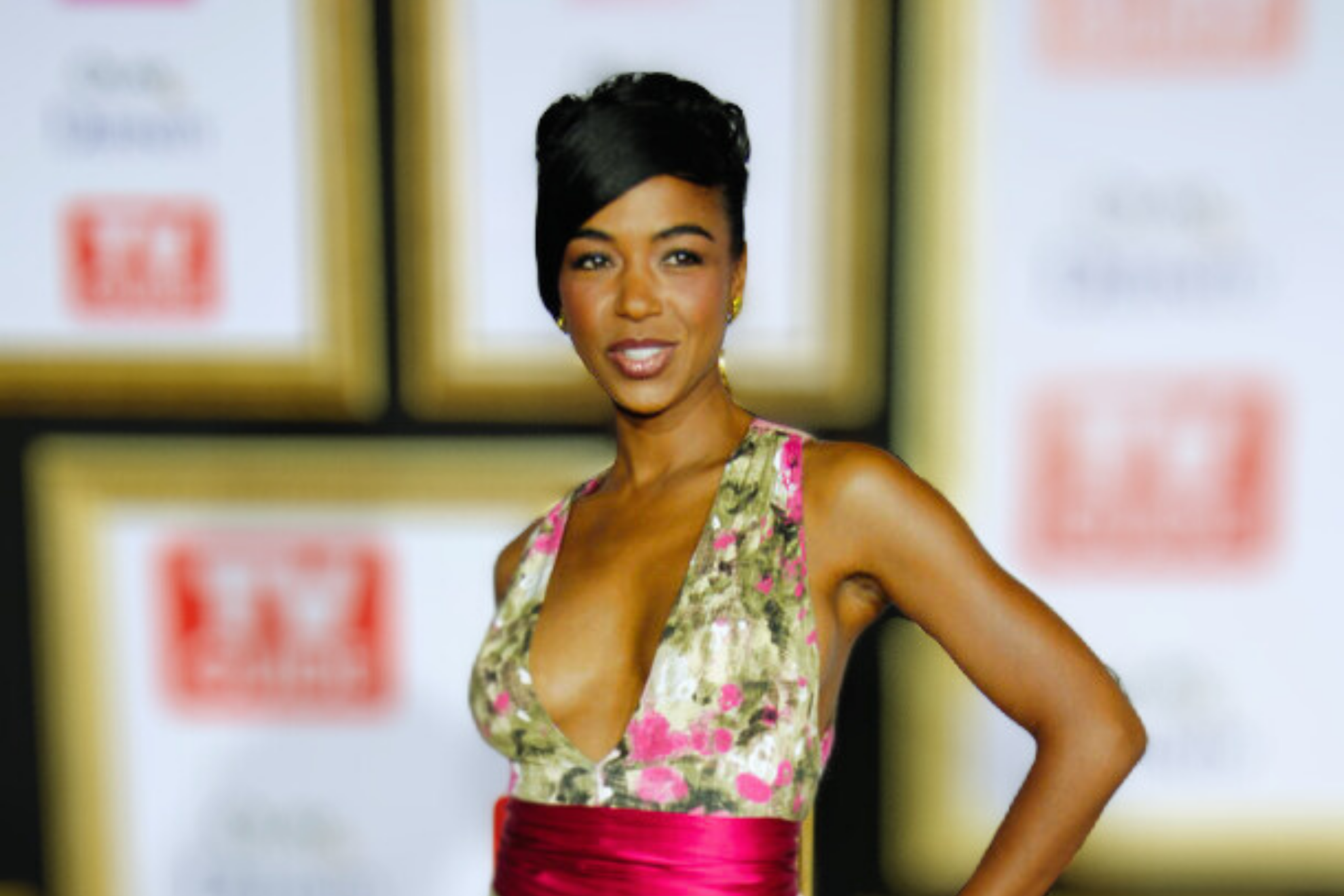
Ananda Lewis was a pivotal figure on MTV’s Total Request Live (TRL) during its cultural zenith in the late 1990s and early 2000s. As a seasoned VJ, she provided a sophisticated, grounded counterpoint to the high-energy pop chaos of Times Square, bridging the gap between urban music and mainstream pop culture.
For a generation of viewers, the name Ananda Lewis is synonymous with the golden age of music television. While Carson Daly was often seen as the face of Total Request Live, Lewis provided the show with its intellectual and emotional backbone. Her transition from the socially conscious Teen Summit on BET to the neon-lit studios of MTV represented a significant shift in how music journalism was delivered to the masses. As we look back from the vantage point of 2026, her influence on the format of the "celebrity interview" and her role as a trailblazer for women of color in media remains undisputed.
The Cultural Context: MTV in the Late 1990s
To understand Ananda Lewis’s impact on TRL, one must first understand the landscape of MTV at the turn of the millennium. By 1998, the network was shifting away from pure music video blocks toward personality-driven programming. TRL became the epicenter of this shift. It was a live, high-stakes environment where the "screaming fan" became a character in itself.
In this environment, Lewis was an essential asset. While the show was often criticized for its focus on "bubblegum pop" acts like Britney Spears and NSYNC, Lewis helped maintain the show's credibility within the hip-hop and R&B communities. Her presence ensured that the "Total" in Total Request Live included a diverse range of genres. She navigated the intersection of pop and urban music with a fluidity that few of her contemporaries could match.
The technical production of TRL was notoriously difficult. It involved live voting, real-time fan interactions, and a constant stream of high-profile guests. Lewis’s ability to remain calm and professional amidst the literal noise of Times Square made her a favorite among producers. She wasn't just a teleprompter reader; she was a journalist who understood the artists she was interviewing.
From BET to MTV: The Evolution of a Host
Before she ever stepped foot into the MTV studios at 1515 Broadway, Ananda Lewis had already established herself as a formidable voice in broadcasting. Her work on BET's Teen Summit (1994–1997) was groundbreaking. The show tackled heavy subjects—teen pregnancy, gang violence, and systemic racism—with a level of seriousness rarely seen in youth programming.
The Teen Summit Foundation
Lewis's tenure at BET earned her an NAACP Image Award and solidified her reputation as a "host with a conscience." This background is what made her so unique when she transitioned to MTV. She brought a level of gravitas to the network that helped balance its more irreverent segments. When she interviewed major stars on TRL, she often bypassed the fluff, asking questions that felt more like a conversation and less like a promotional junket.
The MTV Transition
When MTV recruited Lewis in 1997, it was part of a larger strategy to diversify the network’s appeal. She initially hosted programs like MTV News and Hot Zone before becoming a regular fixture on TRL. Her arrival signaled that MTV was looking for more than just "pretty faces"; they wanted hosts who could handle the shifting demographics of their audience. Lewis was the perfect fit—she was articulate, culturally aware, and possessed a natural charisma that translated perfectly through the screen.
The TRL Years: Bringing Authenticity to Times Square
Ananda Lewis’s time on TRL (roughly 1998 to 2001) coincided with the most successful years in the show's history. During this period, the program was the primary vehicle for music discovery and artist promotion. A single appearance on TRL could launch a career or solidify a superstar's dominance.
Interview Style and Artist Rapport
What set Lewis apart was her rapport with artists. Whether she was talking to Mariah Carey, Jay-Z, or Destiny's Child, there was a palpable sense of mutual respect. She possessed the rare ability to make global superstars feel at ease in a chaotic, live-broadcast environment. This led to moments of genuine vulnerability and insight that were often missing from more structured interviews.
She was particularly noted for her coverage of significant events, such as the Video Music Awards (VMAs) and various "Spring Break" specials. In these high-pressure settings, her training as a live broadcaster was evident. She could pivot from a breaking news update to a fan interaction without missing a beat, a skill set that became the blueprint for modern multimedia hosting.
The "Total Request" Mechanism
Technically, TRL was fueled by user engagement—a precursor to the social media interaction we see today. Fans would call in or vote online to determine the daily top ten videos. Lewis was instrumental in explaining this process to the audience, framing the "countdown" not just as a list, but as a democratic reflection of youth culture. This interactive element was revolutionary at the time, and Lewis served as the primary interface between the fans and the data.
Behind the Scenes of Total Request Live
The production of a live daily show like TRL required immense coordination. The "Glass Studio" overlooking Times Square was a logistical challenge, as thousands of fans would gather below, often disrupting audio and movement. Lewis was known for her "one-take" capability, a crucial trait in live television where there are no do-overs.
| Feature | Description | Ananda Lewis's Role |
|---|---|---|
| Broadcast Format | Live, daily one-hour countdown | Lead host/VJ for rotating segments |
| Studio Location | 1515 Broadway (Times Square) | Handled street-level and studio fan interactions |
| Core Demographic | Teens and Young Adults (12–24) | Acted as a "big sister" and relatable mentor |
| Interaction Mode | Phone-in and early internet voting | Interpreted fan data and read live requests |
| Musical Scope | Pop, Hip-Hop, R&B, and Nu-Metal | Primarily bridged the gap for R&B and Hip-Hop acts |
The technical staff often cited Lewis as one of the most reliable VJs on the roster. In an era before sophisticated digital teleprompters and ear-pieces, the ability to ad-lib and handle "dead air" was paramount. If a guest was late or a video clip failed to load, Lewis could carry the segment through sheer personality and professional poise.
The "Talk Show" Pivot and Departure from MTV
In 2001, at the height of her MTV fame, Ananda Lewis made the decision to leave the network to launch her own syndicated talk show, The Ananda Lewis Show. This move was seen as the natural progression of her career, following in the footsteps of broadcasters like Oprah Winfrey.
The talk show aimed to combine the celebrity access of her MTV years with the social consciousness of her BET years. While the show only lasted one season, it was a significant moment in media history. It demonstrated that a VJ could be taken seriously as a solo host in the daytime television market. The failure of the show to secure a second season was less a reflection of Lewis's talent and more a result of the incredibly crowded daytime market of the early 2000s.
Despite the short run of her talk show, Lewis did not fade from the public eye. She transitioned into various roles, including stints on The Insider and eventually pursuing her passion for carpentry and home renovation—a surprising turn that showcased her multifaceted nature. This "pivot" serves as a case study in career longevity and the importance of diversifying one's skill set.
Representation and the "Ananda Effect"
The significance of a Black woman holding a prime-time slot on MTV during the late 90s cannot be overstated. For many young viewers of color, Lewis was a rare example of a professional who looked like them in a predominantly white pop-culture landscape. She didn't have to "code-switch" or diminish her identity to fit the MTV mold; instead, MTV adapted to her.
Her influence, often called the "Ananda Effect," paved the way for future hosts like La La Anthony, Vanessa Minnillo, and Terrence J. She proved that music television hosts could be journalists, advocates, and cultural icons simultaneously. Her legacy is found in every host who brings a sense of social responsibility to the world of entertainment news.
A Modern Perspective: Health Advocacy and 2026 Status
As we evaluate her career in 2026, Ananda Lewis's most impactful work may be her advocacy. In October 2020, Lewis went public with a stage 3 breast cancer diagnosis. Her decision to share her journey—including her unconventional treatment paths and her later progression to stage 4—has been a source of education and inspiration for millions.
Transparency in the Social Media Age
Unlike her years on TRL, where her life was mediated by a network, Lewis has used social media to provide raw, unfiltered updates on her health. She has been vocal about the importance of early detection, the nuances of different treatment modalities, and the specific health disparities that affect Black women.
In 2026, she remains a prominent figure in health advocacy, using her platform to push for more research into metastatic breast cancer. Her story has shifted from one of "90s nostalgia" to one of "present-day resilience." She has effectively used the communication skills she honed on TRL to explain complex medical concepts and advocate for patient rights, proving that her voice is as relevant now as it was thirty years ago.
Frequently Asked Questions
When did Ananda Lewis start on TRL?
Ananda Lewis became a regular fixture on Total Request Live in 1998, shortly after the show's debut. While Carson Daly was the primary host, Lewis was one of the "core four" VJs (alongside Carson, Damien Fahey, and Hilarie Burton) who defined the show's most successful era. She had previously worked at MTV on other programs starting in 1997.
Why did Ananda Lewis leave MTV?
Lewis left MTV in 2001 to pursue an opportunity to host her own syndicated daytime talk show, The Ananda Lewis Show. She wanted to return to the more substantive, interview-heavy format she had enjoyed during her BET years. While the move was a risk, it was a logical step for a broadcaster who had reached the ceiling of music television.
Is Ananda Lewis still involved in the entertainment industry?
As of 2026, Lewis focuses primarily on her health advocacy and special projects. While she does not host a daily show, she frequently appears as a guest commentator, public speaker, and advocate for breast cancer awareness. She also has a background in interior design and carpentry, which she has occasionally integrated into her media appearances.
What was Ananda Lewis's most famous TRL interview?
While she had many, her interviews with R&B royalty like Aaliyah and Beyoncé (during the Destiny’s Child era) are often cited as her best. She had a way of cutting through the PR-speak to get to the artist’s true personality. Her interview with Aaliyah shortly before the singer’s passing remains a poignant piece of music history.
What is Ananda Lewis's current health status in 2026?
Lewis has been transparent about her journey with stage 4 metastatic breast cancer. In 2026, she continues to manage her condition with a combination of traditional and alternative therapies, frequently updating her followers on the realities of living with a chronic, life-threatening illness. Her focus remains on quality of life and using her experience to help others navigate the healthcare system.
Final Recommendation for Media Enthusiasts
For those interested in the evolution of music media, studying Ananda Lewis’s tenure on TRL is essential. To truly appreciate her impact, one should seek out archival footage of her Teen Summit years followed by her TRL interviews. This progression highlights the importance of professional versatility. Modern aspiring hosts should take note of her ability to balance "star power" with "human connection"—a skill that remains the gold standard in broadcasting, even in an era dominated by AI and digital influencers. Watching her work provides a masterclass in how to maintain individual integrity within a high-pressure commercial environment.