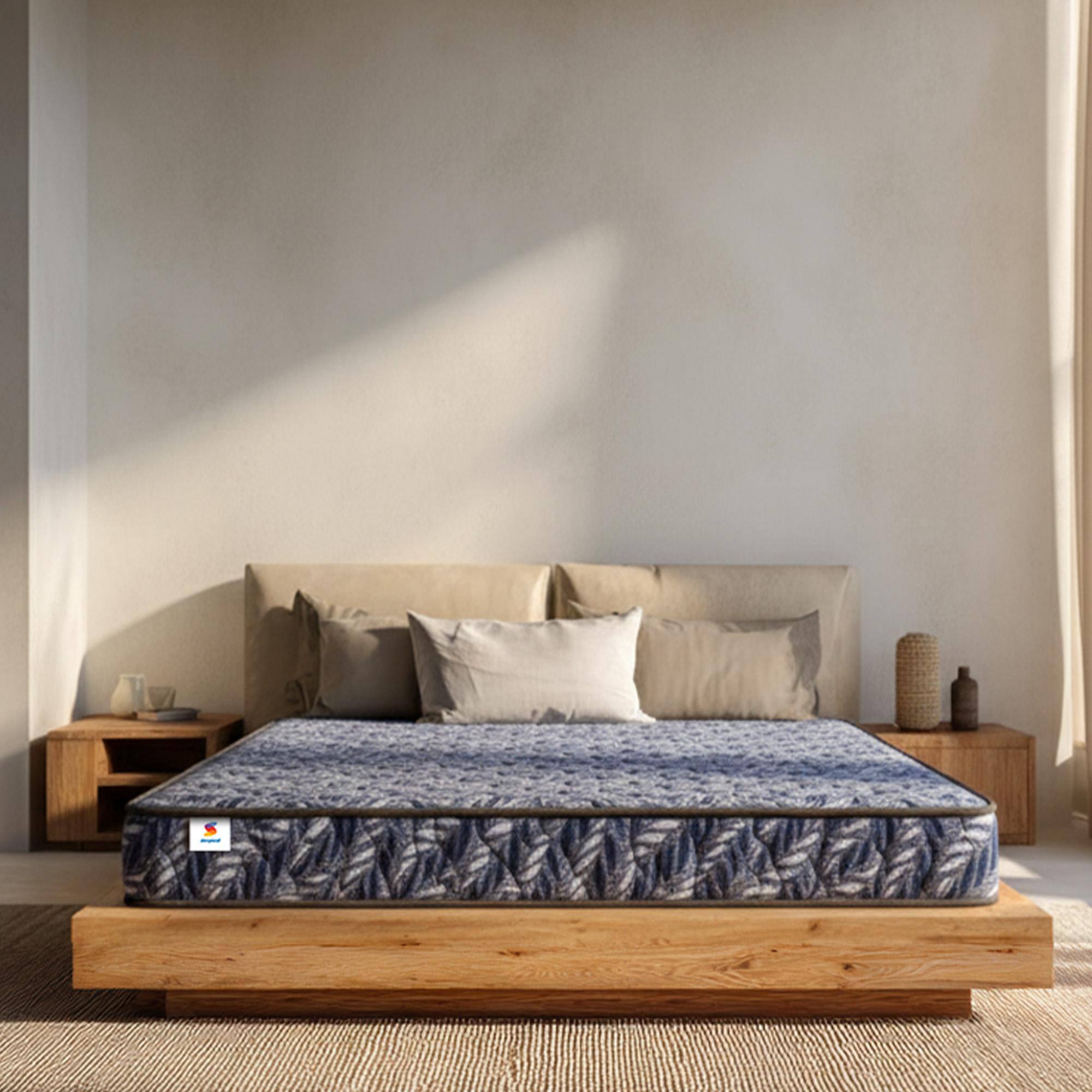
A 60-inch bed, standardly known as a Queen size, offers 30 inches of personal space per sleeper in a dual-occupancy setup. Comfort is derived from the synergy of its 60"x80" dimensions, mattress material density, zoned support systems, and advanced thermal regulation technologies prevalent in 2026 sleep engineering.
Understanding the Dimensions: Why 60 Inches is the Industry Standard
The 60-inch bed, universally recognized as the Queen size, has maintained its position as the most popular mattress dimension for decades. Measuring exactly 60 inches wide by 80 inches long, it provides a surface area of 4,800 square inches. This specific footprint is engineered to balance the spatial constraints of modern residential architecture with the ergonomic needs of the average adult.
In the context of 2026 home design, the 60-inch width is considered the "Goldilocks" zone. It is wide enough to accommodate two sleepers without the intimacy feeling forced, yet narrow enough to fit comfortably in a standard 10x12 foot bedroom while leaving sufficient clearance for walkways. When compared to the 54-inch "Full" bed, the 60-inch model provides an additional 6 inches of width, which is often the critical threshold for preventing partner disturbance. Conversely, it is 16 inches narrower than a standard King, making it a more versatile choice for urban living environments where floor space is at a premium.
For taller individuals, the 80-inch length of a 60-inch bed is a significant comfort factor. Unlike the 75-inch length of Twin and Full mattresses, the Queen’s 80-inch span accommodates individuals up to 6'4" without their feet hanging off the edge. This added length is vital for maintaining spinal alignment and ensuring that the pillow-to-toe distance allows for natural body extension during REM sleep.
Material Science and Its Impact on 60-Inch Bed Comfort
The comfort of a 60-inch bed is fundamentally dictated by its internal composition. As of 2026, mattress technology has evolved to prioritize adaptive support and bio-based materials.
Memory Foam and Pressure Relief
Memory foam remains a primary choice for 60-inch mattresses due to its viscoelastic properties. This material reacts to body heat and pressure, contouring to the sleeper's unique shape. In a 60-inch configuration, memory foam is particularly effective at distributing weight evenly across the surface. This prevents "hot spots" on the hips and shoulders, which are common areas of discomfort for side sleepers. Modern 2026 formulations often incorporate plant-based polyols and open-cell structures to mitigate the traditional heat-retention issues associated with older foam generations.
Hybrid Systems: The Best of Both Worlds
Hybrid mattresses, which combine a pocketed coil support core with foam or latex comfort layers, are currently the market leaders for 60-inch beds. The comfort benefit of a hybrid system lies in its "push-back" support. While the top layers provide pressure relief, the individual coils—often numbering between 800 and 1,200 in a Queen size—respond independently to movement. This prevents the "sinking" sensation that some sleepers find claustrophobic in all-foam beds.
Latex: Durability and Breathability
Natural latex mattresses, derived from the sap of the Hevea brasiliensis tree, offer a "buoyant" comfort profile. Unlike memory foam, latex recovers its shape instantly. For a 60-inch bed used by a couple, latex provides an excellent balance of motion isolation and ease of movement. It is also inherently hypoallergenic and antimicrobial, which contributes to long-term "respiratory comfort" by reducing dust mite accumulation.
The Role of Firmness in the 60-Inch Sleep Experience
Firmness is subjective, yet it is arguably the most critical variable in the 60-inch bed comfort overview. Most manufacturers utilize a 1-10 scale, where 1 is extremely soft and 10 is exceptionally firm.
- Soft (3-4): Best suited for side sleepers under 130 lbs. These mattresses allow the shoulders and hips to sink deeply, ensuring the spine remains horizontal.
- Medium-Firm (5-7): Often cited as the "universal" comfort level. This range is ideal for 60-inch beds used by couples with different sleeping positions, as it provides enough give for side sleeping and enough support for back sleeping.
- Firm (8-9): Recommended for stomach sleepers and individuals over 230 lbs. A firm 60-inch bed prevents the pelvis from sinking too deep, which can otherwise lead to lower back strain and morning stiffness.
According to the Mayo Clinic, maintaining the natural curve of the spine is essential for preventing chronic back pain. In a 60-inch bed, this is achieved when the mattress firmness matches the sleeper's body mass index (BMI) and primary sleep posture.
Motion Isolation: Solving the "Partner Disturbance" Problem
In a 60-inch bed, sleepers are closer to each other than they would be in a King-size bed. Therefore, motion isolation becomes a paramount comfort feature. If one partner tosses and turns, the kinetic energy can travel across the mattress, waking the other person.
To maximize comfort in 2026 models, look for:
- Pocketed Coils: Unlike traditional interconnected Bonnell coils, pocketed coils are wrapped in individual fabric sleeves. This allows them to compress without affecting their neighbors.
- Transition Layers: High-density foam layers placed between the comfort layer and the support core help absorb vibrations.
- Split Queen Options: Some 60-inch beds are available as "Split Queens" (two 30"x80" mattresses). This provides the ultimate motion isolation and allows for individualized firmness levels on each side.
Temperature Regulation and Thermal Comfort
Thermal comfort is a significant factor in sleep quality. The human body needs to drop its core temperature by approximately 2 degrees Fahrenheit to initiate deep sleep. A 60-inch bed that "sleeps hot" will lead to fragmented sleep and night sweats.
Technological advancements in 2026 have introduced Phase Change Materials (PCM) into mattress covers. These materials actively absorb heat when the sleeper is too warm and release it when they cool down. Additionally, copper and graphite infusions in the foam layers act as thermal conductors, drawing heat away from the body and dissipating it through the sides of the mattress. For maximum airflow, look for mattresses with "convoluted" foam layers or "breathable" Tencel covers, which are more effective at moisture-wicking than traditional polyester blends.
Edge Support: Maximizing the 60-Inch Surface Area
One often overlooked aspect of 60-inch bed comfort is edge support. Because the width is limited to 60 inches, sleepers often find themselves migrating toward the perimeter of the bed. If the edges are weak, the sleeper may feel like they are "rolling off," which effectively reduces the usable sleep surface.
High-quality 60-inch beds reinforce the edges using:
- High-Density Foam Encasement: A thick border of very firm foam surrounding the softer comfort layers.
- Reinforced Perimeter Coils: Using higher-gauge (thicker) wire for the two outermost rows of springs.
Superior edge support not only increases the sleepable surface area but also makes it easier to sit on the edge of the bed when dressing or entering/exiting, which is an ergonomic benefit for individuals with mobility issues.
60-Inch Bed Comfort Comparison Table
| Mattress Type | Pressure Relief | Motion Isolation | Cooling Ability | Edge Support | Expected Lifespan |
|---|---|---|---|---|---|
| Memory Foam | Exceptional | High | Low to Moderate | Moderate | 7-10 Years |
| Innerspring | Low | Low | High | Exceptional | 5-7 Years |
| Hybrid | High | Moderate | Moderate | High | 8-12 Years |
| Latex | Moderate | Moderate | High | High | 12-15 Years |
| Air Chamber | Adjustable | High | Moderate | Low | 10-15 Years |
Spatial Ergonomics: Placing Your 60-Inch Bed for Maximum Comfort
The comfort of a bed is not solely contained within the mattress; the environment plays a crucial role. For a 60-inch bed, room layout is essential for psychological and physical comfort.
- The 30-Inch Rule: To maintain a comfortable flow, ensure there are at least 30 inches of walking space on both sides of the 60-inch bed and at the foot. This prevents the room from feeling cramped and allows for easy bed-making.
- Symmetry and Anchoring: Placing the head of the bed against a solid wall (ideally with a headboard) provides a psychological sense of security, which can improve sleep onset latency.
- Lighting and Airflow: Positioning the bed away from direct air conditioning drafts but near enough to a window for natural ventilation can enhance the thermal comfort of the sleep environment.
Common Pitfalls in Selecting a 60-Inch Bed
When seeking the ultimate comfort overview, it is important to avoid common mistakes that can lead to "buyer's remorse."
- Ignoring the Foundation: Placing a high-quality 60-inch mattress on an old, sagging box spring or a bed frame with slats spaced too far apart (more than 3 inches) will ruin the comfort. The mattress needs a flat, rigid surface to perform its support functions.
- Overestimating Firmness Needs: Many people buy a "Firm" bed thinking it is better for their back, only to find it causes shoulder pain. Always test a mattress in your primary sleeping position for at least 15 minutes.
- Neglecting the Pillow: A 60-inch bed can only do so much. If your pillow is too high or too low, your neck will be out of alignment regardless of how comfortable the mattress is.
FAQ: Frequently Asked Questions About 60-Inch Bed Comfort
Is a 60-inch bed big enough for two people?
Yes, a 60-inch (Queen) bed is the standard choice for couples. It provides 30 inches of space per person, which is equivalent to the width of a "Crib" or "Small Single" mattress. While some couples prefer the 76-inch width of a King for extra "sprawl room," the Queen is sufficient for most adults and fits better in average-sized rooms.
How does a 60-inch bed compare to an Olympic Queen?
An Olympic Queen is a non-standard size that measures 66 inches wide. While it offers 6 inches of extra width, it is significantly harder to find bedding and frames for this size. For most, the standard 60-inch Queen offers a better balance of comfort and availability of accessories.
What is the best mattress height for a 60-inch bed?
Comfortable mattress heights typically range from 10 to 14 inches. A profile lower than 10 inches may lack the necessary layers for deep pressure relief, while a profile over 14 inches might require specialized deep-pocket sheets and can be difficult to climb into for shorter individuals.
Can I use two 30-inch mattresses to make a 60-inch bed?
Yes, this is known as a Split Queen. It is an excellent solution for couples with drastically different firmness preferences or for use with adjustable bases, allowing each person to elevate their head or feet independently.
Does a 60-inch bed require a specific type of headboard?
While not strictly required for mattress comfort, a headboard provides a buffer between your head and the wall, providing thermal insulation and a comfortable surface for sitting up. Most 60-inch headboards are designed with mounting brackets that match standard Queen metal frames.
Next Actions for Optimal Sleep Comfort
To finalize your 60-inch bed comfort strategy, begin by assessing your current sleep environment. Measure your bedroom to ensure you have the recommended 30-inch clearance on all sides. If your current mattress is over eight years old or you are experiencing morning stiffness, research hybrid or latex models that offer zoned support. Finally, ensure your bed frame and foundation are in good condition; a 60-inch mattress is only as good as the surface it rests upon.
For further technical specifications on sleep ergonomics, consulting resources such as the International Sleep Products Association (ISPA) can provide deeper insights into 2026 manufacturing standards.