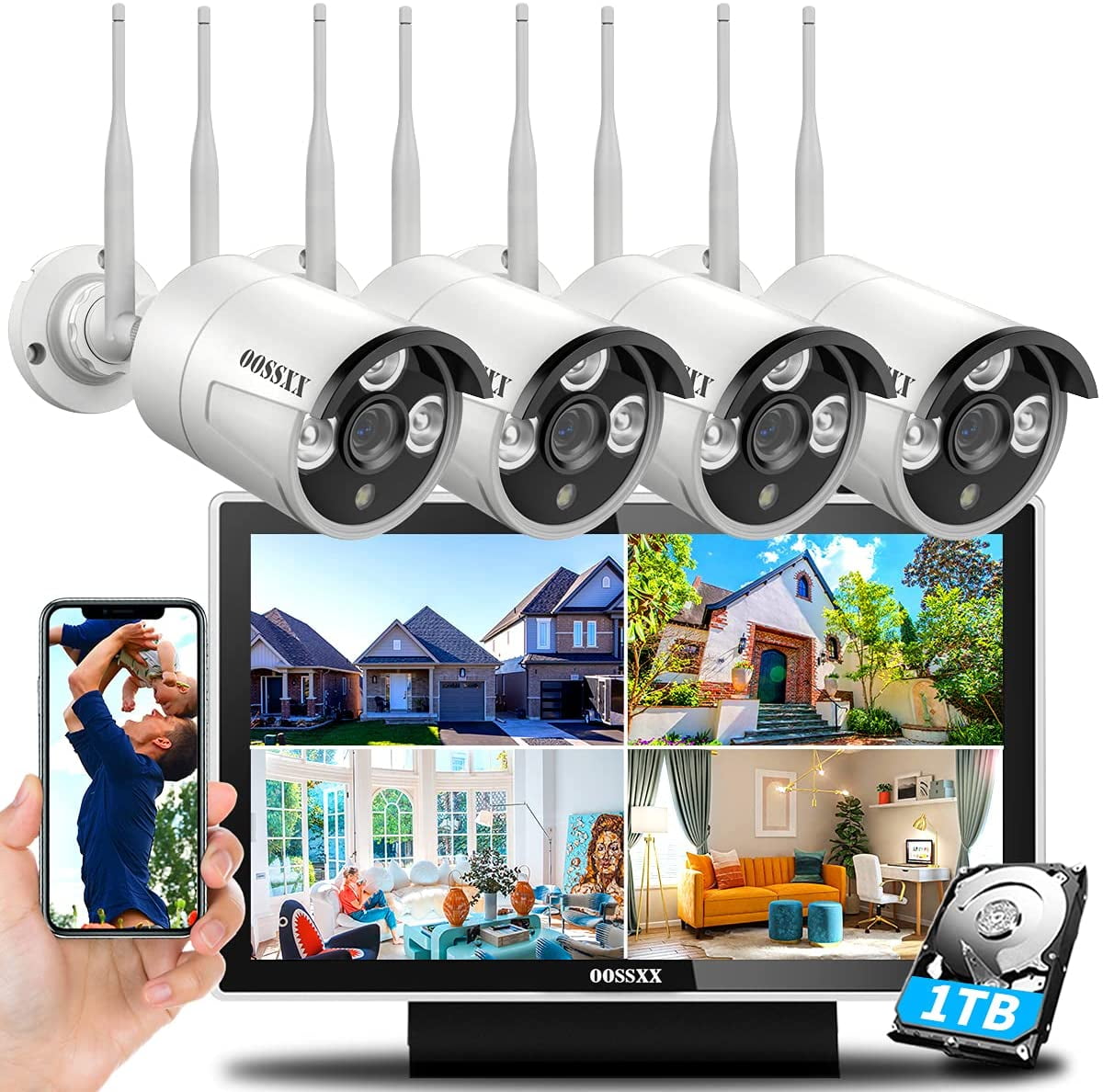
Wired cloud security cameras offer the highest level of home monitoring reliability by providing continuous power and stable data transmission, eliminating the "sleep" cycles and latency issues common in battery-operated units. In 2026, the industry leaders for consistent performance and cloud integration are the Google Nest Cam (Wired), Ring Stick Up Cam Elite, Arlo Pro 5S, Reolink RLC-811A, and Eufy Outdoor Cam E220, each balancing advanced AI detection with robust off-site storage.
The Engineering Advantage of Wired Cloud Monitoring
When evaluating home security, the distinction between "wireless" and "wired" often refers to two different things: the power source and the data connection. For the purpose of 2026 standards, a truly reliable system utilizes a permanent power connection (either via a DC plug or Power over Ethernet) to ensure the camera never goes offline due to a drained battery.
Battery-powered cameras rely on Passive Infrared (PIR) sensors to "wake up" the camera when motion is detected. This process inherently introduces a delay of one to three seconds, often causing the camera to miss the beginning of an event. Wired cameras, by contrast, are always active. They utilize a constant stream of video data, allowing for "pre-roll" features where the cloud recording actually begins several seconds before the motion is triggered. This ensures that a package thief's approach or a vehicle's entry is captured in its entirety.
Furthermore, cloud storage remains the gold standard for security because it protects footage from physical tampering. If a thief steals or destroys the camera, local SD card footage is lost. A wired cloud system ensures that the moment data is captured, it is encrypted and transmitted to a secure remote server, providing an immutable record of events.
1. Google Nest Cam (Wired, 2nd Gen) – The Intelligent Ecosystem Pick
The Google Nest Cam remains a top contender in 2026 due to its sophisticated on-device processing and seamless integration with the Google Home ecosystem. Unlike many competitors that offload AI analysis to the cloud, the Nest Cam utilizes a custom-designed TPU (Tensor Processing Unit) to identify people, animals, vehicles, and packages locally.
Technical Performance
The Nest Cam (Wired) records in 1080p HDR, which may seem lower than 4K competitors, but Google’s focus is on bit-rate efficiency and dynamic range. The HDR ensures that details are not lost in high-contrast situations, such as a person standing in front of a bright sunset or under a porch light.
Cloud Integration: Nest Aware
The primary reason this camera leads for cloud reliability is the Nest Aware subscription. Google offers a flat-fee model that covers all cameras in a single home, which is more cost-effective for multi-camera setups. The 2026 iteration of Nest Aware provides 60 days of event video history, while the Nest Aware Plus tier offers 10 days of 24/7 continuous video recording (CVR). This CVR capability is only possible because the camera is wired, providing a complete, gapless history of the monitored area.
2. Ring Stick Up Cam Elite – The Power over Ethernet (PoE) Standard
For homeowners who want the absolute peak of connection reliability, the Ring Stick Up Cam Elite is the specialized choice. While most wired cameras use Wi-Fi for data and a plug for power, the Elite model uses Power over Ethernet (PoE).
The PoE Benefit
PoE allows a single Cat6 cable to provide both high-speed internet and electrical power. This eliminates Wi-Fi dead zones and interference from other household devices. In 2026, as home networks become increasingly crowded with IoT devices, the dedicated physical line of the Stick Up Cam Elite ensures that the 1080p video stream never stutters or drops resolution.
Ring Protect and Advanced Pre-Roll
Ring’s cloud platform, Ring Protect, is highly mature. The "Elite" hardware supports Advanced Pre-Roll, which uses the constant power supply to keep a small cache of video constantly running. When motion is detected, the camera attaches the previous six seconds of full-color video to the beginning of the event notification. This provides critical context that battery cameras simply cannot match.
3. Arlo Pro 5S – High-Resolution 2K Precision
The Arlo Pro 5S (when used with the permanent Outdoor Charging Cable) bridges the gap between consumer-friendly design and professional-grade resolution. While it can be used with a battery, it is only in its wired configuration that it unlocks its full potential for reliable monitoring.
Visual Clarity and Dual-Band Wi-Fi
The Arlo Pro 5S records in 2K resolution with HDR. This extra pixel density is vital for identifying license plates or facial features at a distance. To support this higher bandwidth, Arlo utilizes dual-band Wi-Fi (2.4GHz and 5GHz). In the 2026 landscape, the 5GHz support is essential for avoiding the congested 2.4GHz spectrum used by older smart home devices, leading to faster cloud uploads and less latency during live viewing.
Security Features
Arlo’s cloud platform, Arlo Secure, includes advanced object detection that distinguishes between a swaying branch and a person. It also features a built-in siren and integrated spotlight that can be triggered automatically. When wired, the spotlight can maintain higher brightness levels for longer durations, significantly improving the quality of color night vision recordings stored in the cloud.
4. Reolink RLC-811A – The Prosumer 4K Choice
The Reolink RLC-811A is a powerhouse for users who prioritize raw technical specifications and want to avoid heavy monthly subscription fees while still maintaining cloud backup options. It is a PoE camera capable of 4K UHD resolution at 25 frames per second.
Optical Zoom and AI
One of the RLC-811A's standout features is its 5X optical zoom. Unlike digital zoom, which pixelates the image as you "get closer," optical zoom moves the internal lenses to maintain full 4K clarity. This makes it the best choice for monitoring long driveways or large backyards where a wide-angle lens would lose too much detail.
Cloud Flexibility
While Reolink is famous for its local NVR (Network Video Recorder) capabilities, its cloud service has expanded significantly by 2026. Users can opt to back up critical motion events to the Reolink Cloud. This creates a redundant system: high-resolution 24/7 footage is stored on a local drive, while essential security events are instantly pushed to the cloud for remote access and safety.
5. Eufy Security Outdoor Cam E220 – The Balanced All-Rounder
Eufy has carved out a niche by offering "no-monthly-fee" local storage, but their Wired Outdoor Cam E220 (formerly known as the Solo OutdoorCam) is also a highly effective cloud-connected device when paired with their cloud subscription service.
Hardware Features
The E220 offers 2K resolution and an f/1.6 aperture lens. A wider aperture allows more light to hit the sensor, which is the most critical factor for nighttime reliability. Even in low-light conditions, the camera can often produce clear images without even needing its integrated spotlight.
Reliability Through Constant Power
By using a dedicated 20-foot USB power cable, the E220 avoids the "cooldown" periods found on Eufy’s battery models. It supports 24/7 recording to a local microSD card while simultaneously uploading motion-triggered events to the Eufy Cloud. This dual-path storage strategy is a best practice for 2026, ensuring that even if the local Wi-Fi is sabotaged, the camera’s internal buffer can attempt to upload footage once the connection is restored.
Comparative Specifications Table
The following table summarizes the key technical differences between these five leading wired cloud cameras as of 2026.
| Feature | Google Nest Cam (Wired) | Ring Stick Up Cam Elite | Arlo Pro 5S (Wired) | Reolink RLC-811A | Eufy Outdoor Cam E220 |
|---|---|---|---|---|---|
| Max Resolution | 1080p HDR | 1080p | 2K HDR | 4K UHD | 2K |
| Power Source | AC Plug | PoE or AC Plug | AC Plug (Magnetic) | PoE (802.3af) | AC Plug (USB) |
| Field of View | 135° | 150° (Diagonal) | 160° | 105° - 31° (Zoom) | 125° |
| Primary Cloud Tier | Nest Aware | Ring Protect | Arlo Secure | Reolink Cloud | Eufy Cloud |
| Special Feature | On-Device AI TPU | Ethernet Data Link | Dual-Band Wi-Fi | 5X Optical Zoom | f/1.6 Low-Light Lens |
| 24/7 Recording | Yes (With Plus) | No (Event Only) | Yes (Arlo CVR) | Yes (NVR/Cloud) | Yes (Local/Cloud) |
Key Considerations for Choosing a Wired Cloud System
Bandwidth and Upload Speeds
A common mistake when installing wired cloud cameras is failing to account for "upload" bandwidth. While most ISP plans emphasize download speed, cloud cameras rely on the upload pipe. A single 4K camera like the Reolink can consume 4-8 Mbps of upload bandwidth during active streaming. For a home with five cameras, you need a minimum of 30-40 Mbps of consistent upload speed to ensure that all footage reaches the cloud without compression artifacts.
The Role of Artificial Intelligence (AI)
In 2026, a "reliable" camera is one that doesn't cry wolf. Cheap cameras use simple pixel-change detection, which triggers a cloud upload every time a shadow moves or it rains. This wastes bandwidth and creates notification fatigue. Look for cameras with "Computer Vision" or "Edge AI." These systems analyze the shapes of objects before triggering an alert. Google and Arlo lead the market in "Package Detection," which can specifically notify you when a box is left—and more importantly, when a box is removed—from your doorstep.
Privacy and Encryption
Cloud storage implies that your data lives on someone else's server. To ensure reliability includes privacy, check for End-to-End Encryption (E2EE). This technology ensures that only your authorized mobile device or computer has the "key" to decrypt and view the footage. Even if the cloud provider's servers were compromised, the raw video files would be unreadable to unauthorized parties.
Night Vision Technologies
Reliable monitoring doesn't stop when the sun goes down. There are two primary types of night vision in 2026:
- Infrared (IR): The camera uses IR LEDs to illuminate the scene. The result is a black-and-white image. This is discreet and has a long range.
- Color Night Vision: The camera uses a high-sensitivity sensor and a built-in white spotlight to record in color. This is better for identifying the color of a getaway car or a suspect's clothing, but it makes the camera's presence very obvious.
Installation Best Practices for Wired Cameras
To maximize the reliability of your wired cloud system, follow these professional installation steps:
- Cable Protection: If you are running a power cable outside, use conduit or tuck the wire behind the siding. Exposed wires can be cut by intruders, instantly neutralizing your "wired" advantage.
- UPS Backup: Connect your router, modem, and camera power injectors to a Uninterruptible Power Supply (UPS). This ensures that if an intruder cuts your home's main power lines, the cameras and internet will stay online for an additional 30-60 minutes—enough time to upload the event to the cloud.
- Strategic Mounting Height: Mount cameras between 8 and 10 feet. This is high enough to be out of reach of a person but low enough to capture clear facial features. Mounting a camera too high (e.g., on the second-story eaves) results in "bird's eye" views where only the tops of heads are visible.
- Lighting Complement: While modern cameras have great night vision, adding a motion-activated floodlight near the camera will significantly improve the clarity of the cloud-stored footage.
Frequently Asked Questions
Do wired cloud cameras work if the internet goes out?
Most wired cloud cameras will continue to function but cannot upload to the cloud during an outage. However, models like the Reolink RLC-811A and Eufy Outdoor Cam E220 have local microSD slots that act as a "buffer." They record to the card during the outage and, depending on the software, may sync or provide the local footage once the connection is restored.
Is PoE better than a standard wall plug?
Yes, for maximum reliability. Power over Ethernet (PoE) provides a more stable data connection than Wi-Fi and is less susceptible to signal jamming or interference. However, PoE requires a specialized router (PoE Switch) or an injector, making the initial setup more complex than a standard plug-in camera.
How much do cloud subscriptions typically cost in 2026?
Subscription costs have stabilized into two formats. Single-camera plans typically range from $3 to $5 per month. "Unlimited" home plans, which cover all cameras at a single location, generally cost between $10 and $15 per month. These plans often include extra features like professional monitoring alerts or extended warranties.
Can I use these cameras without a subscription?
Yes, but you will lose the "cloud" aspect of the "wired cloud camera." Without a subscription, most of these cameras (except Reolink and Eufy) will only provide a live view and basic motion notifications. You will not have access to recorded footage of an event after it has happened unless you pay for a storage plan or use a local recording alternative.
Does 4K resolution make a big difference for home monitoring?
In a security context, resolution is about "digital zoom headroom." On a 1080p image, zooming in 4X results in a blurry mess. On a 4K image, a 4X zoom still leaves you with a 1080p-equivalent crop, which is often the difference between seeing a "blurry person" and seeing a "person with a specific tattoo or logo on their shirt."
Final Recommendation for Homeowners
For the average homeowner seeking the best balance of AI intelligence and ease of use, the Google Nest Cam (Wired) is the most reliable choice, particularly when paired with Nest Aware Plus for 24/7 cloud recording. If you have the technical ability to run Ethernet cables through your walls, the Ring Stick Up Cam Elite offers a superior, interference-free connection that is unmatched by Wi-Fi alternatives. Regardless of the model you choose, ensuring a permanent power source and a robust cloud subscription is the only way to guarantee that your home monitoring remains active and your footage remains safe from physical theft.