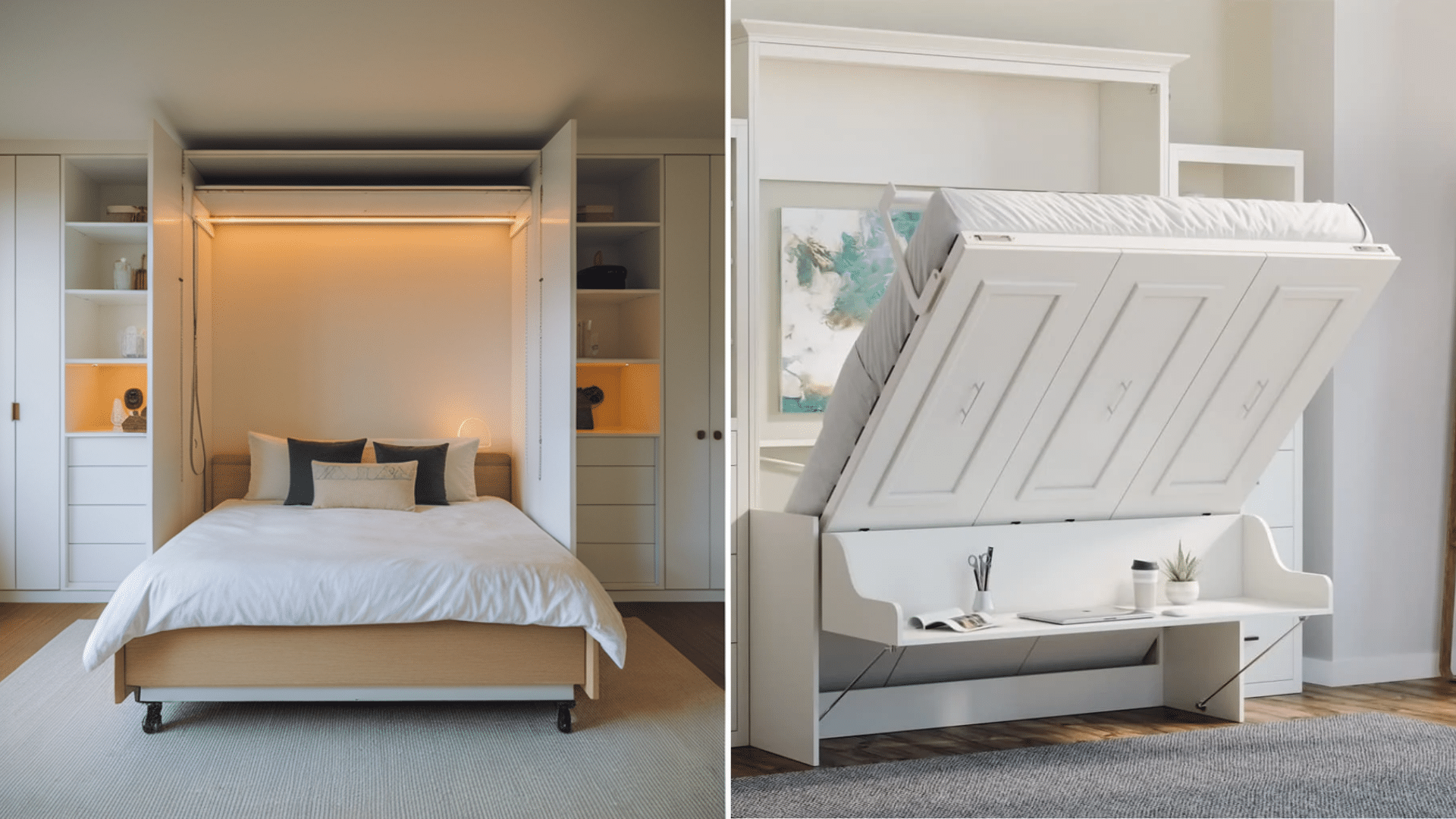
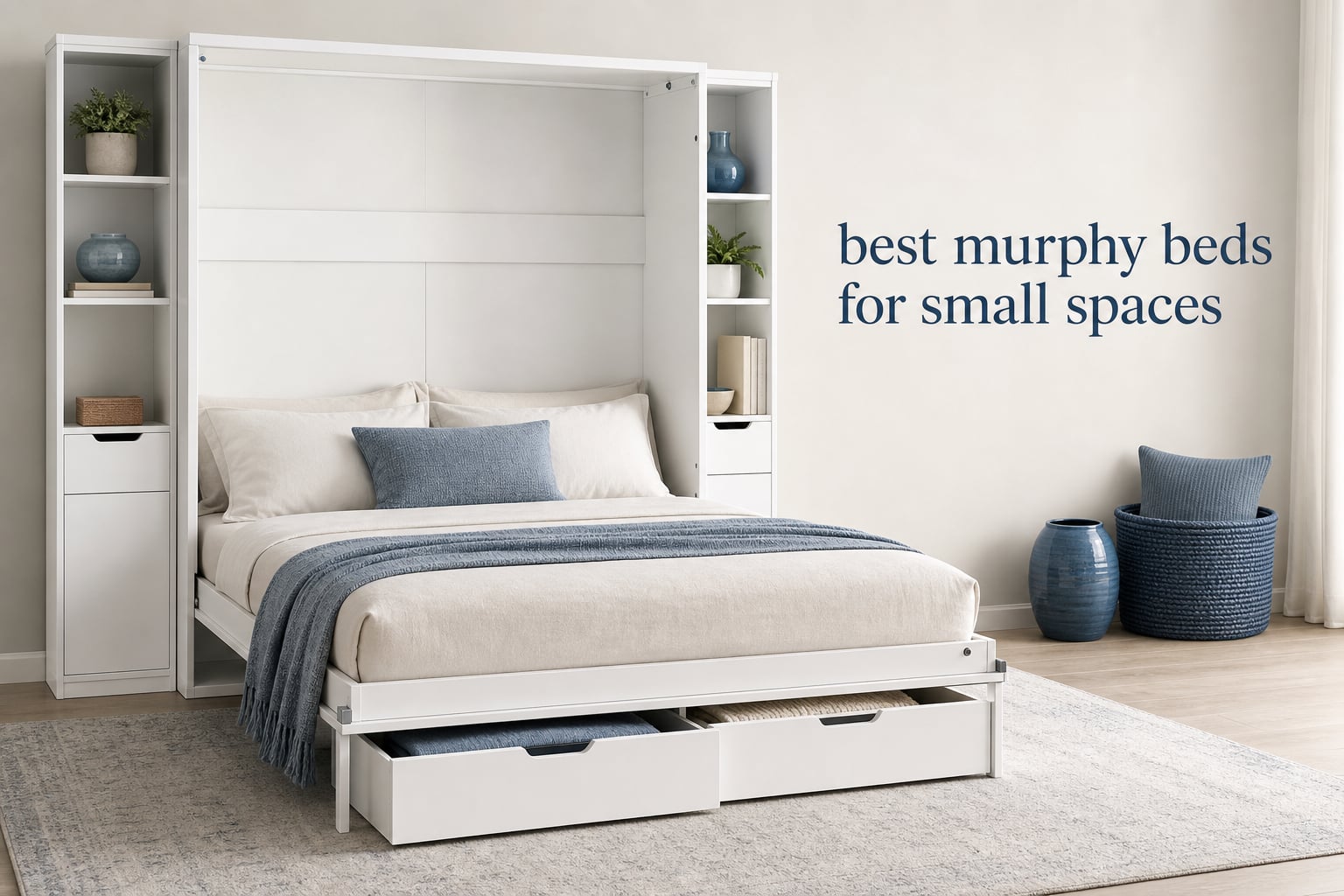
Finding the right Murphy bed requires balancing available floor space, installation requirements, frequency of use, and integration with your room's existing decor. The top-rated options on the market span horizontal configurations for low ceilings, multipurpose cabinet beds that require no wall mounting, classic vertical wall beds, desk-bed hybrids for home offices, and heavy-duty mechanisms engineered for daily sleeping.
Maximizing square footage without sacrificing sleeping comfort is a universal challenge in modern interior design and small-space living. Whether you are outfitting a studio apartment, a multipurpose guest room, a home office, or a vacation rental, choosing the right wall bed or cabinet bed ensures that your room remains functional by day and comfortable by night. The market offers a wide variety of configurations, from traditional vertical models that demand full wall anchoring to freestanding cabinet beds that roll away and conceal their mattresses inside a credenza-style enclosure.
Evaluating these multi-functional furniture pieces requires a close look at mechanical pistons, wood construction quality, mattress thickness compatibility, and floor clearance. By examining the five best-rated Murphy beds tailored to distinct spatial requirements, you can identify the exact model that aligns with your architectural constraints, budget, and design aesthetic.
Understanding Murphy Bed Types and Spatial Requirements
Before selecting a specific model, it is vital to understand the foundational categories of wall beds and how they interact with room dimensions. Unlike traditional bed frames, Murphy beds rely on pivoting hardware, gas pistons, or tension springs to fold upward into a cabinet or recessed wall cavity. This movement changes the dynamic clearance requirements of the room.
Vertical vs. Horizontal Orientation
The primary architectural distinction lies in how the bed folds. Vertical Murphy beds fold out head-first into the room. They require high ceilings—typically a minimum of 80 to 85 inches depending on the frame height—and substantial horizontal floor clearance when extended. However, they occupy less wall width, making them ideal for narrow rooms with high ceilings.
Horizontal Murphy beds, conversely, fold out sideways from the wall. They are purpose-built for rooms with low ceilings, sloped attic walls, or tight floor spaces where a full vertical extension would block a doorway or window. While they demand more linear wall space, their projection into the room is significantly shorter, allowing them to fit comfortably beneath windows or alongside low furniture.
Wall-Mounted vs. Freestanding Cabinet Beds
Traditional Murphy beds require permanent attachment to wall studs to prevent tipping when lowered. This structural requirement makes them permanent fixtures, which can complicate rentals or drywall configurations.
Freestanding cabinet beds—often referred to as chest beds or fold-out cabinet beds—solve this problem. They fold down into a self-contained, heavy wooden console or credenza that sits flat on the floor without anchoring. This makes them an exceptional choice for historic homes, apartments with strict lease rules, or rooms where wall stud alignment is impractical.
1. Best Overall Vertical Wall Bed: The Bestar Pur Collection Full or Queen Wall Bed
For homeowners seeking a classic, high-performance vertical Murphy bed that anchors securely to the wall while offering a clean, modern aesthetic, the Bestar Pur Collection stands out as the premier choice. Engineered from high-density commercial-grade particle board compliant with TSCA Title VI, this unit is built for durability and frequent deployment.
Mechanism and Operation
The Pur Collection utilizes a dual piston system designed to facilitate smooth, balanced lifting and lowering. When properly adjusted, the piston mechanism bears the majority of the mattress weight, allowing a single user to transition the bed effortlessly. Safety latches ensure the bed remains securely closed within the cabinet when not in use.
Spatial and Architectural Demands
- Ceiling Height Requirement: Minimum 83 inches for the Queen size model.
- Floor Clearance: Approximately 85 to 89 inches of unobstructed floor space extending into the room when fully opened.
- Wall Construction: Must be anchored to wood studs or masonry. Metal studs require specialized toggle bolts and professional verification.
Pros and Cons
- Pros: Exceptional build quality; piston system reduces lifting effort; compatible with standard mattresses up to 12 inches thick (excluding box spring); wide variety of matching modular storage add-ons like bookcases and wardrobe units.
- Cons: Assembly is complex and time-consuming, typically requiring two people and several hours; requires permanent wall anchoring, making relocation difficult.
2. Best for Low Ceilings and Tight Rooms: The Wildwood Horizontal Murphy Bed
When vertical height is restricted by architectural features, HVAC ducts, or sloped ceilings, a horizontal configuration is mandatory. The Wildwood Horizontal Murphy Bed delivers robust construction and reliable mechanics tailored specifically to low-ceiling environments.
Design and Mechanism
By orienting the mattress parallel to the wall, this model reduces the room projection distance by several feet compared to vertical alternatives. It features a heavy-duty piston or spring lift mechanism housed inside a durable laminate or solid-wood cabinet. The lower profile makes it exceptionally well-suited for loft apartments, finished basements, and guest rooms with low clearance.
Spatial and Architectural Demands
- Ceiling Height Requirement: Accommodates ceilings as low as 75 to 80 inches.
- Wall Space: Requires greater linear wall width (approximately 85 inches for a Full/Queen) compared to vertical models.
- Floor Clearance: Projects only about 50 to 60 inches into the room when lowered, preserving walking paths around the foot of the bed.
Pros and Cons
- Pros: Fits spaces where vertical beds cannot; easier clearance for overhead ceiling fans or light fixtures; comfortable reach height for operating the latch and handles.
- Cons: Takes up significant horizontal wall space, limiting where you can place adjacent furniture or artwork.
3. Best No-Wall-Mount Option: The Night & Day Cube Cabinet Bed
For renters, homeowners who frequently rearrange furniture, or those hesitant to drill into structural studs, the Night & Day Cube Cabinet Bed represents the gold standard in freestanding versatility. Disguised as a stylish credenza or media console when closed, it transforms into a comfortable guest bed in less than sixty seconds.
Construction and Conversion Process
Built from solid hardwoods and veneers, the Cube features a tri-fold memory foam mattress system that nests inside the cabinet box. To operate, the top of the cabinet flips open or slides forward, and the mattress unfolds across a sturdy wooden platform base. Because the weight rests entirely on the floor through heavy-duty casters and leveling feet, no wall attachment is required.
Spatial and Architectural Demands
- Closed Dimensions: Typically compact, around 64 inches wide, 36 inches high, and 23 inches deep.
- Open Footprint: Extends approximately 74 to 80 inches into the room.
- Ceiling Limitations: None. Because it does not pivot upward into a vertical wall cabinet, it works under any ceiling height.
Pros and Cons
- Pros: Zero wall mounting required; functions as a usable surface (media console or display top) when closed; highly portable; rapid deployment.
- Cons: Uses a specialized tri-fold mattress rather than a standard inner-spring mattress; lower sleeping platform height relative to the floor compared to wall-mounted Murphy beds.
4. Best Dual-Purpose Home Office Solution: The Signature Sleep Orion Desk Bed
Integrating a workspace with a guest bedroom is one of the primary drivers behind the adoption of Murphy beds. The Signature Sleep Orion Desk Bed solves this spatial dilemma by incorporating a functional, full-width desk attached directly to the face of the cabinet.
Operational Mechanics
Unlike traditional desk-beds that require you to clear off the desktop and store items elsewhere before lowering the bed, innovative pivoting mechanisms on advanced models allow the desk surface to remain level and simply glide downward as the bed rotates over it. This means laptops, notebooks, and lamps can often remain undisturbed during the transition, though bulky desktop monitors may still need relocation.
Spatial and Architectural Demands
- Floor Clearance: Requires standard vertical Murphy bed clearance (approx. 85+ inches).
- Electrical Planning: Proximity to wall outlets is critical to ensure desk lighting, computers, and chargers remain accessible and safely managed behind or beside the cabinet.
Pros and Cons
- Pros: Maximizes utility in small home offices or student bedrooms; provides a sturdy full-size workspace by day and a comfortable bed by night.
- Cons: Heavier overall unit weight due to the integrated desk structure; requires careful management of cords and desk accessories to prevent pinching during operation.
5. Best Heavy-Duty Daily Sleeper: The Lori Bed Platform Murphy Bed
If a Murphy bed is intended for nightly use rather than occasional guest hosting, structural sturdiness and mattress ventilation become paramount. The Lori Bed Platform Murphy Bed offers a unique approach by utilizing a manual lift system backed by gas struts, combined with a minimalist, unpretentious wooden frame.
Design Philosophy
Unlike complex mechanical frames enclosed in heavy commercial cabinetry, the Lori Bed relies on a simplified, user-balanced manual lift assisted by heavy-duty gas springs. Its streamlined design eliminates bulky cabinetry, making it lighter, easier to assemble, and visually unobtrusive. The slatted wooden platform ensures optimal airflow beneath the mattress, preventing moisture buildup and extending mattress longevity.
Spatial and Architectural Demands
- Wall Anchoring: Requires secure attachment to wall studs for safe manual operation.
- User Operation: Because it relies on a balanced manual lift rather than spring-loaded or locked piston arms, the user guides the bed down manually (though the gas struts absorb most of the weight).
Pros and Cons
- Pros: Clean, minimalist aesthetic; excellent mattress ventilation via slatted base; highly durable wood construction; more budget-friendly than complex multi-unit wall bed systems.
- Cons: Requires manual guidance during lowering and raising; lacks integrated shelving or side cabinets out of the box.
Comparative Matrix of Top-Rated Murphy Beds
To assist in evaluating your specific room dimensions and lifestyle needs, the following matrix compares the key specifications of each analyzed model:
| Model Name | Primary Type | Wall Mounting Required? | Ceiling Height Min. | Mattress Compatibility | Best Suited For |
|---|---|---|---|---|---|
| Bestar Pur Collection | Vertical Wall Bed | Yes | 83 Inches | Up to 12" Standard | Traditional guest rooms and structured home offices |
| Wildwood Horizontal | Horizontal Wall Bed | Yes | 75–80 Inches | Up to 10" Standard | Low ceilings, attics, and narrow rooms |
| Night & Day Cube | Freestanding Cabinet | No | None (Any) | Included Tri-Fold | Renters, apartments, and multi-use spaces |
| Signature Sleep Orion | Desk-Bed Combo | Yes | 83 Inches | Up to 10" Standard | Small home offices and student study spaces |
| Lori Bed Platform | Manual Lift Wall Bed | Yes | 80 Inches | Up to 10" Standard | Daily nightly sleeping and minimalist decor |
Key Factors to Consider Before Purchase
Investing in a Murphy bed requires careful measurement and realistic assessment of your installation capabilities. Overlooking structural details can lead to installation failures or damaged drywall.
1. Wall Construction and Stud Alignment
Standard residential walls feature wood framing studs spaced 16 inches apart (or sometimes 24 inches). Murphy bed cabinets must be bolted directly into these structural members using heavy-duty lag screws. If your home features metal studs, brick, or plaster over lath, verify that you have the correct toggle bolts, masonry anchors, or reinforcement backing plates before beginning assembly.
2. Mattress Thickness and Weight Limits
Not all mattresses are compatible with Murphy beds. Innerspring mattresses containing thick pillow tops or rigid internal frames often exceed the depth limits of the cabinet closure. Furthermore, exceeding the manufacturer's maximum weight limit can overwhelm the piston or spring mechanisms, causing the bed to drop too quickly or fail to lock securely. Always consult the manufacturer's specified maximum mattress thickness and weight thresholds.
3. Baseboard and Crown Molding Adjustments
Most Murphy bed cabinets are designed with a flush back to rest flat against drywall. However, residential rooms feature baseboards and sometimes crown molding. If the cabinet cannot sit flush against the wall, the top-heavy structure may lean dangerously forward. Many models include customizable toe kicks or baseboard notches that can be trimmed during assembly to ensure a flush, safe fit against the wall.
Frequently Asked Questions
Can I use my existing mattress on a Murphy bed?
Yes, provided it meets the manufacturer's thickness and weight restrictions. Most standard memory foam, hybrid, and light innerspring mattresses up to 10 or 12 inches thick work well. Avoid heavy pillow-top mattresses or traditional box springs, as cabinets cannot accommodate the combined depth.
Are Murphy beds safe from accidental drops?
Modern high-rated Murphy beds feature locking mechanisms, safety latches, and balanced piston or spring systems designed to hold the bed securely in the upright position. They will not fall down on their own if properly installed and locked. However, children should always be supervised around lowered or operating units.
Can I install a Murphy bed myself, or do I need professional help?
Most wall-mounted Murphy beds are sold as flat-pack furniture requiring DIY assembly. Because of the weight of the panels and the necessity of precise wall anchoring, the project typically requires two capable adults and basic tools (drill, level, stud finder) over a period of 4 to 6 hours. If you are uncomfortable anchoring heavy loads to wall studs, hiring a professional handyman is recommended.
Do cabinet beds require assembly?
Freestanding cabinet beds like the Night & Day Cube generally arrive with the main cabinet body pre-assembled or requiring minimal panel connection, though some setup of internal hardware and placement of the mattress is required. They are significantly faster to set up than wall-mounted systems.
Conclusion and Next Action
Selecting the ideal Murphy bed hinges on aligning your room's architectural limits—such as ceiling height, wall stud placement, and floor clearance—with your functional goals. If you need a permanent guest room setup with matching storage, a vertical wall bed like the Bestar Pur is an exceptional choice. For renters or multi-use dens where wall anchoring is impossible, a freestanding cabinet bed provides maximum flexibility without sacrificing sleeping comfort.
Next Action: Take precise tape-measurements of your intended room, noting ceiling height, baseboard depth, and the exact swing path of doors and windows. Verify your wall stud material before purchasing to ensure a secure, safe installation.