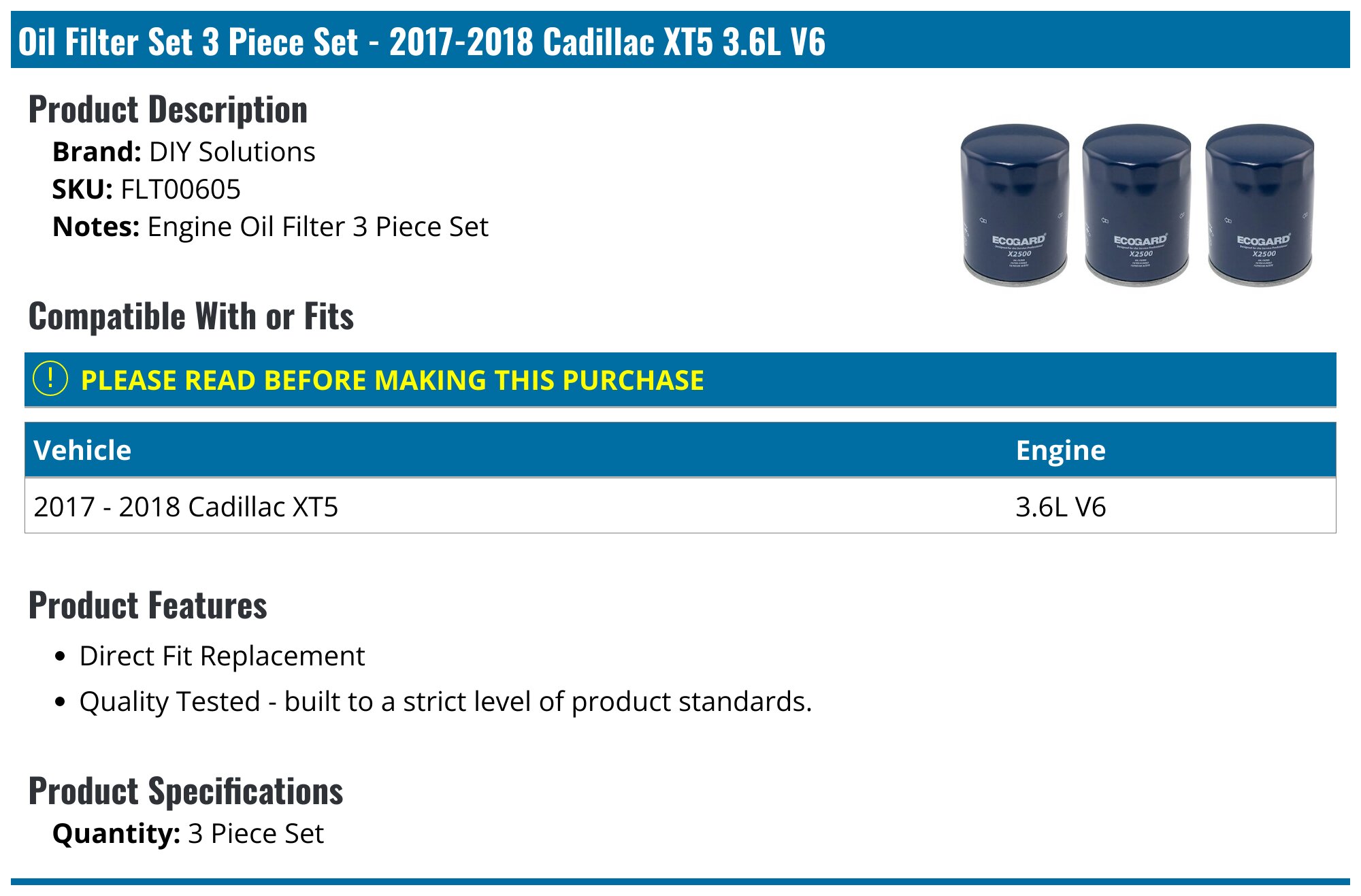
The standard 2017 Cadillac XT5 oil change timeline requires servicing the engine oil every 7,500 miles or 12 months, whichever comes first, under normal driving conditions. If you frequently drive in severe conditions—such as extreme cold, stop-and-go city traffic, or dusty environments—reduce this interval to every 3,000 to 5,000 miles or 6 months.
Understanding the 2017 Cadillac XT5 Maintenance Schedule
Maintaining the powertrain of the 2017 Cadillac XT5 requires adhering strictly to factory service intervals. For the 2017 model year, General Motors equipped the primary North American Cadillac XT5 luxury crossover with a 3.6-liter V6 engine (engine code LGX). This high-compression, direct-injected engine relies on precise fluid pressure and clean lubrication to operate its advanced Variable Valve Timing (VVT) and Active Fuel Management (cylinder deactivation) systems smoothly.
Because motor oil degrades over time due to heat, mechanical shear, and chemical contamination, waiting too long between service appointments risks premature engine wear. General Motors outlines two primary driving schedules for the XT5: Normal Maintenance and Severe Duty Maintenance. Identifying which category matches your daily driving habits is critical for preserving your engine's internal components.
Normal vs. Severe Driving Conditions
Most luxury crossover owners assume their daily routine qualifies as "normal" driving. However, automotive engineers define normal operating conditions quite narrowly.
- Normal Driving Conditions: Long-distance highway travel at consistent speeds, driving in moderate ambient temperatures, carrying light passenger loads, and operating on paved, non-dusty roads. If your commute consists primarily of steady highway miles in mild climates, your vehicle operates under normal parameters.
- Severe Driving Conditions: Driving short distances (under 5 miles in ambient weather, or under 10 miles in freezing temperatures) where the engine fails to reach full operating temperature; frequent idling in heavy traffic; operating in temperatures above 90°F (32°C) or below 32°F (0°C); driving on unpaved or dusty roads; or towing a trailer.
If more than 50% of your driving falls under any severe condition, General Motors recommends adhering to the accelerated maintenance timeline to prevent varnish buildup, carbon accumulation, and thermal oil breakdown.
Deciphering the GM Oil Life System (OLS)
The 2017 Cadillac XT5 features an automated Oil Life System (OLS) built into the vehicle’s Driver Information Center (DIC). Rather than relying purely on odometer mileage, the OLS utilizes a software algorithm that calculates oil degradation based on real-time engine telemetry.
- GM Oil Life System (OLS) Inputs:
- Engine Revolutions
- Operating Temps
- Idle Hours
- Vehicle Speed
- OLS Algorithm
- Remaining %
How the Algorithm Calculates Degradation
The algorithm monitors key operational variables:
- Engine Revolutions and Load: Higher engine speeds and heavy acceleration accelerate calculated wear.
- Operating Temperatures: Cold starts and excessive fluid heat degrade oil faster than steady-state operating temperatures (typically 190°F to 220°F).
- Idle Time: Hours spent idling contribute to engine wear without accumulating odometer miles. The OLS factors in engine run hours to ensure city fleet vehicles and severe idlers are alerted promptly.
Understanding OLS Displays and Thresholds
The Oil Life System presents remaining oil life as a percentage from 100% down to 0%:
- 100% to 20%: Normal operational status. No immediate action is needed.
- 15% to 20%: The vehicle display will show a pop-up alert: "Change Engine Oil Soon." Schedule your service appointment promptly upon seeing this message.
- 0%: The oil life is completely exhausted. The vehicle must undergo oil and filter service immediately to prevent accelerated engine damage.
Crucial Limitations of the Oil Life System
While advanced, the Oil Life System is not an optical sensor or fluid level indicator. It cannot measure physical fluid volume or detect low oil levels caused by leaks or engine consumption.
If your engine burns half a quart of oil per 1,000 miles, the OLS might still read 50% remaining life even though the crankcase is dangerously low on fluid. Therefore, checking the physical oil dipstick at least once per month or during every fuel fill-up remains an essential owner responsibility.
Recommended Oil Specifications and Fluid Capacity
Using the exact fluid viscosity and certification specified by General Motors is essential for protecting the 3.6L V6 LGX engine. Modern engines feature tight internal tolerances and oil-actuated hydraulic tensioners that require fluid with specific flow characteristics and shear strength.
| Attribute | Specification |
|---|---|
| Engine Type | 3.6L V6 (LGX) Direct Injection |
| Oil Capacity | 6.0 US Quarts (5.7 Liters) with Filter |
| Viscosity Grade | SAE 5W-30 Full Synthetic |
| Oil Standard | GM dexos1 Approved (Gen 2 or Gen 3) |
| Drain Plug Torque | 18 lb-ft (25 N·m) |
| Filter Part | ACDelco PF64 (or GM OE equivalent) |
Full Synthetic dexos1 Requirements
General Motors mandates the use of dexos1 certified full synthetic motor oil. While earlier vehicles accepted dexos1 Gen 2, current maintenance standards specify dexos1 Gen 3 fluids. This specification features enhanced resistance to oxidation, improved deposit control for direct-injection engines, and increased protection against Low-Speed Pre-Ignition (LSPI).
- Viscosity Grade: SAE 5W-30 is required for all temperature conditions in the 3.6L V6 engine. In extremely cold Arctic environments (below -20°F / -29°C), SAE 0W-30 may be used to improve cold-cranking performance.
- Engine Capacity: The 3.6L V6 engine requires 6.0 US quarts (5.7 liters) of motor oil when replacing the oil filter. Overfilling or underfilling can cause oil aeration, foaming, pressure drop, or severe mechanical damage.
- Oil Filter Specification: The factory-specified oil filter is an ACDelco PF64 (or GM original equipment equivalent). Avoid low-cost aftermarket filters lacking an internal bypass relief valve rated to GM specifications (typically 22 PSI / 150 kPa bypass threshold), as improper relief pressure can starve internal components of oil during cold starts.
Detailed Maintenance Schedule Table
The following timeline details service milestones, recommended mileage intervals, timeframes, and primary service actions for the 2017 Cadillac XT5 under both driving profiles.
| Driving Condition | Mileage Interval | Time Interval | Primary Action Required | Key Operational Factors |
|---|---|---|---|---|
| Normal Service | 7,500 Miles (12,000 km) | 12 Months | Change oil & filter, rotate tires, inspect fluid levels, inspect brakes. | Steady highway driving, moderate climates, light cargo, low idle time. |
| Severe Service | 3,000 to 5,000 Miles (5,000–8,000 km) | 6 Months | Change oil & filter, rotate tires, inspect intake system & air filter. | Short trips (< 5 miles), heavy city stop-and-go, extreme heat/cold, dusty unpaved roads. |
| Heavy Idling / Fleet | 3,000 Miles (5,000 km) or 200 Engine Hours | 6 Months | Change oil & filter, check battery, inspect belts and hoses. | Commercial use, extensive idling in delivery or security roles. |
| Maximum Limit | 7,500 Miles (12,000 km) | 12 Months | Absolute maximum window; service immediately regardless of OLS percentage. | Never exceed 1 year or 7,500 miles on a single oil fill. |
Step-by-Step Guide to Resetting the Oil Life Monitor
After performing an oil change on your 2017 Cadillac XT5, you must manually reset the GM Oil Life System to restore the monitor to 100%. Changing the physical fluid without resetting the monitor will cause false warnings later.
Method 1: Resetting via Steering Wheel DIC Controls (Preferred Method)
Press the ENGINE START/STOP button once without pressing the brake pedal to place the vehicle in Service Mode (accessory power on, engine off).
Use the five-way control pad located on the right side of the steering wheel to navigate the Driver Information Center (DIC) screen on your instrument cluster.
Press the Left Arrow button to access the main menu categories. Select Info and press the center Select/OK button.
Scroll up or down using the steering wheel arrows until you find the Oil Life display screen.
Press and hold the center Select/OK button for several seconds.
A prompt will ask: "Are you sure you want to reset?" Scroll to Yes and press Select/OK.
The display will change to 100% Oil Life, accompanied by an audible beep confirming the reset. Turn the ignition off.
Ignition ON (Engine OFF): Service Mode
Steering Wheel Controls: Select "INFO" Menu
Scroll to "OIL LIFE" Screen
Press & Hold "OK / SELECT" Button
Confirm "YES" when prompted: Screen displays 100%
Method 2: Manual Accelerator Pedal Reset (Alternative Method)
If the DIC screen is unresponsive or frozen, you can use the secondary manual reset procedure:
- Place the ignition in Service Mode (Engine OFF, Start Button held for 5 seconds without touching the brake pedal).
- Within 5 seconds of entering Service Mode, fully press and release the accelerator pedal three times.
- The Oil Life System will reset in the background.
- Turn the ignition off completely, then start the engine to confirm the "Change Engine Oil Soon" light has cleared.
Critical Engine Protection: Why Following the XT5 Timeline Matters
Adhering to the oil change timeline on the 2017 Cadillac XT5 goes far beyond routine vehicle care—it directly prevents expensive, catastrophic mechanical repairs. The 3.6L V6 LGX engine relies on clean, high-grade motor oil to lubricate key internal systems.
1. Variable Valve Timing (VVT) and Actuators
The 3.6L V6 utilizes fluid-actuated dynamic camshaft phasers. These hydraulic actuators rely on oil pressure delivered through small fluid passages to adjust valve timing instantly.
When engine oil degrades, thermal breakdown forms sludge and carbon varnish. These deposits clog the hydraulic passages and solenoid screens, causing engine codes (such as P0010, P0011, or P0014), rough idling, severe loss of fuel economy, and valve timing failure.
2. Timing Chain Wear and Stretch
General Motors V6 engine families are known for sensitive timing chain assemblies. Engine oil lubricates the primary and secondary timing chains and pressurized chain tensioners.
When oil breaks down or runs low, friction accelerates wear on the chain pins and sprockets. Over thousands of miles, this causes mechanical chain stretch, leading to engine misfires, erratic timing, and multi-thousand-dollar engine repair bills.
- Impacts of Degraded Motor Oil:
- Degraded Oil / Varnish:
- Clogged Hydraulic Passages:
- VVT Failure
- Clogged Hydraulic Passages:
- Contaminated Fluid:
- Increased Pin Friction:
- Chain Stretch
- Increased Pin Friction:
- Fuel Dilution:
- Reduced Film Thickness:
- Bearing Wear
- Reduced Film Thickness:
- Degraded Oil / Varnish:
3. Direct Injection Fuel Dilution
The 3.6L LGX engine sprays fuel directly into the combustion chamber under immense pressure. Over time, unburnt fuel vapor passes by the piston rings into the oil pan—a phenomenon known as fuel dilution.
Diluted oil loses viscosity, reducing its load-bearing capability and exposing rod bearings and main bearings to metal-on-metal contact. Regular oil changes flush out fuel contaminants before they damage internal engine bearings.
DIY vs. Professional Cadillac Service Considerations
When planning your 2017 Cadillac XT5 maintenance schedule, you can choose between performing the service yourself or taking the vehicle to an authorized dealership or independent mechanic.
Cost Breakdown Comparison
- DIY Service: Expect to pay $45 to $70 for 6 quarts of dexos1 Gen 3 synthetic 5W-30 oil and an OEM ACDelco PF64 filter. You will need a standard drain pan, a 15mm socket wrench for the drain plug, an oil filter wrench, safety stands, and ramps.
- Independent Repair Shop: A certified independent repair shop typically charges $85 to $120 for a full synthetic oil service, including environmental disposal fees.
- Cadillac Dealership: Authorized service departments generally charge $120 to $180. This cost includes genuine GM parts, a factory-trained technician, dedicated vehicle software checks, and a comprehensive multi-point inspection.
Essential Multi-Point Inspection Items
Every time the oil is changed, complete the following maintenance inspections:
- Tire Rotation: Front-to-rear cross rotation keeps tread wear even across all four tires, which is essential for preserving the vehicle's All-Wheel Drive (AWD) transfer case and rear drive module.
- Fluid Level Checks: Top off windshield washer fluid, test engine coolant strength, and check brake fluid for moisture contamination.
- Engine & Cabin Air Filters: Inspect the engine air filter every 15,000 miles and replace the cabin air filter every 22,500 miles.
- Brake System Inspection: Inspect front and rear brake pads, rotors, caliper slide pins, and brake lines for signs of fluid leaks or uneven wear.
Frequently Asked Questions
Can I use conventional or synthetic blend oil in my 2017 Cadillac XT5?
No. General Motors mandates the use of dexos1 certified full synthetic oil (specifically 5W-30) for the 2017 Cadillac XT5 3.6L V6 engine. Using non-synthetic or non-dexos approved conventional oil will invalidate fluid warranties, accelerate timing chain wear, lead to sludge formation, and potentially cause Low-Speed Pre-Ignition (LSPI) damage.
How far can I drive after the "Change Engine Oil Soon" message appears?
You should schedule service as soon as possible and avoid driving more than 500 miles after the alert triggers. The "Change Engine Oil Soon" message displays when remaining oil life drops between 15% and 20%. Continuing to drive until the monitor reaches 0% exposes internal components to thermal degradation and friction wear.
Why does my 2017 Cadillac XT5 burn oil between scheduled service intervals?
Direct-injected engines like the 3.6L LGX naturally consume small quantities of oil between maintenance intervals due to high cylinder pressures and crankcase ventilation design. Consuming up to 1 quart per 2,000 to 3,000 miles can fall within standard manufacturer tolerances. Checking your dipstick monthly ensures the fluid level remains safe regardless of the Oil Life System display.
What happens if I forget to reset the Oil Life System after changing the oil?
If you skip resetting the monitor, the vehicle will continue to calculate oil breakdown based on your previous service cycle. The system will trigger the "Change Engine Oil Soon" warning prematurely, even though you have fresh oil in the engine. You can safely reset the monitor at any point after verifying new oil and a fresh filter were installed.
Should tires be rotated on the same timeline as oil changes?
Yes. General Motors recommends rotating your tires every 7,500 miles, matching the normal oil change interval. Performing both services simultaneously helps maintain even tread wear across all four tires, prolongs tire lifespan, and prevents driveline stress on All-Wheel Drive (AWD) models.
Final Recommendations & Next Actions
To keep your 2017 Cadillac XT5 running smoothly, follow these practical maintenance steps:
- Check Your Dipstick Monthly: Pull the dipstick on level ground with the engine off to verify proper oil level between changes.
- Service by 15-20% OLS: Schedule your maintenance appointment when the Oil Life display hits 20% to prevent overdue fluid degradation.
- Enforce strict 12-Month / 7,500-Mile Limits: Never exceed one year on a single oil fill, regardless of low odometer mileage, because ambient moisture and fuel blow-by degrade stagnant oil over time.
- Insist on dexos1 Gen 3 Synthetic: Confirm your service shop uses SAE 5W-30 dexos1 certified full synthetic fluid and an OEM-quality oil filter like the ACDelco PF64.