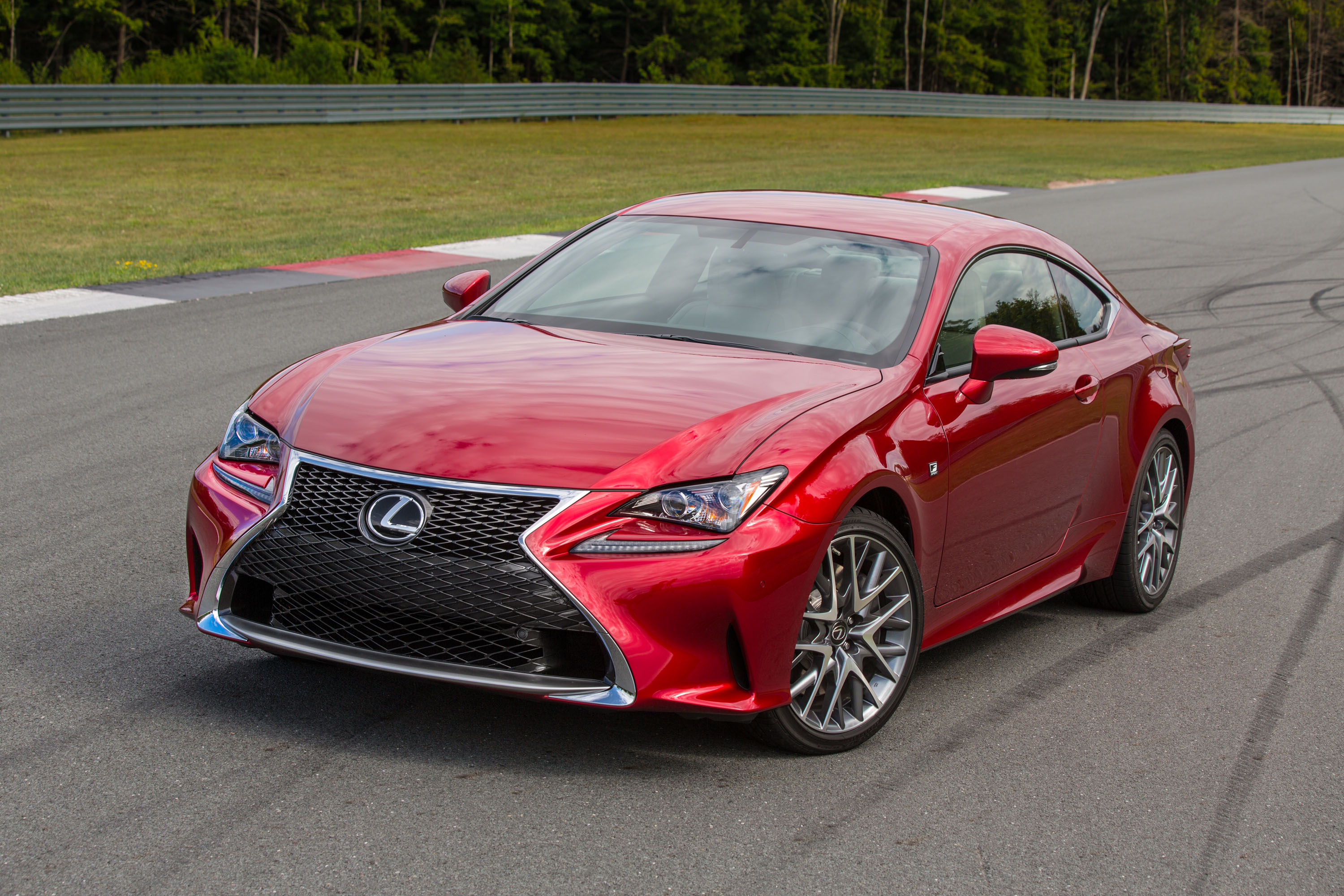
The 2015 Lexus RC 350 features a robust 3.5-liter V6 engine that produces 306 horsepower at 6,400 rpm and 277 lb-ft of torque at 4,800 rpm, delivering a balanced blend of responsive luxury cruising and spirited acceleration for performance-oriented drivers.
Introduction to the 2015 Lexus RC 350
The introduction of the Lexus RC lineup for the 2015 model year marked a significant milestone for the luxury Japanese marque. For years, Lexus had built a reputation around comfortable sedans, refined crossovers, and the ultra-exclusive LFA supercar. The RC—which stands for "Radical Coupe"—was designed to bridge the massive gap between everyday luxury and exotic performance. At the heart of this two-door luxury sport coupe is a powerplant that enthusiasts and casual buyers alike immediately scrutinize: the naturally aspirated V6 engine. Understanding the 2015 Lexus RC 350 horsepower rating requires looking beyond a single numerical figure. It involves examining how that power is generated, how it transfers to the pavement, and how the vehicle handles the mechanical weight inherent to a luxury platform.
When this car debuted, it entered a fiercely contested segment dominated by German heavyweights like the BMW 435i, the Audi A5, and the Mercedes-Benz C400 coupe. Prospective buyers searching for specifications on this vehicle are typically evaluating whether its output translates into a genuinely engaging driving experience. This comprehensive guide analyzes the performance metrics, mechanical engineering, drivetrain configurations, and real-world dynamics of the 2015 Lexus RC 350, providing a complete picture of what its output means for owners and enthusiasts.
Engine Specifications and Output Mechanics
The core of the RC 350's performance identity lies in its engine bay. The vehicle utilizes a 3.5-liter (3,456 cc) 2GR-FSE V6 engine. This powerplant is a cornerstone of Toyota and Lexus engineering, known for its longevity, smooth power delivery, and sophisticated fuel delivery system.
| Engine Attribute | Technical Specification |
|---|---|
| Displacement | 3.5 Liters (3,456 cc) |
| Configuration | 60-degree V6, Aluminum block/heads |
| Horsepower | 306 hp @ 6,400 rpm |
| Torque | 277 lb-ft @ 4,800 rpm |
| Fuel System | D-4S Direct and Port Injection |
| Valvetrain | Dual VVT-i w/ intelligence |
| Compression Ratio | 11.8:1 |
Achieving 306 horsepower from a naturally aspirated 3.5-liter engine requires precise thermal management, high compression ratios, and advanced valvetrain tuning. The 2GR-FSE utilizes an 11.8:1 compression ratio, which optimizes thermodynamic efficiency. Furthermore, the engine features Toyota’s D-4S system, combining high-pressure direct fuel injection into the combustion chambers with traditional port fuel injectors. This dual-injection strategy allows the engine to adapt instantly to driving conditions, switching between port injection for smooth idling and low-load efficiency, and direct injection for high-rpm power bursts.
The valvetrain utilizes Dual VVT-i (Variable Valve Timing with intelligence) with electronic intake control. This system continuously modulates valve overlap and duration, ensuring that the 277 lb-ft of peak torque is spread broadly across the rev range. While maximum torque is achieved at 4,800 rpm, a substantial portion of that pulling power is available much lower down the tachometer, making highway passing and urban maneuvering effortless without requiring constant downshifts.
Drivetrain Options and Power Delivery
Having 306 horsepower available is only part of the equation; how that power reaches the wheels dictates the actual driving dynamics. The 2015 Lexus RC 350 was offered in two distinct drivetrain configurations: Rear-Wheel Drive (RWD) and All-Wheel Drive (AWD). Each layout employs a different transmission architecture, which slightly alters the vehicle's weight, acceleration characteristics, and overall driving feel.
Rear-Wheel Drive (RWD) Configuration
Models equipped with rear-wheel drive feature an 8-speed Sports Direct Shift (SPDS) automatic transmission with steering-wheel-mounted paddle shifters. This transmission is engineered for rapid gear changes in manual mode, locking up the torque converter in gears two through eight during aggressive driving to mimic the direct feel of a dual-clutch transmission. The RWD variant is slightly lighter than its AWD counterpart, allowing the 306 horsepower to propel the car from zero to 60 miles per hour in approximately 5.8 seconds.
All-Wheel Drive (AWD) Configuration
To cater to drivers in climates prone to snow, heavy rain, or slick road surfaces, Lexus offered an All-Wheel Drive variant. However, due to packaging constraints within the transmission tunnel and front axle assembly, AWD models utilize a traditional 6-speed automatic transmission rather than the 8-speed unit. Under normal driving conditions, the electronically controlled transfer case distributes power with a 30:70 front-to-rear bias to maintain a sporty, rear-drive handling balance. When wheel slip is detected, the system can dynamically shift up to 50 percent of the torque to the front wheels. Because of the added mechanical weight of the AWD system, the zero-to-60 mph time increases slightly to approximately 6.0 seconds, though straight-line stability in adverse weather is significantly improved.
Curb Weight and Power-to-Weight Ratio
When evaluating automotive performance figures, raw horsepower numbers can be misleading if evaluated in isolation. The true determinant of agility and acceleration is the power-to-weight ratio. The 2015 Lexus RC 350 is constructed on a hybrid platform that borrows structural components from the IS sedan, GS sedan, and LS flagship, heavily reinforced to provide exceptional torsional rigidity for a two-door coupe.
This structural rigidity, combined with extensive luxury sound deadening, safety equipment, and comfort features, results in a relatively high curb weight. The RWD model tips the scales at approximately 3,792 pounds, while the AWD model weighs roughly 3,892 pounds. Calculating the power-to-weight ratio reveals:
- RWD Power-to-Weight Ratio: ~0.081 hp per pound (approx. 12.4 lbs/hp)
- AWD Power-to-Weight Ratio: ~0.079 hp per pound (approx. 12.7 lbs/hp)
This places the RC 350 in a grand touring category rather than a dedicated track-day sports car category. While 306 horsepower is ample for effortless cruising and spirited backroad driving, the vehicle's mass dampens initial acceleration compared to lighter forced-induction competitors like the BMW 435i, which benefits from low-end turbo-boosted torque.
Driving Modes and Performance Customization
To extract the most out of the 306 horsepower, the 2015 Lexus RC 350 features a Drive Mode Select system located on the center console. This system allows the driver to alter the vehicle's throttle mapping, transmission shift points, and steering effort in real time.
- Eco Mode: Dampens throttle sensitivity and optimizes climate control operation to maximize fuel economy during long highway commutes.
- Normal Mode: Provides a balanced, linear throttle response and smooth gear shifts suitable for daily driving.
- Sport / Sport+ Modes: Sharpens throttle response, holds gears longer into the rev range, increases steering weight via the electronic power steering system, and—if equipped with the F Sport package—adjusts the Adaptive Variable Suspension (AVS) dampers for flatter cornering dynamics.
For drivers who select the F Sport package, the vehicle also includes an active sound generator (on certain trims) that enhances the acoustic profile of the V6 engine inside the cabin during hard acceleration, complementing the natural exhaust note.
Comparison With Competitors of the Era
To understand how the 2015 Lexus RC 350 horsepower stands up historically, it is helpful to compare it directly against its primary luxury sport coupe rivals from the 2015 model year.
| Vehicle Model | Engine Type | Horsepower | 0-60 mph Time (est.) |
|---|---|---|---|
| 2015 Lexus RC 350 | 3.5L Naturally Aspirated V6 | 306 hp | 5.8 seconds (RWD) |
| 2015 BMW 435i | 3.0L Turbocharged I6 | 300 hp | 5.0 seconds (RWD) |
| 2015 Audi A5 | 2.0L Turbocharged I4 | 220 hp | 6.4 seconds (Quattro) |
| 2015 Mercedes C400 | 3.0L Twin-Turbo V6 | 329 hp | 4.8 seconds (4Matic) |
As demonstrated by the comparison table, the Lexus RC 350 holds its own in peak horsepower against the inline-six BMW 435i and comfortably outperforms the base four-cylinder Audi A5. However, turbocharged engines from BMW and Mercedes-Benz deliver maximum torque at much lower rpm levels, which explains their quicker off-the-line acceleration times despite similar or slightly lower horsepower ratings. The RC 350 requires higher revs to access its peak power, rewarding drivers who enjoy wringing out a naturally aspirated engine.
Real-World Fuel Economy and Efficiency
Balancing 306 horsepower with daily usability involves fuel consumption considerations. According to the United States Environmental Protection Agency (EPA) testing guidelines established for the 2015 model year, the Lexus RC 350 achieves the following efficiency figures:
- RWD Fuel Economy: 19 mpg city / 28 mpg highway / 22 mpg combined
- AWD Fuel Economy: 19 mpg city / 26 mpg highway / 21 mpg combined
These figures reflect typical luxury V6 performance for the mid-2010s. Premium unleaded gasoline (91 octane or higher) is strictly required to prevent engine knocking and ensure that the 11.8:1 compression ratio operates safely without pulling ignition timing, which would otherwise diminish the rated 306 horsepower.
Common Modifications and Aftermarket Tuning Potential
Because the 2GR-FSE engine features direct and port injection along with a high factory compression ratio, extracting significantly more horsepower through traditional aftermarket modifications—such as bolt-on exhausts or cold air intakes—is notoriously challenging.
- Exhaust Systems: Cat-back exhaust systems can improve the acoustic growl of the V6 and marginally reduce backpressure, but horsepower gains are typically limited to 5 to 10 horsepower.
- ECU Tunes: Because the factory engine control unit (ECU) is heavily encrypted, traditional re-flashing yields minimal gains on naturally aspirated Lexus engines compared to turbocharged competitors.
- Supercharger Kits: While aftermarket forced induction kits have been developed by specialty tuners for the 2GR engine platform, they require extensive custom engineering, upgraded fuel systems, and careful transmission management to handle increased torque loads reliably.
Most owners choose to appreciate the factory 306 horsepower for its mechanical reliability, focusing instead on cosmetic enhancements, suspension lowering springs, or wheel and tire upgrades to optimize handling.
Frequently Asked Questions
Is the 2015 Lexus RC 350 considered fast?
The 2015 Lexus RC 350 is moderately fast, capable of accelerating from zero to 60 mph in roughly 5.8 seconds. While its 306 horsepower provides strong passing power on highways and an engaging driving experience, its relatively heavy chassis means it prioritizes smooth grand-touring performance over raw, track-focused acceleration.
Does the 2015 Lexus RC 350 have a turbocharger?
No, the 2015 Lexus RC 350 utilizes a naturally aspirated 3.5-liter V6 engine. It relies on high compression and advanced D-4S direct and port fuel injection to generate its power rather than forced induction, delivering linear power delivery and throttle response.
What is the difference in horsepower between the RC 300 and RC 350?
For the 2015 model year, the RC lineup in North America primarily featured the RC 350 with 306 horsepower, alongside the high-performance RC F V8 model with 467 horsepower. Lower-powered variants like the RC 300 (utilizing a detuned V6 or turbocharged four-cylinder depending on the market and year) were introduced in subsequent model years to offer lower entry price points.
Can the 2015 Lexus RC 350 run on regular gas?
No, Lexus requires premium unleaded gasoline (91 octane or higher) for the RC 350. Using lower-octane fuel can trigger engine knock sensors, causing the computer to retard ignition timing, which results in reduced horsepower, sluggish throttle response, and decreased fuel efficiency.
How reliable is the 3.5-liter V6 engine in the RC 350?
The 2GR-FSE engine family is widely regarded by automotive technicians as one of the most mechanically reliable and durable V6 engines ever produced. With proper routine maintenance—including regular synthetic oil changes and spark plug replacements—these engines frequently exceed 200,000 miles without major internal mechanical failures.
Conclusion and Next Actions
The 2015 Lexus RC 350 delivers a refined, reliable, and mechanically sophisticated driving experience anchored by its 306-horsepower V6 engine. While it may not match the explosive low-end torque of its turbocharged German rivals, its linear power delivery, high-revving character, and bulletproof reliability make it a compelling choice in the used luxury coupe market. If you are inspecting or purchasing a used model, verify service records, confirm that premium fuel has been used consistently, and test-drive both the RWD and AWD variants to determine which drivetrain best suits your local climate and driving preferences.