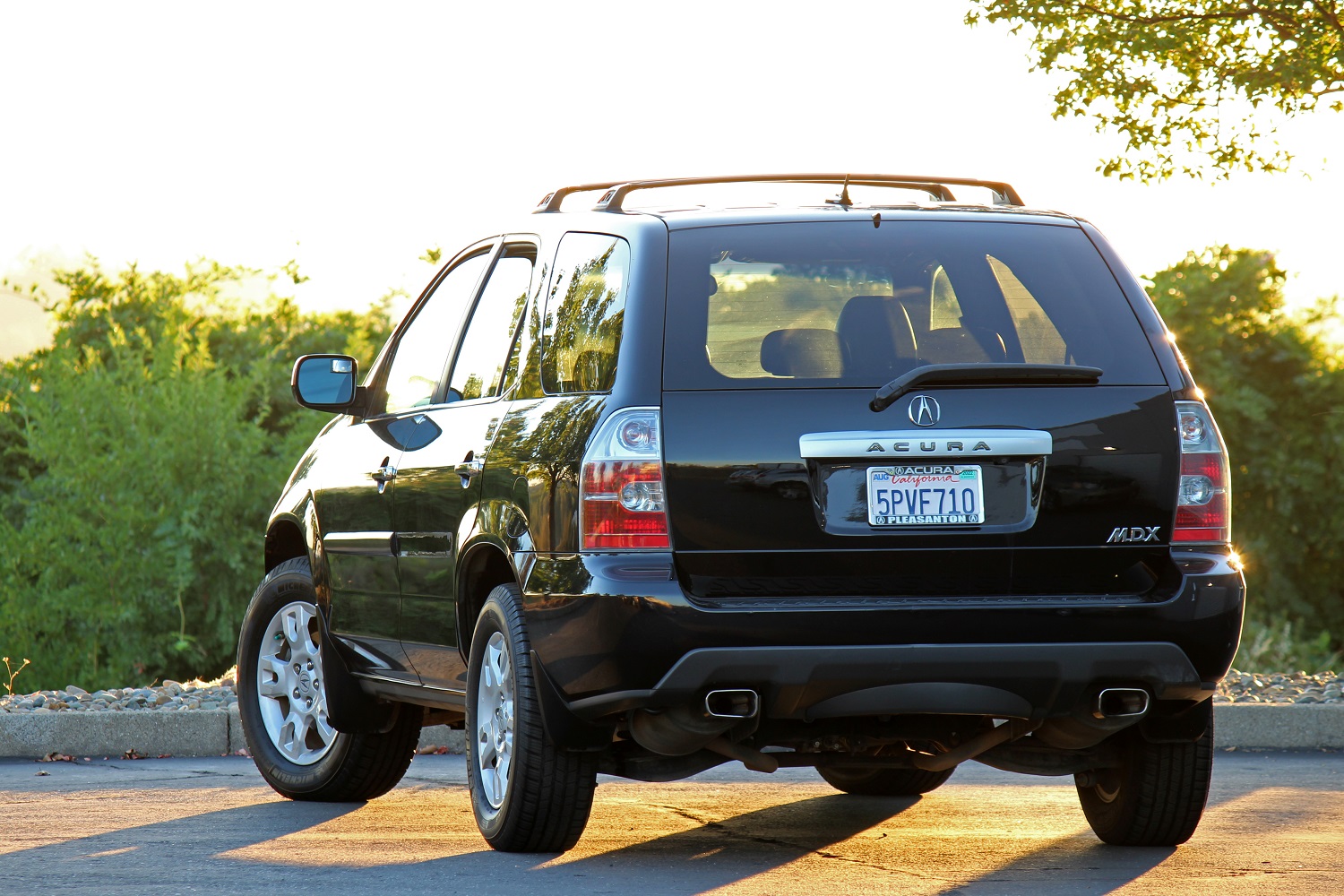
The 2005 Acura MDX delivers an EPA-rated fuel economy of 15 mpg in city driving, 21 mpg on the highway, and a combined average of 17 mpg. As a first-generation midsize luxury crossover SUV, its real-world mileage reflects a robust 3.5-liter V6 engine paired with a 5-speed automatic transmission and Variable Torque Management all-wheel-drive system (VTM-4), balancing heavy-duty utility with early 2000s performance standards.
Evaluating a vehicle that has spent two decades on the road requires looking past window-sticker estimates and examining how actual mileage holds up over time. For prospective buyers, current owners, and automotive enthusiasts, understanding the 2005 Acura MDX mileage profile involves analyzing factory efficiency, long-term odometer durability, driving habits, and maintenance factors that influence fuel consumption and engine lifespan.
Evolution of the First-Generation Acura MDX Powertrain
Introduced for the 2001 model year and refreshed for 2003 through 2006, the first-generation Acura MDX established a strong footprint in the luxury crossover segment. The 2005 model year benefited from mid-cycle powertrain enhancements that increased engine output while maintaining competitive efficiency for its class.
Under the hood lies a 3.5-liter VTEC® (Variable Valve Timing and Lift Electronic Control) V6 engine. For the 2005 model year, this powerplant was rated at 253 horsepower and 250 lb-ft of torque—an increase from earlier years due to a revised exhaust system, a larger throttle body, and electronic throttle control (drive-by-wire). This engine is mated to a 5-speed automatic transmission designed to handle both highway cruising and towing duties.
However, fuel economy standards shifted significantly in 2008 when the EPA updated its testing methodology to reflect real-world driving conditions such as aggressive acceleration, higher speeds, and air conditioning use. Consequently, while the original window sticker for the 2005 model often displayed higher figures (around 17 city / 23 highway under older testing guidelines), the modern EPA retrofitted ratings stand at 15 mpg city, 21 mpg highway, and 17 mpg combined.
Factory Fuel Economy Specifications and Breakdown
Understanding how the 2005 Acura MDX consumes fuel requires analyzing the interplay between its engine, transmission, and standard VTM-4 all-wheel-drive system. Unlike many front-wheel-drive-biased competitors of its era, the MDX features an electronically controlled VTM-4 system that can lock the rear differential for low-traction situations. This permanent mechanical engagement adds weight and drivetrain drag, which directly impacts fuel economy.
| Driving Metric | EPA Rating (Modern Standard) | Real-World Expectation | Primary Efficiency Factors |
|---|---|---|---|
| City Driving | 15 MPG | 13 – 16 MPG | Stop-and-go traffic, vehicle weight (4,384 lbs), idle time |
| Highway Driving | 21 MPG | 19 – 23 MPG | Aerodynamics, 5th-gear overdrive ratio, steady cruising speed |
| Combined Average | 17 MPG | 15 – 18 MPG | Mixed daily commuting, terrain variations, climate control use |
| Cruising Range | ~321 Miles | ~280 – 350 Miles | 19.0-gallon fuel tank capacity |
Achieving the upper limits of these real-world ranges depends heavily on maintenance health and driving environment. Because the vehicle features a 19.0-gallon fuel tank, drivers can generally expect a cruising range of roughly 300 miles between fill-ups under mixed driving conditions before hitting the low-fuel warning light.
Long-Term Odometer Longevity: How Many Miles Can It Last?
When discussing mileage in the context of a 2005 model, fuel consumption is only half the equation. Odometer longevity is a defining characteristic of this vehicle generation. Built on Honda’s J-series engine architecture, the 3.5-liter V6 in the 2005 MDX is widely recognized by mechanics and automotive forums for exceptional mechanical durability.
It is common to find well-maintained 2005 Acura MDX models with 200,000 to 250,000 miles still operating on their original engine and transmission. Some examples exceed 300,000 miles with dedicated upkeep. However, reaching these high milestones is not accidental; it requires strict adherence to specific maintenance intervals.
Critical Maintenance Milestones for High-Mileage MDXs
- Timing Belt and Water Pump (Every 105,000 miles or 7 years): The J35 engine uses an interference timing belt. If this belt snaps, catastrophic engine damage occurs. Replacing the belt, water pump, tensioner, and drive belts is mandatory at this interval.
- Transmission Fluid Flushes (Every 30,000 to 45,000 miles): The 5-speed automatic transmission in the 2005 MDX is its most vulnerable mechanical component. Early iterations of this transmission family experienced premature wear. Frequent drain-and-fill services using genuine Honda ATF DW-1 fluid are vital to preserving shift quality and longevity.
- Valve Adjustments (Every 100,000 miles): Maintaining proper valve clearance ensures optimal engine compression, smooth idling, and prevention of burned exhaust valves.
- VTM-4 Fluid Changes (Every 15,000 to 30,000 miles): The rear differential requires specialized VTM-4 fluid. Neglecting this service leads to binding, whining noises during tight turns, and premature differential failure.
Factors Influencing Real-World Fuel Economy and Performance Drop
Drivers reviewing the 2005 Acura MDX often note discrepancies between historical efficiency ratings and current pump visits. As vehicles age, several mechanical and environmental factors degrade fuel economy beyond factory specifications.
1. Oxygen Sensors and Air-Fuel Ratios
Over time, oxygen (O2) sensors and air-fuel ratio sensors degrade, becoming sluggish in reporting exhaust gas composition to the Powertrain Control Module (PCM). A lazy O2 sensor can cause the engine to run rich, burning excess fuel without throwing a dashboard check-engine light. Replacing worn sensors often restores 1 to 2 mpg in efficiency.
2. Ignition System Wear
Spark plugs with worn gaps and aging ignition coils weaken the combustion spark. In a V6 engine, misfires or incomplete combustion force the driver to apply more throttle to maintain speed, directly tanking fuel economy. The 2005 MDX requires iridium or platinum spark plugs inspected or replaced every 105,000 miles.
3. Drivetrain Drag and Wheel Alignment
With a heavy all-wheel-drive system, any mechanical resistance multiplies fuel loss. Seemingly minor issues such as dragging brake calipers, worn wheel bearings, or incorrect suspension alignment increase rolling resistance. Furthermore, driving on underinflated tires creates excessive sidewall flex, increasing the engine's workload.
4. Air Filtration and Throttle Body Buildup
Carbon buildup on the throttle plate and a restricted engine air filter starve the combustion chambers of clean airflow. Cleaning the throttle bore and idle air control components helps stabilize idle RPM and optimizes the air-fuel mixture.
Comparing the 2005 MDX Mileage to Competitors of Its Era
To contextualize the 2005 Acura MDX mileage profile, it helps to compare it against other midsize luxury SUVs from the same model year. While fuel efficiency across this class was generally low by modern standards, the MDX held a competitive position against V8-powered rivals.
| Vehicle Model | Engine Configuration | EPA Fuel Economy (City / Hwy / Comb) | Fuel Tank Capacity |
|---|---|---|---|
| 2005 Acura MDX | 3.5L V6 (AWD) | 15 / 21 / 17 MPG | 19.0 Gallons |
| 2005 Lexus RX 330 | 3.3L V6 (AWD) | 17 / 23 / 19 MPG | 19.2 Gallons |
| 2005 BMW X5 (3.0i) | 3.0L Inline-6 (AWD) | 16 / 21 / 18 MPG | 24.6 Gallons |
| 2005 Volvo XC90 (T6) | 2.9L Twin-Turbo I6 (AWD) | 14 / 20 / 16 MPG | 21.1 Gallons |
| 2005 Ford Explorer | 4.0L V6 (4WD) | 14 / 19 / 16 MPG | 22.5 Gallons |
As shown in the comparison, the Lexus RX 330 offered slightly better fuel economy due to a smaller displacement engine and a lighter overall platform. However, the MDX traded minor efficiency gains for third-row seating utility and superior cargo capacity, making it a popular choice for families needing passenger versatility.
Common Challenges and Troubleshooting Low MPG
When a 2005 Acura MDX begins delivering significantly worse fuel economy than its baseline 15/21 mpg ratings, systematic troubleshooting can identify the root cause. Owners frequently encounter specific diagnostic trouble codes (DTCs) and mechanical symptoms that correlate with poor efficiency.
- Check Engine Light (CEL) and Emissions Codes: Codes such as P0420 or P0430 indicate catalytic efficiency below threshold. A failing catalytic converter often clogs exhaust flow, choking the engine and causing a severe drop in highway power and fuel economy.
- EGR System Clogging: Exhaust Gas Recirculation (EGR) passages in the intake manifold can carbon up over decades of operation. Cleaning these passages restores smooth EGR function and prevents detonation pinging under load.
- Transmission Slippage: If engine RPMs rise without a corresponding increase in vehicle speed, the 5-speed automatic transmission is slipping. This mechanical failure wastes engine output and requires immediate professional evaluation or transmission rebuild.
Frequently Asked Questions
What kind of gas does a 2005 Acura MDX require?
The factory specification for the 2005 Acura MDX recommends premium unleaded gasoline (91 octane or higher) for optimal performance and horsepower output. While the engine's knock sensor can retard timing to run safely on regular 87 octane fuel, doing so may result in a slight reduction in engine power and a minor drop in fuel efficiency.
Is the 2005 Acura MDX transmission reliable?
The 5-speed automatic transmission in the 2005 model year is an improvement over the highly problematic units found in 2001–2002 models, but it remains a known point of wear. Longevity depends entirely on whether previous owners performed regular fluid changes using genuine Honda fluid every 30,000 miles. Neglected units are prone to premature failure.
Can I improve the fuel economy of a high-mileage 2005 MDX?
Yes. You can recover lost efficiency by replacing worn oxygen sensors, cleaning the mass air flow (MAF) sensor and throttle body, installing fresh spark plugs, ensuring proper wheel alignment, and replacing clogged air and fuel filters. Keeping tires inflated to the manufacturer placard specification also reduces rolling resistance.
How many miles can a 2005 Acura MDX last before major engine work?
With standard preventative maintenance—particularly timely replacement of the timing belt, water pump, and fluids—the 3.5-liter V6 engine routinely surpasses 250,000 miles without requiring internal mechanical rebuilds.
Final Recommendation and Buying Advice
Reviewing the 2005 Acura MDX mileage profile reveals a vehicle that is mechanically durable and versatile, though constrained by the fuel economy limitations of mid-2000s SUV engineering. For buyers considering a used model today, fuel consumption should be weighed against low vehicle purchase costs and high mechanical reliability.
Before purchasing or retaining a high-mileage 2005 MDX, verify the service history for documented timing belt replacements and transmission fluid services. If these baseline maintenance records are present, the vehicle offers dependable utility, safe all-weather all-wheel-drive capability, and a robust engine capable of handling many more miles on the road.