The value of 2 to the power of 10 (written as 2¹⁰) is 1,024. In binary notation, this is represented as 1,000,000,000,000 (a one followed by ten zeros). This specific exponent serves as the fundamental "binary kilo," acting as the baseline for digital storage measurements, memory addressing, and computing architecture.
The Mathematical Foundation of 2^10
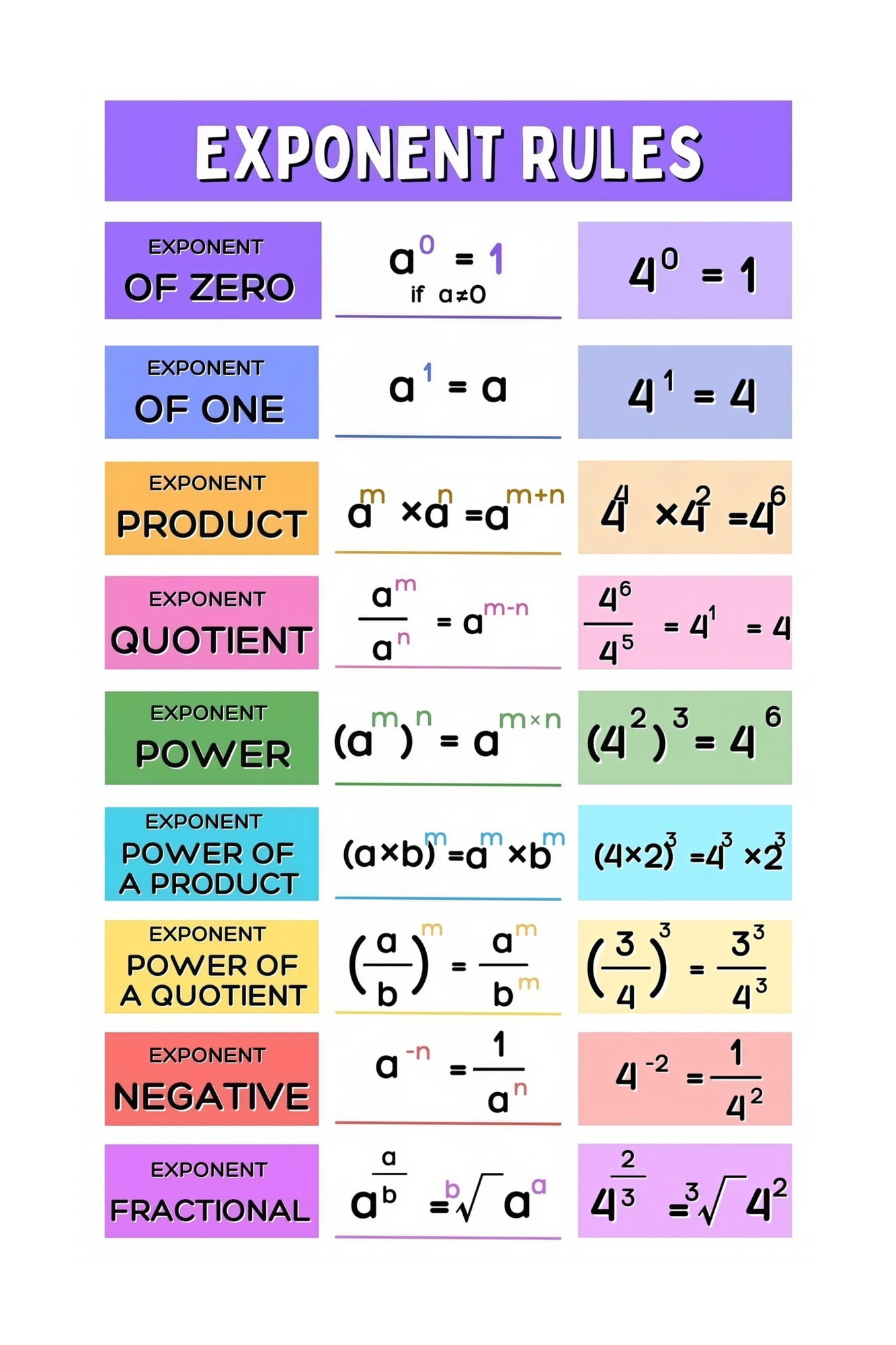
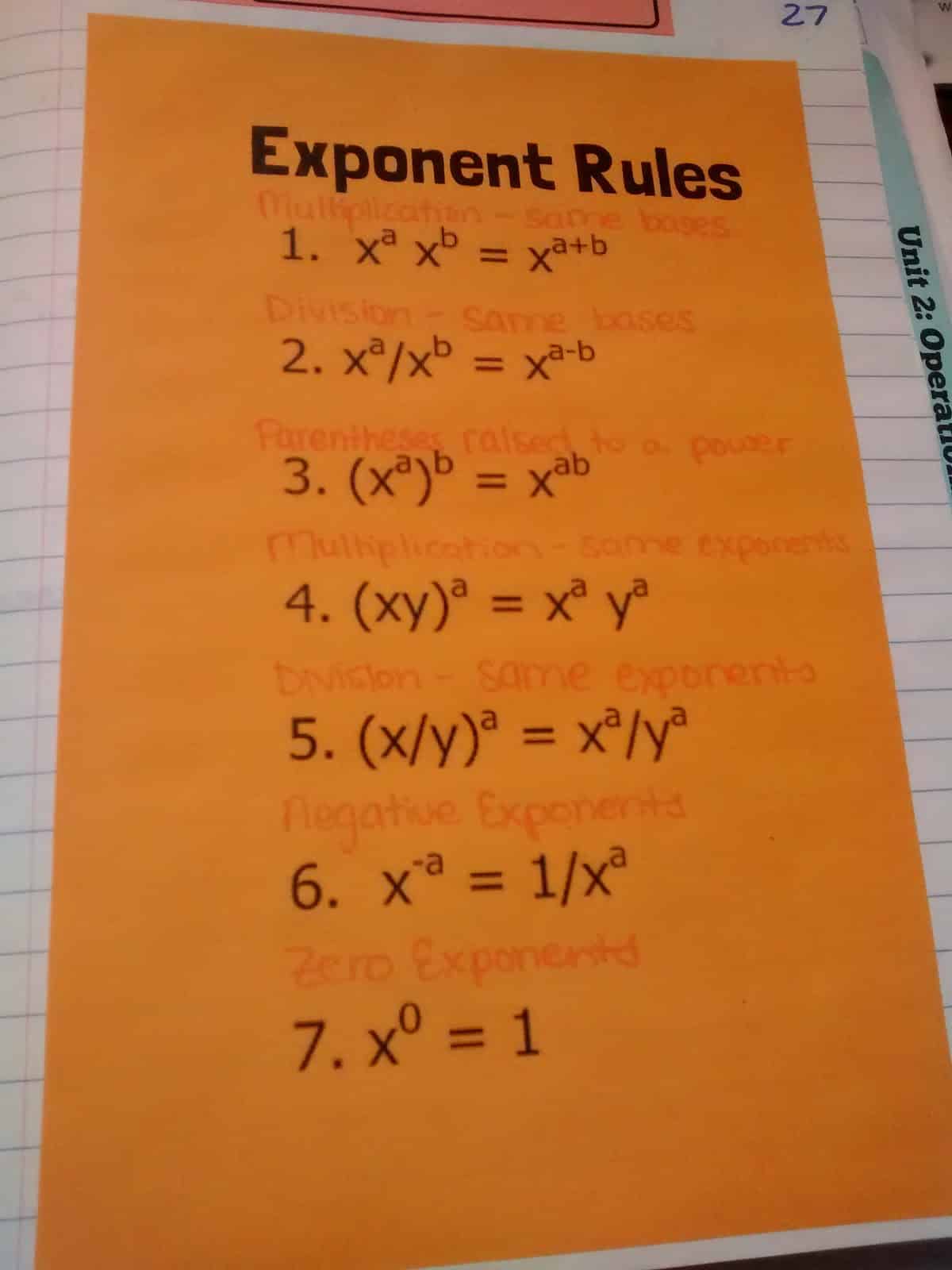
To understand why 2 to the power of 10 is a cornerstone of modern computing, one must first understand the mechanics of exponential growth within a base-2 system. In mathematics, an exponent indicates how many times a base number is multiplied by itself. For 2¹⁰, the calculation is 2 × 2 × 2 × 2 × 2 × 2 × 2 × 2 × 2 × 2.
While base-10 (decimal) is the standard for human counting, computers utilize base-2 (binary) because of the physical properties of transistors. A transistor exists in one of two states: "on" (represented as 1) or "off" (represented as 0). Each additional bit in a binary sequence doubles the number of possible states or values that can be represented.
When we reach the tenth power, the result is 1,024. In the decimal system, we often round numbers to the nearest thousand for convenience. However, in the digital world, 1,024 is the "cleanest" number near 1,000 that fits perfectly into the binary logic of hardware. This proximity to 1,000 is why the prefix "kilo-" was historically adopted for 1,024, leading to decades of both utility and confusion in technical specifications.
Binary Representation and Bitwise Structure
In the binary system, every "place value" represents a power of two, just as every place value in decimal represents a power of ten. Moving from right to left, the positions represent 1, 2, 4, 8, 16, 32, 64, 128, 256, and 512. The eleventh position represents 1,024.
Therefore, the binary string for 2¹⁰ is: 10000000000
This structure reveals several critical properties:
- Bit Depth: A 10-bit unsigned integer can represent 1,024 distinct values, ranging from 0 to 1,023.
- Memory Alignment: Data is almost always handled in blocks that are powers of two. A 1,024-byte block (1 KiB) is a standard unit for memory allocation and disk sectors.
- Efficiency: Computers can calculate powers of two using "bit-shifting." To find the value of 2¹⁰, a processor simply takes the binary value of 1 and shifts it ten places to the left. This is significantly faster than performing traditional multiplication.
The Evolution of Standards: Kilobytes vs. Kibibytes
As of 2026, the distinction between "Kilobytes" (KB) and "Kibibytes" (KiB) is strictly enforced in professional engineering and most modern operating systems, though consumer marketing still overlaps the terms.
Historically, programmers used "kilobyte" to mean 1,024 bytes because it was the closest power of two to 1,000. However, the International Electrotechnical Commission (IEC) and the National Institute of Standards and Technology (NIST) standardized new prefixes to resolve the ambiguity between decimal-based SI units and binary-based units.
- Kilobyte (KB): 10³ = 1,000 bytes. Used primarily in networking speeds (e.g., 100 Mbps) and by storage manufacturers (HDDs, SSDs).
- Kibibyte (KiB): 2¹⁰ = 1,024 bytes. Used for RAM capacity and file sizes in operating systems like Linux and newer versions of macOS.
This 2.4% difference between 1,000 and 1,024 may seem negligible at the "kilo" level, but it compounds significantly as capacities increase. By the time we reach Terabytes (10¹²) versus Tebibytes (2⁴⁰), the discrepancy grows to nearly 10%, which explains why a "1 TB" drive appears as approximately 931 GiB in a Windows environment.
Hardware and Architecture Applications
The reference value of 2¹⁰ appears in almost every layer of computer hardware. Because hardware designers must work within the constraints of physical wiring, the number of "address lines" determines the maximum reachable memory.
Memory Addressing
If a CPU has 10 address lines, it can generate 1,024 unique binary patterns. Each pattern corresponds to a specific location in memory. Therefore, 10 address bits can uniquely identify 1,024 bytes of data. In the early days of microcomputing, such as with the MOS 6502 or early Intel processors, managing memory in 1 KB (2¹⁰) "pages" was a standard method for organizing code and data efficiently.
Data Buffers and Network Packets
In network protocols, 1,024 is often used as a maximum or default size for buffers. When data is transmitted over a network, it is broken into packets. While the Maximum Transmission Unit (MTU) is often 1,500 bytes for Ethernet, internal software buffers are frequently sized at 1,024 (2¹⁰) or 2,048 (2¹¹) bytes to align with the memory architecture of the network interface card (NIC).
Digital Signal Processing (DSP)
In audio and video processing, the Fast Fourier Transform (FFT) is a common algorithm used to analyze frequencies. FFTs require the input size to be a power of two to function optimally. A 1,024-point FFT is a standard reference for analyzing a slice of audio data, providing a balance between frequency resolution and computational speed.
Quick Reference Table: Powers of 2 in Computing
The following table places 2¹⁰ within the context of common binary exponents used in system architecture and programming.
| Exponent (2^n) | Decimal Value | Binary Value | Common Application/Terminology |
|---|---|---|---|
| 2^0 | 1 | 1 | A single bit (On/Off) |
| 2^3 | 8 | 1000 | 8 bits = 1 Byte |
| 2^4 | 16 | 10000 | Hexadecimal base / Half-byte (Nibble) |
| 2^7 | 128 | 10000000 | Standard ASCII character set limit |
| 2^8 | 256 | 100000000 | Colors per RGB channel / 8-bit systems |
| 2^10 | 1,024 | 10000000000 | 1 Kibibyte (KiB) / Memory Paging |
| 2^16 | 65,536 | 1 (16 zeros) | 16-bit registers / Max value of a short integer |
| 2^20 | 1,048,576 | 1 (20 zeros) | 1 Mebibyte (MiB) / 20-bit address bus |
| 2^32 | 4,294,967,296 | 1 (32 zeros) | 32-bit IPv4 addresses / 4 GiB RAM limit |
| 2^64 | 1.84 x 10^19 | 1 (64 zeros) | 64-bit modern CPU architecture limit |
Practical Calculation Methods for 2^10
For those working in software development or systems administration in 2026, being able to quickly identify or calculate 2¹⁰ is essential.
Bit Shifting
In languages like C, C++, Python, and Java, the bitwise shift operator << is used.
1 << 10effectively means "take the binary 1 and shift it left by 10 positions."- Result:
1024.
The "Doubling" Rule
Engineers often memorize the sequence: 2, 4, 8, 16, 32, 64, 128, 256, 512, 1024. If you know that 2⁵ is 32, you can quickly double it five more times to reach 2¹⁰.
Square of 2^5
Another mathematical shortcut is recognizing that $2^{10} = (2^5)^2$. Since $2^5 = 32$, then $32^2 = 1,024$. This is a common mental math trick used in technical interviews and hardware design.
Common Mistakes and Troubleshooting
Despite its status as a fundamental constant, the "2¹⁰ reference" is frequently misunderstood in practical applications.
The "Off-by-One" Error
In computing, we start counting at zero. A 10-bit address space provides 1,024 locations, but the highest address is actually 1,023. Beginners often mistakenly try to access index 1,024, which results in an "out of bounds" error or a system crash. Always remember that for $2^n$, the range of values is $0$ to $(2^n - 1)$.
Marketing vs. Engineering
When purchasing a "1,000 GB" (1 TB) SSD, you are receiving 1,000,000,000,000 bytes. However, since the operating system calculates "Giga" as $2^{30}$ ($1,024 \times 1,024 \times 1,024$), it divides your trillion bytes by 1,073,741,824. This is not a "missing space" or a defect; it is simply the result of the industry's failure to consistently use the KiB/MiB/GiB nomenclature.
Alignment and Padding
Modern processors perform best when data is "aligned" to powers of two. If you have a data structure that is 1,000 bytes, a compiler might "pad" it with an extra 24 bytes to reach 1,024. This allows the CPU to fetch the data in a single, efficient cycle rather than performing multiple partial reads.
Frequently Asked Questions
Why is 2^10 so important compared to other powers?
The value 2¹⁰ is the first power of two that is significantly close to a power of ten ($10^3 = 1,000$). This allows for a mental bridge between the decimal system humans use and the binary system computers use. It serves as the base unit for all higher-order storage (Mega, Giga, Tera).
How do I write 2^10 in hexadecimal?
In hexadecimal (base-16), 1,024 is represented as 0x400. This is calculated by seeing how many times 256 ($16^2$) goes into 1,024, which is exactly four times, with zero remainder in the lower positions.
Does 2^10 relate to 10-bit color?
Yes. In 10-bit color (often called "Deep Color" or HDR10), each color channel (Red, Green, Blue) can represent $2^{10}$ or 1,024 different shades. This results in over 1 billion possible color combinations ($1,024 \times 1,024 \times 1,024$), providing much smoother gradients than the standard 8-bit color, which only offers 256 shades per channel.
Is there a difference between 2^10 and 10^2?
Yes, a massive one. $2^{10}$ is 1,024, whereas $10^2$ is 100. People sometimes confuse the base and the exponent. In binary systems, the base is always 2 because there are only two possible states.
What is 2^-10?
In binary mathematics, a negative exponent represents a fraction. $2^{-10}$ is $1 / 2^{10}$, or $1 / 1,024$. In decimal, this is approximately 0.0009765625. This is used in floating-point calculations and precision limits for small decimals.
Recommendations for Practitioners
When working with binary exponents, consistency is your best defense against errors. If you are developing software, always clarify in your documentation whether you are using SI units (multiples of 1,000) or IEC binary units (multiples of 1,024).
For systems administrators, when configuring partitions or memory limits, use the suffix "KiB" or "MiB" to signal to other engineers that you are working with the binary 1,024-based reference. This reduces ambiguity during troubleshooting and system scaling. Finally, for students, memorizing the first ten powers of two is as essential to computer science as the multiplication table is to basic arithmetic. It allows you to visualize memory spaces and data structures without relying on a calculator, fostering a deeper intuition for how hardware actually processes information.