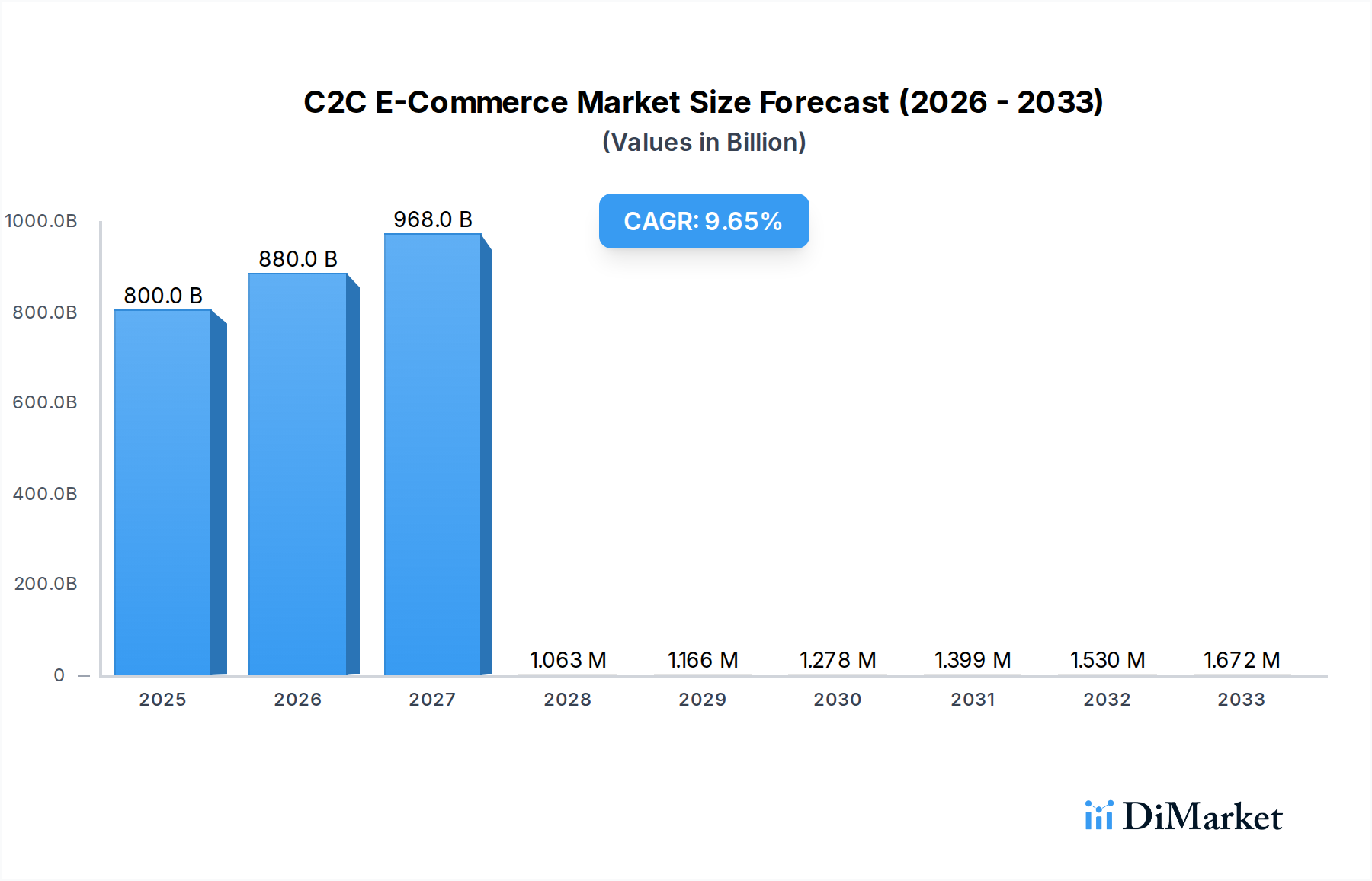
Consumer-to-Consumer (C2C) e-commerce is a business model where individual consumers trade goods or services directly with one another, typically facilitated by a third-party platform. These platforms provide the infrastructure for listing, payment processing, and dispute resolution, allowing everyday users to act as both buyers and sellers in a global marketplace.
The Evolution of the C2C Marketplace in 2026
As of 2026, the C2C market has transcended its original "online garage sale" roots to become a cornerstone of the circular economy. The market is currently defined by three major pillars: sustainability, social commerce integration, and AI-driven verification. Consumers are increasingly prioritizing used goods to reduce their carbon footprint, while platforms have integrated sophisticated artificial intelligence to automate photo editing, description writing, and authenticity checks.
In this landscape, the intermediary's role has shifted from a mere listing host to a trust-enforcement agent. Successful C2C platforms in 2026 differentiate themselves through their ability to handle logistics, offer "buy now, pay later" (BNPL) options for used goods, and manage complex tax reporting requirements like the 1099-K regulations in the United States.
1. eBay: The Multi-Category Pioneer
eBay remains the definitive example of the C2C model. While it has incorporated many business-to-consumer (B2C) sellers over the decades, its core identity is rooted in peer-to-peer auctions and fixed-price sales. In 2026, eBay continues to dominate the "collectibles" and "rare goods" sectors.
The platform uses a tiered fee structure, generally taking a percentage of the final sale price plus a small fixed charge. Its primary strength lies in its Authenticity Guarantee program, which has expanded to include high-end sneakers, watches, and handbags. By intercepting high-value items for physical inspection before they reach the buyer, eBay solves the primary hurdle of C2C commerce: the trust gap between strangers.
2. Etsy: The Artisanal and Vintage Hub
Etsy illustrates how a C2C platform can thrive by narrowing its focus to a specific niche—handmade, vintage, and craft supplies. It allows individual creators to reach a global audience without the overhead of an independent website.
For the market, Etsy demonstrates the power of community-centric commerce. Sellers are not just vendors; they are "makers" who build brands through storytelling. In 2026, Etsy has leaned heavily into video commerce, allowing sellers to livestream their creation process, which helps verify the "handmade" status of goods in an era where AI-generated products are prevalent.
3. Poshmark: The Social Fashion Marketplace
Poshmark reimagines C2C commerce as a social network. Users don’t just list items; they "follow" closets, "share" other people's listings to their own networks, and participate in "Posh Parties." This social layer increases engagement and reduces the friction of discovery.
A key takeaway from Poshmark’s model is its shipping simplification. By offering flat-rate "PoshPost" labels, they remove the logistical headache that often discourages casual sellers. In 2026, Poshmark’s "Posh Shows" (live selling events) have become a primary revenue driver, illustrating that the future of C2C is as much about entertainment as it is about transactions.
4. Vinted: The Zero-Seller-Fee Disruptor
Vinted has seen massive growth by flipping the traditional revenue model. Unlike eBay or Poshmark, Vinted often charges the buyer a protection fee rather than taking a large cut from the seller. This makes it an incredibly attractive platform for individuals looking to clear out their wardrobes without losing 10–20% of their earnings to commissions.
Vinted’s success in the European and North American markets highlights a shift toward frictionless listing. Its app is designed for speed, allowing a user to list an item in under 60 seconds. This low barrier to entry is essential for maintaining the high inventory volume required for C2C success.
5. Depop: The Gen Z Trendsetter
Owned by Etsy but operated independently, Depop caters specifically to younger demographics with an interface that looks and feels like Instagram. It focuses on "streetwear," "vintage Y2K," and "aesthetic-based" fashion.
Depop illustrates the importance of curation. Sellers often act as influencers, and buyers are often purchasing an "aesthetic" rather than just a piece of clothing. In 2026, Depop’s integration with digital fashion and physical "thrift flips" shows how C2C platforms can drive cultural trends rather than just reacting to them.
6. Facebook Marketplace: The Local Connectivity King
Facebook Marketplace has largely replaced the traditional classifieds section (like Craigslist) for local peer-to-peer sales. Because it is tied to a user’s social profile, it offers a perceived layer of security—you can see who you are meeting.
This example highlights the geographic advantage in C2C. For large items like furniture, appliances, or bicycles, shipping is often prohibitively expensive. Facebook Marketplace solves this by facilitating local pickups. In 2026, it remains the dominant force for hyper-local commerce, utilizing "neighborhood" groups to foster trust within small communities.
7. Airbnb: The Service-Based C2C Model
While many think of e-commerce as physical goods, Airbnb is a prime example of C2C in the services and real estate sector. Individual homeowners (consumers) rent out their spaces to other individuals.
Airbnb's market contribution is its comprehensive insurance and verification system. By providing "AirCover," the platform mitigates the extreme risks associated with letting a stranger into one's home. This illustrates that for high-stakes C2C transactions, the platform must act as a sophisticated risk manager.
8. Fiverr: The Gig Economy C2C
Fiverr represents the C2C model applied to digital services. Individuals (freelancers) sell specific "gigs"—ranging from logo design to voiceover work—directly to other individuals or small business owners.
In 2026, Fiverr’s model demonstrates the modularization of labor. By breaking down complex professional services into clear, buyable products with fixed prices, it removes the need for long negotiation phases. This "productization" of services is a key trend in modern peer-to-peer exchanges.
9. StockX: The "Stock Market of Things"
StockX introduced a "bid/ask" model to C2C commerce, primarily for sneakers and high-end electronics. It acts as a middleman that physically authenticates every single item before it reaches the buyer.
StockX illustrates the data-driven C2C market. It provides real-time market pricing, historical price charts, and volatility metrics for consumer goods. This has turned many C2C participants into "resellers" or "investors," treating consumer products like financial assets.
10. Mercari: The Convenience Specialist
Mercari positions itself as the easiest way to sell anything from around the house. Its "Mercari Local" service, which uses delivery drivers (similar to Uber) to pick up items from a seller's door and deliver them to a buyer’s door, has set a new standard for C2C logistics.
Mercari proves that logistics innovation is the best way to compete against giants like Amazon. By removing the need for a seller to even go to the post office, Mercari attracts "lazy" sellers who have high-quality inventory but low patience for traditional shipping processes.
11. Grailed: The Niche Community Authority
Grailed is a curated marketplace for high-end menswear and "archive" fashion. It thrives by creating a community of enthusiasts who have a deep, specialized knowledge of specific designers.
The lesson from Grailed is the power of editorial content. The platform doesn't just host listings; it publishes articles about fashion history and designer profiles. This builds authority and ensures that the buyers and sellers on the platform are high-value, knowledgeable participants who are willing to pay a premium for authenticated, rare goods.
12. Reverb: The Specialized Equipment Market
Reverb focuses exclusively on musical instruments. Because musicians are often very protective of their gear, a general marketplace like eBay often lacks the technical specificity required for these transactions (e.g., specific guitar neck profiles or vintage tube amp conditions).
Reverb illustrates that technical depth is a viable C2C strategy. By providing specialized listing tools that ask for instrument-specific details, they create a better user experience for both the buyer and seller than a generalist platform ever could.
Comparison of C2C Platform Models (2026 Data)
| Platform | Primary Niche | Revenue Model | Key Strength |
|---|---|---|---|
| eBay | Multi-category | Seller Fee (10-15%) | Massive global reach & Auctions |
| Vinted | Fashion | Buyer Protection Fee | $0 Seller commission |
| Facebook Marketplace | Local Goods | Free (Local) / Fee (Shipping) | Zero barrier to entry & No shipping |
| StockX | Sneakers/Tech | Transaction & Auth Fees | Verified authenticity & Market data |
| Airbnb | Stays/Experiences | Split Host/Guest Fees | High-trust verification & Insurance |
| Mercari | General Household | Selling & Payment Fees | Door-to-door local delivery |
| Reverb | Musical Gear | Flat Selling Fee | Niche community & Expertise |
The Mechanics of C2C Success: Trust and Safety
The primary obstacle to any C2C transaction is the inherent risk of dealing with an unknown individual. To survive, the examples listed above have all implemented various versions of the following "Trust Stack":
- Escrow Payments: The platform holds the buyer's money and only releases it to the seller once the buyer confirms the item matches the description.
- Reputation Systems: Two-way reviews allow both parties to assess the reliability of the other based on past performance. In 2026, these systems are increasingly defended by AI to prevent "review bombing" or fake testimonials.
- Dispute Resolution: A centralized team that acts as a judge in cases of "Item Not as Described" (INAD) claims.
- Identity Verification: Integration with government ID databases or social media verification to ensure sellers are real people.
Challenges and Regulations in 2026
While the C2C market is booming, it faces significant headwinds. Governments worldwide have increased scrutiny on the "shadow economy." In the US, the Internal Revenue Service (IRS) requires platforms to report gross payments for the sale of goods and services that exceed certain thresholds.
Furthermore, the rise of organized retail crime has forced platforms to implement stricter "Know Your Seller" (KYS) protocols. Platforms like eBay and Amazon (for its C2C third-party wing) must now proactively screen for stolen property, as mandated by various "INFORM Consumers" acts globally. According to the Federal Trade Commission (FTC), these regulations are designed to increase transparency and prevent the resale of illicit goods.
FAQs
What defines a C2C platform?
A C2C platform is a digital intermediary that allows two individuals to transact. The platform does not own the inventory; instead, it provides the tools (search, payment, communication) for the transaction to happen. The platform typically makes money through listing fees, transaction commissions, or advertising.
How do C2C sites handle fraud?
Most C2C sites use a combination of AI-driven pattern recognition (to spot suspicious listings), escrow payment services, and physical authentication centers. For example, StockX and eBay physically inspect items to ensure they aren't counterfeit before the buyer receives them.
Are C2C sales taxable in 2026?
Yes, in most jurisdictions. In the United States, if you sell more than a specific dollar amount in a calendar year (the threshold has fluctuated between $600 and $20,000 depending on specific legislative updates leading into 2026), the platform is required to issue you a Form 1099-K. You are generally responsible for paying taxes on any profits made from these sales.
What is the difference between C2C and B2C?
In B2C (Business-to-Consumer), a professional entity sells new products at scale (e.g., buying a pair of Nikes from Nike.com). In C2C, an individual sells an item they own to another individual (e.g., selling your used Nikes on Poshmark). C2C often involves unique, used, or vintage items that are no longer available in primary retail channels.
How do sellers handle shipping in C2C?
Modern platforms offer integrated shipping labels. When an item sells, the platform generates a prepaid label for the seller to print. Some platforms, like Mercari or Uber Direct integrations, allow for courier pickup, where the seller doesn't even need to package the item or go to a shipping hub.
Recommendation for New Participants
For individuals looking to enter the C2C market in 2026, the best approach is to start niche. Rather than listing a variety of items on a generalist platform like eBay, choose a specialized marketplace like Reverb for instruments or Vinted for clothing. These platforms offer specific tools and an audience that understands the value of your specific items. Additionally, always use the platform’s integrated payment system; moving a transaction "off-platform" to avoid fees removes all your legal and financial protections, making you a prime target for scams.