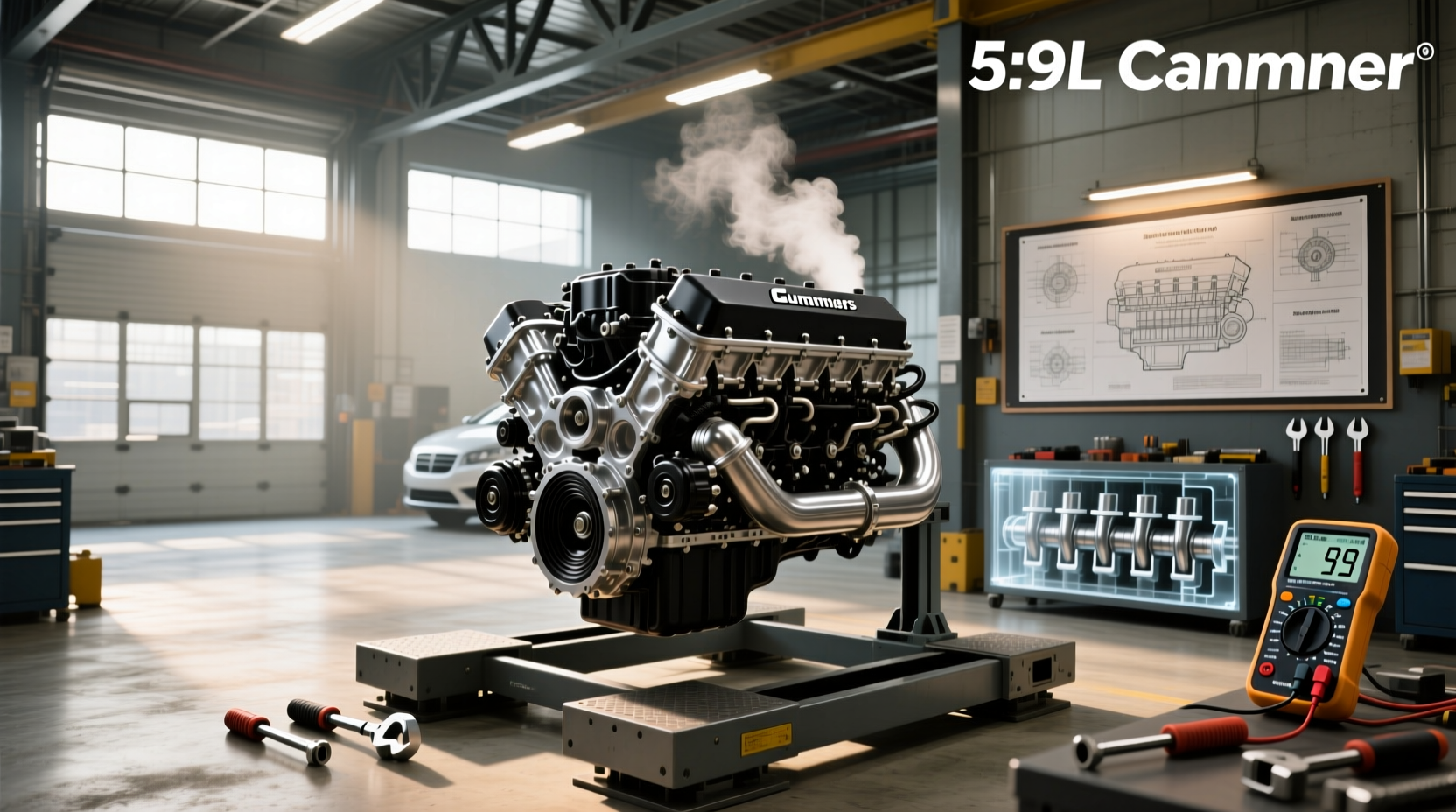
The 6.7L Cummins Turbo Diesel engine requires exactly 12.0 quarts (11.4 liters) of engine oil for a standard service refill, including the volume held within the oil filter. Maintaining this specific capacity is critical for ensuring the longevity of the high-pressure common rail system, the turbocharger bearings, and the internal components subjected to the massive torque loads characteristic of these engines.
Since its introduction in mid-2007 as a replacement for the venerable 5.9L, the 6.7L Cummins has become the backbone of the RAM 2500 and 3500 Heavy Duty lineup. Even as we look at the landscape in 2026, the fundamental requirement for a 12-quart sump remains a constant for these inline-six powerhouses. Whether you are a long-haul hauler, a construction professional, or a diesel enthusiast, understanding the nuances of this oil capacity—and how to manage it—is the single most important aspect of your vehicle's preventative maintenance schedule.
The Engineering Behind the 12-Quart Sump
One might wonder why a 6.7-liter engine requires significantly more oil than a large gasoline V8, which typically takes 6 to 8 quarts. The answer lies in the unique thermal and mechanical stresses of diesel combustion.
Heat Dissipation and Thermal Mass
Diesel engines operate at much higher cylinder pressures and generate more heat than gasoline engines. In a 6.7L Cummins, the oil does more than just lubricate; it acts as a primary coolant for the pistons. Oil jets located at the bottom of the cylinder block spray oil directly onto the undersides of the pistons to carry away heat. A 12-quart capacity provides a larger thermal mass, meaning the oil can absorb more heat before reaching its breakdown temperature. This volume also allows the oil to spend more time in the oil pan (the sump) cooling down before being recirculated through the engine.
Contaminant Suspension
The 6.7L Cummins utilizes Exhaust Gas Recirculation (EGR) and a Diesel Particulate Filter (DPF) to meet emissions standards. These systems, particularly the EGR, introduce soot into the crankcase. Oil is designed to hold this soot in suspension so it doesn't form sludge on internal components. A larger oil volume (12 quarts) can hold a higher total mass of soot before the additive package is depleted or the oil becomes too viscous to flow properly.
Turbocharger Lubrication and Cooling
The Variable Geometry Turbocharger (VGT) on the 6.7L Cummins is a precision component that spins at speeds exceeding 100,000 RPM. It relies on a constant, high-pressure supply of clean oil for both lubrication of its bearings and cooling of the center housing. Any drop in oil volume or quality directly threatens the lifespan of the turbocharger.
Oil Specifications for the 6.7L Cummins in 2026
While the capacity remains 12 quarts, the type of oil you put in those 12 quarts is governed by the American Petroleum Institute (API) and Cummins Engineering Standards (CES).
Viscosity Grades
- 15W-40: This is the standard viscosity for most operating conditions. It provides excellent protection in warm climates and under heavy towing loads.
- 5W-40 (Full Synthetic): Highly recommended for vehicles operating in ambient temperatures below 0°F (-18°C). Synthetic 5W-40 flows faster at startup, which is when the majority of engine wear occurs in cold climates.
- 10W-30: Some newer iterations of the 6.7L Cummins in lighter-duty cycles may permit 10W-30 for slightly improved fuel economy, but always refer to your specific owner's manual or the Cummins official service portal for your Engine Serial Number (ESN).
API Standards
As of 2026, API CK-4 remains the primary service category. CK-4 oils are designed to provide improved aeration control, shear stability, and oxidation resistance compared to the older CJ-4 oils. If you are using a legacy vehicle, CK-4 is backward compatible.
The Critical Role of the Oil Filter
When calculating the 12-quart capacity, roughly 1 to 2 quarts are accounted for by the oil filter itself. Using a high-quality filter is non-negotiable for the 6.7L Cummins.
Fleetguard and Mopar
Cummins owns Fleetguard (now under the Atmus Filtration Technologies umbrella), and their filters are specifically engineered for the 6.7L. The Fleetguard LF16035 is the standard-bearer, featuring "Stratapore" media that provides superior filtration of small particles compared to generic cellulose filters. In the RAM application, the Mopar equivalent is also a top-tier choice.
The "Venturi Combo" Technology
Higher-end Fleetguard filters for the 6.7L often utilize a "Venturi Combo" design. This incorporates both a full-flow section and a bypass section within a single canister. The full-flow section cleans the oil going to the engine, while the bypass section cleans a smaller portion of the oil to a much higher degree of purity (down to 5-10 microns). This technology is part of why the 12-quart system is so effective at extending engine life.
Step-by-Step Oil Change Procedure
Performing an oil change on a 6.7L Cummins is a straightforward task, but the scale of the job (handling 3 gallons of used oil) requires preparation.
Required Tools and Supplies
- 12 quarts of API CK-4 certified oil.
- New oil filter (Fleetguard LF16035 or equivalent).
- 1-1/8 inch (or 28mm) socket for the drain plug.
- Oil filter wrench (cap style or strap style).
- Large drain pan (minimum 15-quart capacity).
- New crush washer for the drain plug.
- Funnel.
The Process
- Warm the Engine: Run the engine for a few minutes to warm the oil, which helps it drain faster and carry out more contaminants.
- Drain the Oil: Position your large drain pan under the oil pan. Remove the drain plug. Be prepared for a high-volume flow; 12 quarts comes out quickly. Inspect the drain plug magnet (if equipped) for excessive metal shavings.
- Remove the Filter: The filter is located on the passenger side of the engine block. Access it through the wheel well or from the top, depending on the year of your truck. Use a plastic bag over the filter during removal to catch the oil that will inevitably spill from the top of the canister.
- Prep the New Filter: This is a vital step for diesel engines. Pre-fill the new filter with clean engine oil before installation. This prevents a "dry start" where the engine runs without oil pressure for several seconds while the oil pump fills the filter. Lubricate the rubber gasket with a thin film of oil.
- Install the Filter: Hand-tighten the filter until the gasket makes contact, then turn it an additional 3/4 to 1 full turn. Do not over-tighten.
- Reinstall the Drain Plug: Use a new crush washer and torque the plug to approximately 37-40 lb-ft (check your specific model year specs).
- Add Oil: Pour in the remaining oil until you have reached the 12-quart total (including what you put in the filter).
- Verify Level: Start the engine, check for leaks at the filter and plug, let it run for a minute, then shut it off. Wait 15 minutes for the oil to drain back into the pan and check the dipstick. The level should be exactly at the "Full" mark.
Summary of 6.7L Cummins Oil Specifications
| Component / Spec | Specification |
|---|---|
| Total Oil Capacity | 12.0 Quarts (11.4 Liters) |
| Oil Filter Capacity | Included in 12-quart total (~1-2 quarts) |
| Standard Viscosity | 15W-40 (Above 0°F) |
| Cold Weather Viscosity | 5W-40 Synthetic (Below 0°F) |
| API Service Category | CK-4 (Current for 2026) |
| Drain Plug Torque | 37-40 lb-ft (50-54 Nm) |
| Recommended Filter | Fleetguard LF16035 / Mopar 5083285AA |
| Change Interval (Normal) | 15,000 Miles / 6 Months / 500 Hours |
| Change Interval (Severe) | 7,500 Miles / 3 Months / 250 Hours |
Managing Oil Life and the DPF Impact
In 2026, most RAM trucks equipped with the 6.7L Cummins use an "Oil Life Monitor" system. This is not a simple mileage timer; it is an algorithm that considers engine temperature, idle time, load, and the frequency of DPF regenerations.
Fuel Dilution
A specific concern with the 12-quart capacity in the 6.7L is fuel dilution. During a "post-injection" DPF regeneration cycle, small amounts of diesel fuel can wash past the piston rings and enter the oil sump. This thins the oil and reduces its lubricating effectiveness. If your oil level appears to be rising on the dipstick, this is a sign of excessive fuel dilution, and the oil must be changed immediately regardless of mileage. This is another reason why having a 12-quart capacity is beneficial; it provides a larger buffer against the percentage of fuel in the oil compared to a smaller sump.
Severe vs. Normal Duty
If you frequently idle for long periods (common in oil field or utility work) or pull a heavy trailer through mountainous terrain, you fall under the "Severe Duty" category. In these cases, 12 quarts of oil may only last 7,500 miles or 6 months. Ignoring the 12-quart maintenance requirement under severe loads is the most common cause of premature bearing failure in these engines.
Common Mistakes to Avoid
1. Overfilling the Sump
Adding more than 12 quarts can be just as damaging as underfilling. When the oil level is too high, the crankshaft can strike the surface of the oil, whipping it into a foam (aeration). Air does not lubricate like liquid oil, and aerated oil can lead to a sudden drop in oil pressure and catastrophic engine damage.
2. Using "Passenger Car" Diesel Oil
Not all diesel oils are created equal. The 6.7L Cummins requires oil that meets specific shear stability and soot-handling requirements. Always look for the CES 20086 (for CK-4) or CES 20081 (for CJ-4) rating on the back of the bottle.
3. Neglecting the Oil Pressure Gauge
While the 12-quart capacity provides a safety net, the 6.7L Cummins is known for having a "normalized" oil pressure gauge in some RAM models—meaning the gauge displays a calculated value rather than a real-time reading. In 2026, sophisticated telematics often provide more accurate data, but a physical dipstick check remains the only 100% reliable method to verify your oil level.
Frequently Asked Questions
Can I use 10 quarts if I'm not towing?
No. The oiling system is designed around a 12-quart volume. Underfilling the engine can lead to oil starvation during steep climbs or sharp turns, as the oil pick-up tube may momentarily suck in air. Furthermore, you will significantly accelerate the degradation of the remaining oil.
Why does my oil turn black immediately after a change?
This is perfectly normal for a 6.7L Cummins. Because of the EGR system and the high-soot nature of diesel combustion, a small amount of residual soot stays in the engine after draining. This soot will stain the new 12 quarts of oil black almost as soon as the engine is started. It does not mean the oil is dirty or the change was ineffective.
Is synthetic oil worth the extra cost for the 12-quart change?
For most users, yes. Given that a 12-quart oil change is already an investment, the extra cost of synthetic oil provides significantly better protection against turbocharger "coking" (where oil bakes onto the turbo shaft after shutdown) and better flow in cold weather. If you plan to keep the truck past 200,000 miles, synthetic oil is the preferred choice.
How often should I change the oil in 2026 models?
Follow the Oil Life Monitor on your dashboard. However, for those seeking maximum longevity, a conservative interval of 10,000 miles for highway driving and 5,000 to 7,500 miles for heavy towing or city driving is highly recommended. Cummins traditionally suggests a maximum of 15,000 miles under perfect conditions, but few trucks operate in "perfect" conditions.
Does the 6.7L Cummins in Chassis Cab trucks take the same amount?
Generally, yes. RAM 3500, 4500, and 5500 Chassis Cab models using the 6.7L Cummins also utilize the 12-quart capacity. However, some specialized industrial or commercial applications with different oil pan configurations may vary. Always verify the dipstick marks as the final authority.
Practical Recommendation
To ensure the health of your 6.7L Cummins, always keep a "spare quart" of your preferred 15W-40 or 5W-40 oil in the truck. While these engines are not typically known for excessive oil consumption, the sheer size of the 12-quart sump means that if you are low enough to show on the dipstick, you are missing a significant amount of protection.
By adhering to the 12.0-quart capacity and using high-quality API CK-4 oils and Fleetguard filters, you are protecting one of the most durable engines ever put into a pickup truck. Regular oil analysis through labs like Blackstone Laboratories can further help you monitor the health of your engine and the status of your 12-quart investment, providing peace of mind as your vehicle ages.