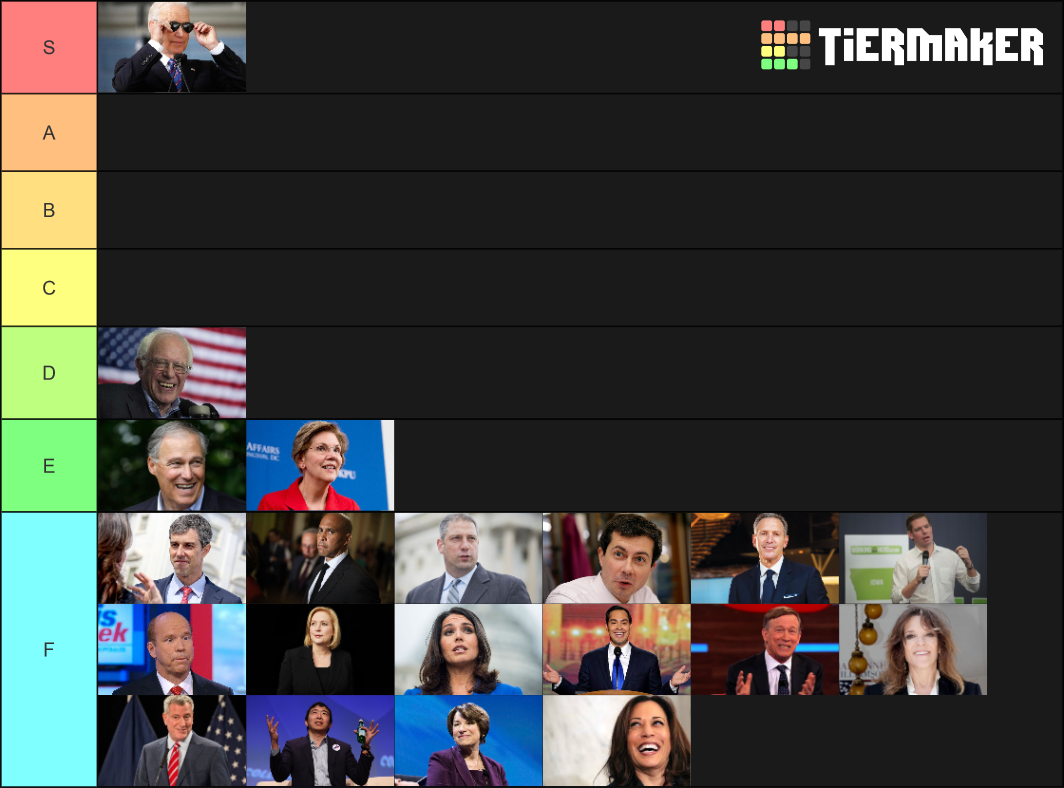
The 2020 Democratic presidential primary field featured over two dozen major contenders, making it one of the largest and most diverse primary fields in modern American political history. Examining the key highlights of the top tier candidates reveals critical insights into the ideological factions, strategic turning points, and defining policy debates that shaped the eventual nomination of Joe Biden.
The Structural Scale and Diversity of the 2020 Democratic Field
The primary cycle for the 2020 Democratic presidential nomination began accumulating candidates as early as 2017, ultimately swelling to more than 29 major declared contenders before the first primary contests in early 2020. This unprecedented volume of candidates forced the Democratic National Committee (DNC) to establish strict polling and donor thresholds just to manage the debate stages, splitting debates across multiple nights during the summer and autumn of 2019.
This historic field was notable not only for its sheer size but also for its profound demographic and ideological diversity. The roster included multiple female senators, several candidates of color, self-made entrepreneurs, mayors, and a diverse spectrum of ideological thought ranging from self-described democratic socialists to moderate establishment centrists. For political analysts, historians, and voters, the 2020 primary served as a laboratory for the future direction of the Democratic Party, testing whether progressive structural transformations or steady institutional competence would win over primary electorate voters.
Ideological Factions: The Progressive Wing Versus the Moderate Establishment
A defining highlight of the 2020 Democratic primary was the fierce ideological contest between the progressive wing and the moderate or centrist establishment. This divide manifested primarily in how candidates approached healthcare, taxation, climate change, and economic regulation.
The progressive wing, championed primarily by Senator Bernie Sanders of Vermont and Senator Elizabeth Warren of Massachusetts, pushed the national conversation significantly to the left. Their platforms centered around ambitious, structural overhauls of American institutions. Key proposals included Medicare for All—a single-payer healthcare system that would eliminate private health insurance—comprehensive cancellation of student loan debt, the Green New Deal, and wealth taxes targeting ultra-high-net-worth individuals. These candidates argued that incremental reform was insufficient to address systemic economic inequality and climate degradation.
Conversely, the moderate or centrist wing, represented by figures such as former Vice President Joe Biden, South Bend Mayor Pete Buttigieg, and Senator Amy Klobuchar, advocated for pragmatic, incremental improvements to existing frameworks. Instead of dismantling the Affordable Care Act (ACA), moderates proposed building upon it by adding a public option. Their economic strategies focused on targeted tax credits, fiscal responsibility, and preserving private insurance markets for Americans who preferred their current coverage. This ideological tension dominated debate stages, town halls, and media coverage throughout 2019 and early 2020.
Examining Key Figures from the 2020 Candidate Field
To understand how the primary unfolded, it is essential to examine the core strategies, policy platforms, and defining moments of the primary's most prominent figures. While twenty-nine candidates entered the race, a subset of candidates captured the majority of media attention, fundraising dollars, and primary votes.
1. Joe Biden
As the former Vice President under Barack Obama, Joe Biden entered the race as the early front-runner, leveraging high name recognition and deep ties to the party establishment. His campaign emphasized institutional experience, the restoration of traditional alliances abroad, and a return to political normalcy. Despite stumbling in early state contests in Iowa and New Hampshire, Biden engineered a decisive comeback in the South Carolina primary, which catalyzed a massive consolidation of moderate support ahead of Super Tuesday.
2. Bernie Sanders
Senator Bernie Sanders built upon his formidable 2016 presidential campaign with a massive grassroots network and prolific small-dollar fundraising operation. Sanders dominated the early nominating contests, winning the New Hampshire primary and the Nevada caucuses, establishing himself as the front-runner for much of February 2020. His unwavering commitment to democratic socialism and economic populism galvanized young voters and progressive activists, though concerns among moderate Democrats about his electability ultimately limited his national coalition.
3. Elizabeth Warren
Senator Elizabeth Warren positioned herself as a policy-heavy progressive, famously summarizing her campaign approach with the phrase, "I have a plan for that." Warren combined populist economic critiques of corporate power with detailed regulatory proposals, including wealth taxes and anti-corruption measures. Her campaign enjoyed a surge in the polls during the summer of 2019, though debates over healthcare financing—specifically her transition timeline to Medicare for All—created friction with both moderates and left-wing purists.
4. Pete Buttigieg
As the young, openly gay former mayor of South Bend, Indiana, Pete Buttigieg surprised political observers by mounting a highly organized, articulate campaign. Buttigieg carved out a lane in the middle-to-progressive tier, appealing to moderate and college-educated voters with articulate policy explanations and generational framing. His narrow victory in the Iowa caucuses and strong second-place finish in New Hampshire proved that executive experience in municipal government could translate to national viability.
5. Kamala Harris
Senator Kamala Harris of California entered the race in early 2019 with immense national expectations, drawing tens of thousands of supporters to her Oakland campaign launch. Her legislative background as a prosecutor, attorney general, and senator provided a sharp platform during debates, notably her pointed critique of Joe Biden during the June 2019 Miami debate. However, shifting campaign strategies and organizational challenges led her to withdraw from the race in December 2019 before primary voting began.
6. Michael Bloomberg
Former New York City Mayor Michael Bloomberg entered the race unusually late in November 2019, bypassing the early four states entirely to focus on a massive self-funded media blitz targeting Super Tuesday states. Bloomberg utilized billions of dollars of his personal fortune to blanket television and digital advertising. Although his entry disrupted the moderate lane, a difficult performance in his debut debate in Las Vegas halted his momentum, leading to his withdrawal shortly after Super Tuesday.
7. Amy Klobuchar
Senator Amy Klobuchar of Minnesota ran an unapologetically pragmatic campaign focused on government effectiveness, legislative accomplishments, and Midwestern electoral appeal. Klobuchar gained significant traction following a standout performance in the February 2020 New Hampshire debate, where she finished a strong third. Her campaign emphasized her ability to win working-class voters and deliver bipartisan legislation before she suspended her campaign to endorse Joe Biden.
8. Cory Booker
Senator Cory Booker of New Jersey brought a message of unity, restorative justice, and civic grace to the primary field. Known for his eloquence and legislative work on criminal justice reform (such as the First Step Act), Booker emphasized civil rights and urban policy. Despite strong debate performances and high initial respect among party insiders, his campaign struggled to break through the fundraising dominance of top-tier rivals and ended before voting commenced.
9. Julián Castro
Serving as the Secretary of Housing and Urban Development under the Obama administration and former mayor of San Antonio, Julián Castro was the sole Latino candidate in the primary's top-tier conversations. Castro centered his campaign on progressive immigration reform, universal early childhood education, and criminal justice reform. His aggressive questioning of rival candidates on immigration policy during the debates remained one of the notable policy flashpoints of the early cycle.
10. Beto O'Rourke
Former Texas Congressman Beto O'Rourke generated national media frenzy following his narrow 2018 Senate race against Ted Cruz. Launching his presidential bid on the cover of Time magazine in March 2019, O'Rourke electrified crowds with a message of national unity and grassroots activism. However, his campaign struggled to maintain momentum as policy specifics became central to primary discourse, particularly following his declarative stance on mandatory buybacks for certain semi-automatic firearms.
Comparative Overview of Prominent 2020 Democratic Candidates
| Candidate | Primary Ideological Lane | Key Signature Proposal | Notable Electoral Outcome / Status |
|---|---|---|---|
| Joe Biden | Moderate / Establishment | Healthcare public option; restoration of alliances | Won the nomination and general election |
| Bernie Sanders | Progressive / Left Populist | Medicare for All; Green New Deal | Second place; won early state contests |
| Elizabeth Warren | Progressive / Regulatory | Wealth tax; anti-corruption structural reform | Strong early contender; consolidated third tier |
| Pete Buttigieg | Moderate / Centrist | Democratic renewal; Medicare for All Who Want It | Won Iowa caucuses; strong early state showing |
| Kamala Harris | Moderate / Progressive | Middle-class tax cuts; reproductive rights protection | Withdrew December 2019; later selected as VP |
| Michael Bloomberg | Centrist / Technocratic | Gun control legislation; climate investment | Self-funded Super Tuesday strategy; withdrew March 2020 |
| Amy Klobuchar | Pragmatic Moderate | Bipartisan legislative record; infrastructure investment | Third place in New Hampshire; withdrew March 2020 |
| Cory Booker | Pragmatic Progressive | Baby bonds; criminal justice reform | Withdrew January 2020 |
| Julián Castro | Progressive / Civil Rights | Decriminalization of border crossings; housing equity | Withdrew January 2020 |
| Beto O'Rourke | Progressive / Centrist Hybrid | Universal background checks; gun buybacks | Withdrew November 2019 |
Campaign Mechanics, Fundraising, and the Debate Stage
The logistical mechanics of managing a historically large field transformed the traditional primary campaign. Securing a spot on the Democratic National Committee debate stages required candidates to meet escalating dual criteria: reaching specific percentages in certified national or early-state polls and acquiring donations from a minimum number of unique individual donors (starting at 65,000 and eventually rising to 130,000 or more).
This donor threshold fundamentally altered campaign strategy, forcing campaigns to invest heavily in digital fundraising, email marketing, and national digital advertising rather than relying solely on wealthy political action committees (PACs) or high-net-worth donors. Candidates who could not build a robust digital apparatus found themselves locked out of debate stages, which served as the primary oxygen for media coverage and name recognition. Consequently, breakout debate moments—such as Julián Castro’s exchange on immigration or Amy Klobuchar’s breakthrough in New Hampshire—could completely alter a candidate's fundraising trajectory overnight, injecting millions of dollars into struggling campaign coffers within hours of a broadcast.
The Turning Point: South Carolina and Super Tuesday
The culmination of the 2020 Democratic primary occurred in late February and early March 2020, marked by a rapid series of events that compressed a multi-month contest into a few pivotal days.
Following Bernie Sanders's victories in Iowa, New Hampshire, and Nevada, establishment and moderate factions within the Democratic Party faced mounting pressure to consolidate behind a single alternative to prevent a progressive candidate from capturing an insurmountable delegate lead. This consolidation accelerated dramatically following Joe Biden's decisive victory in the South Carolina primary on February 29, 2020, propelled by strong support from African American voters.
Within 72 hours of the South Carolina primary, former South Bend Mayor Pete Buttigieg and Senator Amy Klobuchar suspended their campaigns and endorsed Joe Biden. Shortly thereafter, former candidate Beto O'Rourke and other figures threw their support behind Biden as well. This coordinated consolidation transformed the race ahead of Super Tuesday on March 3, 2020. Biden outperformed expectations across the American South, Midwest, and parts of the West, capturing numerous states where he had spent comparatively little money or campaign infrastructure. This sudden shift established Biden as the presumptive nominee, setting the stage for the general election campaign against incumbent President Donald Trump.
Frequently Asked Questions
How many candidates ultimately ran in the 2020 Democratic presidential primary?
More than 29 major candidates formally declared their candidacy and filed paperwork with the Federal Election Commission (FEC) during the 2020 cycle. This made it the largest primary field in modern American political history, requiring the DNC to host debates across multiple nights to accommodate all qualifying contenders.
What were the primary ideological divisions within the 2020 Democratic field?
The primary was largely defined by a division between the progressive wing (advocating for Medicare for All, structural wealth taxes, and the Green New Deal) and the moderate or establishment wing (advocating for incremental reforms, public healthcare options, and institutional stability).
Why did candidates like Pete Buttigieg and Amy Klobuchar withdraw right before Super Tuesday?
Following Joe Biden's decisive win in the South Carolina primary, moderate candidates recognized that splitting the centrist vote would likely secure the nomination for progressive front-runner Bernie Sanders. By dropping out and endorsing Biden, they consolidated moderate voter support ahead of the critical Super Tuesday primaries.
What role did debate thresholds play in the 2020 primary?
The DNC implemented strict polling and unique donor thresholds to qualify for debate stages. These rules were designed to manage the massive field, but they also forced campaigns to prioritize digital grassroots fundraising and national outreach, making small-dollar donor counts a critical metric of campaign viability.
How did the COVID-19 pandemic affect the conclusion of the 2020 primary?
As the primary progressed into March and April 2020, the onset of the COVID-19 pandemic forced numerous states to postpone their primary elections, transition to vote-by-mail systems, and move campaign events entirely online. This effectively froze physical campaigning and accelerated the consolidation of the race around Joe Biden.
Conclusion and Next Actions
The 2020 Democratic presidential primary field stands as a watershed moment in modern American political organization, showcasing the power of grassroots digital fundraising, intense ideological debate, and rapid party consolidation. For researchers and political observers, reviewing the highlights of these ten candidates provides essential context regarding the internal dynamics, policy shifts, and strategic coalitions that continue to shape the contemporary Democratic Party and American electoral politics. When analyzing historical primary cycles, examine original FEC campaign finance disclosures, DNC debate criteria documentation, and certified state election returns to gain a complete, verifiable understanding of the nomination process.