The 2012 London Olympic Games marked a watershed moment for American women’s artistic gymnastics, highlighted by the historic gold medal-winning performance of the United States team, famously known as the "Fierce Five," and Gabby Douglas capturing the individual all-around title. This era defined a massive shift in global gymnastics competitiveness, technical difficulty, and cultural visibility, cementing 2012 as one of the most celebrated chapters in Olympic gymnastics history.
The Genesis of a Historic Quadrennium: The 2012 U.S. Olympic Women's Gymnastics Team
The journey to the top podium at the North Greenwich Arena during the 2012 London Summer Olympics was not born overnight. It was the culmination of a grueling four-year quadrennium managed by National Team Coordinator Martha Karolyi. The selection camp at the Karolyi Ranch in Huntsville, Texas, served as the ultimate proving ground, where the nation's top elite athletes battled through injuries, consistency tests, and pressure to secure one of the five coveted spots on the roster.
When the team was officially named, it featured a potent mix of veteran leadership and explosive youth. Jordyn Wieber, the reigning 2011 World All-Around Champion, entered the Games as the heavy favorite for individual gold. Joining her were Gabby Douglas, whose soaring bar routines earned her the nickname "The Flying Squirrel"; Alexandra "Aly" Raisman, the steadfast anchor on floor exercise and beam who would become team captain; Kyla Ross, known for her exquisite execution and unwavering poise; and McKayla Maroney, whose vaulting prowess was unmatched globally.
This specific combination of athletes possessed a unique statistical advantage: depth across all four apparatuses—vault, uneven bars, balance beam, and floor exercise. Unlike previous Olympic cycles where the U.S. occasionally suffered from major deductions on the uneven bars, the 2012 squad closed that technical gap significantly, neutralizing the traditional strengths of rival gymnastics powerhouses like Russia, China, and Romania.
Dominating the Team Final: The Birth of the "Fierce Five"
July 31, 2012, remains an indelible date in sports history. The U.S. women’s gymnastics team captured the Olympic team gold medal for only the second time in U.S. history, and the first time on foreign soil, echoing the legendary "Magnificent Seven" victory from Atlanta in 1996.
The competition format for the team final followed a 5-3-3 structure—five athletes on a team, three routines up per apparatus, and all three scores counting toward the team total. This format offered zero margin for error; a single fall could completely derail a nation's gold-medal aspirations.
Rotation-by-Rotation Breakdown
- Rotation 1 (Vault): The U.S. started off with absolute authority. McKayla Maroney delivered a nearly flawless Amanar vault (a round-off, back handspring onto the board, followed by 2.5 twists in layout position), scoring a massive 15.900. Jordyn Wieber and Aly Raisman backed her up with clean, stuck landings to establish an early lead.
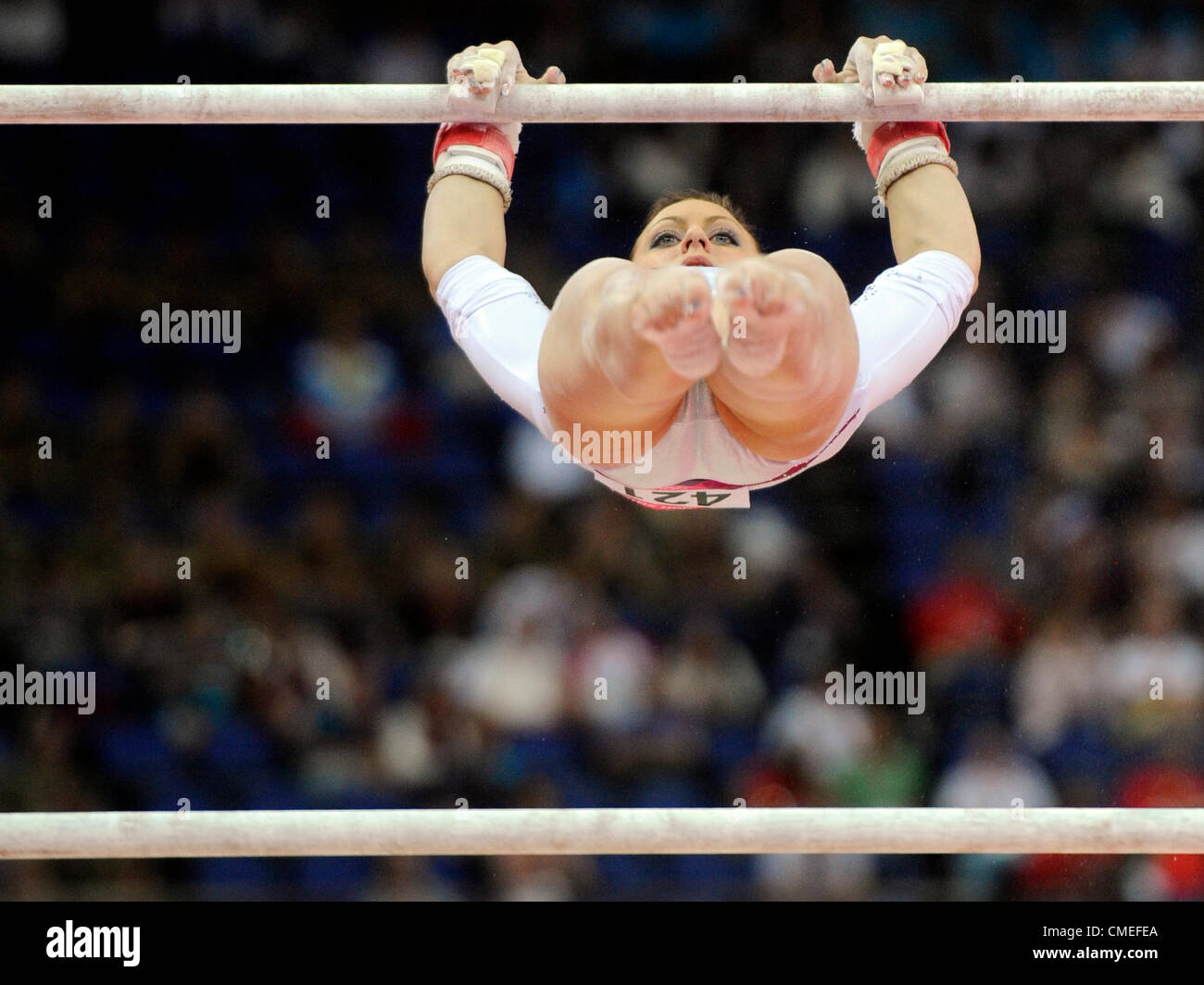
- Rotation 2 (Uneven Bars): Historically a nervous event for American teams, Gabby Douglas and Kyla Ross executed clean, high-difficulty routines without major form breaks, keeping the U.S. ahead of the challenging Russian and Chinese delegations.
- Rotation 3 (Balance Beam): Known as the most nervy apparatus due to its four-inch width, the team maintained composure. While minor wobbles occurred, Raisman anchored the rotation with a poised, high-scoring set.
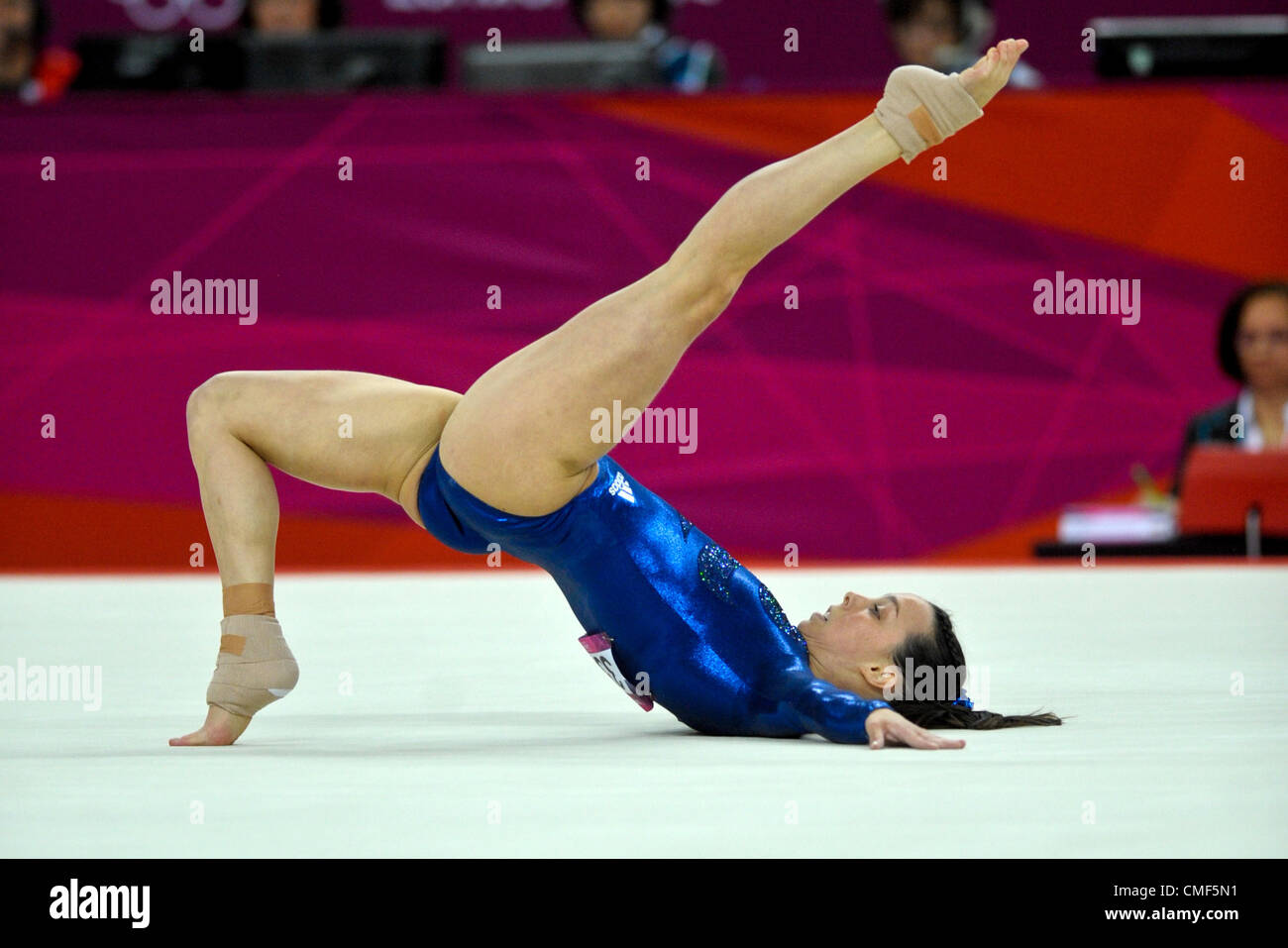
- Rotation 4 (Floor Exercise): Needing a strong closing rotation, the team delivered dynamic tumbling passes and high-energy choreography. When Aly Raisman landed her final tumbling pass, the math was definitive: the United States secured the gold medal by a historic margin of over five points.
| Athlete | Key Apparatuses | Notable Contribution in Team Final |
|---|---|---|
| Gabby Douglas | Uneven Bars, All-Around | Delivered crucial high-scoring bar sets and consistent performances across all four events. |
| Aly Raisman | Floor Exercise, Balance Beam | Served as team captain; anchored beam and floor with immense difficulty and composure. |
| McKayla Maroney | Vault | Provided the highest-scoring vault of the competition, setting a dominant tone early. |
| Jordyn Wieber | All-Around | Overcame qualification heartbreak to anchor team success with powerful tumbling. |
| Kyla Ross | Balance Beam, Uneven Bars | Utilized her trademark artistic execution to secure vital, mistake-free scores. |
Individual Glory: Gabby Douglas and the All-Around Crown
While the team gold cemented the collective legacy of the squad, the individual competitions yielded historic milestones that expanded the sport's cultural reach far beyond traditional gymnastics fandom.
On August 2, 2012, Gabby Douglas stepped onto the competition floor for the women's individual all-around final. Entering the rotation against fierce competitors like Russia's Viktoria Komova and Aliya Mustafina, Douglas displayed incredible mental fortitude. Following a tightly contested battle across vault, bars, beam, and floor, Douglas clinched the gold medal, becoming the first African American woman in history to win the Olympic individual all-around title.
Her victory shattered racial barriers in a sport historically dominated by white athletes from Eastern Europe, Western Europe, and North America. Douglas’s triumph inspired a generation of young gymnasts of color, paving the way for future champions like Simone Biles.
Apparatus Finals: Triumphs, Heartbreak, and Iconic Moments
Beyond the team and all-around events, the 2012 apparatus finals produced moments of intense drama that are still analyzed by technical experts today.
McKayla Maroney and the Vault Final
McKayla Maroney was the undisputed favorite to win individual gold on vault. In the event final, her first vault—an Amanar—was executed with such height, distance, and form that it earned a staggering 16.233 score, featuring a 0.5 execution score from one judge who deemed it nearly flawless. However, on her second vault, a Dos Santos II (round-off, half-on, full-twisting front layout), Maroney suffered an unexpected fall, sitting the landing. This uncharacteristic error dropped her to the silver medal position behind North Korea's Hong Un-jong. Maroney's immediate, disappointed facial expression on the podium instantly became a global viral meme, capturing the immense pressure of Olympic competition.
Aly Raisman's Gold and Bronze Success
Aly Raisman rebounded from a heartbreaking tie-breaker in the individual all-around competition—where she lost the bronze medal to Russia's Aliya Mustafina despite finishing with identical total scores—by dominating the apparatus finals. First, she claimed the bronze medal on the balance beam following an inquiry that successfully raised her difficulty score. Shortly after, she delivered a masterclass routine on the floor exercise, capturing the gold medal with high-flying tumbling and precise artistic presentation. Her victory marked the first time an American woman won Olympic gold on the floor exercise.
Technical Evolution and Code of Points Impact
The 2012 Olympic Games were the second major Games conducted under the modern International Gymnastics Federation (FIG) Open-Ended Code of Points, introduced after the 2004 judging scandals. This system separated scoring into two distinct categories: Difficulty (D-Score) and Execution (E-Score).
The 2012 U.S. team was engineered to maximize this new code. Martha Karolyi and personal club coaches understood that to win gold, athletes needed to push the technical envelope in acrobatic difficulty without sacrificing execution deductions.
- Amanar Vaults: The inclusion of multiple gymnasts performing the 5.8-to-6.5 start-value Amanar gave the U.S. an insurmountable mathematical advantage before other teams even took their turns on bars or beam.
- Complex Composition: The team integrated difficult tumbling connections on floor and complex leap series on beam that satisfied strict FIG requirements for composition and connection value.
Frequently Asked Questions
What was the "Fierce Five" in 2012 women's gymnastics?
The "Fierce Five" is the nickname given to the U.S. women's gymnastics team that won the gold medal in the team competition at the 2012 London Olympics. The members were Gabby Douglas, Jordyn Wieber, Aly Raisman, Kyla Ross, and McKayla Maroney.
Who won the individual all-around gold medal in 2012?
Gabby Douglas won the individual all-around gold medal at the 2012 London Olympics, making her the first African American gymnast—and the first woman of color of any nationality—to win the Olympic all-around title.
Did Jordyn Wieber win an individual medal in 2012?
Despite entering the 2012 Games as the reigning World All-Around Champion, Jordyn Wieber missed the all-around final due to the Olympic rule limiting countries to two gymnasts per nation in the final (behind teammates Douglas and Raisman). However, she played a vital role in winning team gold and later finished fourth in the floor exercise final.
What scoring system was used during the 2012 Olympics?
The 2012 Olympics used the Open-Ended Code of Points governed by the FIG. This system calculates a gymnast's total score by adding an un-capped Difficulty (D) score to an Execution (E) score that starts at 10.0 and incurs deductions for form, wobbles, and falls.
How did the U.S. team perform compared to previous Olympics?
The 2012 team victory was only the second time the United States won the team gold medal in Olympic history, following the "Magnificent Seven" in Atlanta in 1996. Furthermore, it marked the first time a U.S. women's team won team gold outside of the United States.
Conclusion and Legacy
The 2012 women's gymnastics competition at the London Olympic Games fundamentally transformed the landscape of the sport. By combining unprecedented athletic difficulty with elite mental conditioning, the U.S. team established a blueprint for modern gymnastics dominance. Reviewing archival recordings, official FIG score sheets, and documentaries from this era provides aspiring athletes and fans with a masterclass in high-performance execution under extreme pressure. To further explore this era, review official competition archives via USA Gymnastics or study the historical progression of the FIG Code of Points.