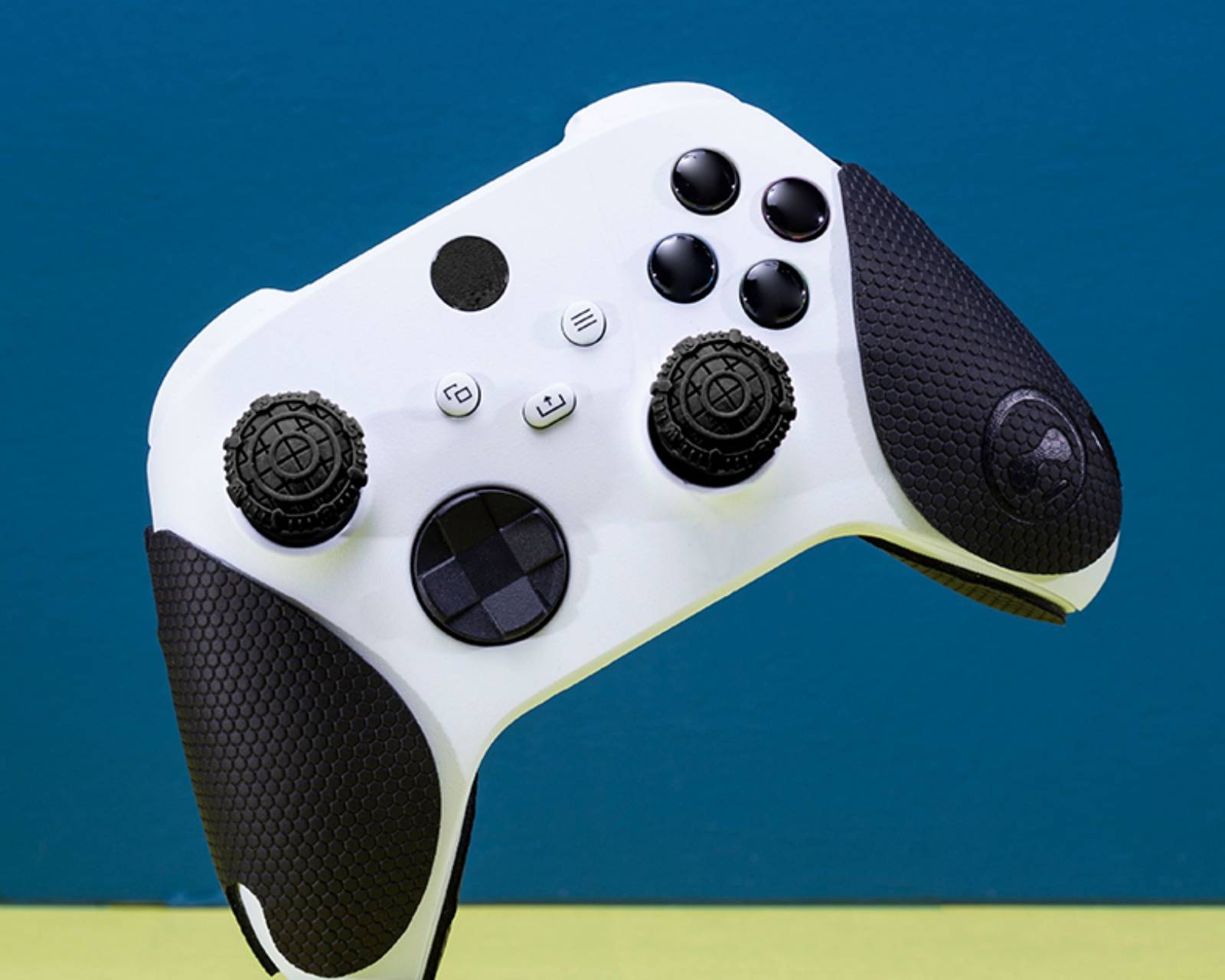
For performance-focused gamers deciding between hardware, the Xbox Series S is objectively superior to the Xbox One S due to its modern architecture, support for current-generation titles, and advanced features like Variable Rate Shading and ray tracing. While the Xbox One S remains a legacy media device, the Series S provides the speed, resolution, and responsiveness required to keep pace with the 2026 gaming landscape.
Defining the Generational Divide
When considering a console purchase or upgrade in 2026, the distinction between the Xbox Series S and the Xbox One S represents more than just a chronological difference; it marks a fundamental shift in computing architecture. The Xbox One S, released in 2016, is built on the Jaguar CPU architecture, which was designed for a mobile-centric era of computing. In contrast, the Xbox Series S, released as part of the ninth generation of consoles, utilizes the custom Zen 2 CPU architecture and RDNA 2 GPU architecture.
For the performance-focused gamer, this means the Series S offers computational parity with more powerful flagship consoles, albeit scaled for a different resolution target. The Xbox One S was designed for 1080p gaming with frequent dynamic resolution scaling. The Series S, however, is architected to deliver high frame rates, including support for 120 FPS, and significantly reduced input latency, which is the primary metric by which professional and competitive gamers measure performance.
Architectural Advantages: Why Speed Matters
Performance in gaming is not solely defined by the graphical fidelity of a title; it is defined by the stability of frame times and the speed of data retrieval. The most significant bottleneck in the Xbox One S is its mechanical hard disk drive (HDD). Even with external solid-state drive (SSD) upgrades, the system’s internal bus speeds are limited, resulting in slow loading times and "pop-in" of textures in open-world environments.
The Xbox Series S features the Xbox Velocity Architecture. This hardware-accelerated integration of a custom NVMe SSD and a dedicated hardware decompression block allows games to stream data at high speeds. For a player, this translates to nearly instantaneous level loads and the ability for game developers to include more complex assets without worrying about the disk read speeds that plagued the Xbox One generation. If you value your time and demand a responsive interface that does not hang during menu navigation, the jump to the Series S architecture is mandatory.
Graphics, Ray Tracing, and Modern APIs
The Xbox One S was developed long before real-time ray tracing became a standard requirement in gaming engines. Consequently, it lacks the hardware acceleration required to render these lighting effects, which provide the realistic reflections, shadows, and global illumination seen in contemporary titles. The Xbox Series S includes dedicated hardware for hardware-accelerated ray tracing. While the console targets 1440p rather than 4K, the actual quality of the pixels it renders is significantly higher due to modern lighting and shading techniques.
Furthermore, the Series S supports features such as Variable Rate Shading (VRS). This technology allows the GPU to focus its processing power on important areas of a frame rather than wasting resources on simple backgrounds or peripheral objects. The Xbox One S does not have the architecture to utilize these modern APIs, meaning even titles released on both platforms will look softer, feature less detail, and run at lower, less stable frame rates on the older hardware.
Comparison Matrix: Xbox Series S vs. Xbox One S
| Feature | Xbox Series S | Xbox One S |
|---|---|---|
| CPU Architecture | Custom Zen 2 (8 Cores @ 3.6GHz) | Custom Jaguar (8 Cores @ 1.75GHz) |
| GPU Architecture | Custom RDNA 2 (4 TFLOPS) | GCN (1.4 TFLOPS) |
| Storage Type | Custom 512GB/1TB NVMe SSD | 500GB/1TB/2TB Mechanical HDD |
| Target Resolution | 1440p (Upscaled to 4K) | 1080p |
| Max Frame Rate | Up to 120 FPS | Up to 60 FPS |
| Ray Tracing | Supported (Hardware) | Not Supported |
| Quick Resume | Yes | No |
The Value of "Quick Resume" and User Experience
Beyond raw benchmark performance, the "performance-focused" gamer also considers the efficiency of their gaming sessions. The Series S introduces "Quick Resume," a feature that allows a user to suspend multiple games in a saved state and switch between them in seconds. On the Xbox One S, closing one game and launching another requires a full boot sequence for the title, followed by loading screens.
For players with busy schedules who may want to hop between a competitive shooter and a narrative RPG, Quick Resume is a game-changer. It eliminates the friction of starting a session. Furthermore, the Xbox Series S interface is rendered in a higher resolution and benefits from a faster CPU, making the dashboard feel snappy and responsive, whereas the Xbox One S dashboard can often stutter when multitasking.
Handling Modern Software Constraints
By 2026, the vast majority of AAA software developers have ceased developing versions of their games specifically for the Xbox One family of consoles. While some games may technically launch via cloud streaming, the performance-focused gamer needs native hardware execution. The Xbox One S is effectively sunsetting as a viable platform for new releases.
Purchasing an Xbox One S today means you are restricted to a library of older titles or rely on cloud streaming, which introduces input lag—the antithesis of "performance gaming." The Series S, conversely, is a first-class citizen in the current gaming ecosystem. It receives day-one patches, optimized updates, and supports the latest graphical engines, such as Unreal Engine 5, which rely on technologies like Nanite and Lumen that the Xbox One S cannot process natively.
Troubleshooting and Limitations
While the Series S is the clear winner for performance, it is important to address its limitations for the sake of an informed purchase. The primary limitation of the Series S is the internal storage capacity. Because modern games utilize high-resolution assets, 512GB or even 1TB can fill up quickly. However, this is a storage issue, not a performance issue. Users can mitigate this by utilizing the proprietary storage expansion cards, which provide the same NVMe speed as the internal drive, ensuring that game performance remains consistent even when playing from expanded storage.
Users should also note that the Series S does not have an optical disc drive. If you have an extensive physical collection of Xbox One games, the Series S will not play them. This is a crucial distinction: if your priority is "performance," the Series S is the correct choice; if your priority is "physical media preservation," you are looking at a different segment of the hardware market entirely.
Common Questions Regarding Hardware Performance
Can the Xbox Series S output 4K resolution? Yes, the Xbox Series S can output 4K resolution for media and display, and it supports 4K upscaling for games. While it does not render games natively at 4K like the Series X, it provides a crisp, high-fidelity image that significantly outperforms the 1080p native limit of the Xbox One S.
Is the Series S noticeably quieter than the One S? Generally, yes. The Series S features a highly efficient cooling system with a large fan and vapor chamber. Because it does not have an optical disc drive—often a major source of noise in previous consoles—and utilizes more efficient components, it runs quieter under heavy load compared to an aging Xbox One S, which may suffer from fan degradation or dust accumulation over time.
Does the Series S support all Xbox One games? The Series S supports the vast majority of the Xbox One library via backward compatibility. In many cases, these older games actually perform better on the Series S due to "Auto HDR" and higher frame-rate consistency, effectively providing a "remastered" experience for your existing library without any input from developers.
Is it worth upgrading to the Series S if I already own an Xbox One S? For a performance-focused gamer, the answer is an emphatic yes. The upgrade provides immediate benefits in loading speeds, graphical fidelity, and input responsiveness. The transition to the new architecture effectively removes the performance ceiling you are currently hitting with the 2016-era hardware.
Making the Decision
When you look at the trajectory of gaming in 2026, the hardware requirements for modern titles continue to climb. The Xbox One S was a remarkable piece of hardware for its time, but it is now a historical artifact. If your goal is to play current games with high-speed loading, ray-traced lighting, and smooth, responsive frame rates, the Xbox Series S is the only logical choice in this comparison.
Next steps for the performance-conscious gamer: assess your current library to ensure you are comfortable transitioning to an all-digital format, verify your monitor or television supports at least 1440p or high-refresh-rate 1080p, and consider the inclusion of an expansion card if your library exceeds 512GB. By choosing the Series S, you are investing in a platform built for the current and future gaming standard.