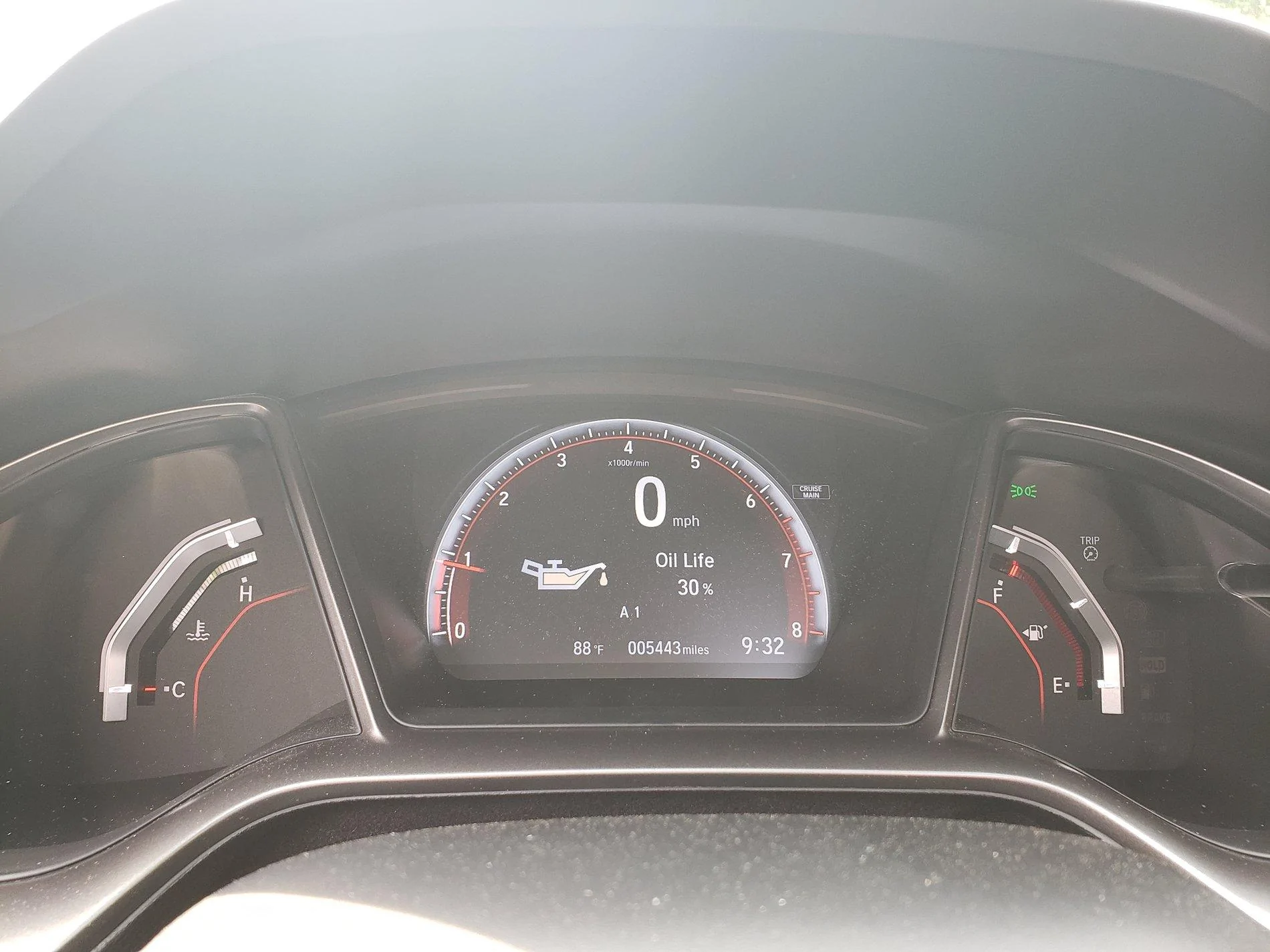
When the Honda Pilot A1 maintenance code illuminates on the dashboard, it signals that the vehicle’s onboard computer has tracked driving conditions and determined it is time for an engine oil change and a tire rotation. This specific alphanumeric combination is part of Honda’s intelligent Maintenance Minder system, designed to eliminate guesswork, eliminate arbitrary mileage intervals, and optimize service scheduling based on actual wear and tear.
The Fundamentals of the Honda Maintenance Minder System
Modern Honda vehicles, including generations of the Honda Pilot, utilize an algorithm-based Maintenance Minder rather than a traditional, rigid sticker on the windshield that demands an oil change every 3,000 or 5,000 miles. The system monitors various operating conditions—such as engine revolutions, engine temperature, vehicle speed, climate, and frequent short trips versus long-distance highway cruising—to calculate the remaining engine oil life as a percentage.
When this percentage drops to 15 percent, the Maintenance Minder light illuminates alongside a main code and a sub-code. For vehicle owners, understanding this system prevents premature servicing while protecting the internal components from excessive wear. The Maintenance Minder system is split into two distinct tiers: main codes (letters) and sub-codes (numbers).
Main Codes Explained
- Code A: Replace engine oil only.
- Code B: Replace engine oil and oil filter, inspect various braking components, check the suspension system, inspect tie-rod ends, steering gear box, driveshaft boots, brake hoses and lines, fluid levels, and exhaust system.
Sub-Codes Explained
- Code 1: Rotate tires, check tire pressure, and inspect tire condition.
- Code 2: Replace air cleaner element, check dust and pollen filter, and inspect drive belt.
- Code 3: Replace transmission fluid and transfer fluid (if equipped with All-Wheel Drive).
- Code 4: Replace spark plugs, inspect valve clearance, and inspect water pump.
- Code 5: Replace engine coolant.
- Code 6: Replace rear differential fluid (if applicable).
By combining Main Code A with Sub-Code 1, the Honda Pilot A1 interpretation points to a straightforward, routine service interval: an engine oil change paired with a tire rotation.
Decoding the A1 Service Requirements
To fully appreciate the scope of the Honda Pilot A1 service, it helps to examine the two primary tasks involved. While neither task is complex for a seasoned mechanic, both play a critical role in the longevity, safety, and fuel efficiency of a three-row crossover SUV.
1. Engine Oil Replacement (Code A)
The engine oil in a Honda Pilot lubricates moving parts, reduces friction, cleans microscopic debris, and helps dissipate heat away from the combustion chambers. Over time, thermal breakdown occurs, and the oil accumulates contaminants.
- Oil Viscosity: Most modern Honda Pilots require specific synthetic oil grades, typically 0W-20, which maintains optimal flow across varied climate extremes.
- Filter Note: While Main Code A strictly specifies replacing the oil, standard industry practice—and strong recommendation by technicians—is to replace the oil filter simultaneously, even though Code B is technically required to trigger a mandatory filter replacement directive in the computer's logic. Changing the oil without changing the filter leaves behind a quart of contaminated fluid in the old filter element.
2. Tire Rotation (Sub-Code 1)
Front-wheel-drive and all-wheel-drive Honda Pilots experience uneven tire wear due to steering forces, weight transfer during braking, and power delivery.
- Wear Patterns: Front tires typically wear down faster on the shoulders due to cornering loads.
- Rotation Pattern: Rotating the tires from front to back and crossing them (depending on whether the tires are directional or symmetrical) ensures even tread wear, extends the lifespan of expensive crossover tires, maintains predictable handling, and preserves fuel economy.
Technical Specifications and Service Comparison
Reviewing how the A1 code compares to other common maintenance minder combinations clarifies what your vehicle needs at different mileage milestones.
| Maintenance Code | Primary Tasks Included | Typical Frequency / Interval | Primary Objective |
|---|---|---|---|
| A1 | Oil change + Tire rotation | Every 7,500 to 10,000 miles | Basic wear balancing and lubrication health |
| B1 | Oil change, filter change, comprehensive safety inspection + Tire rotation | Every 15,000 to 20,000 miles | Fluid refresh plus multi-point mechanical safety check |
| A12 | Oil change, tire rotation, engine air filter, cabin air filter | Every 15,000 to 30,000 miles | Filtration maintenance and breathable cabin air quality |
| B13 | B service requirements + Transmission fluid change | Every 30,000 to 60,000 miles | Heavy drivetrain fluid protection and mechanical inspection |
Step-by-Step Procedure to Reset the Honda Pilot Maintenance Minder
Once the A1 service has been completed—either by a professional service center or through DIY efforts—the vehicle's computer must be manually reset so that the oil life monitor recalculates from 100 percent. Failing to reset the system results in inaccurate future maintenance prompts.
The reset procedure varies slightly depending on the model year of your Honda Pilot (e.g., second generation 2009–2015 versus third generation 2016–2022 or fourth generation 2023–present), but the general button-press sequence remains consistent.
Resetting via Steering Wheel Controls (Digital Dash / Modern Generations)
- Turn the ignition switch to the ON position (do not start the engine, or if equipped with push-button start, press the Start button twice without touching the brake pedal).
- Use the directional pad or selector wheel on the right side of the steering wheel to navigate to the Settings menu on the multi-information display (MID).
- Scroll down and select Vehicle Settings.
- Locate and select Maintenance Info or Maintenance Reset.
- Scroll to highlight the specific code (in this case, A1 or the overall oil life percentage) and press the inner selector wheel or Enter button.
- Confirm the reset prompt by selecting Reset. The display will return to 100 percent oil life.
Resetting via the Instrument Cluster Stem (Older Generations)
- Turn the ignition switch to the ON position.
- Press the Select/Reset knob (the physical stick protruding directly from the instrument cluster glass) repeatedly until the engine oil life percentage is displayed on the screen.
- Press and hold the Select/Reset knob for approximately 10 seconds. The oil life display and the maintenance code will begin to blink.
- Release the knob momentarily, then press and hold it again for another 5 seconds until the oil life indicator resets to 100 percent and the blinking stops.
Frequently Asked Questions
Can I ignore the Honda Pilot A1 code if I just changed my oil early?
No. If you changed your oil ahead of time without resetting the minder, the computer still tracks its own internal algorithm. You should manually reset the Maintenance Minder system after every service so that future intervals remain accurate. Ignoring the code long-term can also lead to missed secondary inspections or neglected tire wear.
Does the A1 code mean I need to change my oil filter?
Technically, Main Code A stands for an oil change only, whereas Main Code B mandates an oil and filter replacement. However, standard automotive best practices dictate that you should always replace the oil filter whenever you change the engine oil to prevent old contaminants from immediately sullying the fresh fluid.
How many miles does the A1 code typically take to appear?
The A1 code is not strictly mileage-based, but under normal driving conditions, it usually triggers between 7,500 and 10,000 miles. Extreme driving habits—such as constant towing, frequent short-distance trips in freezing weather, or heavy idling—will cause the oil life percentage to drop much faster.
Is it safe to drive with the A1 code displayed?
Yes, seeing the A1 code does not indicate an immediate mechanical emergency. It serves as an advance notice that your oil life is down to 15 percent. You have ample time—typically several hundred miles or a few weeks—to schedule an appointment or perform the service without risking engine damage.
What should I do if the Maintenance Minder reset won't stick?
If the reset procedure fails, ensure the vehicle is completely stationary and the ignition is fully turned on without the engine running. If the display still refuses to reset, a momentary electronic glitch may require disconnecting the battery for a few minutes or having a diagnostic tool clear the service reminder.
Summary and Next Actions
The Honda Pilot A1 code is a routine, manageable maintenance indicator signaling that your vehicle requires an engine oil change and a tire rotation. Rather than relying on guesswork, check your multi-information display to confirm the oil life percentage, schedule the service or gather your tools for a DIY garage project, and remember to perform the manual reset procedure once the work is finalized to keep your maintenance schedule running smoothly.